
Brush for Cleaning Car: Genius Essential Guide

Find the perfect brush for cleaning your car with this essential guide. We cover types, features, and how to choose the best one for a spotless shine, making car cleaning easy and effective.
Keeping your car clean inside and out is a satisfying task. A good car cleaning brush is your secret weapon for tackling dirt, grime, and stubborn stains. It helps you reach every nook and cranny, ensuring a thorough clean that protects your car’s finish. This guide will help you pick the right brush to make your car sparkle.
Why a Dedicated Brush for Cleaning Your Car Matters
Using the right brush for cleaning your car makes a big difference. It helps prevent scratches and ensures dirt is lifted effectively. Specialized car brushes are designed to be gentle on surfaces while tough on grime. This protects your car’s paint and interior materials, keeping them looking new for longer.
A dedicated car brush is designed with specific materials and shapes. These features help lift dirt without damaging delicate car surfaces. Unlike household brushes, car brushes are made to handle automotive grime. They are an essential tool for any car owner who values a clean vehicle.
Types of Brushes for Cleaning Your Car
There are many types of brushes for cleaning your car. Each type is suited for different tasks and parts of your vehicle. Understanding these differences helps you choose the best tools for a complete clean.
Wheel Brushes
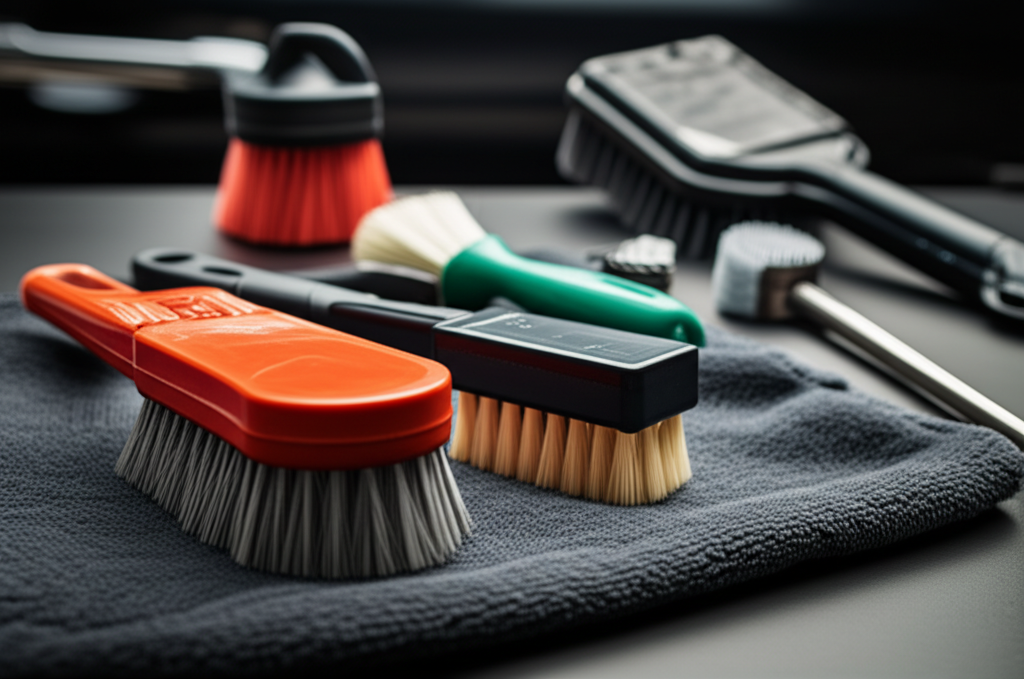
Wheel brushes are designed to clean car wheels. They often have long handles to reach deep into wheel wells. Their bristles are usually stiff enough to remove brake dust and road grime.
Some wheel brushes are shaped like a bottle brush. Others are flat or have a rounded head. The material of the bristles matters, too. Soft bristles are good for painted wheels, while stiffer ones can tackle tough dirt on alloy or chrome wheels.
Tire Brushes
Tire brushes are built for scrubbing tires. They typically have firm bristles that can scrub away dirt and old tire dressing. This brush helps restore the black look of your tires.
A good tire brush should have a comfortable grip. This allows you to apply enough pressure for effective cleaning. They are usually made of durable materials to withstand harsh chemicals and vigorous scrubbing.
Interior Brushes
Interior brushes are for cleaning the inside of your car. They come in many shapes and sizes. Some are small and detailed for vents and tight spaces. Others are larger for carpets and upholstery.
Soft bristles are common for interior brushes. This protects delicate surfaces like dashboards and screens. Many interior brushes have ergonomic handles for easy maneuvering.
Detailing Brushes
Detailing brushes are small, fine brushes. They are perfect for very specific cleaning tasks. You can use them for cleaning emblems, grilles, or tight seams.
These brushes often have very soft bristles. This is important for not scratching paint or trim. They are excellent for getting into those hard-to-reach spots that larger brushes miss.
Wash Mitts and Sponges (Not Brushes, but Related)
While not technically brushes, wash mitts and sponges are common car cleaning tools. Wash mitts are often made of microfiber or chenille. They hold a lot of soap and water.
Sponges can also be used, but they can sometimes trap dirt. This can lead to scratches on your car’s paint. Microfiber wash mitts are generally preferred for their gentleness and cleaning ability.
Key Features to Look for in a Car Cleaning Brush
When choosing a brush, certain features can make a big difference. Consider how you will use the brush. This will help you decide which features are most important for your needs.
Bristle Material and Stiffness
The bristles are the most important part of a car cleaning brush. Bristles can be made of nylon, horsehair, synthetic fibers, or natural materials. Nylon bristles are often durable and good for tough jobs. Horsehair or soft synthetic bristles are gentler on paintwork.
The stiffness of the bristles should match the task. Stiff bristles are good for tires and heavy dirt. Softer bristles are better for paint, glass, and interior surfaces. Always consider the surface you will be cleaning to avoid damage.
Handle Design and Length
A comfortable handle is crucial for effective cleaning. Look for brushes with ergonomic handles that fit well in your hand. This prevents fatigue during longer cleaning sessions.
The length of the handle is also important. Long handles are great for reaching wheels and undercarriage areas. Shorter handles offer more control for detailed interior work.
Durability and Construction
A good car cleaning brush should be built to last. Check the construction quality. The bristles should be securely attached to the base. The handle should be sturdy and not prone to breaking.
Materials like high-quality plastic or metal are good signs of durability. A brush that holds up well will save you money in the long run. It will also perform better every time you use it.
Size and Shape
The size and shape of the brush should suit its purpose. Large brushes cover more area quickly, like for washing the car body. Small, specialized brushes are needed for intricate areas like vents or badges.
Consider the specific parts of your car you want to clean. A variety of brush shapes can be useful for different tasks. For example, a rounded brush head is good for wheels.
Using Brushes for Different Parts of Your Car
Each part of your car requires a specific approach to cleaning. Using the right brush for each area ensures the best results and protects your vehicle.
Cleaning Car Wheels and Tires
Wheels and tires face the harshest dirt. Brake dust, road salt, and mud can be tough to remove. Use a stiff-bristled tire brush for the tires. For wheels, a dedicated wheel brush with appropriate bristle stiffness is best.
Always rinse wheels thoroughly after cleaning. This removes any residual cleaning chemicals. Consider using a wheel cleaner designed for your wheel type.
Cleaning Car Paintwork
Cleaning car paintwork requires a gentle touch. A soft wash mitt is usually best for the main body. For stubborn spots or intricate areas, a very soft detailing brush can be useful.
Never use stiff brushes directly on your car’s paint. This can cause scratches and swirl marks. Always use plenty of car wash soap and water.
Cleaning Car Interiors
The car interior has many different surfaces. Dashboards, leather seats, carpets, and plastics all need specific care. Use soft-bristled brushes for dashboards and screens. A stiffer brush might be needed for carpets and floor mats.
Vacuuming is essential before brushing interiors. This removes loose dirt and debris. Detailing brushes are perfect for cleaning air vents and seams.
How to Choose the Best Brush for Cleaning Your Car
Selecting the right brush depends on your car and your cleaning habits. Think about what you need the brush to do. This will guide your decision-making process.
Assess Your Car’s Needs
Does your car have delicate paint or specialized wheels? Are you mostly dealing with interior dust or exterior mud? Knowing your car’s specific challenges will help you pick the right brush.
For example, if you have chrome wheels, you’ll need a softer brush than someone with rugged alloy wheels. If your car is often dusty inside, a set of interior detailing brushes will be very useful.
Consider Your Cleaning Routine
How often do you wash your car? Do you do a quick clean or a deep detail? Your routine will determine how many different brushes you might need. A casual cleaner might only need one or two versatile brushes. A car enthusiast might invest in a whole set.
Read Reviews and Compare Options
Before buying, check reviews from other car owners. See what brushes they recommend and why. Compare prices and features from different brands. This research ensures you get good value for your money.
Reputable brands often offer better quality and durability. Look for brands known for making good car care products.
Invest in Quality Tools
It’s often worth investing a little more in high-quality brushes. Cheap brushes might wear out quickly or even damage your car. A well-made brush will last longer and perform better. This means a better clean for your car and less frustration for you.
Maintaining Your Car Cleaning Brushes
Proper care of your brushes ensures they last longer and work effectively. Cleaning your brushes after each use is simple but important. This prevents dirt and chemicals from damaging the bristles.
Cleaning Your Brushes
Rinse your brushes thoroughly after each use. Use clean water to remove soap and dirt. For stubborn grime, you can use a mild soap.
Shake off excess water and let the brushes air dry. Store them in a clean, dry place. Avoid leaving them in direct sunlight, as this can degrade the bristles over time.
Proper Storage
Store your brushes properly to maintain their shape. Hanging brushes by their handles can help preserve the bristles. Keep them away from harsh chemicals or solvents. A dedicated brush organizer or container can be helpful.
Top Brands and Recommendations
Several brands are well-regarded in the car cleaning community. These brands offer a range of brushes for different needs. Researching these brands can help you find reliable options.
Some popular brands include Chemical Guys, The Rag Company, and Mothers. They offer specialized brushes for wheels, tires, and interiors. Many also offer brush kits that provide a good starting point for beginners.
Example Comparison Table:
| Brush Type | Bristle Stiffness | Best For | Handle Length |
| :—————- | :—————- | :————————————- | :———— |
| Wheel Brush | Medium to Stiff | Rims, brake dust, deep wheel barrels | Long |
| Tire Brush | Stiff | Tire sidewalls, removing grime | Medium |
| Interior Detailer | Soft | Vents, dashboards, electronics, seams | Short |
| Wash Mitt | Soft | Car paint, general washing | Medium |
Frequently Asked Questions (FAQ)
What is the best brush for cleaning car wheels?
The best brush for car wheels depends on the wheel finish. For most alloy wheels, a medium-stiff synthetic bristle brush with a long handle is effective. For painted or polished wheels, opt for softer bristles to prevent scratches.
Can I use a household brush to clean my car?
It’s not recommended to use household brushes on your car. Household brushes often have bristles that are too stiff. They can scratch your car’s paint and delicate surfaces.
How do I clean the inside of my car’s vents?
Use a soft, small detailing brush for car vents. These brushes can reach into narrow openings without causing damage. Gently brush away dust, then use a vacuum with a crevice tool to remove it.
What is the difference between a tire brush and a wheel brush?
A tire brush has stiff bristles designed to scrub the rubber sidewalls of tires. A wheel brush is typically designed with softer or shaped bristles to clean the metal or painted surface of the wheels without scratching.
How often should I replace my car cleaning brushes?
You should replace your car cleaning brushes when the bristles become worn, bent, or damaged. For frequently used brushes, this might be every 6-12 months. Inspect them regularly for signs of wear.
Conclusion: Your Car Deserves the Right Brush
Choosing the right brush for cleaning your car is key to achieving a showroom shine. From tackling tough brake dust on wheels to gently dusting your dashboard, the correct brush makes all the difference. Invest in quality tools that are designed for automotive use. This will protect your car’s surfaces and make your cleaning routine more effective and enjoyable. Explore the options, consider your car’s specific needs, and maintain your brushes well. Your car will thank you for it with a lasting, clean appearance.
