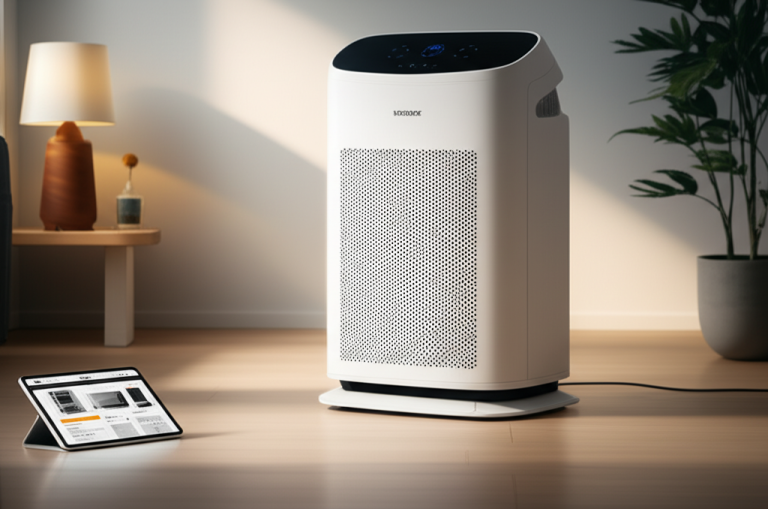
What Is Best Air Purifier For Cigarette Smoke: Proven Solution

The best air purifier for cigarette smoke uses a true HEPA filter and an activated carbon filter. It needs to be powerful enough for your room size and have a high CADR for smoke. Look for models specifically designed to tackle odors and fine particles.
The lingering smell of cigarette smoke can be a real nuisance. It clings to furniture, fabrics, and the air itself, making your home feel less fresh. If you’re dealing with this, you’re not alone. Many people struggle to eliminate smoke odors effectively. But don’t worry, there are proven solutions. This guide will help you find the best air purifier for cigarette smoke. We’ll explore what makes an air purifier great for smoke and what to look for. Let’s get your air smelling clean again.
Why Cigarette Smoke is Tough to Remove
Cigarette smoke isn’t just an unpleasant smell; it’s a complex mix of tiny particles and harmful gases. These microscopic particles, also known as PM2.5, can easily get deep into your lungs. The smoke also contains volatile organic compounds (VOCs) and other chemicals that cause that stubborn, smoky odor. Standard air fresheners only mask the smell. They don’t actually remove the harmful components from the air.
This is why specialized air purifiers are necessary. They are designed to capture these fine particles and absorb the odor-causing gases. Without the right filtration, the smoke particles and smells will continue to circulate in your home.
What Makes an Air Purifier Good for Smoke?
To effectively tackle cigarette smoke, an air purifier needs specific features. The most crucial are a true HEPA filter and a substantial activated carbon filter. A high Clean Air Delivery Rate (CADR) for smoke is also essential. This rating tells you how quickly the purifier can clean the air of smoke.
Consider the size of the room you need to clean. A small purifier won’t do much in a large living space. The best ones are powerful and have multiple stages of filtration. They work like a team to trap smoke particles and neutralize odors.
The Power of True HEPA Filters
A true HEPA (High-Efficiency Particulate Air) filter is a must-have for smoke. It’s designed to capture at least 99.97% of airborne particles that are 0.3 microns in size. These tiny particles include dust, pollen, pet dander, and importantly, the fine particulate matter found in cigarette smoke.
When smoke passes through a true HEPA filter, most of the solid particles are trapped. This significantly reduces the amount of smoke residue that can settle on surfaces or be inhaled. Without a true HEPA filter, an air purifier will miss many of the smallest, most harmful smoke particles.
The Crucial Role of Activated Carbon Filters
While HEPA filters catch particles, activated carbon filters tackle the gases and odors. Activated carbon is a special type of charcoal that has been treated to be extremely porous. This porosity gives it a massive surface area, perfect for adsorbing (like a sponge) odor molecules and VOCs.
For cigarette smoke, a thick, high-quality activated carbon filter is vital. It absorbs the acrid smell of smoke, making a noticeable difference in air freshness. A thin or low-quality carbon filter will quickly become saturated and stop working effectively.
Understanding CADR Ratings for Smoke
CADR stands for Clean Air Delivery Rate. It’s a measure of how well an air purifier cleans the air in a room. There are three CADR ratings: one for dust, one for pollen, and one for smoke. For cigarette smoke, you want to focus on the smoke CADR.
A higher smoke CADR means the purifier can clean the air faster. For example, a CADR of 200 for smoke is better than a CADR of 100 for the same room size. It’s like having a stronger fan that can move more air and clean it more quickly.
Choosing the Right Size for Your Space
The effectiveness of an air purifier depends heavily on its size relative to the room. Manufacturers usually provide a recommended room size for their purifiers. It’s best to choose a unit rated for a slightly larger room than you have. This ensures it can handle the air cleaning effectively, especially with a persistent source like cigarette smoke.
For example, if you have a 200 sq ft living room where someone smokes, you might want an air purifier rated for 250-300 sq ft. This gives it extra power to combat the smoke. Overlooking room size means the purifier will struggle to keep up, and you won’t get the clean air you desire.
Key Features to Look For
Beyond the core filters, several other features enhance an air purifier’s performance against smoke. These include a pre-filter to catch larger particles like ash, extending the life of the HEPA and carbon filters. A robust fan motor is also important for strong airflow.
Consider models with multiple fan speeds, allowing you to adjust cleaning power. An air quality sensor that automatically adjusts fan speed based on detected smoke levels can be very convenient. Look for models with a filter replacement indicator, so you know when to change filters for optimal performance.
Top Air Purifier Technologies for Smoke
Different air purifiers use various technologies, but for smoke, a multi-stage filtration system is generally best. This typically includes:
Pre-filter: Catches large particles like hair and dust.
True HEPA Filter: Captures 99.97% of tiny particles down to 0.3 microns.
* Activated Carbon Filter: Adsorbs smoke odors and VOCs.
Some purifiers may also include UV-C light or ionizers. However, be cautious with ionizers, as some can produce ozone, which can be an irritant. For cigarette smoke, prioritize HEPA and substantial activated carbon filtration.
How to Use Your Air Purifier for Maximum Effectiveness
Proper placement and maintenance are key to getting the most out of your air purifier. Place the unit in the room where smoking occurs, ideally in a central location. Avoid placing it directly against walls or furniture, as this can obstruct airflow.
Run the air purifier continuously, especially when someone is smoking. Regularly clean or replace the pre-filter as recommended by the manufacturer. Always use genuine replacement filters for HEPA and activated carbon stages. This ensures the purifier continues to perform at its best.
Air Purifier Maintenance: A Crucial Step
Like any appliance, air purifiers need maintenance to work well. The most important task is replacing the filters. HEPA filters usually last 6-12 months, and activated carbon filters may need replacing every 3-6 months, depending on the amount of smoke.
Check your air purifier’s manual for specific recommendations. Ignoring filter changes means the filters become clogged and less effective. A saturated carbon filter can even start releasing trapped odors back into the air. Consistent maintenance is the secret to long-term smoke removal.
Top Air Purifier Models for Cigarette Smoke (Examples)
While specific model recommendations can change, certain brands consistently offer strong performance for smoke. Brands like Coway, Levoit, Blueair, and Winix often have models with excellent HEPA and activated carbon filtration systems.
For instance, the Coway Airmega 200M is frequently cited for its powerful performance and substantial carbon filter, making it a solid choice for smoke. The Levoit Core 300S is a popular, more budget-friendly option that still offers a three-stage filtration system including HEPA and carbon. Always check the latest reviews and specifications for the most current models.
Here’s a quick comparison of features to consider:
| Feature | Model A (Example) | Model B (Example) | Model C (Example) |
| :——————— | :—————- | :—————- | :—————- |
| Room Size | Up to 500 sq ft | Up to 300 sq ft | Up to 700 sq ft |
| HEPA Filter Type | True HEPA | True HEPA | True HEPA |
| Carbon Filter | Heavy-duty | Standard | Extra-large |
| Smoke CADR | High | Medium | Very High |
| Noise Level | Low to Medium | Medium | Medium to High |
| Smart Features | Yes | No | Yes |
Remember to verify the exact specifications for any model you consider.
What About Ozone and Ionizers?
Some air purifiers use ionizers or UV-C light to clean the air. Ionizers release charged ions that attach to airborne particles, causing them to clump together and fall out of the air. UV-C light is used to kill germs and bacteria.
While these can be supplementary, they are not the primary solution for cigarette smoke. More importantly, some ionizers can produce ozone as a byproduct. Ozone is a lung irritant and can worsen respiratory problems. For cigarette smoke, it’s generally safer and more effective to rely on HEPA and activated carbon filters. Always check if a purifier is CARB (California Air Resources Board) certified to ensure it emits minimal to no ozone.
Expert Insights on Air Purification for Smoke
“When dealing with smoke, the key is a robust activated carbon filter,” says Dr. Anya Sharma, an environmental health specialist. “Particles are one thing, but the VOCs and odor compounds in smoke require substantial carbon adsorption capacity. A thin carbon filter will just not cut it.” This advice highlights the importance of the carbon component.
Another expert, Mark Jenkins from a leading air quality lab, notes, “Always look for a high smoke CADR relative to your room size. It’s the best indicator of how quickly the unit can clear the air of smoke. Don’t be fooled by just a HEPA filter; the carbon is equally critical for odor.”
Frequently Asked Questions (FAQ)
Q1: Can an air purifier completely remove cigarette smoke smell?
Yes, a good air purifier with a powerful activated carbon filter can significantly reduce and often eliminate cigarette smoke smell. It traps smoke particles and absorbs odor molecules from the air.
Q2: How often do I need to change the filters for cigarette smoke?
For heavy smoke, you may need to change the activated carbon filter every 3-6 months and the HEPA filter every 6-12 months. Check your manufacturer’s guide.
Q3: Is it better to have a large or small air purifier for smoke?
It’s better to have an air purifier rated for a larger room than you have. This ensures it has enough power to effectively clean the air from smoke.
Q4: Can air purifiers help with thirdhand smoke?
Air purifiers can help reduce airborne particles that contribute to thirdhand smoke residue. However, they cannot remove existing residue on surfaces. Regular cleaning is still needed.
Q5: Do air purifiers with ionizers work well for smoke?
While they can help with particles, some ionizers produce ozone, which can be harmful. It’s safer to prioritize HEPA and activated carbon filters. Ensure any unit with an ionizer is ozone-free.
Q6: What is the best type of filter for cigarette smoke?
The best filter combination is a true HEPA filter to capture fine particles and a substantial activated carbon filter to absorb odors and VOCs.
Conclusion: Breathe Easier with the Right Air Purifier
Dealing with cigarette smoke in your home can be challenging, but finding the best air purifier for cigarette smoke is achievable. By focusing on units with true HEPA filters, powerful activated carbon filters, and high smoke CADR ratings, you can effectively clear your air. Always choose a size appropriate for your room and maintain your filters diligently.
Investing in a quality air purifier means investing in a healthier, fresher living environment. You deserve to breathe clean air, free from the lingering smell and harmful particles of smoke. Take control of your indoor air quality today.
If you found this guide helpful, consider exploring other ways to improve your home’s air quality on our site.