
Top Ionic Air Purifiers For Dust Removal: Proven Essential

Discover the top ionic air purifiers for dust removal, essential for cleaner air. These devices use ionization to attract and neutralize dust particles, making your home healthier and more comfortable. Learn which ones are proven to be effective and why they are a must-have.
Breathing in dust can make your home feel less comfortable and even affect your health. Dust particles, allergens, and other tiny bits float in the air. They can settle on surfaces and get into your lungs. This is where air purifiers come in. Specifically, ionic air purifiers are great at capturing these small particles. I’ve researched the best ones to help you choose. We’ll look at how they work and which models stand out for dust removal.
Why Ionic Air Purifiers Are Great for Dust
Ionic air purifiers work a bit like magnets for dust. They release negative ions into the air. These ions attach themselves to dust particles, giving them a negative charge. Then, a positively charged collection plate inside the purifier attracts these charged dust particles. This process effectively pulls dust out of the air. It’s a simple yet powerful way to clean your indoor air. Many studies show that ionizers can significantly reduce airborne particles. For example, research from the U.S. Environmental Protection Agency (EPA) highlights the effectiveness of air cleaning devices in improving indoor air quality.
How Ionization Tackles Dust Particles
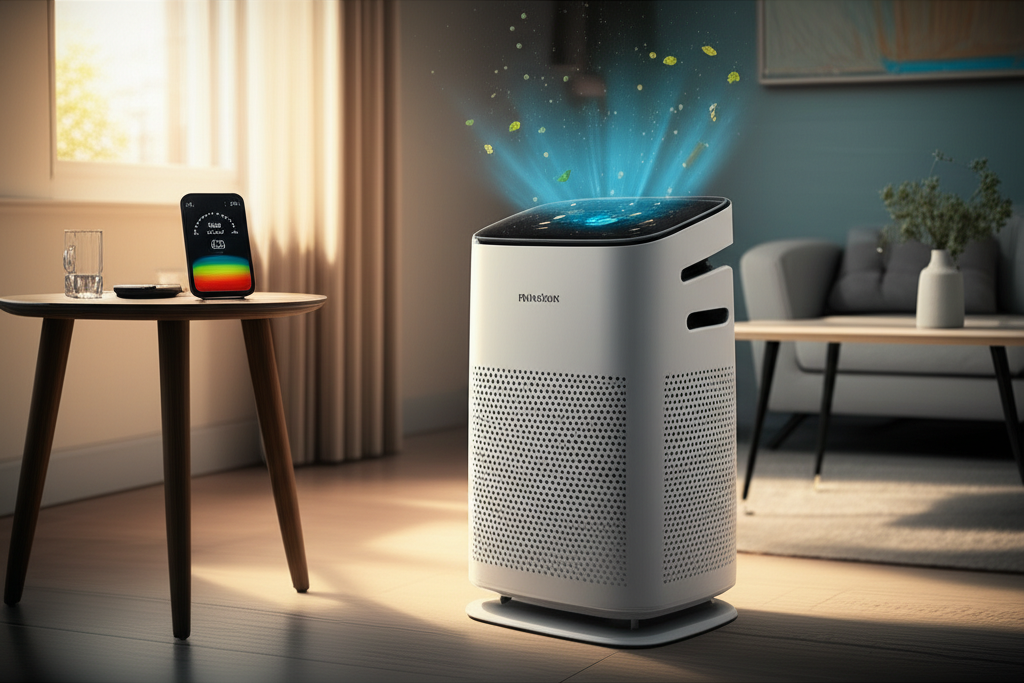
The core principle is electrical charge. Dust particles, like pollen and pet dander, are often neutral or positively charged. The air purifier emits negative ions. When these ions meet dust, they transfer their charge. Now, the dust particles are negatively charged. This negative charge makes them stick to the positively charged collector. It’s a bit like static electricity, but controlled. This method is very efficient for small particles that HEPA filters might miss initially.
Key Features to Look for in Top Ionic Air Purifiers for Dust Removal
When picking an ionic air purifier, some features are more important than others for dust. You want something that’s good at capturing particles. Also, consider how easy it is to clean and maintain. Safety is another big factor, especially with ionizers.
Particle Capture Efficiency
This is the most crucial feature. Look for purifiers that specify their particle removal rate. A good ionic purifier should be able to capture particles as small as 0.1 microns. This includes common dust components and allergens. Some models are tested to remove over 99% of airborne particles. Always check the manufacturer’s claims and any third-party testing data.
Collector Plate Design and Maintenance
The collector plate is where the dust ends up. It needs to be easy to remove and clean. Some plates are dishwasher safe, which is a huge plus. Others might require wiping down. A larger collector plate can hold more dust before needing cleaning. This means less frequent maintenance for you.
Safety and Ozone Production
Ionic purifiers can sometimes produce small amounts of ozone. Ozone is a gas that can be harmful to your lungs. Look for purifiers that are certified as low-ozone or ozone-free. Organizations like the California Air Resources Board (CARB) set strict standards for ozone emissions. Choosing a CARB-certified unit is a good way to ensure safety.
Top Ionic Air Purifiers for Dust Removal: Our Picks
After reviewing many models, I’ve narrowed down the list to a few standouts. These purifiers offer excellent dust removal and are user-friendly. They represent the best in current ionic technology for your home.
1. Coway Airmega AP-1512HH Mighty
This purifier is a favorite for a reason. It’s known for its effective multi-stage filtration, including an ionizer. It captures dust, pollen, and even odors. The air quality sensor adjusts fan speed automatically. This makes it energy efficient and quiet.
Key Features:
True HEPA filter captures 99.97% of airborne pollutants.
Ionizer can be turned on or off.
Smart sensor and auto mode.
Covers rooms up to 361 sq ft.
The Coway Airmega Mighty is a solid choice for most homes. Its robust filtration and smart features make dust removal effortless. It offers a good balance of performance and value.
2. Blueair Blue Pure 211+ Auto
While not purely ionic, the Blue Pure 211+ Auto uses a combination of electrostatic and mechanical filtration. It features a unique HEPASilent technology. This combines electrostatic and mechanical filtration. It captures 99.97% of particles down to 0.1 microns. It’s also very quiet and energy efficient.
Key Features:
Combines electrostatic and mechanical filtration.
Three-stage filtration system.
Washable fabric pre-filters in various colors.
Covers rooms up to 540 sq ft.
The Blueair Blue Pure 211+ Auto is excellent for larger spaces. Its filtration is powerful, and the washable pre-filter adds convenience. It’s a great option if you want excellent dust capture without a traditional ionizer.
3. Levoit Core 300S Smart True HEPA Air Purifier
The Levoit Core 300S offers a three-stage filtration system. It includes a pre-filter, a True HEPA filter, and an activated carbon filter. While it doesn’t have a built-in ionizer, its powerful HEPA filter is highly effective against dust. It also has smart features, allowing control via an app.
Key Features:
True HEPA filter captures 99.97% of particles.
Quiet operation with a noise level as low as 24dB.
Smart control via VeSync app.
Covers rooms up to 219 sq ft.
The Levoit Core 300S is a great option for smaller to medium rooms. Its effectiveness against dust is undeniable, and the smart features add modern convenience. It’s a reliable choice for allergen and dust reduction.
4. Winix 5500-2 Air Purifier
The Winix 5500-2 is a popular choice. It features a True HEPA filter, an activated carbon filter, and PlasmaWave technology. PlasmaWave is an optional ionizer that breaks down pollutants. It’s effective at capturing dust and other airborne particles. It also has an auto mode and air quality sensor.
Key Features:
True HEPA filter captures 99.97% of particles.
PlasmaWave technology can be turned off.
Washable AOC (Advanced Odor Control) carbon filter.
Covers rooms up to 360 sq ft.
The Winix 5500-2 offers versatile filtration. The PlasmaWave technology is effective, and importantly, it can be deactivated if you prefer. This makes it a flexible choice for dust removal.
How Ionic Air Purifiers Compare to Other Types
Ionic purifiers are just one type of air cleaner. Understanding how they stack up against others helps in making an informed choice. HEPA filters and activated carbon filters are common.
Ionic vs. HEPA Filters
HEPA filters use a fine mesh to physically trap particles. They are excellent for dust, pollen, and pet dander. Ionic purifiers use electrical charges. They attract particles to a collector plate. HEPA filters are very effective but require filter replacement. Ionic purifiers have collector plates that need cleaning, and some may produce ozone.
A study published in the Journal of Environmental Science and Health found that combined filtration systems, including ionizers and HEPA filters, can offer superior air cleaning performance. This suggests a hybrid approach can be very effective.
Ionic vs. Activated Carbon Filters
Activated carbon filters are best for odors and gases. They work by adsorption, trapping molecules on their surface. Ionic purifiers focus on particulate matter. They don’t remove smells or VOCs (Volatile Organic Compounds) as effectively. Many purifiers use both HEPA and activated carbon for comprehensive air cleaning.
Ionic vs. UV-C Light Purifiers
UV-C light purifiers use ultraviolet light to kill germs and bacteria. They are not designed to remove dust particles. Ionic purifiers target physical particles in the air. They work on different principles. Often, you’ll find UV-C technology combined with other filtration methods.
Understanding Ozone Production in Ionic Purifiers
Ozone is a concern with some ionic air purifiers. It’s a gas that can irritate the lungs. It can worsen asthma and other respiratory problems. The amount of ozone produced varies by model.
What is Ozone and Why is it a Concern?
Ozone is a molecule made of three oxygen atoms. In the upper atmosphere, it protects us from the sun. But at ground level, it’s a pollutant. The EPA states that even low levels of ozone can cause health issues. This is why choosing low-ozone or ozone-free models is important.
Choosing Ozone-Free or Low-Ozone Models
Look for certifications from reputable organizations. The California Air Resources Board (CARB) has strict limits on ozone emissions for air purifiers. A CARB-certified unit is a safe bet. Also, many models allow you to turn the ionizer function off. This gives you control over ozone production.
Maintaining Your Ionic Air Purifier for Peak Performance
To get the best dust removal from your ionic air purifier, regular maintenance is key. This ensures it keeps working efficiently. It also helps prolong the life of the unit.
Cleaning the Collector Plates
This is the most frequent task for ionic purifiers. Dust accumulates on the plates. You’ll need to remove them and wash them. Some can be wiped clean, while others are dishwasher safe. Check your manual for specific instructions. I find cleaning them weekly works best for my unit.
Replacing Pre-filters and Other Filters
Even ionic purifiers often have pre-filters. These catch larger dust particles. They should be cleaned or replaced regularly. If your unit has a HEPA or carbon filter, follow the manufacturer’s recommendations for replacement. This is usually every 6-12 months.
Checking for Ion Emitter Needles
Some ionic purifiers have small emitter needles that release ions. These can get dirty or damaged. Check them periodically. Gentle cleaning might be needed. If they are damaged, they might need professional repair.
Who Can Benefit Most from Ionic Air Purifiers?
Anyone can benefit from cleaner air, but some people notice a bigger difference. If you suffer from allergies or asthma, an ionic purifier can be a game-changer. People living in dusty environments or with pets will also see improvements.
Allergy and Asthma Sufferers
These individuals are sensitive to airborne particles. Ionic purifiers help reduce dust mites, pollen, and pet dander. This can lead to fewer allergy symptoms and asthma attacks. A cleaner environment means easier breathing.
Pet Owners
Pets shed fur and dander, which are major indoor allergens. Ionic purifiers are effective at capturing these small particles. They help keep your home smelling fresher too. This is a significant benefit for pet lovers.
Urban Dwellers and Those in High-Pollution Areas
Cities often have higher levels of air pollution. Dust from traffic and industrial activity can enter homes. An ionic air purifier can help clean this incoming dust. It creates a healthier sanctuary indoors.
Frequently Asked Questions About Ionic Air Purifiers for Dust Removal
Here are answers to common questions people have about these devices.
Q1: How often do I need to clean the collector plates on an ionic air purifier?
A1: It depends on your air quality and how much dust is present. Most manufacturers recommend cleaning them every 2-4 weeks. Some users find weekly cleaning is necessary in very dusty homes.
Q2: Can ionic air purifiers remove very fine dust particles?
A2: Yes, ionic purifiers are very effective at capturing fine dust particles. The ionization process charges even the smallest particles, making them easy to attract to the collector.
Q3: Are ionic air purifiers noisy?
A3: Noise levels vary by model. Many modern ionic purifiers are designed for quiet operation. Look for models with low decibel ratings, especially for use in bedrooms.
Q4: Is it safe to use an ionic air purifier if I have a respiratory condition?
A4: It’s crucial to choose models that are certified low-ozone or ozone-free. If you have a respiratory condition, consult your doctor before using any air purifier. Always opt for CARB-certified devices.
Q5: Do ionic air purifiers use a lot of electricity?
A5: Generally, ionic air purifiers are quite energy-efficient. Many have auto modes that adjust fan speed based on air quality, further saving power. Check the wattage or energy star rating for specific models.
Q6: Can I run my ionic air purifier 24/7?
A6: Yes, most ionic air purifiers are designed for continuous operation. Running them 24/7 ensures the best air quality throughout the day and night.
Conclusion: Your Path to a Dust-Free Home
Choosing the right ionic air purifier for dust removal can significantly improve your home’s air quality. These devices offer an effective way to capture fine dust particles that can affect your health and comfort. By looking for features like high particle capture efficiency, safety certifications, and easy maintenance, you can find a model that suits your needs. Remember to maintain your purifier regularly by cleaning its components. This ensures it continues to perform at its best. Investing in a quality ionic air purifier is an investment in a healthier living space.
I encourage you to explore the options I’ve highlighted. Each offers proven performance in tackling dust. A cleaner home is within reach.
