Best Air Purifier For Large Spaces: Essential Guide

Discover the best air purifier for large spaces to transform your home environment, ensuring cleaner air and a healthier atmosphere with this comprehensive guide.
Breathing fresh, clean air is essential for our well-being, especially in larger homes where pollutants can easily spread. Finding the right air purifier for expansive areas can feel overwhelming with so many options available. This guide is designed to simplify the process, helping you make an informed decision to achieve a healthier living space. Let’s explore how to choose the perfect unit for your needs.
Why Air Purifiers are Crucial for Large Spaces
Large spaces present unique challenges for air quality management. Without proper ventilation and filtration, pollutants like dust, allergens, pet dander, and even volatile organic compounds (VOCs) can accumulate and circulate freely. This can exacerbate allergies, asthma, and other respiratory issues, impacting the comfort and health of everyone in the home. An effective air purifier acts as a dedicated guardian, actively removing these airborne contaminants.
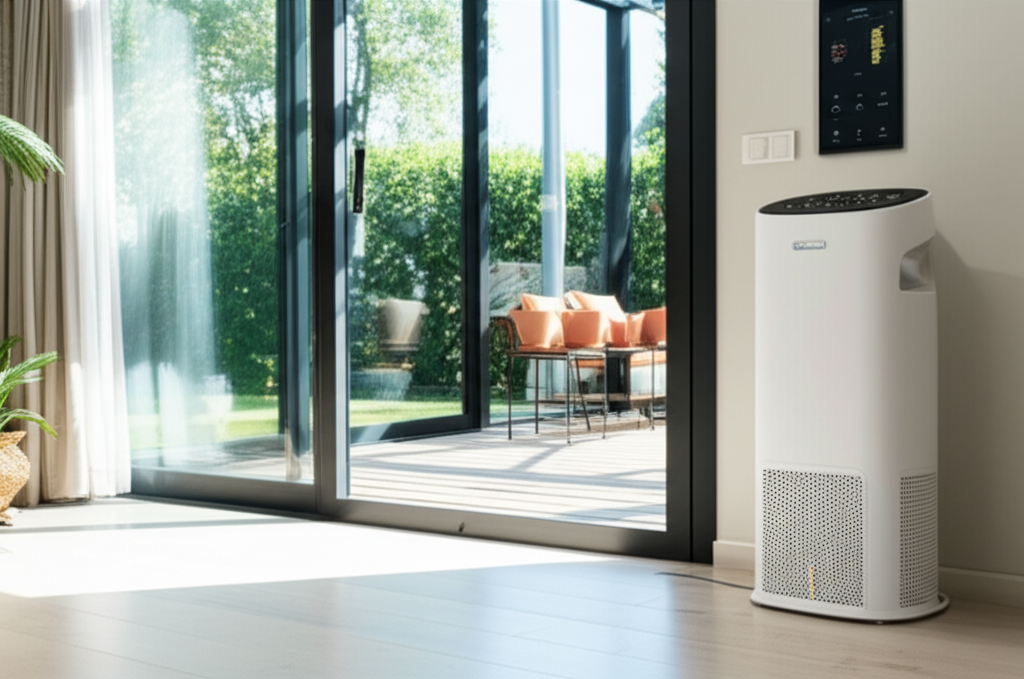
An air purifier designed for large spaces offers a powerful solution to maintain optimal air quality throughout your home. It ensures that every corner benefits from cleaner air, promoting a healthier and more comfortable living environment for your family.
Understanding CADR: The Heart of Air Purification Performance
CADR, or Clean Air Delivery Rate, is the most critical metric when selecting an air purifier, especially for large rooms. It measures how quickly an air purifier can clean a room of specific pollutants – smoke, dust, and pollen. A higher CADR value indicates faster and more efficient air cleaning. For large spaces, you’ll want a purifier with a high CADR for smoke, as smoke particles are the smallest and hardest to capture.
When evaluating models, always look for the CADR ratings provided by the manufacturer, ideally from independent testing organizations like AHAM (Association of Home Appliance Manufacturers). This ensures you’re comparing apples to apples and selecting a device capable of handling the volume of air in your expansive area.
HEPA Filters: The Gold Standard for Allergen Removal
High-Efficiency Particulate Air (HEPA) filters are the industry benchmark for capturing microscopic airborne particles. A true HEPA filter is certified to remove at least 99.97% of particles as small as 0.3 microns. This includes common allergens like pollen, dust mites, mold spores, and pet dander, which are often prevalent in larger homes. For those with allergies or respiratory sensitivities, a HEPA filter is non-negotiable.
Look for the “True HEPA” designation on product packaging and specifications. This ensures the filter meets the stringent standards required for effective allergen removal. Some purifiers also feature pre-filters to capture larger particles like hair, extending the life of the HEPA filter itself.
Activated Carbon Filters: Tackling Odors and VOCs
While HEPA filters excel at capturing particles, activated carbon filters are essential for neutralizing odors, gases, and volatile organic compounds (VOCs). VOCs are emitted from common household items like paints, cleaning supplies, furniture, and air fresheners, and can contribute to poor indoor air quality and health issues. A substantial amount of activated carbon is crucial for effectively adsorbing these harmful gases.
For large spaces, a purifier with a thick, high-quality activated carbon filter is highly recommended. This ensures it can handle the volume of odors and chemical pollutants that might accumulate in a bigger area. Some units offer specialized carbon filters designed for specific issues like pet odors or smoke.
Room Size and ACH: Matching Purifier to Your Space
The effectiveness of an air purifier is directly tied to its ability to clean the air within a specific room size. Manufacturers typically provide a recommended room size coverage for their units, often based on a standard Air Changes per Hour (ACH) rating. ACH indicates how many times the air in a room is completely filtered in one hour. For optimal air purification, aim for an ACH of at least 4, meaning the air is filtered four times per hour.
For large living areas, open-plan homes, or spaces with high ceilings, it’s often better to choose a purifier rated for a larger room than your actual square footage. This provides an extra buffer and ensures consistent air cleaning even in the most challenging environments.
Key Features to Look For in Large Space Air Purifiers
Beyond filtration, several features can enhance the performance and convenience of an air purifier for large areas. Smart features like app control allow you to monitor air quality and adjust settings remotely. Auto modes adjust fan speed based on real-time air quality readings, saving energy and ensuring optimal performance. Quiet operation is also a significant consideration, especially for living areas or bedrooms.
Consider models with multiple fan speeds, a filter replacement indicator, and a timer function for added convenience. For very large spaces, you might even consider using two smaller, strategically placed units rather than one oversized one to ensure more even air circulation.
Top Air Purifier Models for Large Spaces (2024)
Choosing the best air purifier for large spaces involves balancing powerful performance with user-friendly features. Based on extensive research and user reviews, several models consistently stand out for their ability to handle expansive areas effectively. These units often combine high CADR ratings, robust multi-stage filtration, and smart capabilities.
Here are some of the top contenders:
| Model Name | Room Size (Sq. Ft.) | CADR (Smoke/Dust/Pollen) | Filter Type | Key Features |
| :—————- | :—————— | :———————– | :——————————- | :———————————————————————— |
| Coway Airmega 400S | Up to 1,572 | 135 / 132 / 141 | True HEPA, Activated Carbon, Pre-filter | Smart App Control, Air Quality Indicator, Auto Mode, Eco Mode |
| Levoit Core 300S | Up to 540 | 141 / 140 / 141 | True HEPA, Activated Carbon, Pre-filter | Smart App Control, Voice Control (Alexa/Google Assistant), Sleep Mode |
| Blueair HealthProtect 7470i | Up to 365 | N/A (High performance) | HEPASilent Ultra, Activated Carbon | Smart Connectivity, Multiple Sensors, Whisper-silent Operation, Energy Star |
| Winix HR900 | Up to 300 | 120 / 120 / 130 | True HEPA, Activated Carbon, PlasmaWave | Pet-Focused Filtration, Auto Mode, Sleep Mode, Washable Pre-filter |
| Airdog X5 | Up to 1,000 | N/A (Ionic) | Washable Filter, Plasma Technology | Zero Filter Replacement Costs, Low Energy Consumption, Quiet Operation |
It’s important to note that room size coverage can vary based on ceiling height and airflow dynamics. Always check the manufacturer’s specifications and consider your specific needs. For truly vast open-plan areas, you may need to consider professional consultation or multiple units.
Smart Features and Connectivity for Modern Homes
In today’s connected world, smart air purifiers offer unprecedented control and insight into your home’s air quality. Many models integrate with Wi-Fi, allowing you to manage your device through smartphone apps. These apps often provide real-time air quality monitoring, filter life status, and scheduling capabilities. Some even support voice commands through virtual assistants like Amazon Alexa or Google Assistant, adding a layer of convenience.
These smart features are particularly beneficial for large spaces where you might not always be near the unit. You can easily adjust settings, check air quality from another room, or set schedules to optimize purification without interrupting your daily activities.
Maintenance and Filter Replacement: Keeping Your Purifier Effective
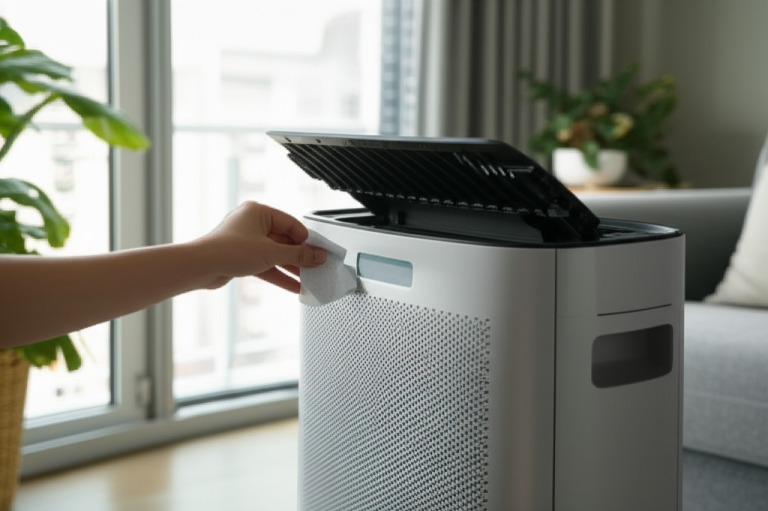
To ensure your air purifier continues to perform at its best, regular maintenance and timely filter replacement are essential. The pre-filter, which captures larger particles, should be cleaned or vacuumed regularly, typically every few weeks. This prevents it from clogging and reduces the strain on the more sensitive HEPA and carbon filters.
HEPA filters usually need replacement every 6-12 months, depending on usage and air quality. Activated carbon filters may need similar or slightly more frequent replacement, especially if dealing with significant odors or VOCs. Always follow the manufacturer’s recommendations for filter life and replacement intervals to maintain optimal performance and air purity.
Choosing the Best Air Purifier for Large Spaces: A Final Checklist
When making your final decision on the best air purifier for large spaces, consider these key points. Prioritize a high CADR rating suitable for your room’s square footage. Ensure it features a True HEPA filter for allergen removal and a substantial activated carbon filter for odors and gases. Look for convenient features like auto mode, quiet operation, and filter life indicators.
Ultimately, the best air purifier for your large space is one that effectively cleans your air, fits your budget, and seamlessly integrates into your lifestyle. Don’t hesitate to read user reviews and compare specifications to make an informed choice.
Frequently Asked Questions About Air Purifiers for Large Spaces
Q1: How large of a room can a single air purifier effectively cover?
A single air purifier’s effectiveness is measured by its CADR rating and manufacturer-specified room coverage. For large spaces, look for units designed for at least 500-1000 sq. ft., but always ensure the CADR is high enough for your specific needs.
Q2: How often should I replace the filters in my air purifier?
HEPA filters typically last 6-12 months, while activated carbon filters may need replacement every 3-6 months, depending on usage and the level of pollutants. Always check your manufacturer’s guidelines.
Q3: Are air purifiers noisy?
Noise levels vary greatly. Many modern air purifiers offer a “sleep mode” or low fan settings that are very quiet, often below 30 dB, comparable to a whisper. Higher fan speeds will naturally be louder.
Q4: Can an air purifier remove pet dander and odors effectively in a large home?
Yes, a good air purifier with a True HEPA filter and a substantial activated carbon filter is highly effective at capturing pet dander and neutralizing odors. For very large homes with multiple pets, consider a unit specifically designed for pet owners or multiple units.
Q5: What is the difference between a HEPA filter and a True HEPA filter?
A “True HEPA” filter is certified to capture at least 99.97% of airborne particles 0.3 microns in size. Some filters marketed as “HEPA-type” or “HEPA-like” may not meet these stringent standards.
Q6: Do air purifiers with ionizers or UV lights work better for large spaces?
While ionizers and UV lights can offer additional benefits, the core effectiveness for large spaces comes from high CADR and robust HEPA/carbon filtration. Some ionizers can produce ozone, which may be a concern for some individuals. Always check for certifications like CARB compliance if ozone is a concern.
Conclusion: Breathe Easier with the Right Air Purifier
Investing in the best air purifier for large spaces is a proactive step towards a healthier home environment. By understanding key features like CADR, HEPA filtration, and activated carbon, you can confidently select a unit that effectively tackles airborne pollutants in your expansive living areas. Remember to consider room size, ACH, and convenient smart features to find a purifier that truly meets your needs. With the right air purifier, you can transform your large space into a sanctuary of clean, fresh air, promoting well-being for everyone.