
Best Air Purifier For Basement Mold: Proven Solution

The best air purifier for basement mold is a crucial tool to combat musty odors and health issues. Look for models with HEPA filters, activated carbon, and sufficient CADR for your basement’s square footage to effectively capture mold spores and volatile organic compounds.
The Best Air Purifier for Basement Mold: Your Proven Solution for a Healthier Home
Basements are notorious for dampness, which can quickly lead to mold growth. This not only creates an unpleasant musty smell but can also pose serious health risks. Finding the right air purifier is key to tackling basement mold effectively and ensuring a cleaner, healthier living environment. I’m here to guide you through choosing the best air purifier for basement mold, offering a proven solution to this common household problem.
Why Basements are Prime Real Estate for Mold
Basements often lack adequate ventilation and sunlight, creating the perfect humid and dark conditions for mold to thrive. Water intrusion from leaks, condensation, or high humidity levels can kickstart the growth of various mold species. These microscopic organisms release spores into the air, which can trigger allergies, asthma, and other respiratory issues.
Understanding Mold Spores and Their Impact
Mold spores are microscopic and can easily become airborne, traveling throughout your home. When inhaled, these spores can cause a range of symptoms, from sneezing and itchy eyes to more severe reactions in sensitive individuals. Removing these airborne contaminants is essential for improving indoor air quality.
The Role of Air Purifiers in Combating Basement Mold
An air purifier acts as a vital defense against airborne mold spores. By drawing in air, filtering out contaminants, and releasing clean air, it significantly reduces the concentration of mold in your basement. This not only mitigates health risks but also helps eliminate those persistent musty odors.
Key Features to Look for in a Basement Air Purifier
When selecting the best air purifier for basement mold, several features are paramount. These components work together to ensure maximum effectiveness in a typically challenging environment.
HEPA Filtration: The Gold Standard for Mold Spores
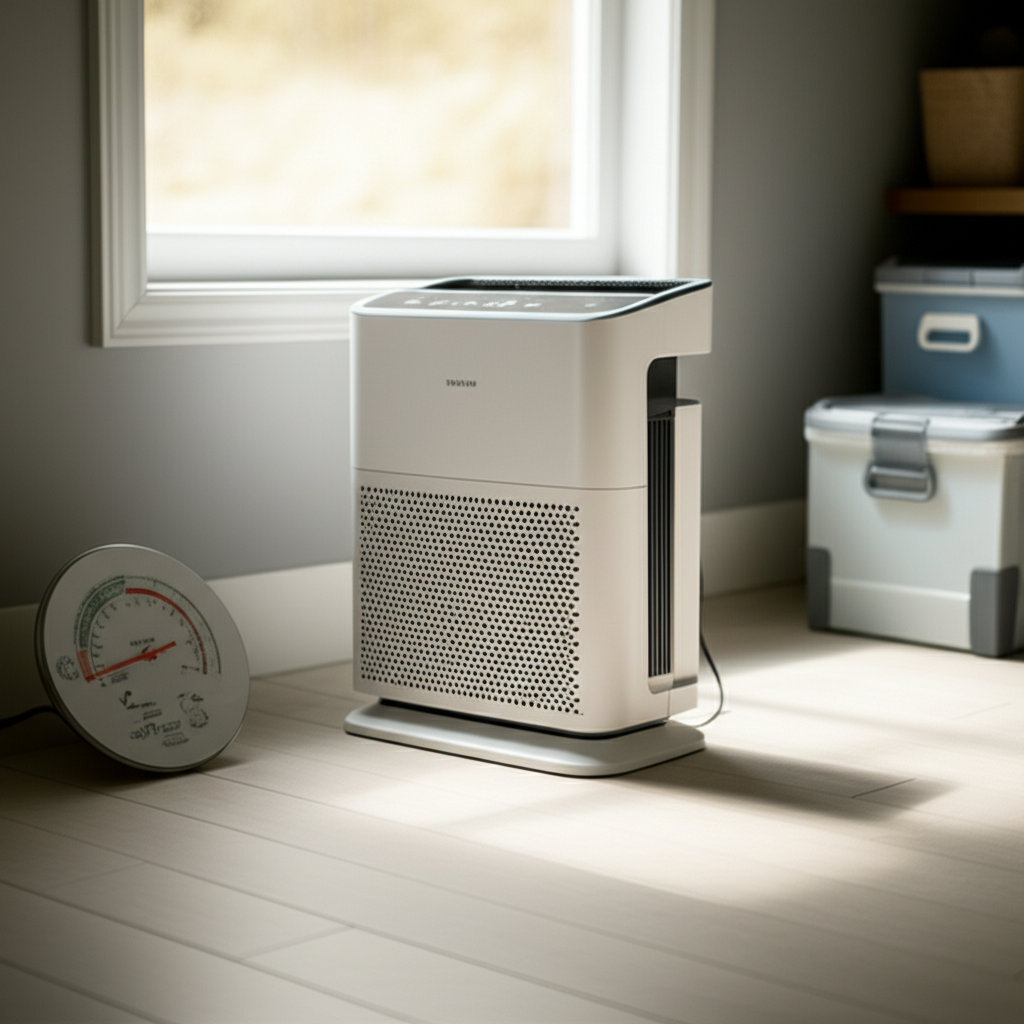
True HEPA (High-Efficiency Particulate Air) filters are designed to capture at least 99.97% of airborne particles as small as 0.3 microns. This includes mold spores, dust mites, pollen, and pet dander. A HEPA filter is non-negotiable when dealing with mold.
Activated Carbon Filters: Tackling Odors and VOCs
Mold often comes with a distinct musty odor, caused by volatile organic compounds (VOCs). Activated carbon filters excel at adsorbing these gases and odors, leaving your basement smelling fresh. Look for purifiers with substantial amounts of activated carbon for the best odor removal.
CADR Rating: Matching Power to Your Space
The Clean Air Delivery Rate (CADR) indicates how quickly an air purifier can clean a room. For basements, which can be larger and more humid, a higher CADR is generally better. Aim for a CADR that is appropriate for your basement’s square footage, ideally with a rating for smoke, dust, and pollen.
Coverage Area: Ensuring Complete Air Circulation
Ensure the air purifier’s specified coverage area matches or exceeds your basement’s dimensions. A unit that is too small will struggle to effectively clean the air, leaving mold spores and odors lingering. It’s often wise to choose a unit rated for a slightly larger space than your basement.
Pre-filters: Extending the Life of Your Main Filters
A washable pre-filter captures larger particles like dust and hair. This protects the more expensive HEPA and carbon filters, extending their lifespan and maintaining the unit’s overall efficiency. Regular cleaning of the pre-filter is crucial for optimal performance.
Top Air Purifier Features for Basement Mold Control
Here’s a breakdown of the essential features to prioritize when selecting the best air purifier for basement mold:
True HEPA Filter: Captures 99.97% of particles down to 0.3 microns, including mold spores.
Activated Carbon Filter: Adsorbs odors and VOCs associated with mold.
High CADR Rating: Ensures efficient air cleaning for larger basement spaces.
Adequate Coverage Area: Matches or exceeds your basement’s square footage.
Washable Pre-filter: Catches larger debris, prolonging filter life.
Quiet Operation: Essential for basements that may be used for living or recreation.
Energy Efficiency: Look for ENERGY STAR certified models to save on electricity costs.
Humidistat (Optional but beneficial): Some advanced models can monitor and help control humidity, a key factor in mold prevention.
Recommended Air Purifiers for Basement Mold
Based on performance, features, and user reviews, here are some of the best air purifiers that can effectively tackle basement mold.
Coway Airmega 200M: A Powerful and Reliable Choice
The Coway Airmega 200M is a popular choice for its robust performance and excellent filtration capabilities. Its multi-stage system, including a HEPA filter and activated carbon, makes it adept at capturing mold spores and neutralizing odors. Its coverage area is suitable for most medium to large basements.
Levoit Core 300S: Compact Power for Smaller Spaces
For smaller basements or specific problem areas, the Levoit Core 300S offers impressive performance in a compact design. It features a three-stage filtration system with a True HEPA filter, effectively trapping mold spores and other airborne allergens. Its smart capabilities add convenience for remote monitoring and control.
Winix 5500-2: A Versatile All-Rounder
The Winix 5500-2 is celebrated for its comprehensive air purification system, including a True HEPA filter, an activated carbon filter, and PlasmaWave technology. It excels at removing mold spores, odors, and other pollutants from the air. Its coverage area is substantial, making it ideal for larger basements.
Beyond Air Purifiers: A Holistic Approach to Mold Prevention
While an air purifier is crucial for managing airborne mold, it’s only one part of the solution. Addressing the root cause of moisture is paramount for long-term success.
Identifying and Eliminating Moisture Sources
The first step in any mold remediation is to find and fix the source of moisture. This could involve repairing leaky pipes, sealing cracks in the foundation, improving ventilation, or using a dehumidifier. Without addressing the moisture, mold will inevitably return.
The Importance of Dehumidification in Basements
Basements are naturally prone to higher humidity levels. A good dehumidifier can significantly reduce moisture in the air, making it harder for mold to grow. Running a dehumidifier in conjunction with your air purifier creates a powerful one-two punch against basement mold.
Proper Ventilation: Allowing Air to Circulate
Ensuring adequate airflow in your basement can prevent stagnant, humid air pockets where mold thrives. Consider installing exhaust fans or simply opening windows periodically if outdoor air quality permits. Good air circulation is a natural deterrent to mold growth.
Cleaning and Remediation Strategies
If mold is already visible, it needs to be cleaned. For small areas, a mixture of water and mild detergent or a specialized mold cleaner can be effective. For larger infestations, professional mold remediation services may be necessary. Always wear protective gear during cleaning.
Frequently Asked Questions About Basement Mold and Air Purifiers
Here are answers to common questions about using air purifiers to combat basement mold.
Can an air purifier completely eliminate mold from my basement?
An air purifier is highly effective at capturing airborne mold spores and improving air quality, but it cannot remove mold that has already grown on surfaces. It’s a crucial part of a mold control strategy that also includes addressing moisture and cleaning existing mold.
How often should I run my air purifier in the basement?
For continuous protection against mold spores and odors, it’s best to run your air purifier in the basement 24/7, especially during humid months or if you suspect ongoing mold issues.
Will an air purifier get rid of the musty smell in my basement?
Yes, air purifiers with activated carbon filters are excellent at adsorbing and neutralizing the VOCs that cause musty odors. Combined with HEPA filtration for spores, this provides a comprehensive solution for basement air quality.
What size air purifier do I need for my basement?
You need an air purifier with a CADR rating and coverage area appropriate for your basement’s square footage. It’s generally recommended to choose a unit rated for a slightly larger room than your basement to ensure efficient air cleaning.
How do I know if my basement has mold?
Signs of mold include visible growth (often black, green, or white patches), a persistent musty odor, water damage, or peeling paint. If you suspect mold, it’s important to investigate and address the moisture source.
Are there specific filter types I should avoid?
Avoid air purifiers that rely solely on ionization or UV light without a HEPA filter. While they might have some effect, they are not as effective as HEPA filtration for capturing physical mold spores.
Can an air purifier help with mold allergies?
Absolutely. By removing mold spores from the air, an air purifier can significantly reduce allergy symptoms for individuals sensitive to mold.
Conclusion: Breathe Easier with the Right Air Purifier
Dealing with basement mold can feel overwhelming, but with the right tools and strategies, you can reclaim your space. Investing in the best air purifier for basement mold, equipped with a True HEPA filter and activated carbon, is a powerful step towards cleaner air and a healthier home. Remember to also address any moisture issues and ensure proper ventilation for a complete and lasting solution. By combining effective air purification with proactive moisture control, you can transform your basement from a mold haven into a comfortable, fresh-smelling area you can enjoy.
