
Air Sanitizer Vs Air Purifier: Essential Guide

Choosing between an air sanitizer and an air purifier can be confusing, but understanding their core functions is key. Air purifiers primarily remove pollutants, while air sanitizers aim to kill or inactivate airborne microorganisms. This guide clarifies the air sanitizer vs air purifier debate to help you breathe easier.
There’s a growing concern about the air we breathe indoors, making devices that promise cleaner air incredibly appealing. You’ve likely seen both “air sanitizers” and “air purifiers” advertised, often with similar claims of improving air quality. But what’s the real difference between an air sanitizer vs air purifier, and which one is right for your home? It’s a common question, and navigating the options can feel overwhelming. Don’t worry, I’m here to break it down for you step-by-step, so you can make an informed decision and finally achieve that fresh, healthy indoor environment you deserve.
Understanding the Core Difference: Air Sanitizer vs Air Purifier
The fundamental distinction lies in their primary objective. Air purifiers are designed to capture and remove particles from the air, whereas air sanitizers focus on neutralizing or eliminating airborne pathogens. Both contribute to healthier air, but they tackle different aspects of air quality. Understanding this core difference is the first step in deciding between an air sanitizer vs air purifier.
What Exactly is an Air Purifier?
An air purifier is a device that uses a filtration system to remove contaminants from the air. These contaminants can include dust, pollen, pet dander, mold spores, and even some volatile organic compounds (VOCs). They work by drawing in air, passing it through one or more filters, and then releasing cleaner air back into the room.
How Air Purifiers Work: The Filtration Process
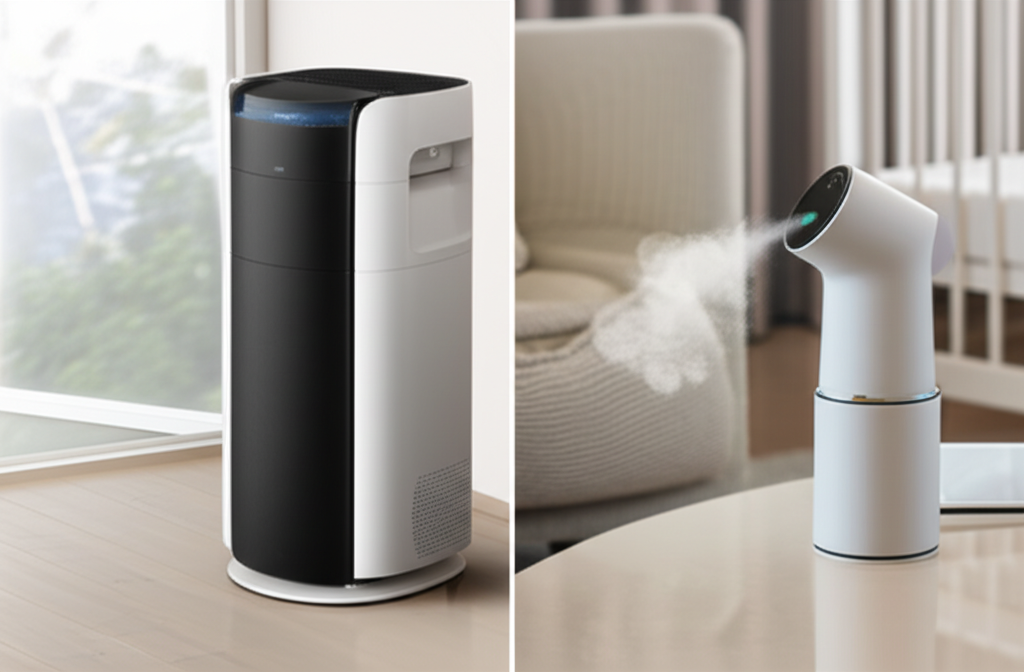
Most air purifiers rely on a multi-stage filtration process. This typically includes a pre-filter for larger particles, a HEPA filter for microscopic contaminants, and often an activated carbon filter to absorb odors and gases. Some advanced models may also incorporate UV-C light or ionization, but their primary mechanism remains filtration.
Common Air Purifier Technologies Explained
HEPA Filters: High-Efficiency Particulate Air (HEPA) filters are the gold standard. They can capture at least 99.97% of airborne particles 0.3 microns in size.
Activated Carbon Filters: These are excellent for removing odors, smoke, and chemical fumes by adsorbing them onto the carbon’s surface.
Pre-filters: These catch larger particles like hair and dust bunnies, extending the life of the more sensitive HEPA filter.
UV-C Light: Some purifiers use ultraviolet germicidal irradiation to kill or inactivate bacteria and viruses as they pass through the unit.
Ionizers: These release negative ions that attach to airborne particles, causing them to clump together and fall out of the air or stick to surfaces.
Benefits of Using an Air Purifier
Air purifiers are fantastic for allergy sufferers and asthmatics, as they significantly reduce common triggers like pollen and dust mites. They also help eliminate unpleasant odors and can improve the overall freshness of your indoor air. Regular use contributes to a cleaner, more comfortable living space.
What Exactly is an Air Sanitizer?
An air sanitizer, on the other hand, is designed to actively kill or inactivate microorganisms such as bacteria, viruses, and mold spores in the air and on surfaces. While some purifiers might have sanitizing capabilities, dedicated air sanitizers prioritize this germicidal action. This is a key differentiator when comparing air sanitizer vs air purifier.
How Air Sanitizers Work: Mechanisms of Action
Air sanitizers employ various technologies to achieve their germicidal effect. These often include UV-C light, ozone generation, or photocatalytic oxidation. The goal is to disrupt the DNA or cell structure of microorganisms, rendering them harmless.
Popular Air Sanitizer Technologies
UV-C Germicidal Irradiation: Similar to some purifiers, but often with a stronger focus on germicidal efficacy. UV-C light damages the genetic material of microbes.
Ozone Generators: These produce ozone (O3) gas, which can effectively neutralize odors and kill microorganisms. However, ozone can be harmful to human health at high concentrations.
Photocatalytic Oxidation (PCO): This process uses UV light and a catalyst (like titanium dioxide) to create oxidizers that break down pollutants and kill microbes.
Potential Benefits of Air Sanitizers
The primary benefit of an air sanitizer is its ability to reduce the presence of airborne pathogens, potentially lowering the risk of illness transmission. They can also be effective at eliminating persistent odors caused by mold or smoke. For those highly concerned about germs, an air sanitizer might seem like the ideal solution.
Air Sanitizer vs Air Purifier: Direct Comparison
Let’s put the air sanitizer vs air purifier head-to-head on key features. While both aim to improve indoor air quality, their methods and primary targets differ significantly. Think of a purifier as a vacuum cleaner for your air, and a sanitizer as a disinfectant.
| Feature | Air Purifier | Air Sanitizer |
| :—————— | :——————————————- | :———————————————– |
| Primary Function| Removes particles (dust, pollen, dander) | Kills or inactivates microorganisms (bacteria, viruses) |
| Mechanism | Filtration (HEPA, Carbon) | UV-C, Ozone, PCO |
| Target Pollutants| Allergens, dust, smoke particles, odors | Bacteria, viruses, mold spores, odors |
| Effectiveness | High for particulate matter | High for microbial reduction |
| Potential Risks | Filter replacement costs, ozone (if present) | Ozone exposure, UV exposure (if not enclosed) |
| Best For | Allergy sufferers, general air cleaning | Reducing germ transmission, odor neutralization |
When to Choose an Air Purifier
If your main concerns are allergies, asthma, or general air cleanliness from everyday dust and dander, an air purifier is likely your best bet. They are excellent for continuous operation in living spaces and bedrooms, providing a steady stream of cleaner air. Devices like the Coway Airmega series or Blueair models are highly regarded for their purification capabilities.
Addressing Allergies and Asthma
For individuals struggling with seasonal allergies or asthma, a good HEPA air purifier can make a world of difference. By trapping microscopic allergens, it prevents them from circulating and triggering respiratory issues. Consistent use can lead to fewer flare-ups and improved breathing comfort.
Eliminating Odors and Smoke
While sanitizers can also tackle odors, air purifiers with substantial activated carbon filters are highly effective at absorbing a wide range of smells, from cooking fumes to pet odors and smoke. This makes them a valuable addition to kitchens or homes where smoking occurs.
When to Choose an Air Sanitizer
Air sanitizers are best suited for situations where the primary concern is reducing the presence of airborne pathogens. This might include homes with frequent visitors, areas prone to illness, or if you are particularly concerned about viruses and bacteria. Always ensure the sanitizer you choose has safety certifications and operates within recommended guidelines, especially concerning ozone production.
Targeting Airborne Germs
If you’re looking to actively combat viruses and bacteria floating in your air, a dedicated air sanitizer technology is what you need. These devices aim to reduce the microbial load, offering an extra layer of protection against airborne illnesses.
Dealing with Persistent Odors from Microbes
Beyond just masking smells, some air sanitizers, particularly those using ozone or PCO, can break down the organic compounds causing odors from mold or mildew. This can be beneficial in damp or poorly ventilated areas. However, it’s crucial to use these with caution and proper ventilation.
The Role of UV-C Light in Air Treatment
UV-C light is a technology found in both air purifiers and air sanitizers, but its application and intensity can vary. When used effectively, UV-C light can damage the DNA of bacteria, viruses, and mold, rendering them unable to reproduce. It’s a powerful germicidal tool, but its effectiveness depends on the duration of exposure and the specific microbe.
UV-C in Air Purifiers vs. Sanitizers
In air purifiers, UV-C is often an additional feature, designed to neutralize microbes that pass through the unit. In dedicated air sanitizers, UV-C is usually the primary mechanism and may be used more intensely. For example, some units may have UV-C lamps that shine directly into the air or onto surfaces.
Ozone Generators: A Powerful but Risky Option
Ozone generators are a type of air sanitizer that produce ozone gas. Ozone is a highly reactive molecule that can break down odors and kill microorganisms. However, ozone is also a lung irritant and can be harmful to people, pets, and plants, especially at higher concentrations.
Safety Concerns with Ozone
The U.S. Food and Drug Administration (FDA) advises that ozone generators are not effective in preventing or treating diseases and can be harmful. It is crucial to use ozone generators only in unoccupied spaces and to thoroughly ventilate the area afterward. Always check for certifications that ensure safe ozone levels if considering such a device.
Can an Air Purifier Also Sanitize?
Some advanced air purifiers incorporate technologies like UV-C light or ionization that can offer a degree of sanitization. However, their primary function remains filtration. While they can help reduce some airborne microbes, they are generally not as potent at germicidal action as a dedicated air sanitizer.
Multi-Function Devices
The market is evolving, with many manufacturers developing multi-function devices that combine HEPA filtration with UV-C or other sanitizing technologies. These offer a comprehensive approach to air quality management, addressing both particulate matter and microbial contaminants.
Air Sanitizer vs Air Purifier: Which is Right for You?
The choice between an air sanitizer vs air purifier hinges on your specific needs and priorities. If allergies, dust, and general air freshness are your main concerns, an air purifier is the way to go. If your priority is reducing the risk of airborne illness by killing germs, an air sanitizer might be more appropriate, provided it’s used safely.
Factors to Consider for Your Home
Primary Concern: Allergies/dust vs. germs/viruses.
Occupants: Presence of children, elderly, or immunocompromised individuals.
Environment: Level of pollution, presence of pets, humidity levels.
Safety: Need for ozone-free operation, child-safe designs.
Budget: Initial cost and ongoing filter replacement expenses.
Integrating Both for Optimal Air Quality
For many, the ideal solution is to use both an air purifier and an air sanitizer. You could run a high-quality HEPA air purifier continuously in your main living areas for general filtration and use a UV-C based air sanitizer in specific areas or during times of increased concern, such as when someone is sick. This layered approach offers comprehensive air quality management.
A Balanced Approach
By combining the particle-removing power of an air purifier with the germ-killing action of an air sanitizer, you create a robust defense against a wide range of indoor air pollutants. This strategy ensures that your home environment is not only clean but also healthier and safer.
Frequently Asked Questions (FAQ)
Can an air purifier kill viruses?
While HEPA filters can capture viruses, they don’t actively kill them. Some purifiers with UV-C light may help inactivate viruses, but their primary function is filtration.
Are air sanitizers safe to use around people?
It depends on the technology. UV-C sanitizers are generally safe if the UV light is contained within the unit. Ozone generators should not* be used when people or pets are present due to health risks.
Do air purifiers remove odors?
Yes, air purifiers equipped with activated carbon filters are very effective at removing a wide range of odors, smoke, and VOCs.
How often should I replace air purifier filters?
This varies by model and usage, but typically HEPA filters need replacement every 6-12 months, and carbon filters may need replacing more frequently. Always check your manufacturer’s recommendations.
Can an air sanitizer make you sick?
Ozone-based air sanitizers can be harmful if used improperly, leading to respiratory irritation. UV-C sanitizers are generally safe if the light source is enclosed and not directly exposed.
Is an air sanitizer better than an air purifier?
It depends on your goal. If you want to remove dust, pollen, and allergens, an air purifier is better. If you want to kill germs and viruses, a dedicated air sanitizer is designed for that purpose.
Conclusion: Making the Right Choice for Your Home’s Air
Navigating the landscape of air treatment devices can be challenging, but understanding the core differences between an air sanitizer vs air purifier empowers you to make the best choice. An air purifier excels at capturing airborne particles like dust, pollen, and dander, making it ideal for allergy relief and general air freshness. In contrast, an air sanitizer focuses on inactivating or killing microorganisms such as bacteria and viruses. For many, a combination of both technologies provides the most comprehensive solution for a healthy indoor environment. Whether you choose one, the other, or both, investing in cleaner air is a significant step towards a healthier home.
