
Can You Use Humidifier/Air Purifier? Genius Solution

Yes, you can absolutely use a humidifier and air purifier in the same room, and doing so can offer significant benefits for your indoor air quality and comfort. This guide explores how to effectively combine these devices for optimal results, addressing common concerns and providing practical advice for a healthier home environment.
Struggling with dry air and pesky allergens? You might be wondering if combining your humidifier and air purifier is a good idea. It’s a common question, especially when aiming for the best possible indoor air quality. Many people worry about potential conflicts or reduced effectiveness. But what if I told you that using them together is not only possible but often the most effective way to create a truly comfortable and healthy living space? Let’s dive into how you can achieve this powerful combination and unlock a new level of air comfort.
The Synergy: Why Combine Humidifier and Air Purifier?
Combining a humidifier and an air purifier in the same room creates a powerful duo for optimizing your indoor environment. While air purifiers tackle airborne pollutants like dust, pollen, and pet dander, humidifiers combat dry air, which can irritate airways and worsen respiratory issues. Together, they address a broader spectrum of air quality concerns, promoting overall well-being.
This combination offers a holistic approach to indoor air management. You’re not just removing contaminants; you’re also ensuring the air is at a comfortable humidity level. This dual action can lead to fewer allergy symptoms, better sleep, and a more pleasant atmosphere in your home.
Understanding Each Device’s Role
An air purifier’s primary function is to remove airborne contaminants. It uses filters, like HEPA filters, to trap particles such as dust, pollen, mold spores, and smoke. This process cleans the air you breathe, reducing allergens and irritants that can affect your health. High-efficiency particulate air (HEPA) filters are crucial for capturing even the smallest particles.
A humidifier, on the other hand, adds moisture to the air. This is particularly beneficial in dry climates or during winter months when heating systems can deplete indoor humidity. Proper humidity levels can alleviate dry skin, chapped lips, and sore throats, and even help reduce static electricity. Maintaining optimal humidity levels is key for comfort and health.
Can You Use a Humidifier and Air Purifier in the Same Room? The Simple Answer
Yes, you can use a humidifier and air purifier in the same room, and it’s often the best strategy for comprehensive air quality management. There’s no inherent conflict between their functions; in fact, they complement each other well. Placing them in the same space allows them to work in tandem to create a healthier and more comfortable environment for you and your family.
Think of it as a tag-team effort for your air. One cleans, and the other conditions. This dual approach addresses a wider range of indoor air issues than either device could manage alone. Many modern homes benefit greatly from this combined approach, especially those with allergies or in regions with naturally dry air.
Optimizing Placement for Maximum Effectiveness
Strategic placement is key when using both devices in the same room. Avoid placing them directly next to each other, as this can interfere with their airflow and performance. Ideally, position them on opposite sides of the room or with some space between them to allow for optimal air circulation.
Consider the general layout of your room and where you spend the most time. Placing them near areas where air tends to stagnate or where you sleep can be particularly beneficial. Ensuring both devices have adequate space around them allows them to draw in air efficiently and distribute treated air effectively throughout the space.
Potential Benefits of Combined Use
Using a humidifier and air purifier together offers a multitude of benefits for your indoor environment. You can experience reduced allergy symptoms, as the purifier removes allergens while the humidifier prevents dry nasal passages that can be more sensitive to them. This dual action creates a more soothing atmosphere for individuals with respiratory conditions.
Furthermore, maintaining optimal humidity levels can contribute to better sleep quality by preventing dry throat and congestion. The air purifier’s removal of pollutants, combined with the humidifier’s moisture, creates a cleaner, more comfortable breathing environment. This can lead to fewer instances of static shock and even help protect wooden furniture from drying out.
Potential Downsides and How to Avoid Them
While combining these devices is generally beneficial, there are potential downsides to be aware of. Over-humidification can lead to mold and mildew growth, which defeats the purpose of air purification. It’s crucial to monitor humidity levels to stay within the recommended range of 30-50%.
Another concern is the potential for the air purifier’s fan to disperse the humidifier’s mist too quickly, potentially reducing its effectiveness or creating damp spots. To avoid this, ensure adequate spacing between the units and consider the output direction of your humidifier. Regularly cleaning both devices is also essential to prevent the buildup of mold or bacteria, which could then be circulated by the purifier.
Choosing the Right Devices for Your Needs
When selecting an air purifier, look for models with True HEPA filters, as these are certified to capture 99.97% of airborne particles. Consider the CADR (Clean Air Delivery Rate) to ensure the unit is appropriately sized for your room. Features like activated carbon filters can also help remove odors and VOCs.
For humidifiers, consider the type: evaporative, ultrasonic, or steam. Evaporative humidifiers are generally self-regulating and less prone to over-humidification. Ultrasonic humidifiers are quieter, while steam humidifiers boil water, which can help kill bacteria but consume more energy. Researching brands like Coway, Levoit, and Honeywell can provide good starting points for quality units.
Maintaining Your Combined System
Regular maintenance is crucial for ensuring both your humidifier and air purifier operate efficiently and safely. For air purifiers, this means cleaning or replacing the filters according to the manufacturer’s recommendations. A clogged filter significantly reduces the unit’s effectiveness and can strain the motor.
Humidifiers require regular cleaning to prevent the growth of mold and bacteria in the water tank and internal components. Use distilled or demineralized water to minimize mineral buildup (white dust). Many manufacturers provide specific cleaning instructions, often involving vinegar or diluted bleach solutions, which should be followed diligently.
Table: Humidifier vs. Air Purifier – Key Differences
| Feature | Air Purifier | Humidifier |
|---|---|---|
| Primary Function | Removes airborne pollutants (dust, pollen, smoke) | Adds moisture to the air |
| Mechanism | Filters (HEPA, carbon) | Evaporation, ultrasonic vibration, or steam |
| Benefits | Reduces allergens, improves air purity, alleviates asthma symptoms | Relieves dry skin/throat, reduces static, helps with congestion |
| Potential Risks | Filter replacement cost, ozone production (in some models) | Over-humidification, mold/bacteria growth if not cleaned |
Understanding these core differences highlights how each device addresses distinct aspects of indoor air quality, making their combined use a powerful strategy for a healthier home.
Frequently Asked Questions (FAQ)
Can I run my humidifier and air purifier 24/7?
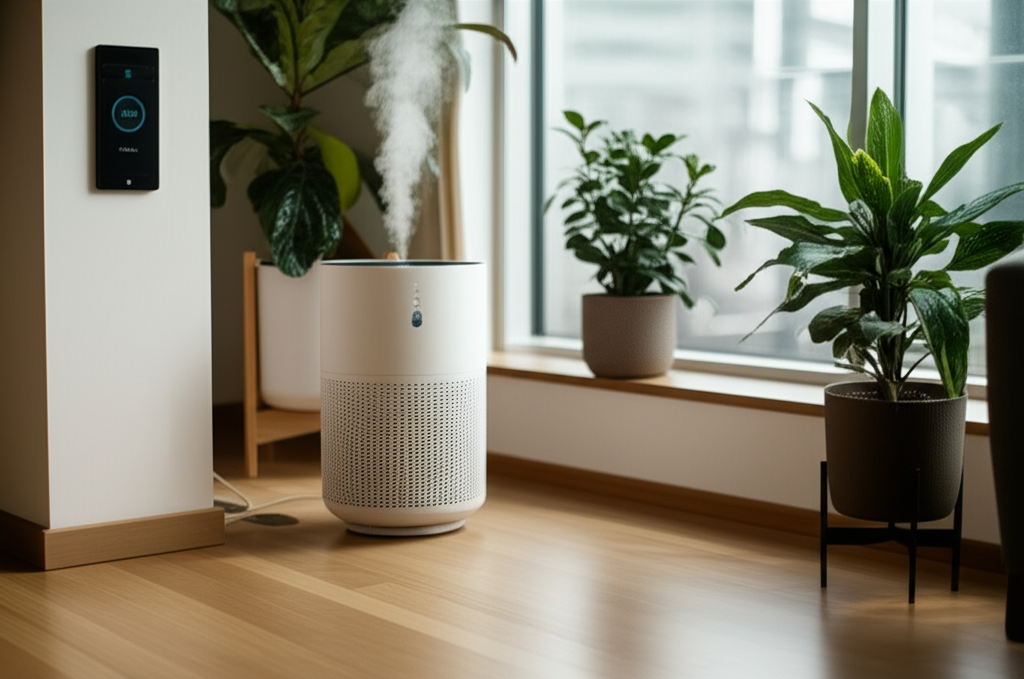
Yes, you can generally run both devices continuously. However, monitor humidity levels with a hygrometer to prevent over-humidification. Ensure your air purifier is appropriately sized for the room to avoid overworking the motor.
Will a humidifier make my air purifier less effective?
Not necessarily, if placed correctly. Avoid placing them too close together to ensure proper airflow for both. The purifier will continue to filter the air, even with added moisture, as long as it has unobstructed air intake.
What is the ideal humidity level for a room with both devices?
The ideal indoor humidity level is typically between 30% and 50%. Using a hygrometer can help you accurately monitor and maintain this range, ensuring you benefit from both devices without risking mold growth.
Should I use distilled water in my humidifier when using an air purifier?
Using distilled or demineralized water in your humidifier is highly recommended, especially if you have an ultrasonic model. This prevents the dispersal of minerals into the air, which can contribute to white dust and potentially affect the sensitive components of some air purifiers.
How do I know if my room is too humid?
Signs of a room being too humid include condensation on windows, a musty smell, or a feeling of clamminess. A hygrometer is the most accurate way to measure humidity levels. If levels consistently exceed 50-60%, reduce the humidifier’s output or run it less frequently.
Can I put essential oils in my humidifier with an air purifier?
While some humidifiers are designed for essential oils, it’s generally not recommended to use them when you also have an air purifier running. Essential oils can degrade the plastic components of some humidifiers and air purifiers, and the purifier’s filter might trap the oil molecules, reducing both its effectiveness and the scent dispersion.
Conclusion: A Healthier Home Through Smart Air Management
In conclusion, the question of “Can you use a humidifier and air purifier in the same room?” is met with a resounding yes, and it’s a smart strategy for enhancing your home’s air quality. By understanding their individual roles and how they complement each other, you can create an indoor environment that is both clean and comfortable. Proper placement, regular maintenance, and monitoring humidity levels are key to maximizing the benefits and avoiding potential pitfalls.
Embracing this dual approach allows you to combat dry air, reduce allergens, and breathe easier, contributing significantly to your overall health and well-being. Invest in quality devices and follow best practices, and you’ll soon discover the genius solution for a healthier, happier home environment.
