
What Causes a Vacuum to Make Loud Noises?

Quick Answer
A vacuum usually starts making loud or unusual noises because airflow is blocked, the filter is dirty, the brush roll is tangled, debris is trapped inside, or a belt or moving part is wearing out. Start with simple cleaning and airflow checks, and follow general EPA household air-quality guidance when dealing with dust and allergens.
Common causes of loud vacuum noise
- Blocked airflow: A clogged hose, wand, floorhead, bag, or bin can change the sound dramatically.
- Dirty filter: Heavy dust buildup can restrict airflow and make the vacuum sound strained.
- Brush-roll obstruction: Hair, string, carpet fibers, or hard debris may create rattling or grinding.
- Loose components: A poorly seated bin, attachment, wheel, or cover can vibrate loudly.
- Worn moving parts: Belts, bearings, brush assemblies, or motor components can develop squeals or grinding sounds.
Stop using the vacuum if:
- You notice smoke, sparks, a burning electrical smell, extreme overheating, or harsh metal-on-metal grinding.
I’ve used enough vacuums to know that a sudden change in sound can make a perfectly ordinary cleaning session feel expensive. A machine that normally hums but suddenly whistles, rattles, squeals, or roars deserves a closer look.
The encouraging part is that many noisy-vacuum problems start with simple maintenance issues. In this 2026 guide, I’ll show you what different sounds can mean, what you can safely check, and when it’s smarter to stop using the machine.
In This Guide
Why Does a Vacuum Suddenly Get Louder?
A vacuum usually gets louder because something has changed in its airflow, vibration, or moving parts. The sudden change matters more than the vacuum’s normal operating volume.
A vacuum cleaner naturally produces sound from its motor, rushing air, floorhead, wheels, and powered brush. An unusual noise appears when one of those systems stops working as it normally does.
Vacuum noise is the combined sound produced by airflow, the motor, rotating components, and vibration through the vacuum’s housing.
Restricted airflow can change the sound
The first thing I check is airflow. A vacuum needs an open route from the intake to the exhaust.
Anything narrowing that route can change the pitch or intensity of the machine.
- Full dust bin: Compacted debris may restrict normal airflow.
- Full vacuum bag: A heavily filled bag can make airflow more difficult.
- Blocked hose: Socks, paper, pet hair, or larger debris may become lodged inside.
- Dirty filter: Dust buildup can restrict the air passing through it.
- Blocked floorhead: Hair and compacted dirt often collect near the brush roll.
I’ve had a stick vacuum suddenly develop an aggressive, high-pitched sound after picking up a small piece of packaging. The motor was fine; the object had lodged at a narrow bend in the airway.
Vibration can make a small problem sound serious
A loose plastic part can create a surprising amount of noise. Bins, covers, wheels, hoses, and attachments can all vibrate.
Turn the vacuum off before checking them. A component that isn’t fully seated may only need to be reattached correctly.
Don’t force a latch that doesn’t close normally. A damaged tab or distorted cover may need replacement.
What Do Different Vacuum Noises Mean?
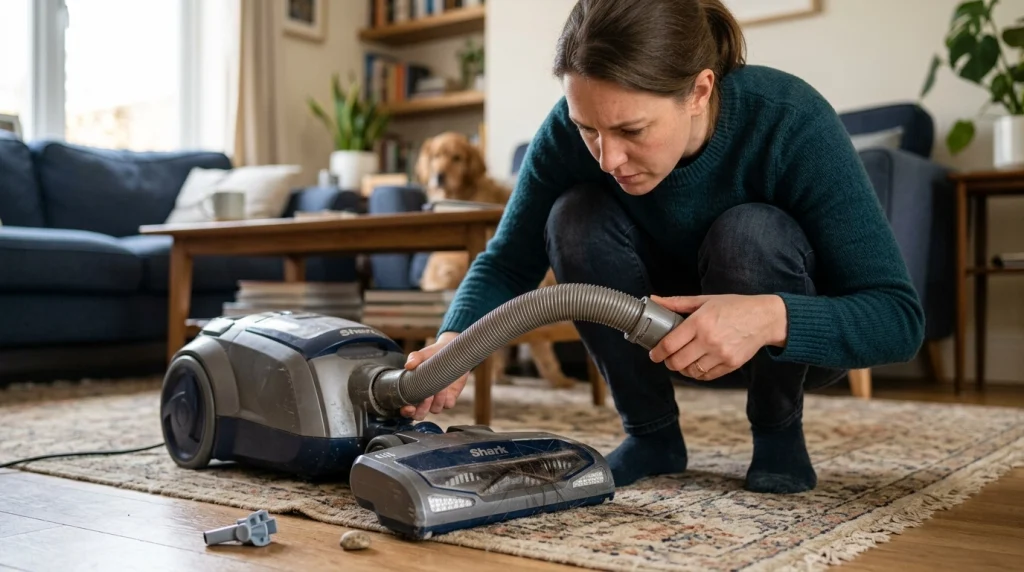
The type of sound often gives you the best clue. A whistle points you in a different direction than a grinding or rattling noise.
| Vacuum Sound | Possible Cause | First Safe Check | Urgency |
|---|---|---|---|
| Whistling | Partial clog, air leak, loose connection | Inspect hose, wand, seals, and filter seating | Usually low |
| Rattling | Hard debris or loose component | Inspect floorhead, bin, hose, and attachments | Low to moderate |
| High-pitched squeal | Belt, brush mechanism, or bearing problem | Check accessible brush and belt areas | Moderate |
| Pulsing or surging | Restricted airflow or protective airflow response | Empty bin and inspect filters and airways | Moderate |
| Grinding | Jammed or damaged rotating component | Switch off immediately and inspect accessible parts | High |
| Sudden roar | Loose hose, bin, filter cover, or air-path connection | Reseat removable components | Moderate |
Why does my vacuum whistle?
A whistle often means air is being pulled through a small opening. That opening may come from a partial clog, damaged seal, or poorly seated attachment.
Inspect the hose for cracks and confirm that filters, bins, and covers sit correctly.
Why is my vacuum rattling?
Rattling commonly comes from solid debris or a loose part. Small stones, coins, clips, and hard crumbs can make a dramatic noise inside a floorhead.
Disconnect power before removing anything. Don’t reach into a powered brush area.
Why is my vacuum making a grinding noise?
Grinding deserves more caution because rotating parts may be rubbing, jammed, or damaged. Continuing to run the vacuum could worsen the problem.
Turn it off and inspect only the areas your owner’s manual allows you to access.
How Do You Diagnose a Noisy Vacuum Safely?
Start with the easiest and least invasive checks. You usually don’t need to open the motor housing to identify a common household vacuum problem.
- Disconnect the power. Unplug a corded vacuum. Remove the battery from a cordless model if the manufacturer allows it.
- Empty the bin or check the bag. Don’t wait until debris is compressed into the container.
- Inspect the filters. Follow the manufacturer’s cleaning or replacement instructions.
- Check the hose and wand. Look through removable sections for visible obstructions.
- Inspect the floorhead. Remove wrapped hair, thread, and fibers according to the manual.
- Check removable attachments. Reseat the bin, hose, tools, covers, and wand.
- Test briefly. If the obvious problem is gone, reconnect power and listen for the original sound.
Don’t wash every vacuum filter
A dirty filter doesn’t automatically mean you should rinse it. Some filters are washable, while others must remain dry or be replaced.
Check the manual first. Installing a damp filter where it isn’t permitted may damage the machine.
Keep household dust under control
Vacuuming helps remove dirt and settled debris, but the activity can also disturb fine dust. The U.S. Environmental Protection Agency provides broader guidance on household dust and indoor air quality.
If allergies or indoor dust are concerns, maintain the vacuum’s filters and seals carefully. A poorly seated filter or damaged dust path can allow debris to escape.
The Centers for Disease Control and Prevention also recommends regular cleaning of household surfaces and vacuuming suitable soft surfaces as part of routine home cleaning.
What Are the Most Common Causes of Loud Vacuum Noise?
Most unusual vacuum sounds trace back to a relatively short list of problems. I check these areas before assuming an expensive motor failure.
1. Clogged hose or airway
A partial blockage can leave enough room for air to move while creating a sharp whistle or strained sound. Narrow hose bends are common trouble spots.
Remove the hose only as your manual permits. Never push sharp tools through flexible vacuum hoses.
2. Dirty or overloaded filter
Filters collect fine debris and eventually need maintenance. A heavily loaded filter can alter airflow and the sound of the vacuum.
HEPA stands for high-efficiency particulate air. Whether your vacuum uses a HEPA filter, foam filter, cartridge, or another design, follow its specific maintenance schedule.
3. Tangled brush roll
Hair, thread, and carpet fibers can wrap tightly around a powered brush. The added resistance may produce clicking, squealing, or rough vibration.
Cut away tangles only after disconnecting power. Keep fingers clear of blades while removing wrapped material.
4. Hard debris in the floorhead
Small stones, toy pieces, screws, or other objects can bounce around inside the cleaning head. That often creates a sharp rattle.
Check the intake and brush chamber before running the vacuum again.
5. Loose or cracked parts
A loose wheel, cover, attachment, or dust bin can amplify normal vibration. Cracked plastic may also buzz against neighboring components.
Look for visible damage rather than overtightening screws or forcing clips.
6. Worn belt or brush mechanism
Some upright and canister vacuums use belts to drive the brush roll. Wear, slipping, or misalignment can create squealing or irregular brush movement.
Replace user-serviceable belts only with the correct part and procedure for your vacuum model.
7. Bearing or motor-related problems
Internal wear can cause grinding, screeching, or a new mechanical hum. These problems usually require more expertise than routine filter or brush maintenance.
Expert Alert: If the noise appears to come from the motor housing, wiring, or another sealed electrical area, stop using the vacuum and contact a qualified appliance repair professional.
When Should You Stop Using a Noisy Vacuum?
Stop immediately when the noise comes with signs of electrical trouble, severe overheating, or mechanical damage. Don’t keep running the vacuum simply to see whether the sound disappears.
- Smoke: Disconnect power and do not restart the vacuum.
- Sparks: Stop using the machine and arrange professional inspection.
- Burning electrical smell: Switch the vacuum off immediately.
- Severe overheating: Let the machine cool and investigate the cause before reuse.
- Harsh grinding: A rotating component may be jammed or damaged.
- Repeated shutdowns: Persistent protective shutdowns need diagnosis rather than repeated restarts.
A hot smell isn’t always electrical. A struggling belt or brush assembly can sometimes produce an odor too.
Either way, stop using the vacuum until you’ve found the cause.
Don’t open sealed electrical housings unless the manufacturer specifically describes the procedure as user maintenance. Electrical repairs belong with a qualified technician.
For broader consumer product comparisons and appliance testing information, Consumer Reports can also be a useful independent resource.
Frequently Asked Questions
Can a clogged vacuum hose make the motor sound louder?
Yes. A partial or complete airflow restriction can change the vacuum’s pitch and make it sound strained. Turn the vacuum off, disconnect power, and inspect accessible hoses, wands, filters, and intake passages before assuming the motor itself has failed.
Why does my vacuum make a loud noise when I use the brush?
The brush roll may have wrapped hair, thread, carpet fibers, or trapped debris around it. A worn belt, damaged brush assembly, or bearing problem can also produce noise. Disconnect power before inspecting the brush area.
Why does my vacuum make a high-pitched noise?
A high-pitched whistle often points to restricted airflow or a small air leak. A squeal may instead come from a belt, brush mechanism, or another moving part. The exact sound and where it originates help narrow the cause.
Can a dirty filter make a vacuum noisy?
It can. A filter loaded with dust may restrict normal airflow and change the vacuum’s sound. Clean or replace the filter according to the owner’s manual, since not every vacuum filter is designed to be washed.
Is it safe to keep using a vacuum that is grinding?
It’s safer to stop. Grinding can indicate trapped debris, a jammed brush, damaged bearings, or another mechanical problem. Continuing to operate the vacuum may cause additional damage or create a safety issue.
Why is my vacuum loud even after I cleaned the filter?
The filter may not be the source. Check the hose, wand, floorhead, brush roll, bin, seals, wheels, and attachments. If the unusual sound persists, an internal mechanical or motor-related problem may need professional diagnosis.
How can I prevent my vacuum from becoming unusually noisy?
Empty the bin or replace the bag regularly, maintain filters on schedule, remove brush-roll tangles, inspect hoses for clogs, and avoid picking up objects the vacuum isn’t designed to handle. Regular maintenance helps airflow and moving parts work normally.
Final Takeaway
When a vacuum suddenly makes loud noises, start with airflow, filters, the brush roll, trapped debris, and loose attachments. Those everyday problems can sound much worse than they are.
Pay attention to the type of sound. Whistling usually sends me toward airflow checks, while rattling points toward debris or loose parts.
Grinding, smoke, sparks, burning electrical odors, and severe overheating are different. Switch the vacuum off and have a qualified technician inspect anything beyond normal user maintenance.
Keeping the vacuum clean matters for more than noise. Routine cleaning and proper filtration also help keep household dust under control as part of a broader home-hygiene routine.
