
Is Air Purifier Or Humidifier Better For Allergies: Essential Guide

For allergy sufferers, understanding whether an air purifier or humidifier is better involves looking at what causes their symptoms. Air purifiers tackle airborne irritants like pollen and dust, while humidifiers address dry air. The best choice often depends on the specific allergy triggers and environmental conditions.
Air Purifier vs. Humidifier for Allergies: Which One Helps You Breathe Easier?
Dealing with allergies can be a constant battle. You might wake up stuffy or sneeze all day. You’ve probably heard about air purifiers and humidifiers as potential helpers. But which one is truly better for your allergies? It’s a common question, and the answer isn’t always straightforward. I’m here to guide you through this. We’ll explore how each device works and when it’s the right choice for you. Let’s find out what will bring you the most relief.
Understanding Your Allergy Triggers
Before we decide between an air purifier and a humidifier, it’s crucial to know what causes your allergies. Allergies happen when your body overreacts to things in the environment. These triggers can be tiny particles floating in the air. Common culprits include dust mites, pet dander, pollen from plants, and mold spores. Sometimes, dry air itself can irritate your nasal passages, making allergies feel worse. Knowing your specific triggers helps us pick the right tool for the job.
What Does an Air Purifier Do?
An air purifier is designed to clean the air in a room. It works by drawing in air and passing it through a filter. This filter traps small particles like dust, pollen, pet dander, and mold spores. High-efficiency particulate air (HEPA) filters are the gold standard. They can capture at least 99.97% of particles that are 0.3 microns in size. By removing these irritants, air purifiers can significantly reduce your exposure to allergens. This often leads to fewer allergy symptoms.
How Does a Humidifier Work?
A humidifier adds moisture to the air. It does this by releasing water vapor or steam. This can be very helpful if the air in your home is too dry. Dry air can dry out your nasal passages and throat. This irritation can make your allergy symptoms feel worse. It can also make it harder for your body to clear out allergens. By increasing humidity, a humidifier can soothe your airways and make breathing more comfortable.
When is an Air Purifier the Better Choice for Allergies?
An air purifier is usually the best option when your allergies are triggered by airborne particles. Think about pollen that blows in from outside, dust that settles on surfaces, or dander from your pets. These are all things an air purifier can effectively capture. If you notice your symptoms worsen when you’re around pets or during high pollen seasons, an air purifier is likely your best bet. It directly removes the things making you sneeze and itch. According to the American College of Allergy, Asthma & Immunology, air purifiers with HEPA filters can help reduce indoor allergen levels.
When is a Humidifier the Better Choice for Allergies?
A humidifier is more beneficial when your allergies are aggravated by dry air. This is often the case during winter months when heating systems dry out the air. It can also be an issue in naturally arid climates. If you experience symptoms like a dry, scratchy throat, a stuffy nose that feels worse in dry environments, or dry skin along with your allergies, a humidifier can provide relief. It helps keep your mucous membranes moist, making them less sensitive to irritants. The optimal indoor humidity level is generally between 30% and 50%.
Can You Use Both an Air Purifier and a Humidifier?
Yes, you can absolutely use both an air purifier and a humidifier together. In fact, for some people, this combination offers the most comprehensive relief. An air purifier tackles the airborne allergens themselves, while a humidifier combats the discomfort caused by dry air. This dual approach can be especially effective if you suffer from a variety of allergy symptoms. It addresses both the root cause (allergens) and the aggravating factor (dryness).
Key Differences: Air Purifier vs. Humidifier
Here’s a simple way to see the main differences:
| Feature | Air Purifier | Humidifier |
| :—————- | :—————————————— | :——————————————- |
| Primary Function | Removes airborne particles from the air. | Adds moisture to the air. |
| Best For | Allergens like dust, pollen, dander, mold. | Dry air, irritated airways, dry skin. |
| Mechanism | Uses filters to trap pollutants. | Releases water vapor or steam. |
| Effect on Air | Cleans the air. | Increases humidity. |
An air purifier actively cleans your air, while a humidifier adjusts its moisture level. Both can help with allergy symptoms, but they do so in different ways. Choosing the right one depends on what bothers you most.
Choosing the Right Air Purifier for Allergies
When selecting an air purifier for allergy relief, look for a unit with a True HEPA filter. This is the most important feature for capturing tiny allergen particles. Consider the size of the room you need to cover. Air purifiers are rated by Clean Air Delivery Rate (CADR), which indicates how quickly they clean the air. A higher CADR is better for larger spaces. Some purifiers also have activated carbon filters, which can help remove odors and volatile organic compounds (VOCs).
Choosing the Right Humidifier for Allergies
For allergies, it’s best to choose a humidifier that allows you to control the humidity level. Look for models with a built-in hygrometer or one that works with a separate hygrometer to maintain the ideal 30-50% humidity range. Cool-mist humidifiers are generally recommended over warm-mist ones for safety, especially if you have children or pets. Regular cleaning is crucial for humidifiers. Mold and bacteria can grow in the water tank, which can then be dispersed into the air, worsening allergies. This is why consistent maintenance is key.
Maintenance and Cleaning: A Crucial Step
Both air purifiers and humidifiers require regular maintenance to work effectively and safely. For air purifiers, this means changing the filters according to the manufacturer’s recommendations. Clogged filters can’t clean the air properly. For humidifiers, daily rinsing of the tank and weekly disinfection are essential. This prevents the growth of mold and bacteria. If not cleaned, a humidifier can actually make your allergies worse by releasing these contaminants into the air. Always follow the specific cleaning instructions for your model.
When to Seek Professional Advice
If you’re unsure about what’s causing your allergies or which device would be best for you, it’s always a good idea to consult a doctor or an allergist. They can perform tests to identify your specific triggers. They can also provide personalized recommendations for managing your allergies. This might include environmental controls like air purifiers and humidifiers, as well as medication or other treatments. Professional guidance ensures you’re taking the most effective steps for your health.
Frequently Asked Questions
What is the main difference between an air purifier and a humidifier?
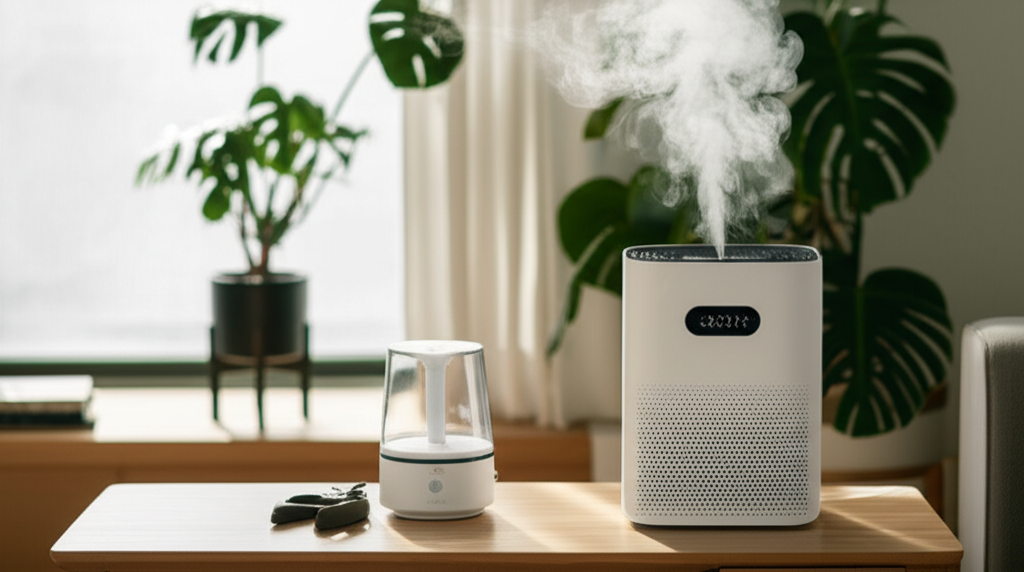
An air purifier cleans the air by trapping allergens and pollutants. A humidifier adds moisture to the air to combat dryness.
Can a humidifier make allergies worse?
Yes, if it’s not cleaned regularly. Dirty humidifiers can release mold and bacteria into the air, which can trigger allergies.
Which type of air purifier is best for allergies?
Air purifiers with a True HEPA filter are best. They capture at least 99.97% of tiny airborne particles.
What humidity level is good for allergies?
An indoor humidity level between 30% and 50% is generally recommended for allergy sufferers.
How often should I change air purifier filters?
This depends on the model and your air quality, but typically every 6 to 12 months. Check your user manual.
Do air purifiers help with pet dander allergies?
Yes, air purifiers with HEPA filters are very effective at removing pet dander from the air.
Should I use an air purifier or humidifier if I have a dry cough from allergies?
A humidifier might help soothe your throat and reduce coughing caused by dry air. If dust or dander is the cause, an air purifier would be more effective.
Final Verdict: Air Purifier or Humidifier for Your Allergies?
The question of is air purifier or humidifier better for allergies doesn’t have a single answer for everyone. If airborne irritants like pollen, dust, and pet dander are your main problem, an air purifier is your primary solution. It directly removes these triggers from your living space. However, if dry air irritates your nasal passages and makes your allergies feel worse, a humidifier can offer significant relief by adding much-needed moisture. For many, the ideal scenario is using both an air purifier and a humidifier to create the cleanest, most comfortable indoor environment possible. Consider your specific symptoms and environment to make the best choice for your health and comfort.
