
How to Vacuum a Couch: A Complete Step-by-Step Guide

Quick Answer
To vacuum a couch, check its care label, remove loose items, and test your attachment on a hidden area. Vacuum removable cushions first, clean beneath them, and finish with the frame, seams, sides, back, and floor below. A machine with adjustable suction, such as a suitable household vacuum cleaner, makes the work easier.
Quick couch-vacuuming steps
- Check the label: Confirm the manufacturer’s cleaning instructions before using any tool or product.
- Clear the couch: Remove blankets, toys, coins, and other loose objects.
- Choose an attachment: Use an upholstery tool for broad areas and a crevice tool for seams.
- Vacuum the cushions: Clean every side with slow, overlapping passes.
- Reach hidden areas: Vacuum beneath the cushions and along the inner frame.
- Finish outside: Clean the arms, back, lower panels, and nearby floor.
Important precaution
- Reduce suction on delicate fabric, and stop if the material stretches, frays, or pulls into the nozzle.
I’ve cleaned couches that looked fine until I removed the first cushion. Dust, crumbs, hair, and grit tend to collect where normal room cleaning cannot reach.
This home-hygiene guide explains how to vacuum a couch without harming its fabric. It also covers pet hair, odors, delicate upholstery, tools, and a practical cleaning schedule.
In This Guide
- Why Should You Vacuum Your Couch?
- What Tools Do You Need to Vacuum a Couch?
- How Do You Vacuum a Couch Step by Step?
- How Should You Vacuum Different Couch Materials?
- How Do You Handle Pet Hair, Odors, and Stains?
- How Often Should You Vacuum a Couch?
- Frequently Asked Questions
- Make Couch Vacuuming Part of Your Routine
Why Should You Vacuum Your Couch?
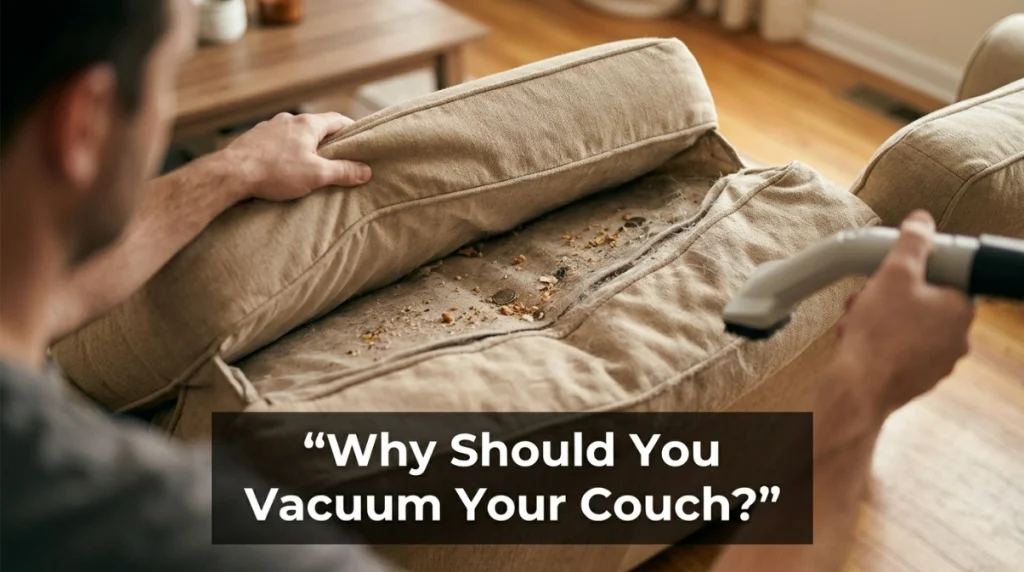
Vacuuming removes loose debris before it becomes embedded in the upholstery. It also reaches seams and gaps that a cloth cannot clean effectively.
Couch vacuuming is the dry removal of dust, crumbs, hair, and other loose particles from upholstery and the furniture frame. It does not replace stain treatment or professional extraction.
It removes abrasive grit
Fine grit settles into fabric and rubs against its fibers whenever someone sits down. Regular removal may help limit this unnecessary wear.
- Food crumbs can collect under cushions and attract pests.
- Pet hair can become woven into textured upholstery.
- Dust settles on the seat, arms, back, and hidden frame.
- Outdoor grit arrives on clothing, bags, and pets.
- Loose fibers gather around seams and cushion edges.
It supports a cleaner indoor environment
A couch can hold dust and particles released by normal household activity. Vacuuming captures this material instead of spreading it with vigorous brushing.
The EPA’s indoor air quality guidance identifies source control, ventilation, and filtration as ways to reduce exposure to indoor pollutants. Couch cleaning is one small part of broader source control.
Vacuuming cannot diagnose or treat allergies or asthma. Anyone with breathing symptoms should follow medical advice rather than relying on cleaning alone.
Section Takeaway: Regular vacuuming removes loose debris from visible and hidden upholstery areas. It complements wider household dust control but does not replace medical care or deep cleaning.
What Tools Do You Need to Vacuum a Couch?
You need a vacuum with suitable attachments and controllable suction. The best tool depends on the couch material, construction, and type of debris.
Useful vacuum attachments
| Tool | Best use | Main precaution |
|---|---|---|
| Upholstery tool | Seats, cushions, arms, and broad fabric panels | Keep the tool clean so it does not transfer dirt |
| Crevice tool | Seams, piping, folds, and frame gaps | Avoid scraping the fabric with a hard edge |
| Soft dusting brush | Delicate surfaces and tufted details | Test first because stiff bristles may snag fibers |
| Mini motorized tool | Stubborn pet hair on durable upholstery | Do not use it on loose weaves or fragile fabric |
| Flexible hose | Moving around cushions without lifting the vacuum | Keep the vacuum body from striking furniture |
Which vacuum type works best?
A canister vacuum often provides convenient hose control. An upright vacuum works if it includes a hose and appropriate attachments.
A handheld or stick vacuum is useful for quick cleanups. Check its bin before starting because a small bin can fill quickly with pet hair.
Robot vacuums cannot clean upholstery, although they can collect debris beneath accessible furniture. This guide to robot vacuums versus regular vacuums explains the broader differences.
Prepare the machine before use
- Empty the dust bin or replace a full bag.
- Check the hose for clogs.
- Remove tangled hair from the attachment.
- Make sure the filter is seated correctly.
- Start with low suction when the machine allows adjustment.
A high-efficiency particulate air, or HEPA, filter is designed to capture fine particles within the vacuum’s airflow. Overall containment also depends on the machine’s construction and seals.
How Do You Vacuum a Couch Step by Step?
Work from the cushions to the inner frame, then clean the couch exterior. Slow, overlapping passes collect more debris than fast, random strokes.
1. Read the couch care label
Look beneath a cushion or under the frame for the manufacturer’s label. Follow its instructions, especially before adding moisture or cleaning products.
Common upholstery codes include W, S, W/S, and X. These codes mainly guide wet or solvent cleaning, so confirm their meaning with the couch manufacturer.
2. Remove loose items and inspect the couch
Take away blankets, covers, toys, and removable cushions. Check each gap for coins, jewelry, pins, or other objects that could enter the hose.
- Look for loose buttons or decorative studs.
- Check seams for existing tears.
- Identify frayed or weak fabric.
- Inspect beneath cushions for dampness or mold-like growth.
- Photograph existing damage if the couch belongs to a rental.
3. Test the attachment and suction
Test your chosen tool on a hidden rear or lower section. Watch for pulling, distortion, color transfer, or snagged threads.
I once started with full suction on a loose cushion cover. The nozzle lifted the fabric, so I reduced suction and used one hand to hold the cover flat.
4. Vacuum every side of the cushions
Place each removable cushion on a clean surface. Vacuum the top, bottom, sides, seams, piping, and zipper area.
- Start at one edge of the cushion.
- Move the upholstery tool in a straight line.
- Overlap the next pass slightly.
- Turn the cushion and repeat.
- Use the crevice tool around piping and seams.
Do not force the nozzle against foam or loose filling. Firm contact is enough when the airflow remains steady.
5. Clean beneath the cushions
Vacuum the platform, corners, and narrow gaps inside the couch. A crevice tool usually works best in these areas.
Move slowly near metal hardware or sleeper-sofa mechanisms. Keep fingers, hoses, and power cords away from hinges.
6. Vacuum the arms, back, and lower panels
Use the upholstery tool on broad surfaces. Switch to a soft brush around tufting, buttons, folds, and decorative trim.
If possible, move the couch away from the wall. Clean its rear panel, exposed frame, legs, and the floor beneath it.
7. Reassemble and inspect
Return each cushion only after checking the frame for missed debris. Rotate reversible cushions to support more even wear.
Empty the vacuum outdoors or over a trash container when practical. Wash or wipe reusable attachments according to the vacuum manufacturer’s directions.
Section Takeaway: Use low suction first, clean every cushion surface, and finish inside the frame. A careful sequence prevents hidden areas from being forgotten.
How Should You Vacuum Different Couch Materials?
Adjust the tool and suction to match the upholstery. A method that works on durable microfiber may damage velvet, leather, or a loose woven fabric.
Fabric and microfiber couches
Use a clean upholstery tool with low or medium suction. Follow the fabric’s nap or visible direction when that creates a smoother finish.
Microfiber can show lines after vacuuming. Make consistent passes instead of rubbing one spot from several directions.
Velvet couches
Velvet needs gentle handling because pressure can alter its pile. Use low suction and a soft attachment approved by the manufacturer.
- Test an unseen section first.
- Work in the direction of the pile.
- Avoid aggressive rotating brushes.
- Do not press the nozzle into the surface.
- Stop if the finish changes or fibers pull.
Leather and faux-leather couches
Leather has no woven pile, but dust collects in seams and folds. Use a soft brush or low-suction crevice tool without scraping the finish.
Vacuuming does not condition leather. Follow the manufacturer’s care instructions before using any leather cleaner or conditioner.
Loose weaves and delicate upholstery
Linen blends, boucle, vintage fabrics, and loose weaves can snag. Cover the nozzle with clean mesh only if the vacuum maker permits unrestricted airflow.
Stop if threads lift or the fabric enters the nozzle. A professional upholstery cleaner is safer when material is valuable, antique, or already damaged.
Expert Alert: Consult a qualified upholstery professional when fabric is antique, badly torn, water-damaged, or marked for specialist cleaning.
How Do You Handle Pet Hair, Odors, and Stains?
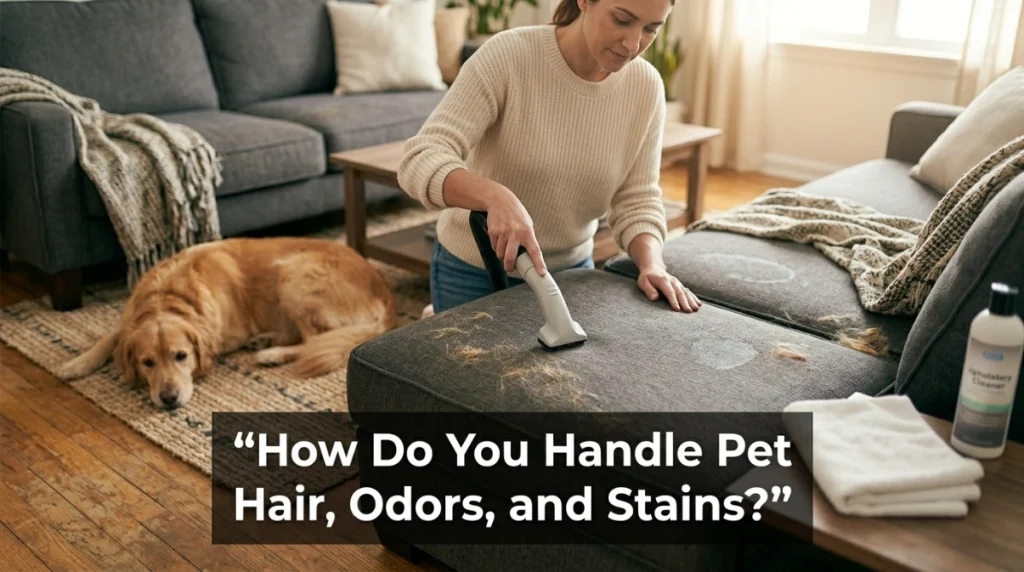
Vacuum loose material before treating odors or stains. Adding liquid over crumbs, dust, or hair can make cleanup harder.
Removing stubborn pet hair
Make several slow passes in different directions on durable upholstery. Empty the bin when airflow drops instead of continuing with weak suction.
- Loosen hair gently with a clean rubber upholstery tool.
- Gather clumps before using the vacuum.
- Use a mini motorized tool only on compatible fabric.
- Clean seams with a crevice attachment.
- Finish with the standard upholstery nozzle.
Homes with shedding animals may benefit from a machine designed for fur. Compare practical features in this pet-hair vacuum cleaner guide.
What if the couch smells?
Vacuuming may remove odor-carrying crumbs and hair, but it cannot fix every odor source. Persistent smells may come from spills, urine, smoke, moisture, or deteriorating cushion material.
Do not automatically sprinkle baking soda or fragranced powder onto upholstery. Fine powder can remain in the fabric, affect some vacuums, and conflict with the couch warranty.
Can you vacuum a stain away?
A vacuum removes dry particles, not absorbed stains. Blot fresh liquid with a clean, colorfast cloth without rubbing it deeper into the material.
Check the care label before applying a cleaner. Test every approved product on a hidden area and never mix household cleaning chemicals.
What if you find mold or dampness?
Stop vacuuming if you discover substantial mold-like growth or unexplained dampness. Ordinary vacuuming can disturb material without addressing the moisture source.
The EPA notes that wet furniture and other materials can support mold growth. Review its broader mold guidance and address leaks or ongoing moisture promptly.
Expert Alert: Call a qualified mold or upholstery professional for extensive growth, sewage exposure, recurring dampness, or contaminated filling.
Section Takeaway: Vacuum hair and loose debris first, but treat stains and odors according to the care label. Moisture and suspected mold require source control, not repeated vacuuming.
How Often Should You Vacuum a Couch?
Vacuum most regularly used couches every one or two weeks. Adjust that schedule for pets, allergies, children, food, and visible debris.
| Household situation | Practical starting schedule |
|---|---|
| Light use and no pets | Every two to four weeks |
| Daily family use | Every one to two weeks |
| Shedding pets on furniture | One or more times per week |
| Visible crumbs or a dry spill | Clean promptly |
| Seasonal deep cleaning | Vacuum all sides, frame gaps, rear, and floor below |
These intervals are starting points, not fixed health rules. Inspect your couch and shorten the gap when hair, dust, or crumbs return sooner.
People managing asthma should follow their clinician’s advice about triggers. The CDC’s asthma information explains that trigger avoidance forms part of symptom management.
As of 2026, the basic method remains simple: use the correct attachment, control suction, and work slowly. Technique matters more than rushing through frequent cleanings.
Frequently Asked Questions
Can I vacuum my couch with a normal vacuum?
Yes, if the vacuum has a clean upholstery or soft-brush attachment. Test it on a hidden area, begin with low suction, and avoid placing a full-size floor head on the couch unless the manufacturer approves it.
Can I vacuum couch cushions?
Yes. Remove each cushion when possible and vacuum the top, bottom, sides, piping, seams, and zipper area. Hold loose covers flat so the nozzle does not pull fabric inward.
Which attachment should I use on a couch?
Use an upholstery tool for broad surfaces and a crevice tool for seams and frame gaps. A soft dusting brush suits delicate details, while a mini motorized tool should be reserved for compatible, durable fabric.
Should I vacuum under couch cushions?
Yes. The area under cushions often holds crumbs, grit, pet hair, and lost objects. Remove hard items by hand before vacuuming so they do not clog or damage the machine.
Can vacuuming remove dust mites from a couch?
Vacuuming can collect dust and some material associated with dust mites, but it cannot guarantee complete removal. Avoid making medical claims based on cleaning alone, and follow professional advice if allergies or asthma are a concern.
Can I use a rotating brush on upholstery?
Only when both the upholstery and vacuum manufacturers allow it. Rotating brushes may help with pet hair, but they can snag loose weaves, damage velvet, or pull delicate threads.
Why does my couch still smell after vacuuming?
The odor source may be inside the cushion or linked to a spill, pet accident, smoke, or moisture. Check the care label and consider professional cleaning if the smell persists or returns.
Make Couch Vacuuming Part of Your Routine
A clean couch starts with a careful dry vacuum. Check the label, use the right attachment, lower the suction, and clean every side of each removable cushion.
Pay special attention to seams and the frame beneath the seats. Those hidden spots usually hold more debris than the visible surface.
Add this job to your weekly or biweekly home-hygiene routine. Your couch will look tidier, feel fresher, and be ready for any material-specific cleaning it may need.
