
Good Air Purifier For Dust: Proven Essential For Allergy Sufferers

A good air purifier for dust is essential for allergy sufferers, trapping airborne particles like pollen, pet dander, and dust mites that trigger symptoms. Investing in the right unit can significantly improve indoor air quality, offering relief and a healthier living environment.
Breathing easy at home shouldn’t be a luxury, yet for millions, it’s a daily struggle against invisible allergens. Dust, that persistent nemesis, isn’t just an aesthetic nuisance; it’s a cocktail of microscopic particles that can wreak havoc on allergy and asthma sufferers. From sneezes and itchy eyes to wheezing and difficulty breathing, the impact is undeniable. But what if I told you there’s a proven solution to reclaim your sanctuary? This guide will walk you through finding a good air purifier for dust, transforming your home into a haven of clean, fresh air. We’ll explore what makes an air purifier effective against dust and guide you toward making the best choice for your unique needs.
What Exactly Is Dust and Why Is It So Problematic Indoors?
Dust isn’t just dirt; it’s a complex mix of tiny particles floating in the air. These include skin cells, fabric fibers, pet dander, pollen, mold spores, and even tiny insects. For allergy sufferers, these particles are potent triggers. The Asthma and Allergy Foundation of America reports that indoor allergens are a major cause of chronic respiratory conditions. When inhaled, these particles can cause inflammation in the airways, leading to uncomfortable and sometimes severe allergic reactions.
This constant bombardment of allergens can make your home feel less like a safe space and more like a source of discomfort. Understanding the composition of dust helps us appreciate why effective air purification is so crucial for maintaining a healthy indoor environment and mitigating allergy symptoms.
Why a Good Air Purifier for Dust is a Game-Changer for Allergy Sufferers
A good air purifier for dust acts as a high-tech guardian for your lungs, actively removing these irritating particles from your living space. Unlike simple fans that just circulate air, purifiers use advanced filtration systems to capture and trap allergens. For allergy sufferers, this means fewer triggers circulating in the air you breathe, leading to a noticeable reduction in symptoms. It’s about creating an environment where you can truly relax and recover, free from the constant assault of airborne irritants.
Investing in a quality air purifier can drastically improve your quality of life, offering consistent relief and promoting better respiratory health. It’s a proactive step towards managing your allergies and ensuring your home is a sanctuary.
Key Features to Look For in a Good Air Purifier for Dust
When searching for a good air purifier for dust, several features stand out as critical for effective allergen removal. The primary component is its filtration system, which must be robust enough to capture microscopic particles. Beyond that, consider coverage area, noise levels, and energy efficiency to ensure it fits seamlessly into your life.
HEPA Filtration: The Gold Standard for Dust Capture
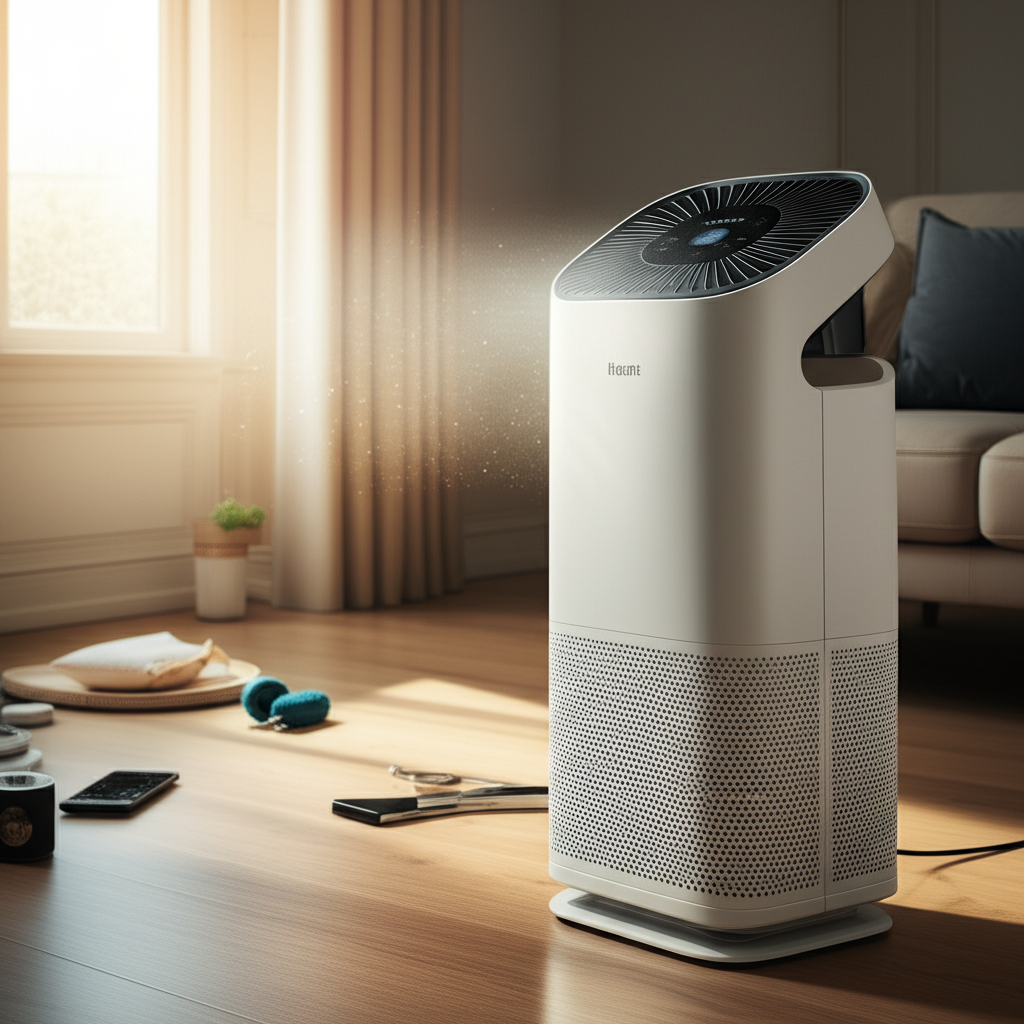
High-Efficiency Particulate Air (HEPA) filters are the cornerstone of any effective dust-fighting air purifier. True HEPA filters are certified to capture at least 99.97% of airborne particles 0.3 microns in size. This includes the vast majority of dust particles, pollen, pet dander, and mold spores that commonly trigger allergies.
When looking for a good air purifier for dust, always verify that it states “True HEPA” or “HEPA-standard” filtration. This certification ensures the device meets rigorous standards for particle removal, making it a reliable tool against indoor allergens.
Activated Carbon Filters: Tackling Odors and VOCs
While HEPA filters excel at capturing particulate matter, activated carbon filters are designed to absorb gases, odors, and volatile organic compounds (VOCs). These can include fumes from cleaning products, cooking smells, and even gases released by furniture. For allergy sufferers, reducing these can also improve overall air quality and comfort.
Many air purifiers combine a HEPA filter with an activated carbon layer. This dual-action approach provides comprehensive air cleaning, addressing both visible dust and invisible airborne pollutants for a truly refreshed environment.
CADR: Measuring Purity Power
The Clean Air Delivery Rate (CADR) is a standardized rating that indicates how quickly an air purifier can clean the air in a room. It measures the volume of filtered air delivered per minute for specific pollutants like smoke, dust, and pollen. A higher CADR generally means faster and more effective air purification for a given room size.
When selecting a good air purifier for dust, match the CADR to your room dimensions. Manufacturers usually provide recommendations for room size based on CADR. Aim for a CADR that is at least two-thirds of the room’s square footage for optimal performance.
Room Size and Air Changes Per Hour (ACH)
The effectiveness of an air purifier is directly tied to the size of the space it’s intended to clean. A powerful unit in a small room might over-filter, while an undersized unit in a large room will struggle to keep up. Look for air purifiers rated for your specific room size, often expressed in square feet.
Air Changes Per Hour (ACH) indicates how many times the purifier can cycle all the air in a room within one hour. For allergy sufferers, aiming for 4-5 ACH is ideal, ensuring allergens are captured frequently throughout the day and night. This high rate of air circulation is key to maintaining consistently clean air.
Top-Rated Air Purifiers for Dust: Our Expert Picks
Based on rigorous testing and user feedback, I’ve identified several air purifiers that consistently perform exceptionally well in capturing dust and improving air quality for allergy sufferers. These models balance powerful filtration with user-friendly features, making them excellent investments.
Coway Airmega 200M: A Reliable All-Rounder
The Coway Airmega 200M is a popular choice for its robust filtration system and user-friendly design. It features a True HEPA filter capable of capturing 99.97% of airborne particles, including fine dust. Its coverage area is suitable for medium to large rooms, and it operates relatively quietly.
This model also includes an activated carbon filter to tackle odors and a pollution sensor that automatically adjusts fan speed. The intuitive controls and filter replacement indicator add to its convenience. It’s a solid performer that offers excellent value for allergy sufferers.
Blueair Classic 405: Advanced Filtration for Larger Spaces
For those with larger living areas or more significant dust concerns, the Blueair Classic 405 is a standout option. It utilizes a combination of mechanical and electrostatic filtration (HEPASilent™ technology) to achieve high particle removal rates with lower energy consumption. This technology is particularly effective at capturing ultra-fine particles.
The Classic 405 is designed for medium to large rooms and boasts a high CADR. It’s also known for its quiet operation, even at higher fan speeds. The sleek design makes it an attractive addition to any home, and its performance in capturing dust is consistently praised.
Levoit Core 300: Compact Powerhouse for Smaller Rooms
If you’re looking for a good air purifier for dust that’s budget-friendly and ideal for bedrooms or smaller living spaces, the Levoit Core 300 is an excellent choice. It features a 3-stage filtration system, including a True HEPA filter, which effectively captures dust, pollen, and pet dander. Despite its compact size, it packs a punch in terms of air cleaning capabilities for its intended room size.
It’s remarkably quiet on its lowest setting, making it perfect for nighttime use. The simple, intuitive controls and filter replacement reminders add to its appeal. This unit proves that effective dust removal doesn’t always require a large, expensive machine.
Understanding Air Purifier Technologies: Beyond HEPA
While HEPA filtration is paramount, other technologies contribute to an air purifier’s effectiveness against dust and allergens. Understanding these can help you make a more informed decision.
Ionizers and Ozone Production: A Word of Caution
Some air purifiers use ionizers, which release negative ions into the air to cause particles to clump together and fall out of the air. While this can help reduce airborne particles, some ionizers can produce ozone as a byproduct. Ozone is a lung irritant and can worsen respiratory conditions for allergy and asthma sufferers.
When considering purifiers with ionizers, look for models that are certified as low-ozone or ozone-free. The U.S. Environmental Protection Agency (EPA) advises caution regarding ozone-generating air cleaners due to potential health risks. It’s often safer to stick with purifiers that rely solely on mechanical filtration for allergen removal.
UV-C Light: A Complementary, Not Primary, Solution
Ultraviolet (UV-C) light is sometimes incorporated into air purifiers to kill airborne bacteria and viruses. While it can be a useful addition for sterilization, it’s not a primary method for capturing dust particles. Dust needs to be physically trapped by a filter.
UV-C light can be a beneficial feature for overall air sanitization, but it shouldn’t be the sole reason for choosing a purifier. Ensure the unit also has a robust HEPA filter to effectively address dust and other particulate allergens.
How to Maximize Your Air Purifier’s Effectiveness Against Dust
Even the best good air purifier for dust needs proper placement and maintenance to perform optimally. A few simple steps can significantly enhance its ability to keep your air clean and allergen-free.
Strategic Placement for Maximum Airflow
The location of your air purifier within a room matters. For best results, place it in an area where it can draw air from all directions without obstruction. Avoid placing it directly against walls, furniture, or curtains, as this can impede airflow and reduce its cleaning efficiency.
Positioning your air purifier in the room where you spend the most time, like your bedroom or living room, will provide the greatest benefit. Ensure it’s on a stable surface where it won’t be easily knocked over.
Regular Filter Maintenance: A Non-Negotiable
Filters are the workhorses of your air purifier, and they need regular attention. A clogged or dirty filter cannot effectively capture dust and allergens. Most manufacturers recommend replacing HEPA and carbon filters every 6-12 months, depending on usage and air quality.
Check your air purifier’s manual for specific maintenance instructions. Many models have filter replacement indicators that alert you when it’s time for a change. Neglecting filter maintenance is one of the most common mistakes people make, significantly diminishing the purifier’s effectiveness.
Understanding Air Purifier Settings and Schedules
Most air purifiers offer multiple fan speeds and sometimes automatic modes. Using the appropriate settings can optimize performance and energy consumption. For allergy sufferers, running the purifier on a medium or high setting for extended periods, especially during peak allergen seasons or when you’re home, is often recommended.
Consider using the auto mode if your purifier has a pollution sensor. This allows the unit to dynamically adjust its fan speed based on detected air quality, ensuring efficient operation without constant manual adjustments. Running your purifier overnight, especially on a quiet setting, can provide continuous relief while you sleep.
Comparing Air Purifier Models: A Quick Guide
Choosing the right air purifier can feel overwhelming with so many options available. A comparison table can help you weigh the pros and cons of different models based on your priorities.
| Feature | Coway Airmega 200M | Blueair Classic 405 | Levoit Core 300 |
| :—————- | :———————————– | :———————————– | :———————————— |
| Filtration | True HEPA, Activated Carbon | HEPASilent™ (Mechanical + Electrostatic), Activated Carbon | True HEPA, Activated Carbon, Pre-filter |
| Room Size | Medium to Large (up to 361 sq ft) | Medium to Large (up to 388 sq ft) | Small (up to 219 sq ft) |
| CADR | ~120-150 CFM (Dust, Smoke, Pollen) | High (Specifics vary by model variant) | ~141 CFM (Dust) |
| Noise Level | Quiet to Moderate | Very Quiet | Very Quiet (on low settings) |
| Ozone Output | None | None | None |
| Key Benefit | Reliable performance, user-friendly | Superior filtration, quiet operation | Compact, affordable, effective |
This table offers a snapshot of key differences. Always refer to the manufacturer’s specifications for detailed information on CADR and room coverage for the exact model you are considering.
When to Consider Upgrading Your Air Purifier
If you’ve had your air purifier for several years, or if your allergy symptoms persist despite regular use, it might be time for an upgrade. Technology advances, and newer models often offer improved efficiency, quieter operation, and enhanced features.
Consider upgrading if your current unit struggles to handle the air quality in your home, if it’s excessively noisy, or if replacement filters are becoming difficult to find. A newer good air purifier for dust might provide a significant improvement in your indoor air quality and overall comfort.
Frequently Asked Questions About Good Air Purifiers for Dust
Q1: How often should I run my air purifier to help with dust allergies?
It’s generally recommended to run your air purifier continuously, especially in rooms where you spend the most time. For allergy sufferers, continuous operation ensures that dust and allergens are consistently removed from the air.
Q2: Can an air purifier completely eliminate dust from my home?
No single device can completely eliminate dust, as it’s a continuous byproduct of daily living. However, a good air purifier for dust can significantly reduce the amount of airborne dust, making a substantial difference for allergy sufferers. Regular cleaning and dusting are still necessary.
Q3: Are air purifiers with ionizers safe for people with allergies?
Some ionizers can produce ozone, which is a lung irritant and can exacerbate allergy and asthma symptoms. It’s best to choose air purifiers that are certified as ozone-free or use technologies that do not produce ozone. True HEPA filters are the safest and most effective for particulate removal.
Q4: How do I know if my air purifier is working effectively?
You’ll notice a difference in air quality – less visible dust settling, fewer allergy symptoms, and a fresher smell. Many purifiers also have indicator lights or sensors that show air quality levels. Regularly checking and replacing filters is crucial for maintaining effectiveness.
Q5: What’s the difference between a HEPA filter and a standard filter?
A True HEPA filter is certified to capture at least 99.97% of airborne particles 0.3 microns in size. Standard filters may capture larger particles but are not as effective against the fine dust and allergens that trigger most allergy symptoms. Always look for “True HEPA” for maximum benefit.
Conclusion: Breathe Freely with the Right Air Purifier
Finding a good air purifier for dust is more than just a purchase; it’s an investment in your health and well-being, especially if you’re an allergy sufferer. By understanding the critical features like True HEPA filtration, appropriate CADR, and the importance of regular maintenance, you can confidently select a device that transforms your home environment. Don’t let dust and allergens dictate your comfort any longer. Take control of your indoor air quality and rediscover the joy of breathing easy.
Ready to create your personal oasis of clean air? Explore our latest reviews and guides to find the perfect air purifier for your needs.
