
Dyson Air Purifier Vs Blueair: Genius Choice

Dyson air purifier vs Blueair: Choosing between Dyson and Blueair depends on your priorities. Dyson offers advanced technology and unique designs, while Blueair excels in powerful filtration and energy efficiency, making the “genius choice” specific to your home’s needs.
When it comes to creating a healthier living space, clean air is paramount. Two of the biggest names in the air purification game are Dyson and Blueair. Both offer impressive machines, but they approach air cleaning with different philosophies and technologies. Deciding between a Dyson air purifier vs Blueair can feel overwhelming with so many features to consider.
I understand the struggle; you want the best for your family’s health, but where do you start? This guide will break down the core differences between Dyson and Blueair air purifiers, helping you make a truly informed and genius choice for your home. We’ll explore their designs, filtration systems, smart features, and overall value, so you can breathe easier knowing you’ve made the right decision.
Dyson Air Purifier vs Blueair: Decoding the Core Differences
Both Dyson and Blueair aim to remove pollutants from your air, but their methods and priorities diverge. Dyson often integrates air purification with other functions like heating and cooling, featuring sleek, modern designs. Blueair, on the other hand, focuses intensely on pure air purification with a reputation for robust filtration and energy efficiency. Understanding these fundamental differences is the first step in your Dyson air purifier vs Blueair decision.
This comparison will equip you with the knowledge to select the purifier that best aligns with your home environment and personal health goals. We will delve into specific models and technologies to give you a clear picture.
Design and Aesthetics: A Matter of Form and Function
Dyson is renowned for its futuristic and often bladeless designs, which are as much a statement piece as an appliance. Their purifiers often incorporate unique airflow technologies and can serve multiple purposes, such as fans or heaters. Blueair models tend to be more minimalist and functional, designed to blend into home environments without drawing excessive attention.
The choice here often comes down to personal style and whether you prefer an appliance that is a focal point or one that discreetly performs its duty. Dyson’s designs are undeniably innovative, often featuring integrated displays and unique fan mechanisms. Blueair prioritizes a clean, unobtrusive look, fitting seamlessly into various decor styles.
Dyson’s Signature Style
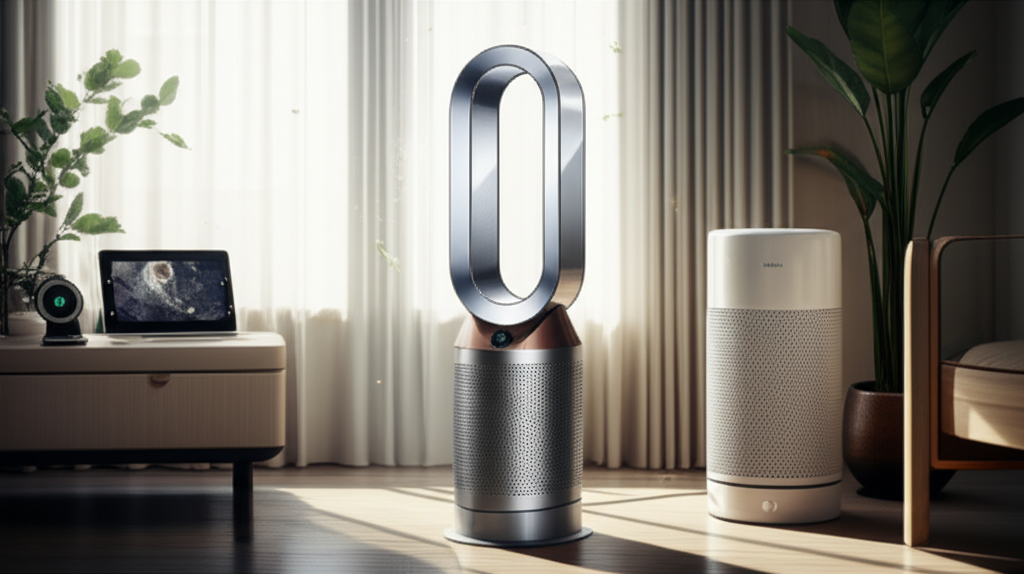
Dyson air purifiers are instantly recognizable for their sleek, often tower-like structures and absence of visible blades. They are engineered not just for performance but also for aesthetic appeal, making them a popular choice for those who value design. Many Dyson models also offer 2-in-1 or 3-in-1 functionality, acting as purifiers, fans, and heaters.
This multi-functionality can save space and offer year-round utility. The unique airflow systems, like Air Multiplier™ technology, are a hallmark of Dyson’s innovative approach to air movement.
Blueair’s Understated Elegance
Blueair purifiers typically feature a more understated, Scandinavian-inspired design. They are often cylindrical or rectangular and are built with high-quality materials that feel robust and durable. The focus is on efficient performance and a clean look that complements most home interiors.
While less flashy than Dyson, Blueair’s design emphasizes practicality and ease of use. Their units are generally compact and easy to move, allowing for flexible placement within your home.
Filtration Technology: The Heart of Air Purification
The core function of any air purifier is its ability to remove airborne particles. Both Dyson and Blueair employ advanced filtration systems, but they differ in their approach. Dyson often uses a combination of HEPA and activated carbon filters, with a strong emphasis on sealing the entire unit to prevent air bypass. Blueair utilizes its proprietary HEPASilent™ technology, which combines electrostatic charging with mechanical filtration for high efficiency and low noise.
Understanding these technologies is crucial for assessing their effectiveness against different types of pollutants. HEPA filters are standard for capturing fine particles, while activated carbon targets gases and odors.
Dyson’s Sealed System Approach
Dyson purifiers are designed with a fully sealed filtration system. This means that 100% of the air drawn into the machine passes through the filters before being expelled. This prevents microscopic particles and allergens from leaking back into the room, ensuring maximum purification.
Their filters typically combine a HEPA layer for capturing 99.97% of particles down to 0.3 microns with an activated carbon layer for removing gases and odors. This comprehensive approach targets a wide range of airborne contaminants.
Blueair’s HEPASilent™ Advantage
Blueair’s HEPASilent™ technology is a key differentiator. It uses an ionizer to give particles a negative charge, which then causes them to be more effectively captured by the filter media. This allows Blueair to use less dense filters, resulting in higher airflow and quieter operation at comparable purification levels.
This technology is particularly effective at capturing fine particles, allergens, and even bacteria and viruses, all while consuming less energy. Blueair also offers models with activated carbon options for enhanced gas and odor removal.
Performance and Coverage: How Much Air Can They Clean?
When comparing Dyson air purifier vs Blueair, performance metrics like CADR (Clean Air Delivery Rate) and room coverage are vital. Dyson often provides impressive airflow and effective purification for medium to large rooms, with some models capable of circulating purified air throughout an entire space. Blueair is known for its high CADR ratings, meaning they can clean the air in a given room very quickly, often excelling in larger spaces.
It’s important to match the purifier’s capacity to the size of your room to ensure optimal performance. A purifier that is too small will struggle to keep up with the air quality demands.
Dyson’s Airflow and Circulation
Dyson purifiers are engineered for powerful airflow, often using their Air Multiplier™ technology to project purified air across the room. This ensures that clean air reaches all corners, providing consistent air quality throughout the space. Many models are designed for effective circulation, helping to mix and purify the air efficiently.
Their performance is often measured not just by particle removal but by how well they distribute that purified air. This makes them suitable for larger open-plan living areas.
Blueair’s Speed and Efficiency
Blueair units often boast impressive CADR scores, indicating their ability to rapidly remove pollutants from the air. This means they can achieve a desired level of air purity in a shorter amount of time. Their HEPASilent™ technology allows for high air exchange rates without excessive noise, making them ideal for bedrooms and living areas where quiet operation is desired.
According to independent testing, Blueair units consistently rank high in performance for their size and energy consumption. This efficiency means they can provide excellent air quality without a significant impact on your electricity bill.
Smart Features and Connectivity: The Modern Air Purifier
In today’s connected world, smart features are increasingly important. Dyson purifiers often come with sophisticated sensors that monitor air quality in real-time, displaying detailed reports on an LCD screen and via a mobile app. They offer app control for scheduling, fan speed adjustments, and remote monitoring. Blueair also offers smart models, with many featuring Wi-Fi connectivity and app control through their Blueair Friend app.
These smart capabilities allow for personalized air quality management and offer convenience. You can often track your home’s air quality, receive filter replacement reminders, and adjust settings from anywhere.
Dyson’s Intelligent Monitoring
Dyson’s smart purifiers are equipped with advanced sensors that continuously measure PM2.5, PM10, VOCs, and NO2 levels. This data is displayed clearly on the unit’s screen and accessible through the Dyson Link app. The app provides historical data, air quality reports, and allows for remote control of all purifier functions.
This level of intelligent monitoring provides peace of mind and allows you to understand the air quality in your home like never before. You can set the purifier to automatically respond to detected pollutants.
Blueair’s Connected Convenience
Blueair’s connected models offer seamless integration into a smart home. The Blueair Friend app allows you to monitor indoor and outdoor air quality, control your purifier remotely, set schedules, and receive filter status updates. Some models even integrate with voice assistants like Amazon Alexa and Google Assistant.
This connectivity makes managing your home’s air quality effortless. You can ensure your purifier is always running optimally without needing to constantly check on it.
Energy Efficiency and Running Costs: A Long-Term Consideration
When choosing between a Dyson air purifier vs Blueair, running costs are a significant factor. Blueair has a strong reputation for energy efficiency, with many of their units earning ENERGY STAR certifications. Their HEPASilent™ technology contributes to lower power consumption, especially at lower fan speeds. Dyson purifiers, while technologically advanced, can sometimes have higher energy consumption, particularly when running at higher fan speeds or in multi-function modes.
Filter replacement costs are also a key consideration. Both brands offer replacement filters, and it’s wise to factor these ongoing expenses into your budget.
Blueair’s Power-Saving Design
Blueair purifiers are designed with energy efficiency in mind. Their HEPASilent™ technology enables them to achieve high purification levels with remarkably low power consumption. Many Blueair models are ENERGY STAR certified, confirming their commitment to energy savings.
This focus on efficiency means that running a Blueair purifier for extended periods will have a minimal impact on your electricity bill. It’s a smart choice for those looking to maintain clean air without high energy costs.
Dyson’s Power Usage
Dyson purifiers, with their advanced features and powerful motors, can sometimes consume more energy than comparable Blueair models. This is especially true when utilizing functions like heating or when running at maximum fan speeds for rapid purification. However, Dyson often incorporates energy-saving modes and efficient motor technology to mitigate this.
When comparing Dyson air purifier vs Blueair on energy, it’s essential to look at the specific model’s wattage and compare it to your expected usage patterns.
Filter Lifespan and Replacement Costs: Ongoing Investments
The longevity and cost of replacement filters are crucial for the long-term affordability of any air purifier. Dyson filters typically need replacement every 6-12 months, depending on usage and air quality. Blueair filters also have varying lifespans, often ranging from 6 to 24 months, with some of their more advanced filters designed for extended use.
It’s important to research the specific filter types and costs for the models you are considering. Factor these recurring expenses into your overall budget for a realistic understanding of ownership costs.
Dyson Filter Durability
Dyson’s sealed HEPA and activated carbon filters are designed for durability and effective capture of pollutants over their lifespan. While they generally require replacement annually, this can vary based on the environment and how often the purifier is used. Dyson provides clear indicators through the app and on the unit itself when filters need changing.
The cost of Dyson replacement filters is a factor to consider, as they are a premium product. However, their long lifespan can help offset some of this initial investment.
Blueair Filter Longevity
Blueair offers different filter technologies, some of which are designed for exceptional longevity. Their standard filters often last around 6-12 months, while some of their more advanced carbon-based filters can last up to 24 months. This extended lifespan can reduce the frequency of filter replacements and associated costs.
Blueair’s commitment to efficient filtration often means their filters can handle a significant volume of air before needing replacement. This makes them a cost-effective choice in the long run.
Noise Levels: Finding Your Quiet Zone
Noise is a critical factor, especially for bedrooms or home offices. Blueair is renowned for its quiet operation, largely thanks to its HEPASilent™ technology, which allows for high airflow at low decibel levels. Many Blueair units operate at whisper-quiet levels on lower settings, making them unobtrusive. Dyson purifiers, while generally quieter than traditional fans, can become more audible at higher fan speeds, particularly when purifying a large volume of air.
Consider the primary location where you’ll use the purifier. If a quiet environment is essential, Blueair often has the edge.
Blueair’s Whisper-Quiet Performance
Blueair consistently scores high marks for its quiet operation. The combination of mechanical filtration and electrostatic charging in HEPASilent™ technology means that high air delivery can be achieved without the loud fan noise often associated with traditional purifiers. Many users report being able to sleep soundly even with a Blueair unit running in their bedroom.
The ability to maintain effective purification while remaining incredibly quiet is a significant advantage for Blueair. This makes them an excellent choice for creating a peaceful environment.
Dyson’s Sound Profile
Dyson purifiers are designed to be relatively quiet, especially on lower settings. However, when operating at higher speeds to tackle significant pollution events or to circulate air more aggressively, the sound level will increase. The unique airflow design contributes to the sound, which some users describe as a more consistent “whoosh” rather than a harsh fan noise.
While not excessively loud, if absolute silence is your priority, you might find Blueair’s lowest settings to be preferable. However, Dyson’s higher settings are still often competitive with other brands.
Price Point and Value: Investing in Your Health
The initial investment for a Dyson air purifier vs Blueair can vary significantly. Dyson purifiers are generally positioned at a premium price point, reflecting their advanced technology, unique designs, and multi-functionality. Blueair offers a range of models across different price brackets, with many providing excellent value for their purification performance and energy efficiency.
When evaluating value, consider not just the upfront cost but also the long-term running costs, filter replacements, and the specific features that are most important to you. A higher initial cost for a Dyson might be justified by its dual-purpose functionality or superior design, while Blueair might offer better pure air purification value for money.
Dyson: Premium Technology, Premium Price
Dyson products are known for their innovation and premium positioning, and their air purifiers are no exception. They often come with a higher price tag, but this is typically justified by their advanced features, unique engineering, and multi-functional capabilities (purifier, fan, heater). For consumers who prioritize cutting-edge technology and design, Dyson offers compelling value.
The investment in a Dyson can be seen as purchasing a high-performance appliance that integrates multiple functions into one sleek unit. This can be a cost-effective solution for those who would otherwise buy separate devices.
Blueair: Performance and Efficiency Focused
Blueair offers a strong balance of performance, efficiency, and price. While some of their high-end models can be comparable in price to Dyson, they generally provide excellent purification capabilities at various price points. Their focus on effective filtration and energy savings makes them a sound investment for long-term air quality management.
For many, Blueair represents superior value in terms of pure air purification performance per dollar spent. Their efficient operation also contributes to lower overall ownership costs.
Who is Each Brand Best For?
Deciding between Dyson air purifier vs Blueair ultimately hinges on your individual needs and preferences. If you’re drawn to cutting-edge technology, innovative design, and multi-functional appliances, a Dyson might be your genius choice. They are ideal for those who want an air purifier that also acts as a stylish fan or heater and appreciate detailed air quality reporting.
If your primary concern is powerful, efficient, and quiet air purification, with a focus on long-term value and energy savings, Blueair often emerges as the superior option. They are excellent for allergy sufferers, those sensitive to noise, and anyone prioritizing robust filtration in their living or sleeping spaces.
Dyson: For the Tech-Savvy Design Enthusiast
Dyson is perfect for those who appreciate the latest in technological innovation and a modern aesthetic. If you want an appliance that performs multiple roles—purifying, cooling, and heating—and integrates seamlessly with a smart home ecosystem, Dyson is a strong contender. They are also great for individuals who want detailed insights into their home’s air quality through advanced app features.
Consider Dyson if you’re looking for an air purifier that is as much a design feature as it is a health appliance. Their commitment to engineering excellence is evident in every product.
Blueair: For the Health-Conscious and Efficiency-Focused
Blueair is the ideal choice for individuals and families who prioritize effective air purification above all else, especially for allergy and asthma sufferers. Their commitment to quiet operation makes them perfect for bedrooms and nurseries. Furthermore, their focus on energy efficiency and long-lasting filters appeals to the budget-conscious and environmentally aware consumer.
Choose Blueair if you want a reliable, powerful, and quiet air purifier that delivers exceptional results without unnecessary bells and whistles, focusing on core performance and long-term value.
Dyson Air Purifier vs Blueair: Key Feature Comparison
| Feature | Dyson Air Purifiers | Blueair Air Purifiers |
| :——————— | :————————————————— | :——————————————————- |
| Design | Futuristic, often multi-functional (fan/heater) | Minimalist, functional, Scandinavian-inspired |
| Filtration | Sealed HEPA + Activated Carbon | HEPASilent™ (electrostatic + mechanical) + optional carbon |
| Smart Features | Advanced sensors, detailed app reporting, Wi-Fi | Wi-Fi enabled, app control, voice assistant integration |
| Noise Level | Relatively quiet, can be audible at high speeds | Very quiet, especially on lower settings |
| Energy Efficiency | Good, but can be higher than Blueair | Excellent, often ENERGY STAR certified |
| Price Point | Premium | Mid-range to Premium |
| Best For | Tech enthusiasts, design-focused homes, multi-use needs | Allergy sufferers, quiet environments, efficiency focus |
Frequently Asked Questions
What is the primary difference between Dyson and Blueair air purifiers?
Dyson focuses on advanced technology, unique designs, and multi-functionality (purifier, fan, heater), while Blueair prioritizes powerful, quiet, and energy-efficient air purification with its HEPASilent™ technology.
Which brand is better for allergies?
Both are excellent, but Blueair’s HEPASilent™ technology is highly effective at capturing fine allergens, and its quiet operation makes it ideal for bedrooms where allergy sufferers spend significant time.
Are Dyson air purifiers worth the high price?
Dyson purifiers offer premium features, advanced sensors, multi-functionality, and striking designs. If these aspects are high priorities for you, they can offer significant value beyond just air purification.
How often do I need to replace filters for Dyson and Blueair?
Dyson filters typically last 6-12 months. Blueair filters vary, with some lasting 6-12 months and others up to 24 months depending on the model and filter type. Always check the specific model’s recommendations.
Which air purifier is quieter, Dyson or Blueair?
Blueair is generally considered quieter, especially on its lower settings, due to its HEPASilent™ technology. Dyson purifiers are relatively quiet but can become more noticeable at higher fan speeds.
Can I use an air purifier in a large room?
Yes, both brands offer models designed for larger spaces. It’s crucial to check the room coverage specifications (often measured in square feet or ACH – Air Changes per Hour) to ensure the purifier is adequately sized for your room.
Conclusion: Your Genius Choice Awaits
Choosing between a Dyson air purifier vs Blueair is about aligning advanced technology with your specific home environment and health priorities. Dyson offers a premium, feature-rich experience with stunning design and multi-functionality, perfect for the tech-savvy homeowner. Blueair delivers exceptional, quiet, and energy-efficient air purification, making it a top choice for those focused purely on superior air quality and long-term value.
Both brands represent the pinnacle of air purification, and either can significantly improve your indoor air. Consider your budget, the size of your space, your sensitivity to noise, and whether multi-functionality is a must-have. By weighing these factors, you can confidently make the genius choice that will lead to healthier, happier breathing for you and your family.
For more insights into creating a healthy home environment, be sure to explore our other guides on smart home technology and wellness.
