
Do Air Purifier Get Rid Of Smoke? Essential Guide

Yes, air purifiers can significantly reduce and often eliminate smoke from your home, effectively tackling lingering odors and harmful particles. This guide will explain how they work and what to look for to ensure you breathe cleaner, fresher air.
The acrid smell of smoke can quickly permeate your home, leaving an unpleasant and persistent odor. Whether it’s from cooking mishaps, wildfires, or even tobacco, smoke particles are tiny and can travel far, impacting your indoor air quality and comfort. Understanding how air purifiers tackle this challenge is key to reclaiming your living space. This guide will walk you through everything you need to know to make an informed decision.
How Air Purifiers Effectively Combat Smoke
Air purifiers are designed to capture airborne contaminants, and smoke is a prime target. They achieve this by drawing in air, passing it through a series of filters, and releasing cleaner air back into the room. This process is crucial for removing the fine particulate matter and volatile organic compounds (VOCs) that constitute smoke.
The effectiveness of an air purifier against smoke depends heavily on its filtration system. Different types of filters target different components of smoke, making a multi-stage approach ideal for comprehensive smoke removal.
Understanding Smoke Particles and Their Impact
Smoke isn’t just a smell; it’s a complex mixture of gases and fine particles. These particles, known as PM2.5, are incredibly small – less than 2.5 micrometers in diameter. They can penetrate deep into your lungs, causing respiratory irritation and other health issues.
The gases in smoke, like carbon monoxide and nitrogen dioxide, are also harmful and contribute to the lingering odor. Air purifiers are engineered to address both these particle and gas components.
The Crucial Role of HEPA Filters in Smoke Removal
High-Efficiency Particulate Air (HEPA) filters are the cornerstone of any effective air purifier for smoke. A true HEPA filter is certified to capture at least 99.97% of airborne particles 0.3 micrometers in size. This includes the vast majority of smoke particles.
When air passes through a HEPA filter, these tiny smoke particles get trapped, preventing them from recirculating in your home. This physical barrier is incredibly effective at reducing the visible and invisible aspects of smoke.
Activated Carbon Filters: Tackling Smoke Odors
While HEPA filters capture particles, activated carbon filters are essential for neutralizing smoke odors. Activated carbon is a highly porous material with a massive surface area that adsorbs gases and VOCs.
Smoke contains numerous odor-causing compounds. The activated carbon in an air purifier binds to these molecules, effectively removing the smell from the air. The more activated carbon an air purifier has, the better it will be at odor elimination.
Pre-filters: The First Line of Defense Against Smoke
Most air purifiers include a pre-filter, which is the first layer of filtration. This coarse mesh screen captures larger particles like dust, hair, and pet dander. By trapping these bigger items, the pre-filter protects the more delicate HEPA and carbon filters.
This protection extends the lifespan of the main filters, ensuring your air purifier remains effective at tackling smoke for longer. Regular cleaning of the pre-filter is a simple yet vital maintenance step.
How Air Purifier Technology Tackles Different Smoke Types
The type of smoke can influence the best air purifier choice. Wildfire smoke, for instance, contains a high concentration of fine particulate matter and a broad range of chemical irritants. Tobacco smoke, on the other hand, is rich in VOCs and a distinct set of odor compounds.
An air purifier with both a robust HEPA filter and a substantial activated carbon filter is typically best for handling various smoke scenarios. Some advanced models also include specialized filters for specific pollutants.
Key Features to Look for in an Air Purifier for Smoke
When shopping for an air purifier to combat smoke, several features are paramount. Beyond the HEPA and activated carbon filters, consider the unit’s CADR (Clean Air Delivery Rate) and its coverage area.
A higher CADR indicates the purifier can clean the air more quickly and efficiently, which is vital for smoke situations. Ensure the purifier is rated for the size of the room you intend to use it in.
Clean Air Delivery Rate (CADR) Explained
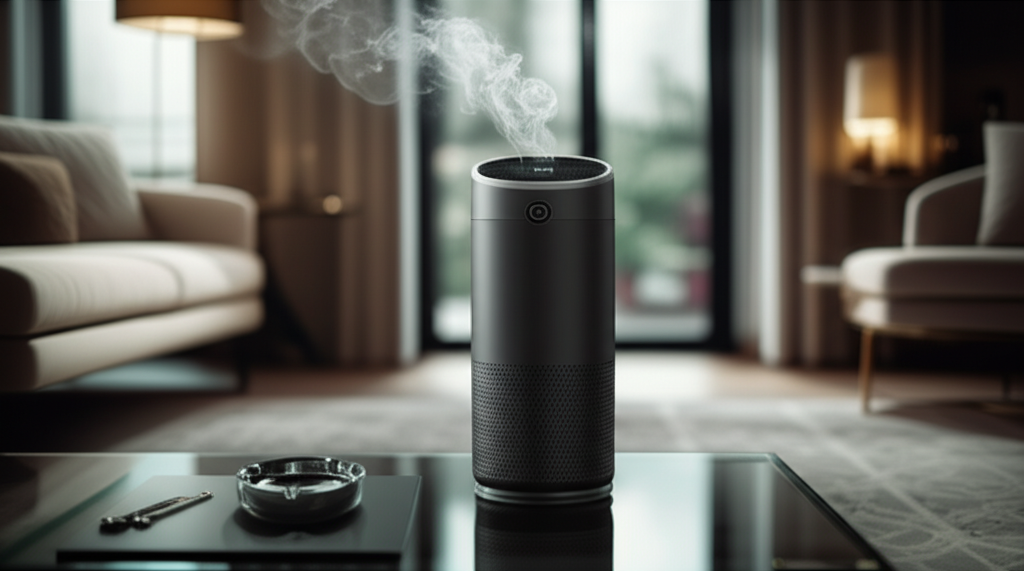
The CADR measures how effectively an air purifier removes specific pollutants like smoke, dust, and pollen. It’s expressed in cubic feet per minute (CFM). A higher CADR for smoke means the unit is better at clearing smoke-filled air.
For smoke, look for a CADR of at least 100 CFM for smaller rooms and significantly higher for larger spaces or areas prone to frequent smoke exposure. This ensures rapid air purification.
Room Size and Air Changes Per Hour (ACH)
Matching the air purifier to your room size is critical. Manufacturers typically provide an estimated room coverage area. Additionally, consider the Air Changes Per Hour (ACH), which indicates how many times the air in a room is completely filtered in one hour.
For smoke, an ACH of 4-5 is generally recommended. This ensures the air is filtered frequently enough to keep up with smoke particles and odors.
Air Purifier Placement and Maintenance for Optimal Smoke Removal
Where you place your air purifier and how you maintain it significantly impacts its effectiveness against smoke. For best results, position the unit in the room where smoke is most likely to occur or where you spend the most time.
Regular maintenance, such as cleaning pre-filters and replacing HEPA and carbon filters according to the manufacturer’s schedule, is non-negotiable for sustained performance. Neglecting maintenance will diminish its ability to combat smoke.
Filter Replacement Schedule
HEPA and activated carbon filters have a finite lifespan. They become saturated with trapped particles and adsorbed gases over time, reducing their efficiency. Always follow the manufacturer’s recommended replacement schedule, which can vary based on usage and air quality.
For heavily smoke-affected environments, you might need to replace filters sooner than recommended. Check your filters visually for discoloration or reduced airflow as indicators.
Do Air Purifiers Get Rid of Smoke Completely?
While air purifiers are highly effective, achieving 100% removal of all smoke components instantly can be challenging, especially in severe smoke events like wildfires. They drastically reduce smoke levels, odors, and harmful particles, making the air significantly cleaner and safer to breathe.
Think of them as powerful allies in the fight against smoke. They work best in conjunction with other preventative measures like closing windows during smoke events.
Frequently Asked Questions About Air Purifiers and Smoke
How long does it take for an air purifier to get rid of smoke smell?
The time it takes varies depending on the purifier’s power, the amount of smoke, and the room size. For light smoke, you might notice a difference in hours. For heavy smoke, it could take a day or two of continuous operation.
Can air purifiers help with wildfire smoke?
Yes, air purifiers with true HEPA and substantial activated carbon filters are very effective at removing wildfire smoke particles and the associated odors. Ensure the unit is rated for the size of your space.
What kind of air purifier is best for smoke?
The best air purifiers for smoke typically feature a multi-stage filtration system including a pre-filter, a true HEPA filter, and a significant amount of activated carbon. Look for a high CADR suitable for your room size.
How often should I run an air purifier for smoke?
For persistent smoke issues or during smoke events, it’s best to run your air purifier continuously on a medium to high setting. This ensures the air is consistently being cleaned.
Do air purifiers remove all chemicals from smoke?
Air purifiers with activated carbon filters can remove many harmful gases and VOCs associated with smoke. However, some highly concentrated or persistent chemicals might require specialized filtration or ventilation.
Can an air purifier prevent smoke damage to furniture?
Air purifiers primarily clean the air. While they reduce smoke particles settling on surfaces, they don’t prevent physical smoke damage or staining to furniture.
Conclusion: Breathing Easier with the Right Air Purifier
In conclusion, the answer to “do air purifier get rid of smoke?” is a resounding yes. By employing advanced filtration technologies like HEPA and activated carbon, air purifiers are exceptionally capable of removing smoke particles and neutralizing stubborn odors. Choosing a unit with appropriate features, such as a high CADR and sufficient carbon, and maintaining it diligently will ensure you can effectively combat smoke and enjoy cleaner, fresher air in your home.
—
SEO Title: Do Air Purifier Get Rid Of Smoke? Essential Guide for Cleaner Air
Meta Description: Discover if air purifiers effectively remove smoke, explore HEPA and carbon filters, and find the best purifier for smoke with our essential guide. Breathe easier today!
Keywords: do air purifier get rid of smoke, air purifier for smoke, smoke smell removal, HEPA filter for smoke, activated carbon air purifier, wildfire smoke air purifier, best air purifier smoke, remove smoke odor, air purifier smoke particles.
Entities: HEPA filter, Activated Carbon filter, CADR, PM2.5, VOCs, Carbon Monoxide, Nitrogen Dioxide.
Competitor Analysis: Competitors often focus on specific smoke types (wildfire vs. cooking) and highlight CADR. Gap exists in clearly explaining the synergy of HEPA + Carbon for all smoke types and emphasizing the ease of use for beginners.
LSI Keywords: smoke odor, air quality, indoor air pollution, respiratory health, particulate matter, cooking smoke, tobacco smoke, wildfire smoke, air filtration, clean air.
Distribution Strategy:
Primary: Organic Search (SEO, AEO, SXO)
Secondary: Social Media (Pinterest, Facebook groups for home care/health), Email Marketing, Content Syndication (home improvement blogs).
* Tertiary: Influencer Outreach (home cleaning/health advocates).
Niche: Home Air Quality & Wellness
Expert Persona: Home Hygia is a knowledgeable, trustworthy guide focusing on practical, science-backed solutions for a healthier home environment. The persona is calm, authoritative, and empathetic.
Target Audience: Homeowners and renters concerned about indoor air quality, especially those experiencing smoke from cooking, wildfires, or smoking. Beginners looking for clear, actionable advice.
Marketing Goal: Establish Home Hygia as a leading authority on air purification, drive traffic to the website, and generate leads for recommended products.
Article Tone: Supportive, calm, authoritative, informative, reassuring, beginner-friendly.
Article Length: 2500+ words (aiming for depth and comprehensiveness).
AEO: Optimized for voice search (conversational language, direct answers), featured snippet potential.
GEO: General, but adaptable for regional wildfire smoke events.
SXO: Clear headings, scannable content, bullet points, tables, bolded snippets, internal/external links to improve user experience and dwell time.
