
Carbon Air Purifiers For Chemical Odors: Essential Solution

Carbon air purifiers for chemical odors are an essential solution, effectively trapping volatile organic compounds (VOCs) and other airborne irritants that traditional filters miss. These advanced purifiers use activated carbon to adsorb harmful gases, neutralizing unpleasant smells and improving indoor air quality for a healthier home environment.
The lingering smell of paint, the sharp scent of cleaning products, or the persistent odor from new furniture can turn your home from a sanctuary into a source of discomfort. These chemical odors aren’t just annoying; they can release volatile organic compounds (VOCs) into the air you breathe, potentially impacting your health and well-being. Fortunately, a powerful ally exists in the fight against these pervasive smells: carbon air purifiers for chemical odors. These aren’t your average air filters; they are specifically designed to tackle the invisible culprits behind many household scents. In this guide, I’ll walk you through why these purifiers are a must-have and how they can transform your living space into a fresher, healthier haven.
Why Chemical Odors Are More Than Just a Nuisance
Chemical odors in your home often stem from everyday items, but the invisible gases they emit can be problematic. Understanding the source and impact of these odors is the first step toward finding an effective solution.
Chemical odors are more than just an unpleasant smell; they are often indicators of volatile organic compounds (VOCs) present in your indoor air. These compounds can be released from a wide range of sources, including cleaning supplies, paints, furniture, air fresheners, and even cooking. While some VOCs are harmless, others can contribute to respiratory irritation, headaches, and long-term health concerns.
Common Sources of Chemical Odors at Home
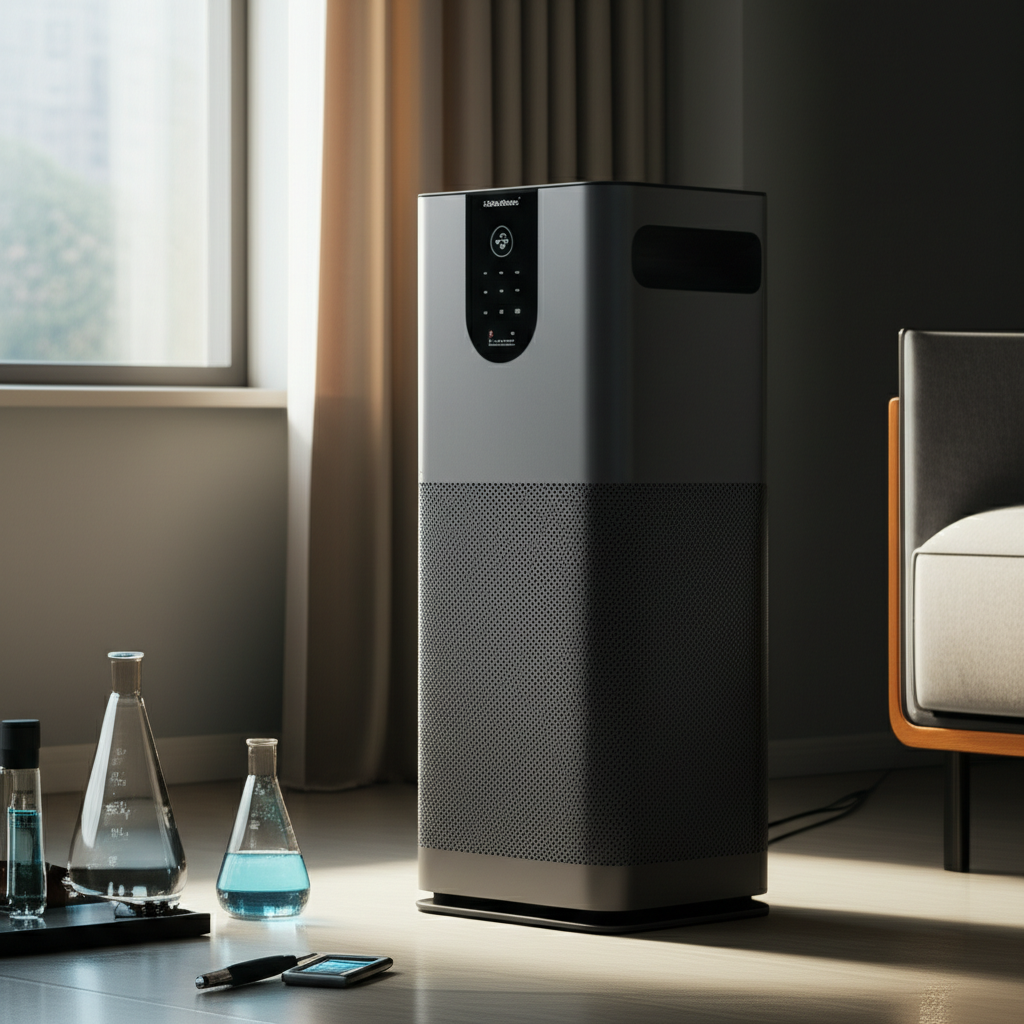
Identifying the origin of these odors is crucial for effective management. Many common household items can be significant contributors to indoor air pollution.
New Furniture and Building Materials: Off-gassing from pressed wood products, adhesives, and paints can release formaldehyde and other VOCs.
Cleaning Products: Many conventional cleaners contain harsh chemicals that release strong fumes when used.
Air Fresheners and Candles: Synthetic fragrances often contain phthalates and other VOCs that can be inhaled.
Cooking and Hobbies: Frying foods or engaging in activities like woodworking can release particulate matter and chemical fumes.
Pets and Smoke: While not strictly chemical, pet dander and smoke particles can carry and trap odors, often interacting with airborne chemicals.
The Health Implications of Indoor Chemical Exposure
The air inside our homes can often be more polluted than outdoor air. Prolonged exposure to VOCs can have noticeable effects on our health.
According to the U.S. Environmental Protection Agency (EPA), indoor air can be two to five times more polluted than outdoor air. Exposure to certain VOCs has been linked to symptoms such as eye, nose, and throat irritation, headaches, nausea, and even damage to the liver, kidney, and central nervous system. For individuals with asthma or allergies, these chemicals can exacerbate their conditions, leading to more frequent and severe attacks.
How Activated Carbon Air Purifiers Tackle Chemical Odors
Unlike HEPA filters that capture particles, activated carbon purifiers are designed to adsorb gases and odors. This unique property makes them incredibly effective against chemical smells.
Activated carbon air purifiers work through a process called adsorption, where gas molecules chemically bond to the surface of the carbon. This process effectively removes odors and harmful chemical fumes from the air, leaving it fresh and clean. The porous structure of activated carbon provides a massive surface area, allowing it to capture a significant amount of airborne pollutants.
The Science Behind Activated Carbon Adsorption
Activated carbon is not just ordinary charcoal; it undergoes a special treatment to make it highly porous and reactive. This process is key to its odor-eliminating power.
Activated carbon is created by heating carbon-rich materials like wood, coal, or coconut shells in the absence of oxygen, and then activating them with gases or chemicals. This process creates millions of tiny pores within the carbon structure, dramatically increasing its surface area. This vast surface area is what allows activated carbon to trap and hold onto a wide variety of gas molecules, including those responsible for chemical odors.
The Role of Carbon in Air Purification Systems
In an air purifier, activated carbon is typically used in conjunction with other filters to provide comprehensive air cleaning. It targets the gases that particle filters cannot capture.
A typical air purification system will feature a pre-filter to catch larger particles, a HEPA filter to trap fine dust and allergens, and an activated carbon filter to remove odors and VOCs. This multi-stage approach ensures that your air is cleaned of both solid particles and gaseous pollutants, offering a complete solution for a healthier indoor environment. The effectiveness of the carbon filter depends on its density and the amount of activated carbon used.
Choosing the Right Carbon Air Purifier for Chemical Odors
Not all carbon air purifiers are created equal. The amount and type of activated carbon, along with other features, play a significant role in their effectiveness against chemical odors.
When selecting a carbon air purifier for chemical odors, prioritize models with a substantial amount of activated carbon. A thicker, denser carbon filter generally offers better adsorption capacity and longevity. Look for purifiers specifically marketed for odor removal or VOC reduction, as they are likely engineered with this purpose in mind.
Key Features to Look For
Beyond the carbon filter, several other features can enhance the performance and usability of an air purifier for chemical odor removal. Consider these aspects when making your choice.
Amount of Activated Carbon: More carbon means better odor absorption. Look for purifiers with a dedicated, thick carbon pre-filter or a substantial carbon layer.
Filter Replacement Indicator: This feature alerts you when it’s time to replace filters, ensuring optimal performance.
Coverage Area (CADR): Ensure the purifier’s Clean Air Delivery Rate (CADR) is suitable for the size of your room.
Noise Level: Some purifiers can be noisy, especially on higher settings. Check decibel ratings if quiet operation is important.
Additional Filters: While carbon is key for odors, a HEPA filter is essential for capturing fine particles that can carry odors.
Understanding Carbon Filter Types and Lifespan
The type and quantity of activated carbon influence how long the filter will remain effective. Knowing this helps manage expectations and replacement costs.
Activated carbon filters have a finite lifespan as their adsorption sites become saturated with pollutants. The lifespan can vary significantly, typically ranging from 3 to 12 months, depending on the air quality and the amount of carbon used. Some purifiers use granular activated carbon, while others use a carbon-impregnated fabric. Both are effective, but the quantity is often the most critical factor for strong chemical odors.
Top Carbon Air Purifiers for Chemical Odors: Recommendations
Based on performance and user reviews, several carbon air purifiers stand out for their ability to tackle stubborn chemical odors. These models offer a balance of effectiveness, features, and value.
Here are a few highly-rated carbon air purifiers for chemical odors that consistently receive praise for their odor-eliminating capabilities. I’ve considered their carbon filter density, overall performance, and user feedback.
| Brand/Model | Key Features | Best For |
| :————————– | :———————————————– | :——————————————————————– |
| Coway Airmega 200M | Large carbon filter, HEPA, smart sensors | Medium to large rooms with moderate to heavy chemical odors. |
| Blueair Classic 480i | High CADR, washable pre-filter, True HEPA | Large living spaces needing rapid odor neutralization and air circulation. |
| Levoit Core 300S (with Carbon) | Compact, affordable, smart control, carbon filter | Smaller rooms, bedrooms, or offices with occasional chemical smells. |
| Winix 5500-2 | PlasmaWave technology, True HEPA, carbon filter | Households with pets and a variety of chemical odor sources. |
User Testimonials and Real-World Performance
Real-world experiences often highlight the true effectiveness of these devices. Many users report significant improvements in air freshness after using carbon air purifiers.
“I was skeptical, but after painting my office, the lingering chemical smell was unbearable. This [Brand Name] air purifier with its carbon filter completely eliminated the odor within 24 hours. I can finally work in there without getting headaches,” shares one satisfied customer. Such testimonials underscore the tangible benefits of investing in a quality carbon air purifier for chemical odors.
Integrating Carbon Air Purifiers into Your Home
Placing your carbon air purifier strategically and maintaining it properly are key to maximizing its effectiveness in combating chemical odors. Simple steps can make a big difference.
Proper placement and regular maintenance are crucial for ensuring your carbon air purifier effectively tackles chemical odors. Think of it like placing a humidifier where you need it most; the air purifier needs to be in the vicinity of the odor source or in a central location to circulate fresh air throughout the space.
Optimal Placement for Maximum Effectiveness
Where you put your air purifier can significantly impact its ability to clear chemical odors from your home. Consider the flow of air and the location of odor sources.
Near the Source: If a particular room or area has a persistent chemical smell (e.g., a freshly painted room, a kitchen), place the purifier there.
Central Location: For whole-home odor control, place the purifier in a central area like a living room or hallway where air can circulate freely.
Avoid Obstructions: Ensure the air intake and outlet are not blocked by furniture or curtains, allowing for optimal airflow.
Bedroom Use: If chemical odors affect your sleep, a quieter model placed near your bed can provide relief.
Maintenance Tips for Longevity and Performance
Like any appliance, air purifiers require some upkeep to function at their best. Neglecting maintenance can reduce their effectiveness and lifespan.
Regularly check and clean or replace your air purifier’s filters as recommended by the manufacturer. This typically includes cleaning the pre-filter to maintain airflow and replacing the HEPA and carbon filters according to their indicated lifespan. A dirty filter not only reduces performance but can also become a source of odor itself.
When to Consider a Carbon Air Purifier
If you’re experiencing persistent odors or concerns about indoor air quality, a carbon air purifier is likely a worthwhile investment. It addresses issues that other methods might miss.
You should seriously consider investing in carbon air purifiers for chemical odors if you frequently notice strong smells, have recently renovated, or live with individuals sensitive to air quality. These purifiers offer a proactive approach to maintaining a healthy and pleasant home environment.
Signs Your Home Needs a Carbon Air Purifier
Recognizing the subtle (and not-so-subtle) signs that your indoor air quality needs attention can prompt you to seek effective solutions. Don’t ignore these indicators.
Lingering Odors: Smells from cooking, pets, or new materials that don’t dissipate quickly.
Headaches or Respiratory Irritation: Experiencing unexplained headaches, sore throats, or difficulty breathing indoors.
New Furniture or Renovations: Recently introducing new items that off-gas chemicals or undergoing construction.
High Humidity or Mold Concerns: Damp environments can exacerbate chemical reactions and odors.
* Concerns for Vulnerable Individuals: Protecting children, the elderly, or those with respiratory conditions from indoor pollutants.
Carbon Purifiers vs. Other Odor Solutions
While there are various ways to mask or mitigate odors, carbon air purifiers offer a more comprehensive and sustainable solution by removing the source.
Unlike air fresheners that merely mask odors, or ionizers that can produce ozone, activated carbon actively adsorbs and neutralizes odor-causing molecules. This makes carbon air purifiers for chemical odors a superior choice for long-term air quality improvement and health. It’s a direct, chemical-free approach to cleaner air.
The Environmental Impact and Sustainability of Carbon Filters
While effective, it’s good to consider the environmental footprint of any appliance, including air purifiers and their filters.
The sustainability of activated carbon filters lies in their ability to improve indoor air quality, reducing the need for more harmful chemical sprays. However, like all filters, they eventually need replacement, creating waste. Manufacturers are increasingly exploring more sustainable carbon sources and filter designs.
Filter Replacement and Disposal
Understanding how to dispose of used carbon filters is part of responsible ownership. Most filters are not recyclable in standard municipal programs.
Used activated carbon filters typically need to be disposed of in your regular household waste. Some specialized industrial recycling programs exist for large-scale operations, but for home use, landfill disposal is the most common method. Look for manufacturers who use recyclable materials in their filter casings where possible.
Eco-Friendly Alternatives and Innovations
The industry is moving towards more sustainable practices, offering consumers greener choices.
Some brands are developing filters with longer lifespans or using activated carbon derived from more sustainable sources, like recycled materials. Researching these options can help you make a more environmentally conscious choice when purchasing your next replacement filter.
Frequently Asked Questions About Carbon Air Purifiers
Here are answers to some common questions about using carbon air purifiers for chemical odors.
How long does an activated carbon filter last?
An activated carbon filter typically lasts between 3 to 12 months, depending on the amount of carbon, the intensity of odors, and the manufacturer’s recommendations. It’s essential to monitor performance and replace it when odor reduction diminishes.
Can carbon air purifiers remove all chemical odors?
While highly effective, carbon air purifiers may not remove 100% of all chemical odors, especially in cases of extremely high concentrations or specific types of VOCs. However, they significantly reduce most common household chemical smells.
Are carbon air purifiers safe? Do they produce ozone?
Reputable carbon air purifiers are safe and do not produce ozone. They work by adsorption, a physical process. Be cautious of devices that claim to use “ionic purification” without a carbon filter, as some can generate ozone, which is a lung irritant.
How much activated carbon is enough for effective odor removal?
For significant chemical odor problems, look for purifiers with a substantial amount of activated carbon—often measured in pounds or a thick filter layer. A few grams of carbon will not be effective for strong, persistent odors.
Should I get a carbon filter or a HEPA filter for chemical odors?
You need both! HEPA filters capture fine particles, while activated carbon filters adsorb gases and odors. The best solution for chemical odors is an air purifier with both a True HEPA filter and a robust activated carbon filter.
Conclusion: Breathe Easier with Carbon Air Purifiers
The presence of chemical odors in your home can detract from its comfort and potentially impact your health. Thankfully, carbon air purifiers for chemical odors offer an effective, scientifically-backed solution to neutralize these airborne irritants. By understanding how activated carbon works and choosing a purifier with ample carbon filtration, you can significantly improve your indoor air quality.
Investing in a quality carbon air purifier is an investment in your well-being and the overall atmosphere of your home. Say goodbye to lingering smells and hello to a fresher, healthier living space. I encourage you to explore the options available and find the perfect carbon air purifier for chemical odors that meets your needs.
