
Car Portable Air Purifier: Your Essential Clean Air Solution

Breathe easier on the go with a car portable air purifier, your essential solution for cleaner, healthier air during every drive. This compact device combats allergens, pollutants, and odors, transforming your vehicle into a sanctuary of fresh air.
The air inside your car can be surprisingly polluted, often worse than the air outside. From exhaust fumes and dust to allergens like pollen and pet dander, your vehicle’s cabin can become a breeding ground for irritants. This is where a car portable air purifier steps in, offering a simple yet effective way to ensure you and your passengers breathe cleaner air. Let’s explore how this essential gadget can revolutionize your driving experience.
Why You Need a Car Portable Air Purifier
Many drivers underestimate the quality of the air they breathe while commuting or traveling. Vehicle interiors trap pollutants from both external sources and internal off-gassing from plastics and fabrics. A car portable air purifier actively removes these harmful particles, creating a healthier environment.
A dedicated car portable air purifier is crucial for anyone concerned about respiratory health or simply wanting a more pleasant driving experience. It tackles airborne contaminants, offering a tangible benefit you can feel.
Understanding the Culprits: What Pollutes Your Car’s Air?
Your car is more than just a mode of transport; it’s a confined space where various pollutants can accumulate. Understanding these sources helps highlight the necessity of a car portable air purifier.
External Pollutants: Exhaust fumes from other vehicles, industrial emissions, and dust are drawn into your car’s cabin, especially with windows down or when using the fresh air intake.
Internal Off-Gassing (VOCs): New car interiors, car fresheners, and cleaning products can release Volatile Organic Compounds (VOCs) into the air, contributing to poor indoor air quality.
Allergens: Pollen, dust mites, mold spores, and pet dander can easily find their way into your car and linger, triggering allergies and asthma.
Odors: Food spills, smoke, pet odors, and stale air can make your car an unpleasant environment.
These invisible threats can impact your health and comfort during every journey. A good car portable air purifier is designed to address these specific issues effectively.
How Does a Car Portable Air Purifier Work?
Most portable air purifiers for cars utilize a multi-stage filtration system to capture airborne particles. Understanding this process reveals the science behind the clean air you’ll experience.
The core of a car portable air purifier is its filtration system. Typically, it involves a pre-filter to catch larger particles like dust and hair, followed by a HEPA (High-Efficiency Particulate Air) filter to trap microscopic allergens and pollutants as small as 0.3 microns. Some models also include an activated carbon filter to absorb odors and VOCs, ensuring a comprehensive purification process.
Key Features to Look for in a Car Portable Air Purifier
When selecting the right car portable air purifier, several features can significantly impact its effectiveness and your satisfaction. Prioritizing these aspects ensures you get the best value and performance for your needs.
Consider these essential features:
Filtration Type: Look for a unit with a True HEPA filter and an activated carbon layer for maximum particle and odor removal.
Coverage Area: Ensure the purifier is rated for the size of your car’s interior to guarantee effective air cleaning.
Power Source: Most car purifiers plug into a 12V outlet (cigarette lighter port) or USB. Some may also have a rechargeable battery.
Noise Level: A quieter unit is essential for a peaceful driving experience. Check the decibel (dB) rating.
Size and Portability: It should be compact enough to fit in a cup holder or discreetly on a dashboard or seat without obstructing your view.
Filter Replacement: Check the availability and cost of replacement filters, as they are crucial for ongoing performance.
By focusing on these features, you can confidently choose a car portable air purifier that meets your specific requirements.
The Different Types of Car Air Purifiers
While the concept of a car portable air purifier is straightforward, variations exist in their technology and design, catering to different needs and preferences. Understanding these differences can help you make an informed decision.
HEPA Filter Purifiers: These are the most common and effective, using True HEPA filters to capture a wide range of airborne particles.
Activated Carbon Purifiers: Primarily designed to neutralize odors and absorb VOCs, often used in conjunction with other filter types.
Ionizer Purifiers: These release negative ions to charge particles, causing them to clump together and fall out of the air. However, some ionizers can produce ozone, which can be a respiratory irritant. Always choose models that are ozone-free or have very low ozone emissions.
UV-C Light Purifiers: Utilize ultraviolet light to kill bacteria and viruses. These are often combined with other filtration methods.
For most users, a combination of HEPA and activated carbon filtration offers the most comprehensive solution for a car portable air purifier.
Top Benefits of Using a Car Portable Air Purifier
Investing in a car portable air purifier goes beyond mere convenience; it offers significant health and comfort benefits for every driver and passenger. Experiencing these advantages can transform your daily commute.
Improved Respiratory Health: Reduces exposure to allergens, dust, and pollutants that can trigger asthma, allergies, and other respiratory issues. According to the American Lung Association, indoor air can be significantly more polluted than outdoor air.
Odor Elimination: Effectively neutralizes unpleasant smells from food, smoke, pets, and stale air, creating a fresher cabin environment.
Reduced Fatigue: Cleaner air can contribute to better focus and reduced fatigue during long drives by ensuring optimal oxygen intake.
Safer Environment for Vulnerable Passengers: Particularly beneficial for children, the elderly, or those with compromised immune systems who are more susceptible to airborne contaminants.
Peace of Mind: Knowing you’re actively working to create a healthier space for yourself and loved ones while on the road.
These benefits underscore why a car portable air purifier is becoming an indispensable accessory for modern vehicles.
How to Choose the Right Car Portable Air Purifier for Your Needs
Selecting the perfect car portable air purifier involves considering your specific driving habits, vehicle type, and any particular air quality concerns you might have. A little research goes a long way.
Here’s a step-by-step guide:
1. Assess Your Needs: Do you suffer from allergies? Transport pets frequently? Live in a heavily polluted area? Your answers will guide your choice of filtration.
2. Check Filtration Standards: Prioritize True HEPA filters for particle removal and activated carbon for odors. Avoid ozone-generating purifiers.
3. Consider Coverage Area: Ensure the purifier’s CADR (Clean Air Delivery Rate) is appropriate for your car’s interior volume.
4. Evaluate Noise Levels: Look for units operating below 40 dB for a quiet ride.
5. Read Reviews: User experiences can offer valuable insights into real-world performance and durability.
6. Factor in Maintenance: Research the cost and availability of replacement filters.
By following these steps, you can confidently select a car portable air purifier that effectively addresses your needs.
Setting Up and Maintaining Your Car Portable Air Purifier
Once you’ve chosen your car portable air purifier, proper setup and regular maintenance are key to ensuring its optimal performance and longevity. It’s a simple process that yields significant returns in air quality.
Installation
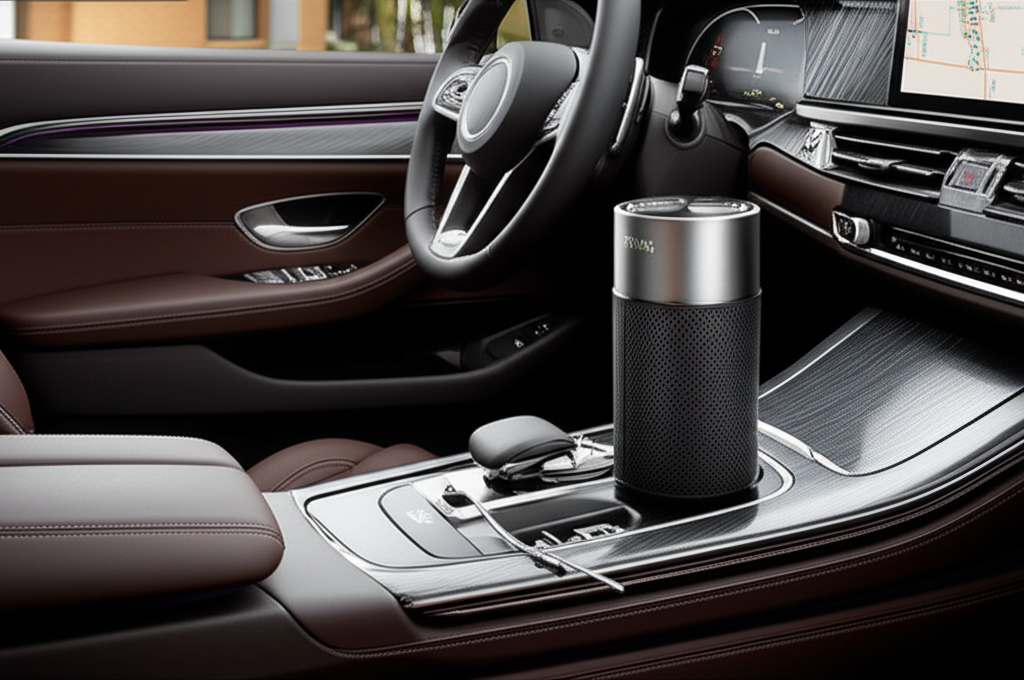
Most car portable air purifiers are designed for plug-and-play use. Simply plug the device into your car’s 12V power outlet or a USB port. Place the unit in a stable location, such as a cup holder or on a flat surface, ensuring its air intake and outlet are not obstructed.
Maintenance
Regular Cleaning: Wipe down the exterior of the unit with a damp cloth as needed.
Filter Replacement: This is the most critical maintenance task. Follow the manufacturer’s recommended schedule for replacing HEPA and carbon filters, typically every 6-12 months depending on usage and air quality.
Check Connections: Periodically ensure the power cord is securely connected to both the purifier and the car’s power outlet.
Neglecting filter replacement can significantly reduce the effectiveness of your car portable air purifier.
Comparison of Popular Car Portable Air Purifier Features
To help you visualize the options, here’s a comparison of typical features found in car portable air purifiers. This table highlights common specifications you might encounter.
| Feature | Model A (Budget) | Model B (Mid-Range) | Model C (Premium) |
| :—————– | :—————————– | :—————————— | :—————————— |
| Filtration | HEPA-style, Activated Carbon | True HEPA, Activated Carbon | True HEPA, Activated Carbon, UV |
| CADR (m³/h) | 5-10 | 10-20 | 15-25 |
| Noise Level (dB) | 30-45 | 25-35 | 20-30 |
| Power Source | 12V Outlet | 12V Outlet, USB | 12V Outlet, USB, Battery |
| Indicator Lights | Basic (Power) | Filter Replacement, Air Quality | Filter Replacement, Air Quality |
| Approx. Price | $30-$50 | $50-$100 | $100-$150+ |
Note: CADR and noise levels can vary significantly even within product categories. Always check specific product details.
This comparison illustrates that while basic functionality is similar, higher-end models often offer superior filtration, quieter operation, and more advanced features for your car portable air purifier.
Real-World Impact: User Testimonials
Hearing from others who have integrated a car portable air purifier into their daily lives can provide compelling evidence of its value. These personal accounts often highlight the tangible improvements experienced.
“I used to sneeze my way through allergy season every time I got in my car,” shares Sarah K., a frequent commuter. “Since getting my car portable air purifier, my drives are so much more comfortable. I can actually breathe deeply without that stuffy, allergenic feeling.”
Another user, Mark T., who travels extensively for work, noted, “The ability to eliminate stale odors from long trips and lingering food smells is a game-changer. It makes my car feel like a fresh space, no matter how long I’ve been on the road.”
These testimonials reflect common sentiments about the positive impact a car portable air purifier can have on daily life.
Frequently Asked Questions About Car Portable Air Purifiers
Here are answers to some common questions about using a car portable air purifier.
Is a car air purifier really necessary?
Yes, especially if you spend significant time in your car or have respiratory sensitivities. Vehicle interiors can trap pollutants, allergens, and odors that a car portable air purifier actively removes, creating a healthier environment.
How often do I need to replace the filters?
Filter replacement frequency depends on the model and your driving environment. Typically, HEPA and carbon filters need replacement every 6 to 12 months. Always check the manufacturer’s recommendations.
Can a car air purifier remove smoke smell?
Activated carbon filters, a common component in many car portable air purifiers, are highly effective at absorbing and neutralizing smoke odors. For persistent smoke smells, a unit with a robust carbon filter is recommended.
Are ozone-generating car air purifiers safe?
No, ozone can be harmful to respiratory health. It’s best to opt for car portable air purifiers that are certified ozone-free or produce negligible amounts of ozone. Look for “ozone-free” certifications.
How do I know if my car air purifier is working?
You might notice a reduction in odors and a fresher smell in your car. For purifiers with air quality sensors, you’ll see the indicator change as it cleans the air. Visually inspecting the filter can also show accumulated dust and particles.
Can I use a regular home air purifier in my car?
Home air purifiers are generally too large and power-hungry for car use. Dedicated car portable air purifier models are designed for smaller spaces and lower power consumption, often plugging into a 12V outlet.
Where is the best place to put a car air purifier?
The best placement is where it won’t obstruct your vision or controls, and where air can circulate freely around it. Common spots include a cup holder, the center console, or a secure place on the dashboard or passenger seat.
Conclusion: Breathe Freely on Every Journey
Your car is an extension of your personal space, and the air quality within it directly impacts your well-being and comfort. A car portable air purifier is no longer a luxury but an essential tool for ensuring you breathe clean, healthy air on every drive, commute, or road trip. By understanding the risks of indoor car pollution and the benefits of these compact devices, you can make an informed choice to invest in your health.
Choosing the right car portable air purifier means investing in a fresher, healthier, and more enjoyable driving experience for yourself and your passengers. Don’t let stale air or unseen pollutants detract from your time on the road.
Ready to transform your car’s interior air quality? Explore our curated selection of top-rated car portable air purifiers to find the perfect fit for your vehicle and lifestyle.
