
Can You Use a Small Air Purifier in a Large Room? Essential Guide

Yes, you can use a small air purifier in a large room, but its effectiveness will be significantly limited. While it might offer some localized improvement, it won’t purify the entire space efficiently. This guide explores the factors you need to consider to make an informed decision and achieve the best possible air quality.
It’s a common dilemma: you have a spacious living area, bedroom, or open-plan office, but only a compact air purifier. The question arises, “Can you use a small air purifier in a large room?” Many of us hope a smaller unit will do the trick to save money or space. While it might offer a glimmer of hope, understanding the limitations is crucial. I’ll walk you through exactly why this setup is often less effective than you’d hope and what you can do about it.
Understanding Air Purifier Capacity: CADR is Key
The effectiveness of any air purifier, regardless of its size, hinges on its Clean Air Delivery Rate (CADR). This metric, established by AHAM (Association of Home Appliance Manufacturers), indicates how quickly a purifier can remove specific airborne pollutants like dust, pollen, and smoke from the air. A higher CADR signifies a more powerful unit capable of cleaning a larger volume of air more rapidly. It’s the most critical factor when determining if a purifier is suitable for a particular room size.
Essentially, CADR tells you how much clean air the device can produce per minute. You’ll typically see three CADR ratings: one for dust, one for pollen, and one for smoke. For optimal performance, ensure the CADR ratings are sufficient for the size of your room.
Matching Purifier Size to Room Dimensions
Air purifiers are designed with specific room sizes in mind, often indicated by the manufacturer. Trying to use a small air purifier in a large room is akin to using a fan designed for a small closet in a gymnasium – it simply won’t have the reach or power to circulate and clean the air effectively throughout the entire space. The unit will constantly run at its maximum capacity, struggling to keep up with the volume of air, leading to reduced efficiency and a shorter lifespan for the device.
Ignoring these recommendations means you’re likely to experience suboptimal air purification. The pollutants will simply circulate in areas the small purifier cannot effectively reach.
The Impact of Room Size on Air Exchange Rate
Air exchange rate (ACH) refers to how many times the air in a room is completely replaced by filtered air within an hour. For effective air purification, especially for individuals with allergies or respiratory issues, an ACH of 4-5 is generally recommended. A small air purifier in a large room will struggle immensely to achieve even a single air exchange per hour, let alone the ideal rate. This means the air in the majority of the room will remain stagnant and polluted for extended periods.
Low ACH in a large room with a small purifier means allergens and pollutants will linger much longer. This can exacerbate symptoms for sensitive individuals and generally lead to poorer indoor air quality.
Can You Use a Small Air Purifier in a Large Room? The Verdict
The short answer is: you can, but it’s highly inadvisable for achieving significant air quality improvement throughout the entire space. A small air purifier will only be effective in a very limited radius around the unit itself. For the rest of the large room, the air will remain largely unpurified. It’s like trying to cool a whole house with a desk fan; you’ll feel the breeze right in front of it, but the rest of the house will remain warm.
While it might offer a slight improvement in the immediate vicinity, it won’t address the overall air quality of a large area. Investing in a unit appropriately sized for your room is crucial for genuine air purification.
Strategies for Using a Small Purifier in a Larger Space (with Limitations)
If you absolutely must use a small air purifier in a large room, or if you’re considering it as a temporary solution, there are a few strategies to maximize its limited impact. These involve strategic placement and potentially using multiple units. However, it’s vital to remember these are workarounds, not ideal solutions. They will offer localized benefits but won’t replace the need for a properly sized unit for comprehensive coverage.
Here are a few ways to make the most of a smaller unit:
- Strategic Placement: Position the small purifier in the area where you spend the most time, like your reading chair or bedside. This ensures the air you’re breathing directly is cleaner.
- Zone Purification: If the large room has distinct zones (e.g., a seating area and a dining area), you might consider using multiple small purifiers, one in each zone. This is more effective than one unit struggling to cover the whole area.
- Close Doors: If the large room is part of a larger open-plan space, closing doors to adjacent rooms can help contain the purified air to a more manageable area, increasing the purifier’s effectiveness within that smaller, defined space.
- Reduce Pollutant Sources: Minimize the introduction of new pollutants into the room. This includes regular cleaning to reduce dust, avoiding smoking indoors, and using low-VOC products.
These methods can provide some localized relief, but they don’t solve the fundamental issue of insufficient air circulation and cleaning power for the entire room.
When a Small Purifier is Simply Not Enough
There are clear indicators that your small air purifier is struggling in a large room. If you notice that dust seems to accumulate quickly, odors persist, or allergy symptoms don’t improve even with the purifier running, it’s a strong sign. Another indicator is the purifier running on its highest setting constantly without achieving a noticeable difference in air freshness. These are all red flags that the unit’s capacity is being overwhelmed.
The most telling sign is that the air quality doesn’t improve significantly in areas far from the purifier. This indicates a lack of circulation and filtration across the entire space.
Calculating Required Air Purifier Size
To avoid the pitfall of using an undersized unit, you need to calculate the appropriate size for your room. Start by measuring the length and width of your room to determine its square footage (Length x Width = Square Footage). Then, consult the air purifier’s specifications for its recommended room coverage area, which is usually listed in square feet. Many manufacturers also provide CADR ratings, and a common rule of thumb is that the CADR should be at least two-thirds of the room’s square footage for effective purification with a good ACH.
For example, if you have a 400 sq ft room, you’d look for a purifier with a coverage area of at least 400 sq ft and a CADR of around 266 (400 * 2/3). Websites like Energy Star offer further guidance on selecting the right air cleaner for your needs.
Types of Air Purifiers and Their Suitability for Large Rooms
Different types of air purifiers employ various technologies, and some are better suited for larger spaces than others. HEPA filters are essential for capturing fine particles, while activated carbon filters are effective against odors and gases. For large rooms, you’ll want to look for units with high CADR ratings, robust multi-stage filtration systems, and features like oscillating fans or multiple fan speeds to improve air circulation. Some high-efficiency models are specifically designed for large open-plan areas or commercial spaces.
Consider units with advanced features like smart sensors that adjust fan speed based on detected pollution levels. Brands like Coway, Blueair, and Dyson offer models specifically engineered for larger square footage, often incorporating advanced airflow dynamics.
HEPA Filters: The Gold Standard for Particle Removal
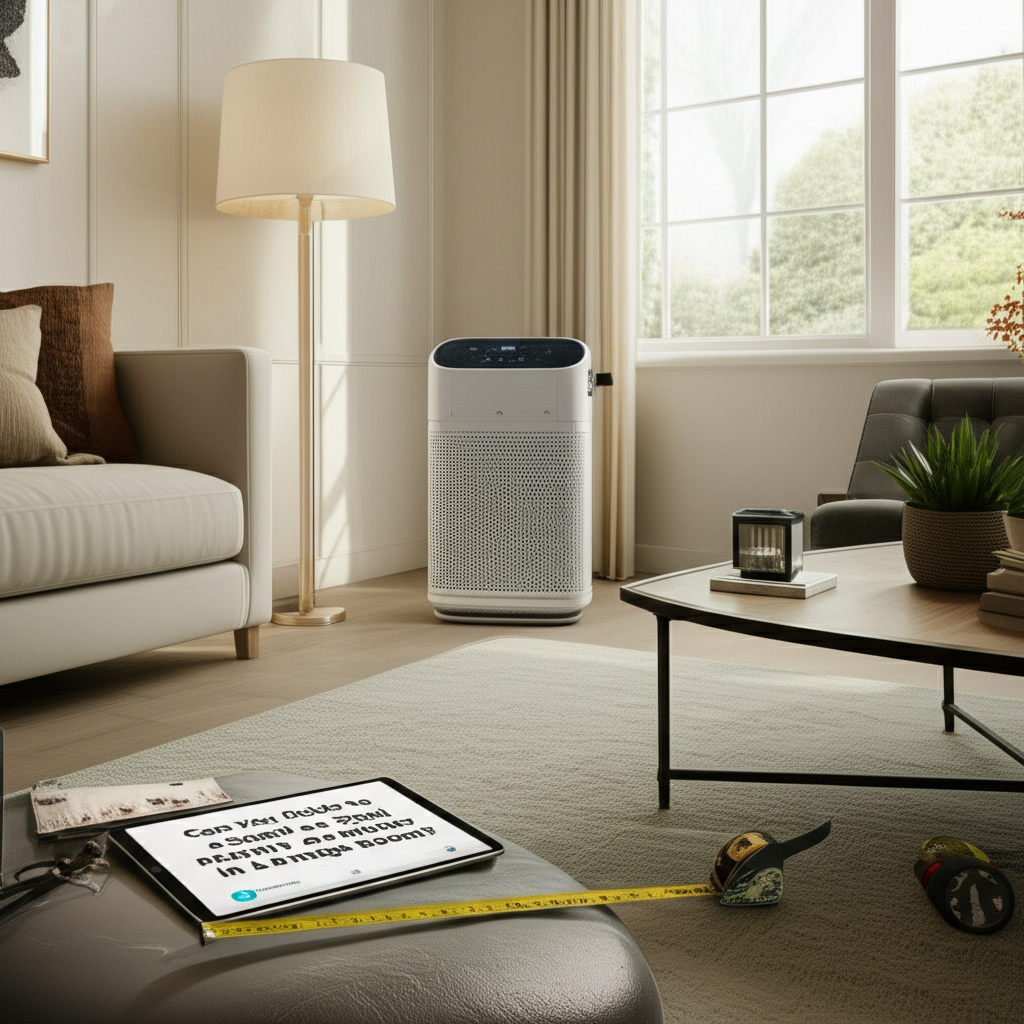
True HEPA filters are designed to capture at least 99.97% of airborne particles 0.3 microns in size. This includes common allergens like pollen, dust mites, pet dander, and mold spores. For a large room, a HEPA filter is non-negotiable, but its effectiveness is still dictated by the unit’s ability to circulate air across the entire space. A small purifier with a HEPA filter will still only clean the air in its immediate vicinity.
Even with a powerful HEPA filter, if the air isn’t being drawn into the purifier from all corners of the room, its benefits will be localized. The air needs to circulate effectively for the filter to do its job comprehensively.
Activated Carbon Filters: Tackling Odors and VOCs
Activated carbon filters are crucial for adsorbing odors, smoke, and volatile organic compounds (VOCs) that a HEPA filter alone cannot capture. In a large room, the concentration of these airborne chemicals can be spread out, making it even harder for a small purifier with a limited carbon filter to make a noticeable difference. A larger room requires a more substantial amount of activated carbon to effectively neutralize odors and gases.
If lingering smells or chemical odors are a concern in your large space, ensure any air purifier you choose has a substantial activated carbon component. A small unit’s carbon filter will quickly become saturated, rendering it ineffective against odors.
Placement Strategies for Maximum Airflow in Large Rooms
The placement of your air purifier is critical, especially in a large room. Avoid placing it in corners or behind furniture, as these locations can obstruct airflow and trap pollutants. Ideally, position the unit in a central location or where air circulation is most needed, such as near a source of pollution or where people spend the most time. Consider placing it on a slightly elevated surface to improve air intake and dispersion.
Think of your purifier as a fan; it needs open space around it to draw air in and push clean air out effectively. Obstructions will significantly reduce its reach and efficiency.
When to Consider Multiple Small Purifiers or One Large Unit
If your room significantly exceeds the recommended coverage area of a small air purifier, you have two primary options: either purchase multiple smaller units to strategically place them around the room, or invest in one larger, more powerful air purifier designed for the square footage. Using multiple small units can be a cost-effective way to achieve better coverage if budget is a primary concern, but it can also lead to more noise and energy consumption. A single, appropriately sized unit is often the most efficient and effective solution for consistent air purification.
For truly effective air purification in large spaces, a single, high-capacity unit is usually the most straightforward and efficient solution. Multiple smaller units can work but require careful placement and may not offer the same level of uniform purification.
Frequently Asked Questions (FAQ)
Can a small air purifier improve air quality in a large room at all?
Yes, a small air purifier can improve air quality in a localized area around the unit. It will effectively clean the air in its immediate vicinity but will not be able to purify the entire large room efficiently.
How many air changes per hour (ACH) should I aim for in a large room?
For optimal air quality, especially for those with respiratory sensitivities, an air change rate of 4-5 times per hour is recommended. A small purifier in a large room will struggle to achieve even one ACH.
What is CADR and why is it important for large rooms?
CADR (Clean Air Delivery Rate) measures how quickly an air purifier can remove dust, pollen, and smoke. For large rooms, a high CADR is essential to ensure the purifier can process the volume of air effectively and meet the desired air exchange rate.
Should I place a small air purifier in a corner of a large room?
No, placing an air purifier in a corner or behind furniture is not recommended. This can obstruct airflow, reducing its effectiveness. It’s best to place it in an open area where air can circulate freely around the unit.
What are the signs that my air purifier is too small for the room?
Signs include persistent odors, rapid dust accumulation, lingering allergens, and the purifier running on high constantly without noticeable improvement. The air will feel fresher only near the unit.
Can I use multiple small air purifiers instead of one large one?
Yes, using multiple small air purifiers strategically placed can help cover a larger area. However, a single, appropriately sized unit for the room’s square footage is often more efficient and provides more uniform purification.
Are there specific features to look for in an air purifier for large rooms?
Yes, look for high CADR ratings, robust multi-stage filtration (HEPA and activated carbon), good air circulation capabilities (e.g., oscillating fans), and coverage area specifications that match or exceed your room’s square footage.
Conclusion
So, can you use a small air purifier in a large room? Technically, yes, but it’s far from ideal. While it may offer a small zone of cleaner air, it cannot effectively tackle the volume and spread of pollutants throughout a spacious area. For genuine, widespread improvement in your indoor air quality, investing in an air purifier that is appropriately sized for your room’s square footage is paramount. Always prioritize CADR ratings and recommended room coverage when making your purchase to ensure you’re getting the best performance and value for your home hygiene needs.
