
Can I Have a Fan and Air Purifier at Same Time? Essential Guide

Yes, you can absolutely use a fan and an air purifier together. Combining their benefits can significantly improve your home’s air quality and comfort, offering both circulation and purification for a healthier living space.
Many people wonder if running a fan and an air purifier simultaneously is a good idea for their home environment. You might be looking for ways to combat stuffy air, allergens, or lingering odors, and you’re considering how these two common appliances can work together. The good news is that using them at the same time is not only possible but often highly beneficial. This guide will walk you through everything you need to know to maximize the effectiveness of both your fan and your air purifier, ensuring you breathe cleaner, fresher air with ease.
The Synergy: Why Running a Fan and Air Purifier Together Makes Sense
Running a fan and an air purifier together creates a powerful combination for improving your indoor air quality and comfort. A fan circulates air, while an air purifier cleans it, leading to a more efficient and comprehensive approach to a healthier home environment.
Fans are excellent at moving air around a room, creating a pleasant breeze and helping to distribute conditioned air from your HVAC system. Air purifiers, on the other hand, actively remove airborne pollutants like dust, pollen, pet dander, smoke, and VOCs through various filtration stages. When used together, the fan’s circulation helps draw more air through the purifier, increasing its efficiency and ensuring cleaner air reaches more areas of your living space.
How a Fan Enhances Air Purifier Performance
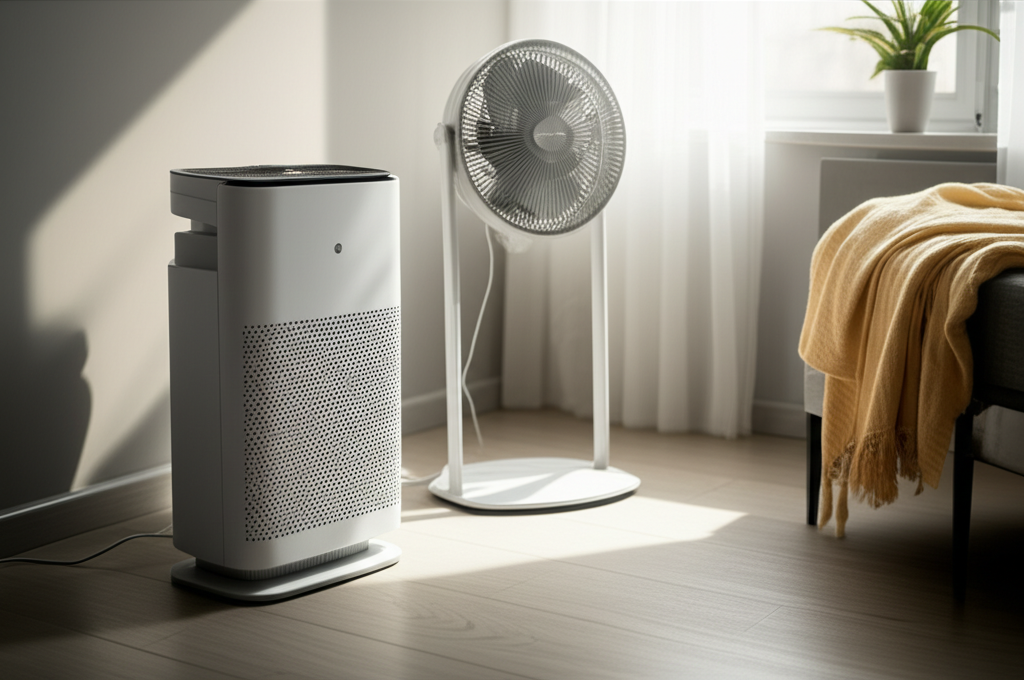
A fan’s ability to move air is crucial for an air purifier’s effectiveness. By circulating the air, a fan ensures that stale or polluted air is consistently drawn into the purifier’s intake, processed, and then redistributed as cleaner air throughout the room.
This constant airflow prevents stagnant pockets of air where pollutants can accumulate. Essentially, the fan acts as a catalyst, accelerating the air purification process by ensuring a continuous supply of air for the purifier to work on. This leads to quicker and more thorough air cleaning.
Airflow Dynamics: What Happens When They’re Together
When you place a fan and an air purifier in the same room, a natural airflow pattern emerges. The fan pushes air, and the purifier draws air in to clean it. This interaction can be optimized for maximum benefit.
Positioning is key; placing the fan to blow air towards the air purifier can help direct more airborne particles into the purifier’s intake. Conversely, placing the purifier slightly away from the fan allows it to draw in air from a broader area, capturing pollutants that might otherwise recirculate.
Understanding Air Purifier Technology
Air purifiers utilize various technologies to clean the air, primarily relying on different types of filters. Understanding these can help you appreciate how a fan complements their function.
Most modern air purifiers use a multi-stage filtration system. This typically includes a pre-filter to capture larger particles like hair and dust, an activated carbon filter to absorb odors and gases, and a High-Efficiency Particulate Air (HEPA) filter to trap 99.97% of airborne particles as small as 0.3 microns.
HEPA Filters: The Gold Standard in Air Purification
HEPA filters are the cornerstone of effective air purification, designed to capture even the smallest airborne contaminants. Their efficiency is vital for allergy sufferers and those sensitive to pollutants.
A true HEPA filter is certified to remove at least 99.97% of airborne particles with a size of 0.3 microns. This includes common allergens like pollen, dust mites, mold spores, and pet dander. The fan’s circulation ensures that these tiny particles are moved towards the HEPA filter for removal.
Activated Carbon Filters: Tackling Odors and VOCs
Beyond physical particles, many air purifiers also address odors, gases, and Volatile Organic Compounds (VOCs). Activated carbon filters are the primary technology for this task.
Activated carbon is highly porous and adsorbs (not absorbs) odor molecules and chemical fumes. This is particularly useful for eliminating smells from cooking, pets, smoke, and off-gassing from furniture or cleaning products. A fan helps bring these odor-laden air molecules into contact with the carbon filter more rapidly.
Types of Fans and Their Role
Different types of fans serve distinct purposes, and their interaction with an air purifier can vary. Understanding these differences helps in choosing the best setup for your needs.
Common fan types include pedestal fans, tower fans, box fans, and desk fans. Each moves air differently, influencing how effectively they can assist an air purifier.
Pedestal and Tower Fans
These fans are designed for broader air circulation, making them excellent companions for air purifiers. Their height and oscillation features help distribute purified air across a larger area.
Pedestal and tower fans can effectively pull air from different parts of the room towards the purifier or help push purified air away from the purifier. Their wider coverage ensures that the benefits of air purification are spread throughout the space, not just in one concentrated area.
Box Fans and Personal Fans
While box fans offer significant airflow, they are less directional and can sometimes create more turbulence. Personal fans are best suited for localized air movement.
A box fan placed strategically can help move a large volume of air, potentially assisting an air purifier. However, it’s important to ensure it doesn’t create so much disruption that it overpowers the purifier’s intake or blows dust back into the air.
Optimizing Placement for Maximum Effectiveness
Strategic placement of both your fan and air purifier is key to maximizing their combined benefits. It’s not just about having them in the same room, but how they are positioned relative to each other and to air sources.
Consider the primary sources of air pollution in your home. If it’s a specific corner where pets sleep or a window that lets in pollen, position your devices accordingly. Think about how air naturally flows in your room and how you can influence that flow to benefit both appliances.
Ideal Fan-Purifier Proximity
The ideal distance between your fan and air purifier depends on the specific models and room layout. Generally, placing them within a few feet of each other is effective.
A common recommendation is to place the fan slightly behind and to the side of the air purifier, angled to blow air towards the purifier’s intake. This creates a continuous loop, drawing air in, purifying it, and then circulating the clean air out. Experiment with different distances to find what works best in your space.
Considering Room Layout and Airflow
The size and layout of your room play a significant role in how well your fan and air purifier work together. Larger rooms may require more powerful units or strategic placement to ensure adequate coverage.
If you have a large open-plan living area, you might need to place units in different zones. For smaller bedrooms, a single well-placed fan and purifier can be highly effective. Always ensure both devices have ample space around them for optimal air intake and output, avoiding corners or obstructions.
When to Use Them Together: Specific Scenarios
There are several situations where running a fan and air purifier concurrently offers distinct advantages. These scenarios highlight the practical benefits of this combined approach.
From managing seasonal allergies to dealing with indoor pollution from cooking or pets, using both appliances can significantly enhance your living comfort and health.
Managing Allergies and Asthma
For individuals suffering from allergies or asthma, the combined action of a fan and air purifier can be a game-changer. The fan circulates air, bringing allergens like pollen and dust mites into the purifier’s filtration system.
This continuous cycle helps reduce airborne allergens, providing much-needed relief. Using a HEPA-filtered air purifier is especially crucial in these cases to capture the microscopic particles that trigger symptoms. A fan helps ensure these particles are captured more efficiently throughout the room.
Combating Pet Dander and Odors
Pet owners often deal with airborne dander and pet-related odors. Both a fan and an air purifier can help manage these issues effectively.
The fan circulates air containing pet dander and odors, directing them towards the air purifier. The purifier’s HEPA filter captures dander, while the activated carbon filter tackles lingering smells. This dual action leads to a fresher, cleaner home environment for everyone, including your furry friends.
Improving Air Quality After Cooking or During Smog Alerts
Cooking can release smoke and odors into the air, while outdoor smog can seep indoors, impacting air quality. In such instances, using both appliances together can be very beneficial.
The fan circulates cooking fumes or outdoor pollutants throughout the space, allowing the air purifier to capture them. This process speeds up the removal of airborne contaminants, making your home more comfortable and healthier, especially during events like wildfires or heavy traffic periods.
Potential Downsides and How to Mitigate Them
While beneficial, there are a few minor considerations when using a fan and air purifier together. Understanding these helps ensure a smooth and effective experience.
The primary concerns revolve around noise levels, energy consumption, and potential interference if not placed correctly. However, these are generally manageable with a little foresight.
Noise Levels
Both fans and air purifiers produce some level of noise, and using them together can increase the overall sound. Modern appliances are designed to be quieter, but it’s still a factor.
To mitigate noise, opt for models known for quiet operation. Place the fan on a lower setting if noise is an issue, or choose a fan and purifier with adjustable speed controls. Strategic placement can also help buffer sound.
Energy Consumption
Running two electrical appliances simultaneously will naturally consume more energy than running just one. It’s important to be mindful of this impact on your electricity bill.
To manage energy use, consider using the fan on a lower speed setting when possible. Many air purifiers also have eco-modes or timers that can help optimize energy consumption. Investing in energy-efficient models can also reduce the overall impact.
Potential for Recirculating Dust
If a fan is placed too close to an air purifier’s exhaust, or if the purifier’s filters are clogged, it could potentially recirculate dust. This is a less common issue but worth noting.
Ensure your air purifier’s filters are cleaned or replaced regularly according to the manufacturer’s recommendations. Proper placement, as discussed earlier, also helps prevent this by ensuring air flows effectively into the purifier and clean air is expelled without immediate recirculation.
Choosing the Right Fan and Air Purifier Combination
Selecting the right fan and air purifier for your needs involves considering several factors, from room size to specific air quality concerns. The goal is to find a complementary pairing.
Think about the primary function you need from each device. Do you need powerful air circulation, or is quiet, consistent purification your main priority? Matching their capabilities ensures optimal performance.
Matching Fan Power to Purifier Capacity
The power of your fan should ideally complement the Clean Air Delivery Rate (CADR) of your air purifier. A higher CADR indicates a more efficient purifier.
For larger rooms or higher pollution levels, a more powerful fan can help ensure that more air is moved through a higher-capacity purifier. Conversely, a smaller fan might suffice for a smaller space or a less powerful purifier.
Key Features to Look For
When purchasing new devices or assessing your current ones, consider features that enhance their combined effectiveness.
Key features include adjustable fan speeds, oscillation capabilities for wider coverage, multiple air purification stages (HEPA, carbon), and smart features like timers or air quality sensors. These can help you tailor their operation to your specific needs and optimize their interaction.
Maintenance Tips for Optimal Performance
Proper maintenance is crucial for both your fan and air purifier to function at their best, especially when used together. Neglecting maintenance can reduce their efficiency and lifespan.
Regular cleaning and filter replacement are the cornerstones of maintaining these appliances. Following manufacturer guidelines ensures they continue to provide clean, circulated air effectively.
Cleaning Fan Blades and Air Purifier Vents
Dust and debris can accumulate on fan blades and within air purifier vents, hindering airflow and performance. Regular cleaning is essential.
Gently wipe down fan blades with a damp cloth and vacuum or wipe clean the intake and exhaust vents of your air purifier. This ensures unobstructed airflow, allowing both devices to operate efficiently.
When and How to Replace Air Purifier Filters
Air purifier filters have a limited lifespan and need to be replaced or cleaned periodically to maintain their effectiveness. This is perhaps the most critical maintenance task.
Follow the manufacturer’s recommendations for filter replacement, typically every 6-12 months for HEPA and carbon filters, depending on usage and air quality. Some purifiers have indicator lights to signal when filters need attention. A clogged filter significantly reduces purification efficiency and can even lead to the purifier recirculating dust.
Frequently Asked Questions (FAQ)
Can using a fan and air purifier together damage either appliance?
No, using a fan and air purifier together generally does not damage either appliance. In fact, it can enhance the air purifier’s efficiency by circulating more air through its filters. Ensure proper placement to avoid any direct strain on components.
Will running both increase my electricity bill significantly?
Yes, running two appliances will use more electricity than running just one. However, the increase is usually moderate, especially with energy-efficient models. You can manage this by using lower fan speeds or timers.
Should I place the fan in front of or behind the air purifier?
It’s often recommended to place the fan slightly behind and to the side of the air purifier, angled to blow air towards the purifier’s intake. This helps draw more air into the purifier for cleaning.
Can I use a ceiling fan with an air purifier?
Yes, a ceiling fan can work well with an air purifier. A ceiling fan helps circulate air throughout the room, which can assist in moving pollutants towards the air purifier for filtration.
Does it matter if my air purifier has a fan built-in?
Many air purifiers have their own internal fans to draw air in and push filtered air out. Using an additional fan alongside one with a built-in fan is still beneficial for enhanced circulation, especially in larger rooms.
How do I know if my fan and air purifier are working effectively together?
You’ll notice improved air freshness, reduced odors, and potentially fewer airborne particles like dust. If you have allergies, you might experience a reduction in symptoms. The room should feel fresher and cleaner overall.
Conclusion
Ultimately, the answer to “Can I have a fan and air purifier at the same time?” is a resounding yes, and it’s a practice that can significantly elevate your indoor air quality and comfort. By understanding how these two appliances work in synergy—the fan circulating air and the purifier cleaning it—you can create a healthier and more pleasant living environment. Strategic placement, mindful maintenance, and choosing the right combination of devices are key to maximizing their benefits. Embrace this powerful duo to breathe easier and enjoy a fresher home.
