
Can Air Purifier Kill Bacteria: Proven Essential

Can Air Purifier Kill Bacteria: Proven Essential for a Healthier Home
Yes, many air purifiers can effectively kill or neutralize bacteria circulating in your home’s air, utilizing technologies like HEPA filtration, UV-C light, and ionization to create a healthier living environment.
Breathing clean air is something we all want for our homes, yet invisible threats like bacteria can linger unseen. You might be wondering, “Can air purifier kill bacteria?” It’s a common concern, especially for families, allergy sufferers, and anyone prioritizing indoor air quality. The good news is that with the right technology, air purifiers are indeed powerful allies in combating airborne bacteria. This article will guide you through how they work, what to look for, and why they are essential for a healthier home.
Understanding Airborne Bacteria and Their Impact
Bacteria are microscopic organisms found everywhere, including the air we breathe indoors. While many are harmless, some can cause illness, trigger allergies, and contribute to unpleasant odors. These tiny culprits can spread through coughs, sneezes, and even simply by shedding skin cells.
The presence of bacteria in indoor air can lead to a variety of health issues. These range from common colds and flu to more serious respiratory infections and allergic reactions. For individuals with compromised immune systems or respiratory conditions, exposure can be particularly detrimental.
How Air Purifiers Combat Bacteria: The Core Mechanisms
Air purifiers employ several advanced technologies to capture and neutralize airborne bacteria. Understanding these mechanisms is key to appreciating their effectiveness in creating a cleaner indoor environment. Each method plays a crucial role in reducing bacterial load.
The primary goal of any air purifier is to remove contaminants from the air. For bacteria, this involves either physically trapping them or inactivating them through various scientific processes. Let’s explore the most common and effective methods.
HEPA Filtration: The Physical Barrier
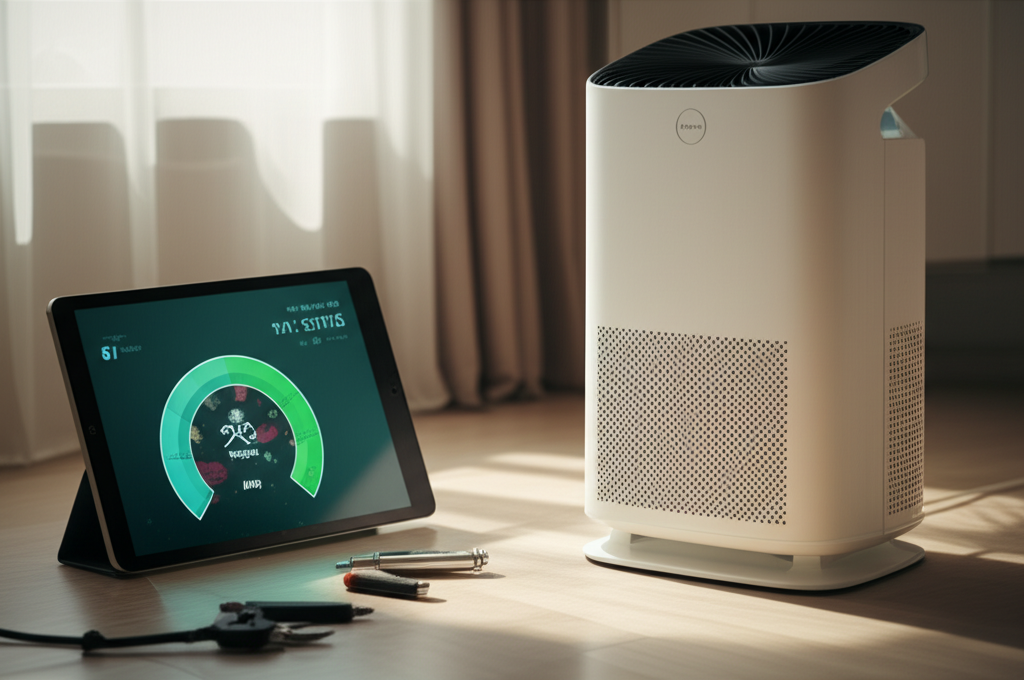
High-Efficiency Particulate Air (HEPA) filters are renowned for their ability to capture extremely small particles. They are designed to trap at least 99.97% of airborne particles 0.3 microns in size, which includes many types of bacteria. This physical trapping is a cornerstone of effective air purification.
When air passes through the dense mesh of a HEPA filter, bacteria are caught within its fibers. This process effectively removes them from the air circulation, preventing them from being inhaled. While HEPA filters trap bacteria, they don’t necessarily kill them within the filter itself.
UV-C Light: The Sterilizing Power
UV-C light is a powerful germicidal agent that can effectively kill bacteria and other microorganisms. Air purifiers with UV-C lamps expose circulating air to this light, damaging the DNA of bacteria and rendering them harmless. This technology adds a vital layer of sterilization.
The effectiveness of UV-C light depends on several factors, including the intensity of the light, the duration of exposure, and the distance from the light source. Proper design ensures that the UV-C light effectively targets and inactivates bacteria as air passes through the unit.
Ionization: Releasing Charged Particles
Ionizers release negatively charged ions into the air, which attach themselves to airborne particles, including bacteria. This process causes the particles to clump together and become heavier, causing them to fall out of the air or be more easily captured by filters. It’s a dynamic way to clear the air.
While ionization can be effective in reducing airborne particles, it’s important to note that some ionizers can produce ozone as a byproduct. Ozone is a lung irritant, so choosing an ozone-free or low-ozone producing ionizer is crucial for health and safety.
Activated Carbon Filters: Tackling Odors and VOCs
Activated carbon filters are excellent at adsorbing odors and volatile organic compounds (VOCs). While their primary function isn’t directly killing bacteria, they can help remove odor-causing bacteria and improve the overall freshness of the air. They complement other purification methods.
By trapping odor molecules produced by bacteria, activated carbon filters contribute to a more pleasant and hygienic environment. This adsorption process enhances the air purification experience, making the air feel cleaner and smell fresher.
Do Air Purifiers Kill Bacteria? The Evidence and Technologies
The question “Can air purifier kill bacteria?” has a nuanced answer: yes, with specific technologies. While HEPA filters trap them, UV-C light and certain ionization methods are designed to kill or inactivate them. Understanding which technologies are most effective is key.
Different air purifier models utilize combinations of these technologies to maximize their effectiveness against airborne pathogens. A multi-stage filtration system often provides the most comprehensive solution for a healthier indoor environment.
HEPA Filters: Trapping Bacteria Effectively
True HEPA filters are certified to capture 99.97% of particles down to 0.3 microns. This includes many bacteria, which often range from 0.2 to 2.0 microns in size. Therefore, HEPA filters are a robust defense against bacteria.
While HEPA filters trap bacteria, they don’t actively kill them. Once trapped, the bacteria remain on the filter until it’s replaced. This means the filter itself becomes a collection point for these microorganisms.
UV-C Germicidal Lamps: Proven Sterilization
UV-C light has a proven track record in sterilizing surfaces and air by disrupting the genetic material of microorganisms. When air passes through a UV-C chamber within an air purifier, bacteria are exposed to this germicidal radiation. This exposure inactivates them, preventing reproduction and rendering them harmless.
The U.S. Food and Drug Administration (FDA) acknowledges UV-C’s germicidal properties. However, for air purification, the effectiveness is dependent on sufficient UV-C intensity and exposure time. Reputable manufacturers ensure their UV-C components are designed for optimal germicidal action.
Photocatalytic Oxidation (PCO): A Chemical Approach
PCO technology uses UV light in combination with a catalyst, often titanium dioxide (TiO2), to create hydroxyl radicals. These radicals are highly reactive and can break down airborne contaminants, including bacteria, viruses, and VOCs, into harmless substances like water and carbon dioxide. It’s a powerful, albeit more complex, method.
While PCO can be effective, some studies have raised concerns about potential byproducts, such as formaldehyde, depending on the specific implementation. It’s a technology to research thoroughly for your specific needs.
Ozone Generators vs. Air Purifiers: A Crucial Distinction
It’s vital to distinguish between air purifiers and ozone generators. While some air purifiers might use ionization that can produce trace amounts of ozone, dedicated ozone generators are designed to produce ozone deliberately. Ozone is a lung irritant and is not recommended for use in occupied spaces.
Many health organizations, including the Environmental Protection Agency (EPA), advise against using ozone-generating air cleaners due to potential health risks. Always ensure your air purifier is certified as ozone-free or meets strict ozone emission standards.
Choosing the Right Air Purifier for Bacteria Control
When selecting an air purifier to combat bacteria, consider the technologies it employs and its suitability for your space. A unit with a multi-stage filtration system, incorporating HEPA and UV-C, often offers the best protection.
Look for certifications from reputable organizations that validate performance claims. Understanding the unit’s coverage area and maintenance requirements will ensure it effectively serves your needs.
Key Features to Look For:
True HEPA Filter: Essential for physically trapping bacteria.
UV-C Germicidal Lamp: For actively killing bacteria.
Activated Carbon Filter: To remove odors associated with bacteria.
Ozone-Free Certification: To ensure safe operation.
Appropriate CADR (Clean Air Delivery Rate): Matches your room size.
Low Noise Levels: For comfortable living.
These features work synergistically to provide a comprehensive approach to tackling airborne bacteria and improving your home’s air quality.
Room Size and CADR: Matching Your Needs
The Clean Air Delivery Rate (CADR) indicates how quickly an air purifier can clean the air in a specific room size. A higher CADR means faster and more effective air purification. Always match the CADR to the square footage of the room you intend to use it in.
Using an air purifier that is too small for the room will result in inefficient cleaning. Conversely, an oversized unit can be unnecessarily noisy and consume more energy.
Maintaining Your Air Purifier for Optimal Performance
Regular maintenance is crucial for ensuring your air purifier continues to effectively kill or capture bacteria. This includes cleaning pre-filters and replacing HEPA and carbon filters as recommended by the manufacturer. Neglecting maintenance can reduce efficiency and even lead to secondary contamination.
A well-maintained air purifier is a reliable guardian of your indoor air quality. It ensures that the technologies designed to combat bacteria remain functional and effective over time.
Filter Replacement Schedule:
| Filter Type | Recommended Replacement Interval |
| :————— | :——————————- |
| Pre-filter | Washable/Clean Monthly |
| HEPA Filter | 6-12 months |
| Activated Carbon | 6-12 months |
| UV-C Bulb | 1-2 years |
Adhering to this schedule is paramount for sustained performance and air hygiene.
Beyond Air Purifiers: Holistic Approaches to Bacteria Control
While air purifiers are powerful tools, they are most effective when part of a broader strategy for maintaining a healthy home environment. Good hygiene practices and proper ventilation also play significant roles in reducing airborne bacteria.
Combining air purification with other healthy habits creates a robust defense against harmful microorganisms, ensuring a consistently clean and safe living space.
Complementary Hygiene Practices:
Regular Cleaning: Dusting, vacuuming, and wiping down surfaces help remove bacteria sources.
Proper Ventilation: Opening windows allows fresh air to circulate, diluting indoor pollutants.
Handwashing: Frequent and thorough handwashing is essential for preventing the spread of bacteria.
Disinfection: Using appropriate disinfectants on high-touch surfaces can kill bacteria.
These practices work hand-in-hand with air purifiers to foster a healthier living environment.
Frequently Asked Questions About Air Purifiers and Bacteria
Q1: Can an air purifier completely eliminate all bacteria from a room?
No air purifier can guarantee complete elimination of all bacteria, as it’s impossible to remove every single microorganism. However, effective air purifiers can significantly reduce the concentration of airborne bacteria to levels that are unlikely to cause harm.
Q2: How long does it take for an air purifier to kill bacteria?
The time it takes for an air purifier to reduce bacteria depends on the technology used, room size, and the initial bacterial load. UV-C and PCO technologies work continuously as air passes through, while HEPA filters trap them over time.
Q3: Are there any risks associated with air purifiers killing bacteria?
The main risk comes from ozone production, particularly with ionizers and PCO. Always choose ozone-free certified models to avoid lung irritation and other respiratory issues.
Q4: Do I need an air purifier if I clean my house regularly?
Yes, even with regular cleaning, bacteria can become airborne and recirculate. An air purifier captures these airborne particles that regular cleaning might miss, providing an extra layer of protection.
Q5: Can an air purifier kill bacteria on surfaces?
Air purifiers primarily target airborne bacteria. They do not directly kill bacteria on surfaces; for that, you need surface disinfectants and manual cleaning.
Q6: Which type of air purifier is best for killing bacteria?
Air purifiers that combine True HEPA filtration with UV-C germicidal lamps are generally considered the most effective for killing and trapping bacteria.
Conclusion: An Essential Tool for Healthier Air
So, can air purifier kill bacteria? Yes, when equipped with the right technologies like UV-C light or effective particle capture systems like HEPA, they are undeniably essential for a healthier home. They act as silent guardians, diligently working to remove harmful microorganisms from the air you breathe daily.
By understanding how these devices function and choosing one that suits your needs, you invest in the well-being of your household. Maintaining your air purifier properly ensures it remains a powerful ally in creating a cleaner, safer, and more comfortable living space for everyone.
