
Blue Air Purifier Vs. Levoit: Essential Comparison

Choosing between a Blueair and Levoit air purifier can be tough. This comparison breaks down key features like filtration, smart capabilities, noise levels, and price to help you decide which is best for your home’s air quality.
Breathing clean air indoors is more important than ever, but navigating the world of air purifiers can feel overwhelming. You’ve likely seen popular brands like Blueair and Levoit, and you’re wondering: which one is the right choice for me? It’s a common dilemma, as both offer compelling features. I’m here to guide you through a detailed blue air purifier vs Levoit comparison, so you can make an informed decision with confidence. We’ll explore everything from their core technology to user-friendliness, ensuring you find the perfect solution for fresher, healthier air in your home.
Blueair vs. Levoit: Understanding the Core Differences
When looking at a blue air purifier vs Levoit, the primary distinction often lies in their filtration technology and approach to air purification. Blueair frequently emphasizes its proprietary HEPASilent™ technology, which combines electrostatic filtration with mechanical filtration for high efficiency at low noise levels. Levoit, on the other hand, typically relies on a multi-stage mechanical filtration system, including True HEPA filters, which are highly effective at capturing particulate matter. This fundamental difference impacts performance, noise, and sometimes cost.
Both brands aim to improve indoor air quality by removing pollutants like dust, pollen, smoke, and odors. They offer a range of models designed for different room sizes and specific needs, but their underlying filtration philosophies set them apart. Understanding these core technologies is the first step in deciding which brand aligns better with your priorities.
Filtration Technology: HEPA vs. Advanced Hybrid Systems
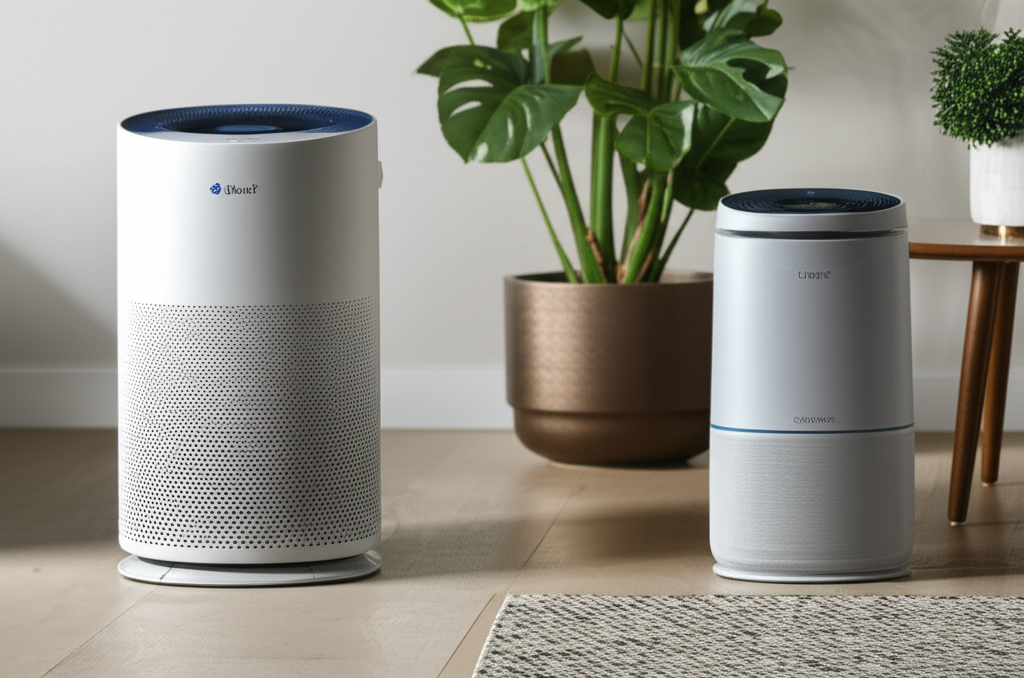
The heart of any air purifier is its filter. Levoit models predominantly use a three-stage filtration system: a pre-filter for larger particles, a True HEPA filter to capture 99.97% of airborne particles 0.3 microns in size, and an activated carbon filter for odors and VOCs. This is a widely recognized and effective standard.
Blueair often employs its HEPASilent™ technology, which uses an electrostatic charge to help particles stick to the filters more easily. This allows them to use less dense filters, which can translate to quieter operation and higher CADR (Clean Air Delivery Rate) for a given fan speed. Some Blueair models also offer activated carbon filtration, particularly in their higher-end lines, to address gases and odors.
Coverage Area and CADR Ratings
When comparing a blue air purifier vs Levoit, ensuring the unit is appropriately sized for your room is crucial. Both brands provide models with varying coverage areas, typically measured in square feet. A higher CADR rating indicates a faster rate at which the purifier can clean the air.
Levoit often publishes CADR ratings for smoke, dust, and pollen, allowing for direct comparison. Blueair also provides CADR figures, but they might also highlight their “room air exchange rate” (how many times per hour the air is cleaned) as a key performance metric. Always check the specifications for your specific room dimensions to ensure optimal performance.
Design and Build Quality: Aesthetics and Durability
Beyond performance, the physical design and build quality of an air purifier contribute to its overall value and user experience. Both Blueair and Levoit offer a range of aesthetic designs, from minimalist to more robust.
Blueair often leans towards a Scandinavian-inspired design, emphasizing clean lines and premium materials. Their units can sometimes feel more substantial and have a sleeker appearance, making them a good fit for modern decor. Levoit units are generally designed to be functional and unobtrusive, with many models featuring a compact footprint.
Material Choices and Construction
The materials used in construction can affect durability and perceived quality. Blueair units often feature high-quality plastics and metal components, contributing to a solid feel. Their commitment to durability is often reflected in their longer warranties on certain models.
Levoit also uses durable plastics for its casings. While perhaps not always as “premium” in feel as some Blueair models, Levoit purifiers are generally well-built and designed for long-term use. The focus is on creating effective units that are accessible and reliable for everyday consumers.
User Interface and Controls
Interacting with your air purifier should be straightforward. Levoit models often feature intuitive control panels with clear buttons and indicators for filter life, fan speed, and modes like sleep or auto. Many of their newer units also offer app control for enhanced convenience.
Blueair also provides user-friendly interfaces, with touch controls and LED displays on many of their models. Higher-end Blueair purifiers integrate advanced smart features, allowing for remote operation and air quality monitoring via Wi-Fi. The complexity of the interface often correlates with the model’s feature set.
Smart Features and Connectivity
In today’s connected homes, smart capabilities are increasingly important. Both brands offer models with Wi-Fi connectivity, allowing for control via smartphone apps. This opens up a world of convenience, from adjusting settings remotely to scheduling operation.
Levoit’s smart models, often part of their “Core” or “Vespera” lines, connect to the VeSync app. This app provides real-time air quality data, filter status, and allows for remote control of fan speed, timers, and modes. Some models even integrate with voice assistants like Amazon Alexa and Google Assistant.
Blueair’s smart purifiers, such as those in the Blue Pure or HealthProtect series, also connect to dedicated apps like the Blueair app. These apps offer similar functionalities, including remote control, air quality monitoring, and filter replacement reminders. The integration with smart home ecosystems is a key selling point for many users.
App Functionality and Ecosystem Integration
The quality and usefulness of the companion app can significantly enhance the user experience. Levoit’s VeSync app is generally praised for its ease of use and comprehensive features. It provides a centralized hub for managing multiple Levoit devices.
Blueair’s app also offers robust control and monitoring capabilities. For users already invested in a particular smart home ecosystem, checking for compatibility with platforms like Amazon Alexa or Google Assistant is essential. Both brands are increasingly focusing on seamless integration into the modern smart home.
Noise Levels: Silent Operation vs. Noticeable Hum
One of the most significant factors for many users is how loud an air purifier is. A noisy unit can be disruptive, especially in bedrooms or living areas. Both Blueair and Levoit have models designed with noise reduction in mind, but their approaches differ.
Blueair’s HEPASilent™ technology is specifically engineered to minimize noise. By using electrostatic charging, they can achieve high filtration rates with lower fan speeds, resulting in whisper-quiet operation on lower settings. This makes their units particularly suitable for bedrooms or quiet workspaces.
Levoit also strives for quiet operation, especially on their lower fan speeds. Many of their models feature a “Sleep Mode” that dims the lights and reduces fan speed to a near-silent level. While generally quiet, some users might notice a more pronounced hum on higher settings compared to Blueair’s most advanced technologies.
Decibel Ratings and Real-World Experience
Decibel (dB) ratings provide a standardized measure of sound intensity. Blueair models often boast very low dB ratings, sometimes as low as 20-30 dB on their lowest settings, comparable to a whisper. This is a significant advantage for light sleepers.
Levoit’s models also have competitive dB ratings, often in the 20-40 dB range depending on the fan speed. While these are excellent figures, the perception of noise can be subjective. It’s worth checking user reviews for real-world experiences regarding noise levels at different settings.
Price and Value Proposition
When considering a blue air purifier vs Levoit, the price point is a crucial determinant for many consumers. Generally, Levoit air purifiers are positioned as more budget-friendly options, offering excellent value for their performance. They provide effective HEPA filtration at accessible price points, making clean air attainable for a wider audience.
Blueair models, particularly their higher-end series with advanced technologies and premium designs, tend to be more expensive. This higher cost is often justified by their proprietary filtration systems, superior build quality, and potentially more sophisticated smart features. However, Blueair also offers more affordable lines like the Blue Pure series, which provide a good balance of performance and price.
Initial Purchase Cost vs. Long-Term Running Costs
The initial purchase price is only one part of the equation. Long-term running costs, primarily filter replacements, should also be factored in. Both brands offer replacement filters, and their availability and cost can vary.
Levoit filters are generally reasonably priced, and their availability is widespread. Blueair filters can sometimes be more expensive, especially for their specialized filter types. However, the lifespan of filters can vary significantly between models and brands, so it’s essential to compare the recommended replacement intervals and filter costs for specific units.
Key Features to Consider for Both Brands
When making your choice between a blue air purifier vs Levoit, several key features should be on your radar. These go beyond the basic filtration and touch upon user experience, specific needs, and overall effectiveness.
Filter Lifespan and Replacement Indicators
Knowing when to replace your filters is vital for maintaining optimal performance. Both Blueair and Levoit provide indicators, either through physical lights on the unit or notifications within their companion apps, to signal when a filter change is due. Filter lifespans can range from 6 months to over a year, depending on usage and air quality.
Energy Efficiency
Air purifiers run for extended periods, so energy efficiency is a consideration for your electricity bill and environmental impact. Look for Energy Star certified models, which meet strict energy efficiency guidelines set by the EPA. Both brands offer energy-efficient options.
Safety Features
For households with children or pets, safety features are paramount. Many air purifiers, including those from Levoit and Blueair, include child lock functions to prevent accidental adjustments to settings. Additionally, ensure the unit has a stable base to prevent tipping.
Blueair vs. Levoit: A Feature Comparison Table
To provide a clear overview, here’s a table comparing typical features you might find in models from both brands. Keep in mind that specific features vary greatly by model.
| Feature | Blueair (Typical) | Levoit (Typical) |
| :—————— | :————————————————— | :—————————————————– |
| Filtration Tech | HEPASilent™ (electrostatic + mechanical) | True HEPA (mechanical) |
| Noise Level | Very quiet, especially on lower settings | Quiet on low settings, noticeable on high |
| Smart Features | Often available on mid-to-high-end models | Available on many popular models, good app integration |
| Design | Often Scandinavian-inspired, premium feel | Functional, minimalist, wide variety of sizes |
| Price Range | Mid-range to premium | Budget-friendly to mid-range |
| Filter Cost | Can be higher | Generally more affordable |
| Room Size | Wide range of options | Wide range of options |
Which Air Purifier is Right for You?
The decision between a blue air purifier vs Levoit ultimately depends on your personal priorities, budget, and specific needs. If whisper-quiet operation and a premium aesthetic are at the top of your list, and your budget allows, Blueair might be the superior choice. Their advanced filtration technology is a significant draw for those seeking the highest possible air purification efficiency with minimal noise disruption.
However, if you’re looking for excellent value, reliable True HEPA filtration, and robust smart features at a more accessible price point, Levoit is an outstanding contender. They consistently deliver effective air purification solutions that meet the needs of a broad range of consumers. Consider your room size, the specific pollutants you’re targeting (e.g., allergens, odors), and your comfort with technology when making your final decision.
When to Choose Blueair
You might lean towards Blueair if:
You have a significant budget for an air purifier.
Extremely quiet operation, especially in bedrooms, is a must.
You appreciate a more premium design and build quality.
You are interested in advanced, proprietary filtration technology.
You prioritize high CADR ratings at lower noise levels.
When to Choose Levoit
Levoit could be the better fit if:
You are on a tighter budget but still want effective air purification.
You value straightforward, reliable True HEPA filtration.
You want a wide selection of models to choose from, often at competitive prices.
You appreciate user-friendly smart features and app control.
You are looking for a good balance of performance and cost-effectiveness.
Frequently Asked Questions
What is the main difference between Blueair and Levoit air purifiers?
The main difference often lies in their core filtration technology. Blueair typically uses its proprietary HEPASilent™ system combining electrostatic and mechanical filtration for quiet efficiency, while Levoit primarily relies on multi-stage mechanical filtration featuring True HEPA filters.
Are Blueair air purifiers quieter than Levoit?
Generally, Blueair models, especially those with HEPASilent™ technology, are designed for exceptionally quiet operation, often quieter than Levoit on comparable settings. However, both brands offer quiet modes on their units.
Which brand offers better value for money?
Levoit generally offers better value for money if your primary concern is cost-effectiveness and reliable True HEPA filtration. Blueair models, particularly higher-end ones, come at a premium price point but often justify it with advanced technology and design.
Do both brands offer smart features and app control?
Yes, both Blueair and Levoit offer models with Wi-Fi connectivity and companion apps for smartphone control, remote monitoring, and scheduling. The specific features and app quality can vary by model.
How often do I need to replace filters for Blueair and Levoit?
Filter replacement frequency varies by model, usage, and air quality, but typically ranges from 6 months to over a year. Both brands provide indicators to alert you when replacement is needed.
Which brand is better for allergies?
Both brands offer effective True HEPA filtration capable of capturing allergens like pollen, dust mites, and pet dander. The best choice depends on room size and specific filtration needs, with Blueair’s efficiency at low noise potentially beneficial for bedrooms.
Conclusion
Deciding between a blue air purifier vs Levoit doesn’t have to be a headache. Both brands offer excellent solutions for improving your indoor air quality, each with its own strengths. Blueair excels in quiet performance and advanced filtration technology, often wrapped in a premium design, making it a great choice for those prioritizing an almost silent, highly efficient purification experience. Levoit, on the other hand, stands out for its exceptional value, providing effective True HEPA filtration and user-friendly smart features at more accessible price points.
Ultimately, the best air purifier for you hinges on your specific requirements. Consider your budget, the size of the room you need to purify, and whether quiet operation or smart home integration is your top priority. By weighing these factors, you can confidently choose the air purifier that will best serve your home and your well-being. Explore both brands further based on these insights to find your perfect match.
