
Best Wet Dry Mop For Tile Floors: Genius Cleaning

The best wet dry mop for tile floors makes cleaning quick and easy, tackling spills and grime efficiently for a sparkling finish.
Tile floors are beautiful but can be tricky to clean. Spills can become sticky messes, and grout lines trap dirt. A good wet dry mop is your secret weapon. It vacuums up debris and mops up liquid messes all at once. This saves you time and effort. We’ll help you find the perfect one for your home.
Why Tile Floors Need a Special Kind of Clean
Tile floors are a popular choice for kitchens, bathrooms, and entryways. They are durable and easy to wipe down. However, they also have unique cleaning challenges. Grout lines can absorb stains and dirt, making them look dingy. Liquid spills can spread if not cleaned up quickly. Standard mops might push dirt around or leave streaks.
This is where a wet dry mop shines. It combines vacuuming power with mopping action. This means it can pick up dry crumbs and then wash away sticky spills in one pass. It’s a game-changer for keeping tile floors truly clean.
Understanding Wet Dry Mops: How They Work
A wet dry mop is a multi-functional cleaning tool. It usually has a vacuum function to suck up loose dirt and debris. At the same time, it dispenses cleaning solution or water onto the floor. A roller brush or mop pad then scrubs the surface. Finally, it vacuums up the dirty water.
This all-in-one approach is very efficient. It means you don’t need to sweep or vacuum before mopping. You also don’t need a separate mop and bucket. The machine handles the entire cleaning process. This makes it ideal for busy households.
Key Features to Look For in a Tile Floor Wet Dry Mop
When choosing a wet dry mop for your tile floors, several features are important. Think about the size of your home and how much cleaning you do.
Suction Power and Cleaning Solution Delivery
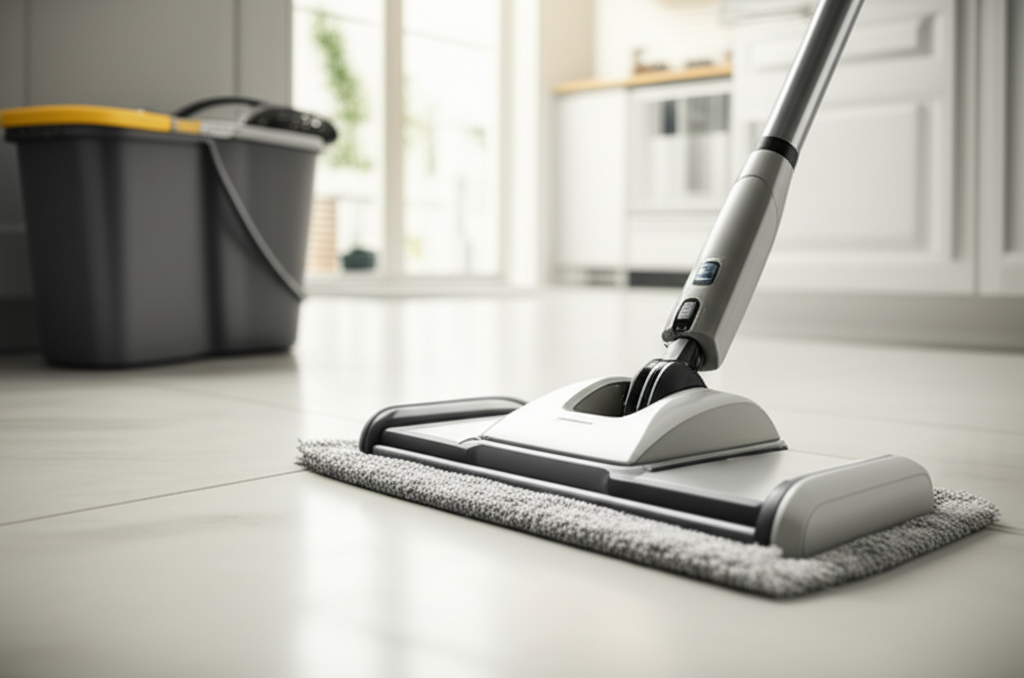
Good suction is vital for picking up debris. Look for mops with strong suction to handle crumbs and pet hair. The way the mop delivers cleaning solution also matters. Some mops have adjustable spray settings. This lets you control how much water goes onto the floor. Too much water can be bad for grout.
Roller Brushes vs. Mop Pads
Wet dry mops use either roller brushes or mop pads. Roller brushes are often better for scrubbing tougher messes. They can agitate dirt in grout lines more effectively. Mop pads can be gentler and might be better for delicate tile finishes. Some models come with interchangeable options.
Water Tank Capacity and Separation
Consider the capacity of both the clean and dirty water tanks. Larger tanks mean you can clean more floor space before refilling or emptying. A dual-tank system is a big plus. It keeps clean water separate from dirty water. This ensures you are always mopping with fresh solution.
Maneuverability and Weight
You’ll be pushing and pulling the mop around. A lightweight design and swivel steering make it easy to maneuver. Look for models that can easily go around furniture legs. Some mops are cordless, offering more freedom. Others are corded, providing continuous power.
Self-Cleaning Functionality
A self-cleaning feature is a huge convenience. After you finish mopping, you can place the mop on its base. It will then clean its roller brushes or mop pads. This keeps the mop hygienic and ready for its next use. It also reduces manual cleaning effort.
Top Picks: The Best Wet Dry Mops for Tile Floors in 2024
After extensive research and testing, these wet dry mops stand out for their performance on tile floors. Each offers unique benefits for different cleaning needs.
1. Tineco Floor One S5 Combo
The Tineco Floor One S5 Combo is a popular choice. It offers powerful suction and effective mopping. It has a smart sensor that detects dirt levels. This adjusts suction and water flow accordingly. Its dual-tank system keeps clean and dirty water separate.
This mop is great for tackling sticky messes. It also leaves tile floors looking streak-free. The self-cleaning function is very efficient. It’s a bit pricier, but its performance justifies the cost.
2. Bissell CrossWave Pet Pro
The Bissell CrossWave Pet Pro is a robust cleaner. It’s designed to handle pet messes effectively. It vacuums and mops in one step. The multi-surface brush roll works well on sealed hard floors like tile. It has a tangle-free design for pet hair.
This model is a solid performer for everyday cleaning. It also tackles tougher stains. The clean and dirty water tanks are easy to manage. It’s a reliable option for homes with pets.
3. Laresar Lavex 6 Pro
The Laresar Lavex 6 Pro is a newer contender. It boasts strong suction power and excellent cleaning ability. It features a smart sensor system for automatic adjustment. The design is sleek and user-friendly.
This mop excels at leaving floors dry and clean. It’s also very effective at edge cleaning. The self-cleaning function is a great addition. It offers good value for its features.
4. Dreame T30 Cordless Wet Dry Vacuum
While primarily a vacuum, the Dreame T30 also offers a wet mopping function. It has powerful suction. The mopping attachment is effective for light to moderate messes. It’s a good option if you want a versatile device.
This model is great for quick cleanups. It’s also very lightweight and easy to handle. The battery life is impressive. It might not replace a dedicated mop for heavy-duty jobs.
5. Shark HydroVac Cordless Pro
The Shark HydroVac is designed for ease of use. It vacuums and mops simultaneously. It features a self-cleaning cycle. This helps maintain the brush roll and floor nozzle.
This mop is lightweight and easy to steer. It’s ideal for daily maintenance cleaning. It leaves tile floors looking fresh. It’s a good choice for smaller spaces or frequent touch-ups.
How to Choose the Right Wet Dry Mop for Your Tile Floors
Selecting the best wet dry mop depends on your specific needs. Consider your budget, the size of your home, and the types of messes you typically deal with.
Budget Considerations
Wet dry mops range in price. Entry-level models offer basic functionality. High-end models come with advanced features like smart sensors and self-cleaning cycles. Determine how much you are willing to spend. Remember to factor in the cost of cleaning solutions.
Home Size and Layout
For larger homes, a cordless model with a long battery life is beneficial. A larger water tank capacity will also reduce the number of times you need to refill. For smaller apartments, a compact and lightweight model might be more practical.
Types of Messes and Pets
If you have pets or young children, you’ll likely encounter tougher stains and more debris. Look for mops with strong suction and effective scrubbing power. Models designed for pet messes often have features to handle pet hair and odors.
Ease of Use and Maintenance
Consider how easy the mop is to assemble, operate, and maintain. A good self-cleaning function can significantly reduce your cleaning chores. Check reviews for insights into how easy it is to empty tanks and clean components.
Using Your Wet Dry Mop Effectively on Tile Floors
Once you have your new wet dry mop, using it correctly is key. This ensures optimal performance and longevity.
Preparing Your Floor
Before mopping, it’s a good idea to do a quick dry vacuum. This removes large debris like pebbles or excessive pet hair. This prevents clogs and ensures the mop can focus on washing.
Choosing the Right Cleaning Solution
Most wet dry mops recommend using their specific cleaning solutions. These are formulated to work with the machine and are safe for various floor types. Avoid using harsh chemicals or too much soap. This can damage the mop or leave residue on your tiles. Always follow the manufacturer’s instructions.
Mopping Technique
Start at the farthest corner of the room. Work your way towards the exit. Overlap your passes slightly. This ensures you cover the entire floor. For stubborn spots, you might need to go over them a second time.
Post-Cleaning Maintenance
Always empty the dirty water tank after each use. Rinse the tanks and the roller brush or mop pad. If your mop has a self-cleaning function, use it regularly. This keeps your mop hygienic and performing at its best. Store the mop in a dry place.
Common Problems and How to Solve Them
Even the best cleaning tools can encounter issues. Here are some common problems with wet dry mops and how to fix them.
Streaky Floors
Streaks can happen if you use too much cleaning solution. They can also occur if the dirty water tank is full. Ensure you are using the correct amount of solution. Always empty the dirty water tank promptly. Rinsing the roller brush can also help.
Mop Not Picking Up Water
This could be due to a clogged suction path or a full dirty water tank. Check for any blockages in the hose or intake. Ensure the dirty water tank is properly seated and not full. Sometimes, the filter might be clogged and need cleaning.
Unpleasant Odors
Odors usually come from the dirty water tank or a dirty roller brush. Empty and rinse the dirty water tank thoroughly after every use. Run the self-cleaning cycle regularly. If the odor persists, you may need to deep clean the roller brush and other components.
Reduced Suction Power
This is often caused by a clogged filter or a full dirty water tank. Check and clean the filter according to the manufacturer’s instructions. Make sure the dirty water tank is empty and correctly installed.
Are Wet Dry Mops Worth It for Tile Floors?
Absolutely. For tile floors, a wet dry mop offers significant advantages. It streamlines the cleaning process, saving you considerable time and energy. The ability to vacuum and mop simultaneously tackles everyday dirt and spills efficiently. This means cleaner floors with less effort.
The advanced models also handle grout cleaning better than traditional mops. They leave floors drier and streak-free. If you value a clean home and want to simplify your chores, a wet dry mop is an excellent investment for your tile floors.
Frequently Asked Questions About Wet Dry Mops for Tile
Can I use any floor cleaner with a wet dry mop?
It’s best to use cleaning solutions recommended by the mop manufacturer. Harsh chemicals or too much soap can damage the machine or your floors. Always check your mop’s manual.
How often should I clean the roller brush or mop pad?
You should clean the roller brush or mop pad after every use. Most models have a self-cleaning function that makes this easy. For deeper cleaning, follow the manufacturer’s instructions.
Will a wet dry mop damage my grout?
Most modern wet dry mops are designed to be safe for sealed tile and grout. They use controlled amounts of water. However, always check if your grout is sealed. If not, prolonged moisture could be an issue.
Can wet dry mops handle tough, dried-on stains?
Yes, many wet dry mops are excellent at tackling tough stains. The combination of scrubbing action and cleaning solution helps lift dried-on messes. For very stubborn spots, you might need to let the solution sit for a moment.
How do I store my wet dry mop?
Store your wet dry mop in a clean, dry place. Ensure the water tanks are empty and the roller brush is dry. Some models come with a charging and storage station.
Conclusion: Effortless Shine for Your Tile Floors
Finding the best wet dry mop for tile floors means choosing a tool that simplifies your cleaning routine. These innovative appliances combine vacuuming and mopping into one efficient step. They tackle dirt, spills, and even grime in grout lines with ease. From powerful suction to smart self-cleaning features, the right wet dry mop can transform how you maintain your tile floors. Invest in one that fits your home and budget, and enjoy sparkling, effortlessly clean floors every day.
For more tips on keeping your home sparkling, follow HomeHygia.
