
Best Steam Cleaner For Mattress: Proven Clean

The best steam cleaner for a mattress effectively sanitizes and deep cleans without harsh chemicals, removing allergens and stains for a healthier sleep environment.
Mattresses can harbor dust mites, allergens, and stains. Finding the best steam cleaner for your mattress is key to a truly clean and healthy sleep space. Steam cleaning uses hot vapor to kill germs and lift dirt. It’s a chemical-free way to refresh your mattress. This guide will help you choose the right one. We’ll look at what makes a steam cleaner great for mattresses. You’ll learn how to use it safely. Get ready for a fresher, cleaner bed.
Why Steam Clean Your Mattress?
Steam cleaning your mattress offers a deep, sanitizing clean. It uses hot vapor to break down dirt and kill microscopic organisms. This is a great way to improve your bedroom’s air quality. It’s especially helpful for people with allergies or asthma. Regular vacuuming is good, but steam gets to the root of the problem. It tackles dust mites, bacteria, and mold spores.
The hot steam also helps to loosen and lift tough stains. It can break down the bonds that hold grime to mattress fibers. This makes stains easier to remove. It’s a much gentler approach than using harsh chemical cleaners. Those can leave residues. Steam leaves only pure water vapor.
Understanding Mattress Steam Cleaners
A steam cleaner for mattresses is a specialized appliance. It heats water to produce high-temperature steam. This steam is then directed onto the mattress surface. The heat and moisture work together to clean. Different models have various features. Some are handheld, while others are larger units.
Look for models designed for upholstery or fabric cleaning. These often come with attachments suitable for mattresses. The key is the steam’s temperature and pressure. Higher temperatures kill more germs. Consistent pressure helps to dislodge dirt effectively. It’s important to choose a machine that is not too wet. Excessive moisture can damage your mattress.
How Steam Cleaning Works on Mattresses
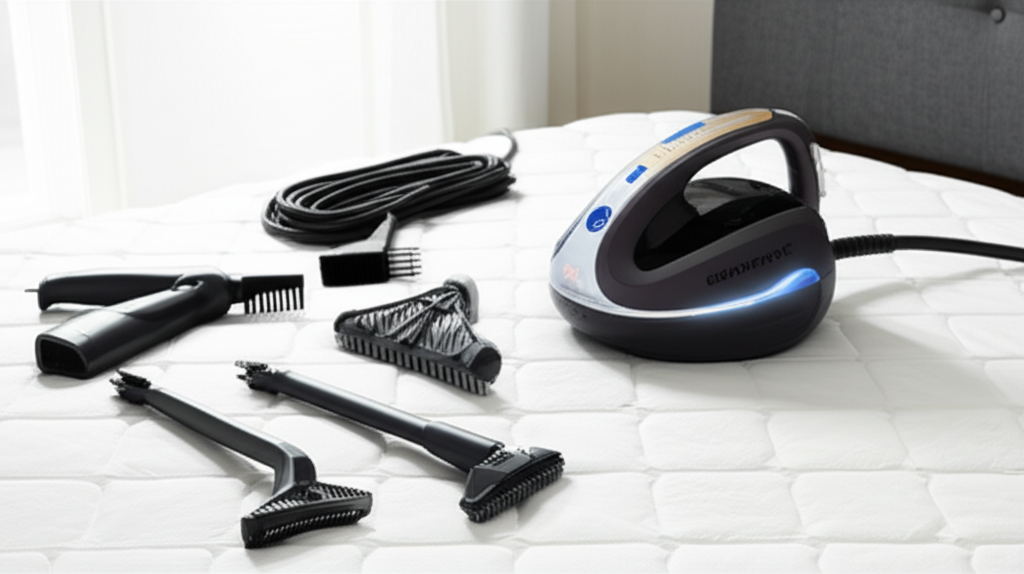
Steam cleaning works by using heat and moisture. The hot steam penetrates the mattress fibers. This loosens dirt, oils, and other contaminants. It also kills bacteria and dust mites on contact. The steam then evaporates quickly. This process leaves the mattress surface dry and sanitized.
The high temperature of the steam is crucial. It denatures proteins in allergens like dust mite droppings. This renders them harmless. It also helps to break down stains. The moisture carries away loosened dirt. Proper use ensures no waterlogging occurs. This is vital for mattress health.
Key Features to Look For in a Mattress Steam Cleaner
When shopping for a steam cleaner for your mattress, several features stand out. You want something effective but also safe and easy to use. Consider the steam output and temperature. A higher temperature is better for sanitizing. Look for adjustable steam settings. This lets you control the moisture level.
Attachments are also very important. You’ll need a nozzle or brush that is suitable for fabric. A crevice tool can help with seams. Consider the water tank size. A larger tank means longer cleaning sessions. Ease of use is also a factor. Is it lightweight? Is it easy to fill and empty?
Steam Output and Temperature
The effectiveness of a steam cleaner hinges on its steam output. Look for a machine that produces continuous, high-temperature steam. Temperatures above 212°F (100°C) are ideal for killing germs. Some units have a “ready to use” time. Shorter times mean you can start cleaning faster.
You might also see terms like “steam pressure” or “PSI.” While important for some cleaning tasks, for mattresses, consistent, hot steam is the priority. Too much pressure can be harsh on delicate mattress fabrics. Focus on machines that offer controlled steam release. This prevents over-saturation.
Attachments and Accessories
Mattress cleaning requires specific tools. Most good steam cleaners come with a variety of attachments. For mattresses, you’ll want a wide upholstery tool. This covers more surface area efficiently. A smaller brush attachment can help scrub away stains.
A crevice tool is also useful. It helps you clean the seams and edges of the mattress. This is where dust and debris often accumulate. Some units might include a fabric-specific nozzle. Ensure the attachments are easy to switch out. This makes your cleaning process smoother.
Water Tank Capacity and Heat-Up Time
The water tank capacity determines how long you can steam without refilling. For a mattress, a medium-sized tank is usually sufficient. Look for tanks between 30-50 ounces. This will allow for about 15-20 minutes of continuous steam. This is generally enough for one mattress.
Heat-up time is also a consideration. Some steam cleaners are ready in under a minute. Others might take 5-10 minutes. If you plan to steam clean often, a quick heat-up time is a bonus. It saves you waiting time.
Portability and Ease of Use
A mattress steam cleaner should be relatively lightweight and easy to maneuver. You’ll be carrying it around the bed. Handheld models are often the most portable. Some canister models have long hoses and cords. This gives you good reach.
Consider the weight when the tank is full. Check for comfortable grip handles. Simple controls are also a plus. You don’t want a complicated machine. Easy filling and emptying of the water tank are also important.
Top Steam Cleaner Picks for Mattresses
After researching many options, a few models consistently perform well for mattress cleaning. These machines balance power, features, and ease of use. They are designed to tackle fabric surfaces effectively without causing damage.
Here are some of the best steam cleaners for mattresses:
1. PurSteam ThermaPro Steam Cleaner
This is a versatile, handheld steam cleaner. It heats up quickly and offers good steam output. It comes with several attachments, including a fabric brush. It’s excellent for spot cleaning stains and general sanitizing. Its compact size makes it easy to handle.
Pros: Fast heat-up, good for spot cleaning, portable.
Cons: Smaller water tank requires frequent refilling for large areas.
The PurSteam ThermaPro is a reliable choice for frequent touch-ups. Its powerful steam can tackle common mattress issues.
2. Dupray Neat Steam Cleaner
The Dupray Neat is a canister-style steam cleaner. It’s known for its robust build and powerful, continuous steam. It includes a floor attachment and a smaller upholstery tool. This makes it suitable for mattresses and other household surfaces. It has a larger water tank for longer cleaning sessions.
Pros: Continuous steam, large water tank, durable.
Cons: Can be heavier to maneuver than handheld units.
This model is a great investment if you need a powerful steamer for multiple tasks. Its high temperature is excellent for deep sanitization.
3. McCulloch MC1275 Heavy-Duty Steam Cleaner
This is another powerful canister steam cleaner. It’s often recommended for deep cleaning. It comes with a wide array of attachments, including an upholstery tool. It produces high-temperature steam for effective sanitizing. The large water tank allows for extended use.
Pros: Powerful steam, large tank, versatile attachments.
Cons: Longer heat-up time compared to some handhelds.
The McCulloch MC1275 is a workhorse. It’s ideal for thorough mattress cleaning and sanitizing.
4. Bissell Steam Shot Handheld Steamer
For a budget-friendly option, the Bissell Steam Shot is a good choice. It’s a compact handheld steamer. It’s simple to use and effective for light sanitizing and spot cleaning. It comes with a few basic attachments suitable for fabric.
Pros: Affordable, easy to use, compact.
Cons: Smaller water tank, less powerful than larger units.
This is a great option for occasional use or for smaller mattresses. It offers a chemical-free cleaning solution.
How to Steam Clean Your Mattress Safely and Effectively
Using a steam cleaner on your mattress requires a careful approach. You want to clean effectively without damaging the mattress or leaving it too wet. Always follow the manufacturer’s instructions for your specific steam cleaner.
Here’s a step-by-step guide:
1. Prepare the Mattress: Remove all bedding. Vacuum the entire mattress thoroughly. This removes loose dirt, dust, and debris. Pay attention to seams and edges.
2. Fill the Water Tank: Use distilled or demineralized water if recommended by the manufacturer. This prevents mineral buildup in the machine. Fill the tank to the indicated level. Do not overfill.
3. Select the Right Attachment: Choose an upholstery tool or a fabric brush. Ensure it’s clean and dry before attaching it.
4. Test in an Inconspicuous Area: Before steaming the whole mattress, test the steam cleaner on a small, hidden spot. This helps you check how the fabric reacts to the heat and moisture. Wait for it to dry.
5. Steam the Mattress: Hold the steam cleaner a few inches above the mattress surface. Move it slowly in overlapping strokes. Don’t hold it in one spot for too long. Work in small sections.
6. Focus on Stains: For stains, you might need to hold the nozzle slightly closer. Use gentle scrubbing motions with the brush attachment. Do not saturate the mattress.
7. Allow to Dry Completely: This is the most crucial step. Open windows to ventilate the room. Let the mattress air dry completely. This can take several hours. Do not put bedding back on until it’s fully dry. You can use a fan to speed up drying.
8. Post-Cleaning Vacuum: Once dry, you can vacuum the mattress again. This helps to lift any loosened dirt particles. It also helps to restore the mattress fibers’ texture.
Important Safety Tips:
Never use a steam cleaner on a mattress that cannot handle moisture. Check the care tag.
Always unplug the appliance when filling or changing attachments.
Keep the steam cleaner away from children and pets.
Avoid over-wetting the mattress. This can lead to mold and mildew.
* Ensure the mattress is completely dry before using it again.
Proper technique ensures a clean, refreshed mattress. It also protects your investment.
Comparing Steam Cleaners: Key Differences
Not all steam cleaners are created equal. When comparing models, consider their primary purpose. Some are designed for general household cleaning. Others are more specialized. For mattresses, you need one that offers controlled steam and suitable attachments.
Here’s a quick comparison of common types:
| Feature | Handheld Steam Cleaners | Canister Steam Cleaners |
| :—————— | :————————————— | :————————————— |
| Portability | Very high | Moderate to High |
| Water Tank Size | Small (1-2 cups) | Large (30-60 oz or more) |
| Cleaning Time | Shorter sessions, frequent refills | Longer sessions, fewer refills |
| Power/Steam | Good for spot cleaning, lighter tasks | More powerful, good for deep cleaning |
| Best For | Quick clean-ups, small areas | Whole mattress, frequent deep cleaning |
| Price | Generally lower | Generally higher |
Handheld models are great for quick spot treatments. They are easy to store. Canister models offer more power and capacity. They are better suited for larger jobs or more frequent, thorough cleaning.
Choosing between them depends on your needs. Do you need to clean the entire mattress regularly? A canister might be better. Is it just for occasional stain removal? A handheld could be sufficient.
Dealing with Mattress Stains Using Steam
Mattress stains can be stubborn. Steam cleaning can be very effective. It helps to break down the stain without harsh chemicals. Always address stains promptly for best results.
Start by vacuuming the stained area. This removes any surface particles. Then, use your steam cleaner with an upholstery attachment. Hold the nozzle a few inches away. Move it in a circular motion over the stain. Do not soak the area.
For tougher stains, you might need to use a bit of gentle scrubbing. Use the brush attachment carefully. You can also try a mild detergent mixed with water. Apply it sparingly to the brush, not directly to the mattress. Then, steam over the area to lift the residue.
Always allow the area to dry completely. If a stain persists, you might need a second treatment. However, avoid excessive steaming. Too much moisture is the biggest risk.
Maintaining Your Steam Cleaner
Proper maintenance ensures your steam cleaner lasts longer. It also keeps it working effectively. After each use, let the machine cool down. Empty any remaining water from the tank. This prevents mineral buildup and potential mold growth.
Wipe down the exterior of the machine. Clean the attachments thoroughly. Use a soft cloth or brush. For models with heating elements, check the manual for descaling instructions. Using distilled water can significantly reduce scale.
Store the steam cleaner in a dry place. Ensure all parts are securely stored. Regular cleaning and proper storage will keep your steam cleaner ready for action. This ensures consistent performance for your mattress cleaning needs.
When to Call a Professional
While a steam cleaner is a great tool for home use, some situations warrant professional help. If your mattress has very old, set-in stains, a professional cleaner might have more powerful equipment. They can also handle delicate fabrics that you might be hesitant to steam clean yourself.
If you’re unsure about the process or your mattress’s material, professional cleaning is a safe bet. Professionals have experience with different fabrics. They can assess the best cleaning method. This is also true if your mattress has specific cleaning instructions that advise against DIY methods.
Consider professional cleaning for deep sanitization needs. Especially if someone in your household has severe allergies or health concerns. They can ensure a thorough, safe cleaning.
Frequently Asked Questions About Mattress Steam Cleaners
Q1: Can steam cleaners damage my mattress?
Steam cleaners can damage a mattress if used incorrectly. Over-wetting is the main risk. It can lead to mold or mildew. Always use a low steam setting if available. Move the cleaner continuously. Ensure the mattress dries completely.
Q2: How often should I steam clean my mattress?
For general sanitizing, steam cleaning once or twice a year is usually sufficient. If you have allergies or pets, you might do it more often, perhaps every 3-6 months. Always check the mattress manufacturer’s guidelines.
Q3: What kind of water should I use in a steam cleaner?
It’s best to use distilled or demineralized water. Tap water contains minerals. These can build up inside the steam cleaner. This can clog the machine and reduce its effectiveness over time. Check your steam cleaner’s manual for specific recommendations.
Q4: How long does a mattress take to dry after steam cleaning?
Drying time varies. It depends on the mattress material and how much moisture was used. It can take anywhere from 4 to 12 hours. Ensure good ventilation. Using fans can speed up the process. Never use the mattress until it’s completely dry.
Q5: Can steam cleaning remove all mattress stains?
Steam cleaning is effective for many stains. It works best on fresh stains. Old or deeply set stains might be harder to remove completely. Multiple treatments might be needed. Some stains, like those from certain dyes, may not be fully removable.
Q6: Are there alternatives to steam cleaning for mattresses?
Yes, you can vacuum your mattress regularly. Baking soda can be sprinkled on the mattress to absorb odors and moisture. For stains, spot cleaning with mild soap and water is an option. However, steam offers superior sanitization without chemicals.
Conclusion: A Healthier Sleep Starts Here
Choosing the best steam cleaner for your mattress is an investment in your health and comfort. By using the right machine and following proper cleaning techniques, you can effectively remove allergens, kill bacteria, and tackle stubborn stains. This leads to a fresher, more hygienic sleep environment.
Remember to look for features like adjustable steam, appropriate attachments, and ease of use. Always prioritize complete drying after cleaning. With the right steam cleaner, maintaining a pristine mattress is achievable. Enjoy a cleaner, healthier sleep.
If you found this guide helpful, consider subscribing for more home hygiene tips.
