
Best Placement for Air Purifier in Bedroom: Genius Essential

Finding the best placement for an air purifier in your bedroom is crucial for maximizing its effectiveness in creating a healthier sleep environment. Strategic positioning ensures optimal air circulation and pollutant removal, leading to better air quality and improved sleep. This guide offers essential tips for genius placement.
Breathing clean air in your bedroom is fundamental for restful sleep and overall well-being. Many of us invest in air purifiers, only to wonder if we’re getting the most out of them. The common question, “Where should I put my air purifier in the bedroom?” often goes unanswered, leading to suboptimal performance. Don’t worry; I’m here to demystify the ideal placement for your air purifier. We’ll explore simple, genius strategies to ensure your device works efficiently, creating a sanctuary of fresh air. Let’s dive into how to position your air purifier for maximum impact.
Why Air Purifier Placement Matters in Your Bedroom
Proper air purifier placement is essential for efficient operation and optimal air purification. It ensures that the device can effectively circulate air and capture pollutants, allergens, and odors. Incorrect placement can create dead zones where air doesn’t reach, rendering the purifier less effective. This leads to stagnant air and a compromised indoor environment, impacting your sleep quality.
Think of it like this: a powerful fan in a corner facing a wall won’t cool an entire room. Similarly, an air purifier needs open space to draw in dirty air and expel clean air effectively. Strategic placement maximizes its reach and filtration capabilities, making a tangible difference in your bedroom’s air quality.
Understanding Airflow: The Key to Optimal Placement
Air purifiers work by drawing in air, filtering it, and then releasing cleaner air back into the room. Understanding this airflow dynamic is the first step to finding the best placement for an air purifier in your bedroom. Most purifiers have intake vents and exhaust outlets. For maximum efficiency, these need to be unobstructed.
The goal is to create a continuous cycle of air circulation. Clean air should be able to spread throughout the room without encountering barriers. This allows the purifier to process the entire volume of air in your bedroom regularly.
The “Sweet Spot”: General Guidelines for Bedroom Placement
The ideal spot for your air purifier is often in a central location, away from walls and furniture. This allows for 360-degree airflow, enabling the unit to pull in air from all directions and distribute purified air evenly. Aim for at least a foot of clearance around the device.
Consider the size of your bedroom and the purifier’s coverage area. A small purifier in a large room, even in the best spot, might struggle. Conversely, an oversized unit crammed into a tiny corner might be overwhelming. Match your purifier’s capacity to your room’s dimensions for the best results.
Avoiding Common Placement Pitfalls
Several common mistakes can hinder your air purifier’s performance. Placing it directly behind furniture, in a closet, or too close to a window can significantly reduce its effectiveness. These placements obstruct airflow and can even lead to the unit overheating.
Another pitfall is placing it too close to where you sleep, especially if it emits a noticeable fan noise or light. While proximity might seem logical, it can disrupt your sleep. Finding a balance between effective placement and comfort is key.
Best Placement for Air Purifier in Bedroom: Specific Scenarios
Let’s explore specific scenarios and genius placement strategies. The best placement for an air purifier in your bedroom often depends on the room’s layout and your specific needs, such as allergies or pet dander.
Near the Source of Pollutants
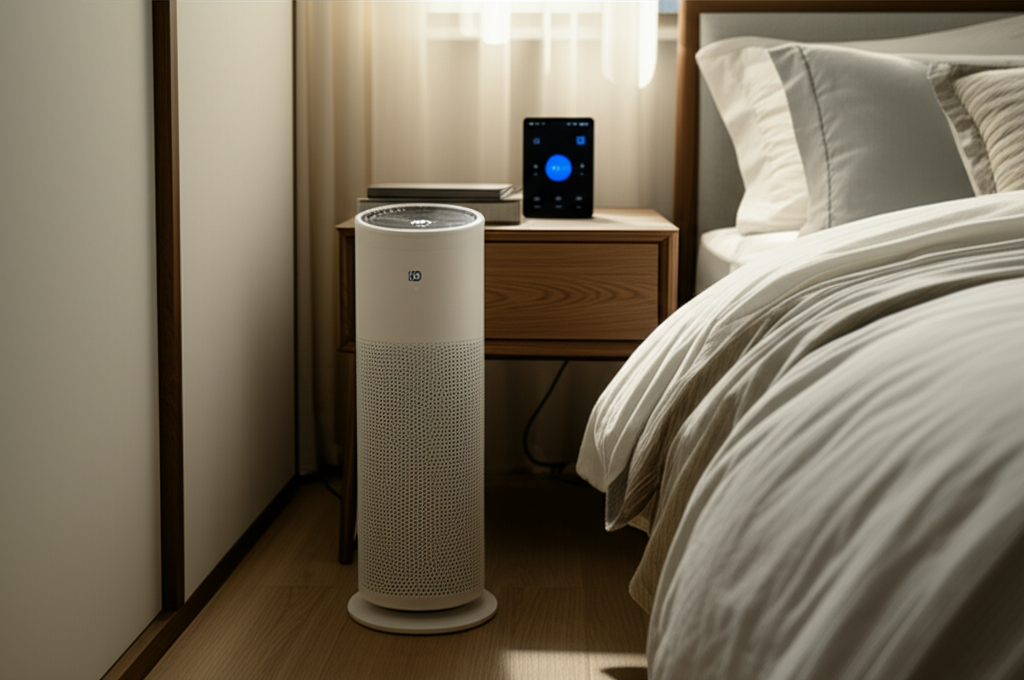
If you have a primary source of pollution, like a pet’s bed or a frequently used window that lets in pollen, placing the purifier closer to that area can be beneficial. This helps capture pollutants before they spread throughout the room. However, ensure it still has adequate space for airflow.
This targeted approach can be particularly effective for individuals with severe allergies. By intercepting allergens near their entry point, you can significantly reduce exposure during sleep.
Corner Placement: The Right Way
While general guidelines suggest avoiding corners close to walls, a corner can be a good spot if done correctly. If you place the purifier in a corner, ensure it’s not pushed against the walls. Pull it out at least a foot, ideally more, to allow for unimpeded airflow from all sides.
Some air purifiers are designed with specific intake and exhaust vents that might make corner placement more feasible. Always consult your device’s manual for recommended clearances.
Near Your Bed: Pros and Cons
Placing an air purifier near your bed might seem like the most direct way to benefit from cleaner air. The advantage is that you’re closer to the purified air stream. However, the cons include potential noise disruption, light emission from indicator lights, and the possibility of air currents disturbing your sleep.
If you opt for this placement, choose a model with a quiet sleep mode and dimmable lights. Position it a few feet away from your head to mitigate noise and drafts.
Against a Wall: When It’s Okay
Generally, you want to avoid placing your air purifier directly against a wall. Most units need space for air intake, which is often on the sides or back. Pressing it against a wall blocks these vents.
However, some purifiers are designed with top or front-facing vents. If your model has such a design, placing it closer to a wall might be acceptable, but always check the manual. Even then, leaving a few inches of space is advisable.
Elevated Placement: Is It Better?
Elevating your air purifier, perhaps on a small table or sturdy shelf, can sometimes improve air circulation. This is because pollutants can settle at different levels, and placing the purifier higher can help capture airborne particles more effectively. It also helps prevent it from being accidentally kicked or blocked by pets.
Ensure the surface is stable and can support the purifier’s weight and vibrations. Also, make sure the elevated position doesn’t compromise the desired airflow pattern.
The Impact of Room Size and Air Purifier Capacity
Matching your air purifier’s Clean Air Delivery Rate (CADR) to your bedroom’s square footage is critical. A purifier with a high CADR can clean the air in a larger room more quickly. If your purifier is undersized for your bedroom, even perfect placement won’t yield optimal results.
Conversely, an oversized purifier in a small room can be noisy and may not be as energy-efficient. Always check the manufacturer’s recommendations for room coverage.
Integrating Air Purifier Placement with Other Bedroom Furniture
Think about how your air purifier fits into your bedroom’s overall layout. Avoid placing it directly next to heat sources like radiators or in areas with excessive dust accumulation, like near open windows during dusty weather.
Consider the aesthetics too. Many modern air purifiers are designed to be sleek and unobtrusive. Find a spot where it blends in and doesn’t become an eyesore, while still maintaining optimal functionality.
Smart Placement Strategies for Allergy Sufferers
For those battling allergies, the best placement for an air purifier in the bedroom is often near the bed or where you spend the most time resting. This maximizes your exposure to purified air during crucial sleep hours. Placing it strategically can significantly reduce nighttime allergy symptoms.
Consider placing it on your nightstand, ensuring it’s not too close to your head. Alternatively, a spot at the foot of the bed with ample clearance can also be very effective.
Maintaining Your Air Purifier for Peak Performance
Proper placement is only one part of the equation. Regular maintenance ensures your air purifier continues to function at its best. This includes cleaning or replacing the filters according to the manufacturer’s schedule. Clogged filters drastically reduce airflow and purification efficiency.
Dusting the exterior and ensuring the vents are clear of debris will also help maintain optimal performance. A well-maintained purifier, in the right spot, is your best defense against indoor air pollutants.
Frequently Asked Questions About Bedroom Air Purifier Placement
Where is the absolute best place for an air purifier in a bedroom?
The absolute best place is typically a central location, at least a foot away from walls and furniture, allowing for 360-degree airflow. This ensures maximum circulation and efficient pollutant capture.
Can I put an air purifier in the corner of my bedroom?
Yes, you can place an air purifier in a corner, but ensure it’s pulled out at least a foot from both walls to allow for proper air intake and exhaust.
Should an air purifier be on the floor or a table?
Both can work. Placing it on a table can sometimes improve air circulation by capturing airborne particles at a higher level. However, ensure it’s stable and has clearance. Placing it on the floor is also effective if it’s not obstructed.
How far should an air purifier be from my bed?
Ideally, an air purifier should be a few feet away from your bed to avoid direct airflow, noise, or light disturbances. This distance still allows for effective air purification in your immediate sleep zone.
Does it matter if my air purifier is near a window or door?
Yes, it matters. Placing it too close to an open window or door can draw in more unfiltered air and pollutants, making it work harder. It’s generally better to place it away from these entry points.
How often should I clean or replace my air purifier’s filters?
Filter maintenance is crucial. Follow the manufacturer’s recommendations, which usually range from replacing HEPA filters every 6-12 months and cleaning pre-filters monthly.
Will placing my air purifier behind my headboard work?
No, this is generally not recommended. Placing it behind a headboard obstructs airflow, significantly reducing its effectiveness and potentially causing the unit to overheat.
Conclusion: Genius Placement for a Healthier Sleep Haven
Achieving the best placement for an air purifier in your bedroom is a straightforward yet impactful process. By understanding airflow principles, avoiding common mistakes, and considering your specific bedroom layout and needs, you can create an optimal environment for clean, healthy air. Remember to prioritize unobstructed airflow, match your purifier’s capacity to your room size, and maintain your device regularly. Implementing these genius essential strategies will transform your bedroom into a true sanctuary for restful sleep and improved well-being.
