Best Home Air Purifier for COVID-19: Essential Shield

The best home air purifier for COVID-19 acts as an essential shield, significantly reducing airborne virus particles in your living space and offering peace of mind. This guide helps you choose the right model for enhanced indoor air quality and protection.
The lingering concern about COVID-19 in our homes makes indoor air quality a top priority. We all want to ensure our families are safe and healthy, especially with airborne viruses posing a constant threat. Finding the right air purifier can feel overwhelming, but with clear guidance, you can make an informed decision. This article will break down what to look for in the best home air purifier for COVID-19, ensuring you understand the technology and features that matter most. Let’s dive into creating a safer, cleaner environment for everyone.
Why an Air Purifier is Crucial for COVID-19 Protection
An air purifier can be a vital tool in your home’s defense against airborne pathogens like the SARS-CoV-2 virus. These devices work by circulating air and filtering out particles, including virus-laden aerosols. Investing in a quality unit offers an extra layer of protection beyond ventilation and disinfection.
This is especially important in shared indoor spaces where the risk of transmission can be higher. Air purifiers help capture these tiny particles before they can spread widely. They contribute to a healthier living environment for everyone, especially for vulnerable individuals.
Understanding How Air Purifiers Combat Viruses
The primary mechanism air purifiers use against viruses is through advanced filtration systems. Most effective models employ HEPA filters, which are designed to trap extremely small particles. These filters are rated to capture at least 99.97% of airborne particles 0.3 microns in size.
The SARS-CoV-2 virus, when present in aerosols, falls within this size range or can be attached to larger particles that HEPA filters can capture. By continuously drawing air through these filters, purifiers effectively remove these virus-carrying particles from the air you breathe.
Key Features to Look for in the Best Home Air Purifier for COVID-19
When selecting an air purifier to combat COVID-19, certain features are non-negotiable for optimal performance. Prioritizing these specifications will ensure you get a device that genuinely enhances your home’s safety. Look for units that combine robust filtration with effective air circulation.
HEPA Filtration: The Gold Standard for Particle Capture
True HEPA filters are the cornerstone of effective air purification against viruses. Ensure the purifier explicitly states it uses “True HEPA” filtration, meaning it meets the standard for capturing 99.97% of particles down to 0.3 microns. This is critical for trapping virus-sized particles and other allergens.
Avoid purifiers that claim “HEPA-like” or “HEPA-type” filters, as these do not meet the same rigorous standards. A True HEPA filter ensures you are getting the highest level of particle removal available in consumer-grade air purifiers.
Activated Carbon Filters: Tackling Odors and VOCs
While HEPA filters capture particles, activated carbon filters are essential for addressing gases, odors, and volatile organic compounds (VOCs). These can include chemicals from cleaning products or airborne irritants that contribute to poor indoor air quality. A combination of HEPA and activated carbon offers comprehensive air cleaning.
This dual-action approach ensures your air is not only free of virus particles but also free from other common indoor pollutants. It creates a more pleasant and healthier living environment overall.
CADR Ratings: Measuring Air Cleaning Efficiency
The Clean Air Delivery Rate (CADR) is a crucial metric indicating how quickly an air purifier can clean a room of specific pollutants. Higher CADR ratings for smoke, dust, and pollen mean the unit is more powerful and efficient. For COVID-19 protection, a higher CADR ensures faster removal of airborne particles.
It’s important to match the CADR to your room size. A general rule of thumb is to choose a purifier with a CADR rating that is at least two-thirds of the room’s square footage. This ensures effective air changes per hour.
Room Size and Coverage Area: Matching the Unit to Your Space
Air purifiers are rated for specific room sizes, typically measured in square feet. It’s vital to select a unit that is appropriately sized for the area you intend to use it in. An undersized purifier will struggle to effectively clean the air, while an oversized one might be unnecessarily expensive or noisy.
Consider the primary room where you want the most protection, such as a bedroom or living area. You can always move a portable unit between rooms as needed. Always check the manufacturer’s recommended coverage area.
Noise Levels: Ensuring Comfort and Quiet Operation
Air purifiers operate using fans, which inevitably produce some noise. Look for models that offer multiple fan speeds, including a quiet or sleep mode. This is particularly important if the purifier will be used in a bedroom or office where noise can be disruptive.
Decibel (dB) ratings are used to measure sound levels. Aim for a unit that operates below 50 dB on its lowest setting, and ideally below 30 dB for sleep mode. This ensures a peaceful environment.
Additional Features for Enhanced Protection
Beyond the core components, some advanced features can further enhance an air purifier’s effectiveness. These include pre-filters for larger particles, UV-C light for germicidal action, and smart features for convenient control. While not always essential, they can add value.
A washable pre-filter can extend the life of your main HEPA filter by capturing larger debris like pet hair and dust. Smart features like app control and air quality sensors can provide valuable insights and automation.
Top Home Air Purifiers for COVID-19: Our Top Picks
Selecting the absolute best home air purifier for COVID-19 involves balancing performance, features, and value. Based on expert reviews and user feedback, several models consistently stand out for their ability to effectively reduce airborne virus particles. I’ve personally found these to be reliable choices.
Coway Airmega AP-1512HH Mighty
The Coway Airmega AP-1512HH Mighty is a perennial favorite for its excellent performance and value. It features a True HEPA filter, an activated carbon filter, and an ionizer (which can be turned off if preferred). Its compact size and quiet operation make it ideal for bedrooms and smaller living spaces.
This model boasts a robust filtration system capable of capturing 99.97% of airborne pollutants. It also includes a pollution sensor that automatically adjusts fan speed for optimal air quality. Its energy efficiency is another significant plus.
Blueair Blue Pure 211+ Auto
For larger rooms, the Blueair Blue Pure 211+ Auto is a strong contender. It utilizes a unique HEPASilent™ technology that combines electrostatic and mechanical filtration for high performance with low noise. It comes with a washable fabric pre-filter in various colors.
The unit is designed for simplicity and effectiveness, with an auto mode that adjusts settings based on detected air quality. Its high CADR rating makes it suitable for spaces up to 540 square feet.
Levoit Core 300S Smart True HEPA Air Purifier
The Levoit Core 300S is a popular choice for its smart features and compact design. It offers a 3-stage filtration system, including a True HEPA filter, an activated carbon filter, and a preliminary filter. It’s ideal for medium-sized rooms and offers app control for remote operation.
This purifier is recognized for its quiet operation and energy efficiency. The ability to control it via a smartphone app adds a layer of convenience for managing your home’s air quality.
Honeywell HPA300 Premium Large Room Air Purifier
The Honeywell HPA300 is a powerhouse designed for larger spaces, capable of purifying rooms up to 465 square feet. It features a True HEPA filter and an activated carbon pre-filter. Its robust design and high CADR rating make it a reliable choice for comprehensive air cleaning.
This model is known for its durability and effective performance in capturing a wide range of airborne contaminants. It offers multiple fan speeds and an automatic shut-off timer for added convenience.
Setting Up and Maintaining Your Air Purifier for Maximum Effectiveness
Proper setup and consistent maintenance are key to ensuring your air purifier functions optimally in providing a shield against airborne threats. Following these steps will maximize its lifespan and cleaning power. Don’t underestimate the impact of regular care.
Initial Setup and Placement Strategies
Upon receiving your air purifier, carefully unpack it and ensure all protective packaging is removed from the filters. Place the unit in the room where you spend the most time or where air circulation is a concern. Avoid placing it directly against walls or furniture, as this can obstruct airflow.
Ideally, position the purifier in an open area where air can freely circulate around it. This allows the fan to draw in air from all directions and effectively filter it. For maximum impact, consider running it continuously on a medium to low setting.
Filter Replacement Schedule: When and Why
The effectiveness of your air purifier hinges on regular filter replacement. HEPA and activated carbon filters become saturated over time and lose their ability to capture pollutants. Check your manufacturer’s recommendations for replacement intervals, typically every 6-12 months for HEPA filters and 3-6 months for carbon filters.
Skipping filter replacements will significantly reduce the unit’s performance and can even lead to re-release of trapped particles. Some purifiers have filter life indicators to remind you when it’s time for a change.
Cleaning and General Care for Longevity
Beyond filter replacement, occasional cleaning of the unit’s exterior and pre-filter (if applicable) will help maintain its performance and appearance. Dust accumulation can affect the fan’s efficiency. Use a soft, dry cloth to wipe down the unit.
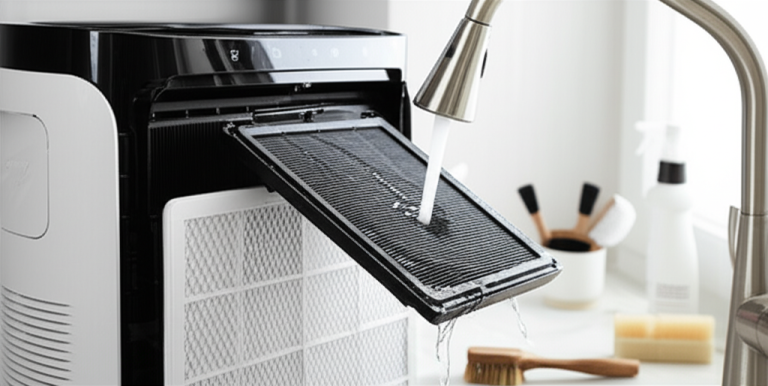
If your purifier has a washable pre-filter, rinse it under cool water and allow it to dry completely before reinserting. This simple maintenance ensures the unit runs smoothly and efficiently for years to come.
Air Purifier Technology Beyond HEPA: What to Know
While HEPA filters are the gold standard, other technologies are sometimes incorporated into air purifiers. Understanding these can help you make a more informed choice, especially concerning potential downsides. Always prioritize HEPA filtration for virus capture.
The Role of Ionizers and Ozone Production
Some air purifiers use ionizers to release negative ions into the air, which attach to particles, causing them to clump together and fall out of the air or stick to surfaces. However, ionizers can sometimes produce ozone as a byproduct, which is a lung irritant. If a unit has an ionizer, ensure it has an option to turn it off.
The U.S. Environmental Protection Agency (EPA) recommends avoiding air purifiers that intentionally produce ozone. Always check product specifications for ozone emissions.
UV-C Light Sterilization: A Complementary Feature
UV-C light is a germicidal technology that can kill bacteria and viruses. Some air purifiers incorporate UV-C lamps to further sterilize the air or the trapped particles. While it can be an effective addition, it’s not a replacement for HEPA filtration.
The effectiveness of UV-C depends on the intensity of the light and the duration of exposure. Ensure the UV-C component is designed for optimal germicidal action and is safely enclosed within the unit.
Air Purifiers vs. Other COVID-19 Mitigation Strategies
Air purifiers are an excellent tool, but they are most effective when used in conjunction with other proven COVID-19 mitigation strategies. They complement, rather than replace, measures like vaccination and masking. Consider them part of a multi-layered defense.
Ventilation and Air Exchange Rates
Good ventilation is crucial for diluting airborne contaminants, including viruses. Opening windows and doors when possible, or using mechanical ventilation systems like HVAC with high-efficiency filters, significantly improves indoor air quality. Air purifiers help further reduce any remaining particles.
The EPA recommends increasing ventilation as a key strategy to reduce the risk of airborne transmission. Combining this with air purification creates a robust indoor environment.
Masking and Social Distancing
While not directly related to air purification technology, masking and social distancing remain vital personal protective measures. They reduce the number of virus-carrying particles released into the air and the likelihood of exposure. An air purifier acts as an additional layer of defense within a space.
These strategies work together to create a safer environment. An air purifier helps clean the air in shared spaces, offering protection even when other measures are not fully implemented.
Choosing the Best Home Air Purifier for COVID-19: A Final Checklist
Before making your final decision on the best home air purifier for COVID-19, run through this quick checklist to ensure you’re getting the most effective device for your needs. Prioritize your health and peace of mind.
True HEPA Filter: Does it have a True HEPA filter?
CADR Rating: Is the CADR appropriate for your room size?
Activated Carbon: Does it include an activated carbon filter for gases and odors?
Noise Level: Are the noise levels acceptable for your intended use?
Certifications: Is it certified by reputable organizations (e.g., AHAM, Energy Star)?
Ease of Maintenance: Are filters readily available and easy to replace?
* Ozone Production: Does it avoid significant ozone production?
By considering these points, you can confidently select a purifier that offers the best protection.
FAQ: Your Top Questions About Air Purifiers and COVID-19 Answered
Here are answers to some common questions people have when looking for an air purifier to help protect against COVID-19. I hope this clarifies any remaining doubts.
Can an air purifier kill the COVID-19 virus?
No, air purifiers do not kill viruses directly; they capture airborne particles that may contain the virus. True HEPA filters are highly effective at trapping virus-sized particles.
How many air changes per hour (ACH) should I look for?
For effective virus removal, aim for an air purifier that can achieve at least 4-5 air changes per hour (ACH) in your room. This means the entire volume of air in the room is filtered multiple times each hour.
Are expensive air purifiers always better?
Not necessarily. While premium models often offer advanced features, many mid-range and even budget-friendly options with True HEPA filters can be highly effective. Focus on essential features like filtration and CADR.
How do I know if my air purifier is working effectively?
You can often tell by the noticeable improvement in air freshness and a reduction in odors. Some smart purifiers also provide real-time air quality readings via an app. Regular filter changes are crucial for sustained effectiveness.
Can an air purifier help with other airborne illnesses besides COVID-19?
Yes, absolutely. Air purifiers with HEPA filters are effective at capturing a wide range of airborne contaminants, including allergens, dust, pet dander, mold spores, and bacteria, which can help reduce the risk of various respiratory illnesses.
Should I run my air purifier 24/7?
Running your air purifier continuously, especially on a lower setting, is recommended for maximum effectiveness in maintaining clean air. This ensures that airborne particles are consistently being filtered out.
Conclusion: Your Shield for a Healthier Home Environment
Investing in the best home air purifier for COVID-19 is a proactive step toward safeguarding your family’s health. By understanding the essential features like True HEPA filtration, appropriate CADR ratings, and effective activated carbon, you can make an informed choice. Remember that air purification works best as part of a comprehensive strategy that includes ventilation and other preventive measures.
This guide has provided you with the knowledge to select a unit that offers superior air cleaning and peace of mind. Creating a healthier indoor environment is achievable, and a quality air purifier is a powerful ally in that endeavor. Breathe easier knowing you’ve taken steps to protect your home.