
Best Air Purifiers For Smoke: Proven Essential

The best air purifiers for smoke offer a vital solution for cleaner indoor air, effectively removing harmful particles from wildfires, cooking, and tobacco. These devices use advanced filtration to capture smoke odors and allergens, creating a healthier living environment. Investing in a top-rated model ensures peace of mind and improved respiratory health.
If smoke has invaded your home, whether from a distant wildfire, a forgotten pot on the stove, or even secondhand smoke, you know how persistent and irritating it can be. The acrid smell clings to everything, and the tiny particles can trigger allergies and breathing difficulties. It’s a frustrating situation, but thankfully, there’s a powerful ally in the fight for fresh indoor air. I’m here to guide you through selecting the best air purifiers for smoke, ensuring you can reclaim your comfortable and healthy living space. We’ll explore what makes an air purifier truly effective against smoke and highlight the top contenders that deliver proven results.
What Makes an Air Purifier “Best” for Smoke?
The best air purifiers for smoke are designed with specific filtration technologies to tackle the complex mixture of particles and gases found in smoke. They prioritize multi-stage filtration systems that capture everything from large ash particles to microscopic VOCs (Volatile Organic Compounds) that cause lingering odors. Look for units that excel in HEPA filtration and activated carbon.
The Crucial Role of HEPA Filters
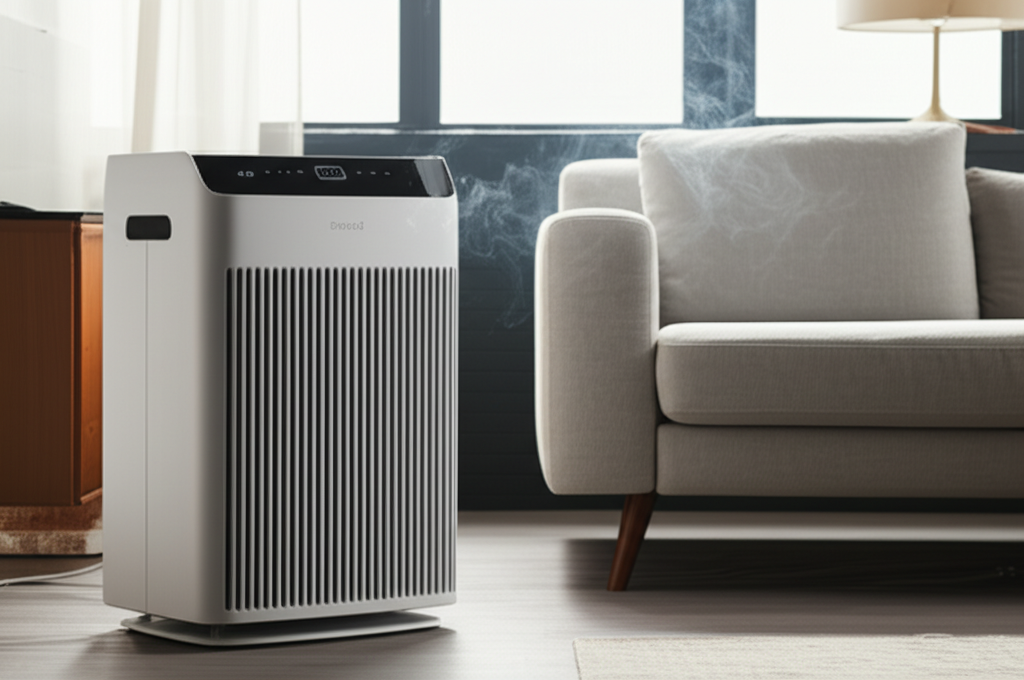
High-Efficiency Particulate Air (HEPA) filters are the backbone of any effective air purifier for smoke. True HEPA filters are certified to capture at least 99.97% of airborne particles as small as 0.3 microns. This includes smoke particles, ash, pollen, dust, and pet dander, making them essential for respiratory health.
Activated Carbon for Odor Elimination
While HEPA filters capture the particles, activated carbon filters are crucial for eliminating smoke odors. These filters contain porous carbon that adsorbs gases and volatile organic compounds (VOCs) responsible for that unpleasant smoky smell. The more activated carbon a purifier has, the more effective it will be at neutralizing odors.
Pre-filters: The First Line of Defense
A good pre-filter is often overlooked but plays a vital role in extending the life of your main filters. It captures larger particles like pet hair and visible dust, preventing them from clogging the HEPA and carbon filters. This simple addition means your purifier can work more efficiently for longer.
Top Air Purifier Features for Smoke Control
Beyond basic filtration, several features can significantly enhance an air purifier’s performance when dealing with smoke. Considering these can help you make a more informed decision for your specific needs and home environment.
CADR Ratings: A Measure of Performance
Clean Air Delivery Rate (CADR) is a standardized rating that indicates how quickly an air purifier can clean the air in a room. Higher CADR ratings for smoke, dust, and pollen mean the unit is more powerful and effective. Always match the CADR to your room size for optimal performance.
Coverage Area and Room Size
It’s essential to choose an air purifier rated for the square footage of the room you intend to use it in. An undersized unit will struggle to keep up with smoke, while an oversized one might be unnecessarily expensive and noisy. Many manufacturers provide specific room size recommendations based on CADR.
Noise Levels and Sleep Modes
Smoke can be a persistent problem, often requiring continuous operation. Therefore, consider the noise level, especially for bedrooms or living areas. Many purifiers offer quiet or sleep modes that reduce fan speed and dim indicator lights for undisturbed rest.
Smart Features and App Control
Modern air purifiers often come with smart capabilities, allowing control via smartphone apps. These features can include remote operation, scheduling, air quality monitoring, and filter replacement alerts, adding convenience and enhancing your ability to manage indoor air quality.
Our Top Picks for the Best Air Purifiers for Smoke
Based on extensive research and user reviews, these models consistently stand out for their effectiveness in combating smoke. I’ve considered their filtration capabilities, CADR ratings, and overall value to bring you proven solutions.
1. Coway Airmega 200M: A Balanced Performer
The Coway Airmega 200M is a fantastic all-around choice, offering a robust three-stage filtration system that includes a washable pre-filter, HEPA filter, and activated carbon filter. Its Smart Eco Mode automatically adjusts fan speed based on air quality, saving energy. This unit is excellent for medium to large rooms and is known for its quiet operation.
Filtration: Pre-filter, HEPA filter, Activated Carbon filter
Coverage Area: Up to 1,572 sq ft (though most effective in rooms up to 361 sq ft)
CADR: 135 cfm (Smoke)
Key Features: Auto mode, air quality indicator, filter replacement indicator, sleep mode.
This purifier provides a great balance of performance, features, and energy efficiency, making it a popular choice for smoke-filled environments. Its reliability and ease of use contribute to its high ranking.
2. Blueair Classic 480i: Powerful and Smart
Blueair is renowned for its innovative air purification technology. The Classic 480i utilizes a combination of electrostatic and mechanical filtration (HEPASilent™ technology) to capture an impressive range of pollutants, including smoke particles and odors. Its sleek design and advanced particle sensor make it a smart choice for larger spaces.
Filtration: Washable pre-filter, HEPASilent™ Ultra (combination of electrostatic and mechanical filtration)
Coverage Area: Recommended for rooms up to 365 sq ft
CADR: 260 cfm (Smoke)
Key Features: Wi-Fi enabled, app control, air quality monitoring, energy star certified.
The Blueair Classic 480i excels in quickly clearing the air of smoke and odors, offering a sophisticated and effective solution for your home. Its advanced features provide granular control and real-time air quality insights.
3. Levoit Core 300S: Compact Powerhouse for Smaller Spaces
For those with smaller rooms or a tighter budget, the Levoit Core 300S is an outstanding option. This compact purifier boasts a three-stage filtration system, including a fine preliminary filter, a True HEPA filter, and a high-efficiency activated carbon filter. It’s remarkably quiet and surprisingly powerful for its size, making it ideal for bedrooms or home offices.
Filtration: Preliminary filter, True HEPA filter, High-Efficiency Activated Carbon filter
Coverage Area: Up to 219 sq ft
CADR: 141 cfm (Smoke)
Key Features: Smart app control, voice control (Alexa/Google Assistant), QuietKEAP™ Technology, sleep mode.
The Levoit Core 300S proves that effective smoke purification doesn’t always require a large or expensive unit. Its smart features and quiet operation make it a user-friendly and highly effective choice for smaller areas.
4. Winix 5500-2: A Well-Rounded Workhorse
The Winix 5500-2 is consistently praised for its performance and value. It features a True HEPA filter, an activated carbon filter (often infused with PlasmaWave technology, which can be turned off if desired), and a washable fine mesh pre-filter. This combination effectively captures smoke particles and neutralizes odors. It’s a solid choice for medium to large living spaces.
Filtration: Washable fine mesh pre-filter, True HEPA filter, Activated Carbon filter, PlasmaWave technology (optional)
Coverage Area: Recommended for rooms up to 360 sq ft
CADR: 232 cfm (Smoke)
Key Features: Auto mode, air quality sensor, sleep mode, filter replacement indicator.
This model offers a comprehensive filtration approach, tackling both particulate matter and odor molecules with ease. Its auto mode and sensor make it a convenient and responsive air cleaner.
5. Alen BreatheSmart FLEX: Customizable and Stylish
The Alen BreatheSmart FLEX offers a blend of powerful performance and aesthetic appeal. It features a medical-grade HEPA filter capable of capturing 99.97% of airborne particles down to 0.3 microns, along with an activated carbon filter specifically designed to combat odors. Its customizable design options allow it to blend seamlessly with your home décor.
Filtration: HEPA-Pure filter (includes pre-filter and HEPA), options for OdorCell (activated carbon) or other specialized filters
Coverage Area: Recommended for rooms up to 700 sq ft
CADR: 110 cfm (Smoke)
Key Features: Smart sensor, auto-pilot mode, whisper-quiet operation, lifetime warranty on defects.
With its versatile filtration options and attractive design, the Alen BreatheSmart FLEX provides an effective and personalized solution for smoke-related air quality concerns. Its robust warranty adds significant value.
Understanding Air Purifier Technologies for Smoke
The effectiveness of an air purifier against smoke hinges on the technologies it employs. Different purifiers use various combinations to achieve optimal air cleaning. Understanding these can help you decipher product specifications and make the best choice.
HEPA vs. HEPA-Type vs. HEPA-like
It’s crucial to distinguish between these terms. True HEPA filters meet the rigorous standard of capturing 99.97% of particles 0.3 microns in size. HEPA-type or HEPA-like filters are less effective, capturing only around 95% of particles down to 2 microns. For smoke, always opt for True HEPA.
Ionizers and Ozone Production
Some air purifiers use ionizers to charge particles, causing them to clump together and fall out of the air. While this can help, many ionizers also produce ozone as a byproduct, which can be a lung irritant, especially for those with respiratory issues. If considering an ionizer, ensure it’s certified to produce minimal to no ozone, or look for models where the ionizer can be turned off.
UV-C Light Technology
UV-C light is sometimes included to kill airborne bacteria and viruses. While it can be a beneficial feature for germ control, its effectiveness against smoke particles and odors is minimal. UV-C’s primary role is sterilization, not particle or odor removal from smoke.
How to Choose the Right Air Purifier for Your Smoke Problem
Selecting the best air purifier for smoke involves more than just picking a model with a HEPA filter. Consider these practical aspects to ensure you get the most effective solution for your home.
Assess Your Specific Smoke Source
Is your primary concern wildfire smoke, cooking smoke, or tobacco smoke? Wildfire smoke contains a wide range of fine particles and chemicals, requiring a robust HEPA and carbon filter. Cooking smoke often involves grease and strong odors, benefiting from a substantial activated carbon filter. Tobacco smoke contains numerous harmful chemicals and requires comprehensive filtration.
Calculate Room Size and CADR Needs
As mentioned, matching the air purifier’s coverage area and CADR to your room size is paramount. A general rule of thumb is to look for a CADR for smoke that is at least two-thirds of the room’s square footage. For example, a 150 sq ft room would benefit from a CADR of at least 100 cfm.
Consider Filter Replacement Costs and Availability
Air purifiers require ongoing maintenance, primarily filter replacements. Factor in the cost and frequency of filter replacements when making your decision. Some brands offer subscription services for filters, which can sometimes be more cost-effective and ensure you never run out.
Read Reviews and Expert Opinions
Don’t solely rely on manufacturer claims. Read reviews from other users who have experienced similar smoke issues. Websites like Wirecutter, Consumer Reports, and reputable tech review sites often conduct thorough testing and provide unbiased comparisons.
Maintaining Your Air Purifier for Peak Performance
Once you’ve invested in a quality air purifier, proper maintenance is key to ensuring it continues to effectively combat smoke. Neglecting maintenance can significantly reduce its performance and lifespan.
Regular Cleaning of Pre-filters
The pre-filter is your first line of defense against larger particles. Most pre-filters are washable and should be cleaned every 2-4 weeks, depending on usage and air quality. Simply rinse it under water and let it air dry completely before reinserting.
Timely HEPA and Carbon Filter Replacement
HEPA and activated carbon filters are not washable and need to be replaced according to the manufacturer’s recommendations, typically every 6-12 months. Over-saturated filters become ineffective and can even become a source of mold or bacteria. Pay attention to the filter replacement indicator lights on your unit.
General Unit Cleaning
Periodically wipe down the exterior of your air purifier with a damp cloth. Ensure the unit is unplugged before cleaning. Keeping the vents and intake areas clear of dust and debris will help maintain optimal airflow and performance.
Frequently Asked Questions About Air Purifiers for Smoke
Q1: How quickly can an air purifier clear smoke from a room?
A: The speed depends on the purifier’s CADR rating, room size, and the density of the smoke. High-CADR units in appropriately sized rooms can significantly reduce smoke and odor within 30 minutes to a few hours.
Q2: Will an air purifier remove the smell of smoke permanently?
A: Air purifiers significantly reduce and neutralize smoke odors by adsorbing them with activated carbon. However, if the smoke source is continuous or severe, complete permanent removal might require addressing the source and ongoing purification.
Q3: Can air purifiers help with wildfire smoke?
A: Yes, especially those with True HEPA filters and substantial activated carbon. Wildfire smoke contains fine particulate matter and chemicals that these filters are designed to capture and neutralize.
Q4: How often should I run my air purifier for smoke?
A: For best results, especially during smoke events, run your air purifier continuously on an appropriate setting. Using auto mode allows it to adjust based on detected air quality.
Q5: Are there any air purifiers that are particularly good for cigarette smoke?
A: Yes, models with a substantial amount of activated carbon are best for cigarette smoke, as it contains many VOCs and odors that carbon effectively adsorbs. Look for units specifically mentioning odor removal.
Q6: Do air purifiers use a lot of electricity?
A: Modern air purifiers are generally energy-efficient, especially those with Energy Star certification. Running them on lower settings or using auto modes can further reduce electricity consumption.
Conclusion: Breathe Easier with the Right Air Purifier
Dealing with smoke indoors is more than just an annoyance; it’s a health concern that impacts your comfort and well-being. Fortunately, the best air purifiers for smoke offer a proven and effective solution to reclaim your indoor air quality. By understanding the critical role of HEPA and activated carbon filters, considering features like CADR and room coverage, and committing to regular maintenance, you can find a device that reliably removes smoke particles and odors. Investing in a top-performing air purifier is an investment in your health and peace of mind, allowing you to breathe easier, no matter the source of the smoke.
