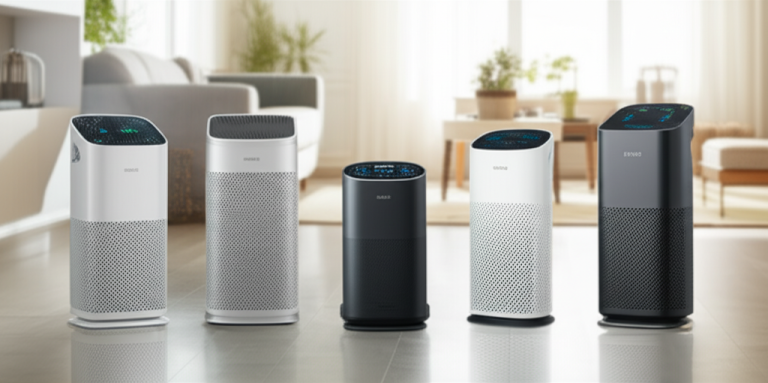
Best Air Purifier for Smoke and Mold: Proven Solution

Find the best air purifier for smoke and mold to eliminate odors, allergens, and health hazards, ensuring a cleaner, healthier home environment with our expert guide.
Dealing with smoke and mold in your home can be incredibly frustrating and detrimental to your health. Lingering smoke odors from fires or cigarettes and the invisible threat of mold spores can trigger allergies, asthma, and other respiratory issues. It’s a common problem, but thankfully, there are effective solutions. I’m here to guide you through selecting the best air purifier for smoke and mold, transforming your living space into a sanctuary of fresh air.
Why You Need the Best Air Purifier for Smoke and Mold
A powerful air purifier is essential for tackling the persistent challenges of smoke and mold. These airborne contaminants aren’t just unpleasant; they pose significant health risks. Smoke particles, from wildfire smoke to tobacco, are fine enough to penetrate deep into your lungs. Mold spores, on the other hand, can cause allergic reactions and worsen existing respiratory conditions. Investing in the right air purifier can significantly improve your indoor air quality and protect your family’s well-being.
Understanding Smoke and Mold Contaminants
Smoke particles are incredibly small, often measuring less than 1 micron, making them easily inhalable. They contain a cocktail of harmful chemicals and volatile organic compounds (VOCs) that contribute to that acrid smell and respiratory irritation. Mold, a type of fungus, thrives in damp environments and releases microscopic spores into the air. These spores can cause sneezing, coughing, itchy eyes, and more severe reactions in sensitive individuals.
Key Features to Look for in an Air Purifier
When searching for the best air purifier for smoke and mold, certain features are non-negotiable. A multi-stage filtration system is crucial, starting with a pre-filter to capture larger particles like pet hair and dust. The real workhorses are the HEPA filter, which captures 99.97% of airborne particles down to 0.3 microns, and an activated carbon filter, vital for absorbing odors and VOCs from smoke.
True HEPA Filtration: The Gold Standard

A True HEPA filter is the cornerstone of any effective air purifier for smoke and mold. It’s designed to capture even the smallest airborne particles, including smoke, dust, pollen, and mold spores. Without this, an air purifier will struggle to address the most harmful contaminants effectively. Ensure the purifier explicitly states “True HEPA” and not just “HEPA-type” or “HEPA-like.”
Activated Carbon Filters: Eliminating Odors and VOCs
Smoke carries a distinct and unpleasant odor, often accompanied by harmful volatile organic compounds (VOCs). An activated carbon filter works by adsorbing these odor molecules and gases. The more activated carbon a filter contains, the more effective it will be at neutralizing smoke smells and chemical pollutants.
Pre-Filters: Protecting the Core Filters
A washable pre-filter is invaluable for extending the life of your HEPA and carbon filters. It traps larger particles like pet dander, hair, and visible dust. This prevents the more expensive, finer filters from becoming clogged too quickly, ensuring your air purifier maintains optimal performance for longer.
CADR Ratings: Performance Metrics
The Clean Air Delivery Rate (CADR) is a standardized measure of how quickly an air purifier can clean the air in a room. Look for high CADR ratings for smoke, dust, and pollen. A higher CADR means the unit can process more air volume, making it more effective for larger spaces or heavily polluted environments.
Room Size and Coverage Area
It’s crucial to match the air purifier’s coverage area to the size of the room you intend to use it in. Most manufacturers provide a recommended room size or an air changes per hour (ACH) rating. Aim for a unit that can exchange the air in your room at least four to five times per hour for optimal smoke and mold removal.
Top Air Purifiers for Smoke and Mold
After extensive research and considering user reviews, I’ve identified several top contenders for the best air purifier for smoke and mold. These models consistently deliver exceptional performance in capturing fine smoke particles and neutralizing stubborn odors, while also effectively trapping mold spores.
Coway Airmega 200M: A Versatile Choice
The Coway Airmega 200M is a popular choice due to its robust filtration system and smart features. It boasts a True HEPA filter, an activated carbon filter, and a pre-filter, making it highly effective against smoke and mold. Its coverage area is suitable for medium to large rooms, and its auto mode adjusts fan speed based on air quality.
Levoit Core 300S: Budget-Friendly Power
For those on a tighter budget, the Levoit Core 300S offers impressive performance. It features a 3-stage filtration system, including a True HEPA filter and an activated carbon filter, making it a strong contender for tackling smoke and mold. Its compact size and quiet operation make it ideal for bedrooms and smaller living areas.
Winix 5500-2: Smart Technology and Value
The Winix 5500-2 is a well-rounded air purifier that offers excellent value. It includes a True HEPA filter, an activated carbon filter, and Winix’s PlasmaWave technology, which can neutralize airborne pollutants. It’s particularly effective at removing smoke odors and airborne allergens.
Blueair Blue Pure 411 Auto: Compact and Efficient
The Blueair Blue Pure 411 Auto is a compact yet powerful air purifier designed for smaller rooms. Its unique HEPASilent™ technology combines electrostatic and mechanical filtration to capture 99.97% of particles. The activated carbon fabric filter effectively tackles smoke odors.
IQAir HealthPro Plus: Premium Performance
For those seeking the absolute best, the IQAir HealthPro Plus is a premium option. It features a HyperHEPA filter capable of capturing ultra-fine particles down to 0.003 microns, making it exceptionally effective against smoke and mold. Its advanced carbon filtration system also excels at odor removal.
How to Place Your Air Purifier for Maximum Effectiveness
The placement of your air purifier can significantly impact its performance. For smoke and mold control, position the unit in the room where the problem is most severe or where you spend the most time. Ensure it has at least a foot of clearance around all sides to allow for optimal airflow. Avoid placing it directly against walls or furniture, which can restrict its ability to draw in and filter air.
Maintenance: Keeping Your Air Purifier Running Smoothly
Regular maintenance is key to ensuring your air purifier continues to provide clean air. This involves cleaning or replacing the filters according to the manufacturer’s recommendations. Neglecting filter maintenance will reduce the unit’s efficiency and can even lead to secondary contamination.
Filter Replacement Schedule
The frequency of filter replacement depends on the model and the level of air pollution in your home. Generally, pre-filters should be cleaned monthly, while HEPA and carbon filters need replacement every 6 to 12 months. Always refer to your air purifier’s manual for specific guidelines.
Cleaning Your Air Purifier Unit
Beyond filter replacement, periodically wipe down the exterior of your air purifier with a damp cloth to remove dust buildup. Ensure the unit is unplugged before cleaning. Keeping the intake and exhaust grilles clean will also help maintain optimal airflow.
Beyond Air Purifiers: Complementary Strategies for Smoke and Mold
While an air purifier is a powerful tool, it’s not the only solution for smoke and mold issues. Addressing the source of the problem is equally important for long-term air quality improvement.
Controlling Humidity for Mold Prevention
Mold thrives in moist environments. Maintaining indoor humidity levels between 30-50% is crucial for preventing mold growth. Using a dehumidifier in damp areas like bathrooms and basements can make a significant difference.
Source Control for Smoke
If smoke is a recurring issue, identify and address the source. This might involve improving ventilation in areas where smoking occurs, addressing chimney issues, or taking steps to prevent indoor smoking altogether. For wildfire smoke, sealing windows and doors is essential.
Frequently Asked Questions About Air Purifiers for Smoke and Mold
What type of filter is best for smoke?
For smoke, a True HEPA filter is essential for capturing fine particulate matter, while an activated carbon filter is crucial for adsorbing smoke odors and VOCs.
How often should I replace the filters in my air purifier?
Filter replacement schedules vary by model and usage, but generally, HEPA and carbon filters need replacement every 6-12 months, and pre-filters should be cleaned monthly.
Can an air purifier completely remove mold from the air?
An air purifier can significantly reduce airborne mold spores, but it cannot eliminate the source of mold growth. Addressing moisture issues is key to complete mold removal.
Are air purifiers noisy?
The noise level varies by model and fan speed. Many modern air purifiers have quiet or sleep modes for nighttime use.
What room size should I consider for my air purifier?
Always match the air purifier’s coverage area to the size of the room you intend to use it in, aiming for at least 4-5 air changes per hour.
Conclusion: Breathe Easier with the Right Air Purifier
Investing in the best air purifier for smoke and mold is a proactive step towards a healthier home environment. By understanding the key features like True HEPA and activated carbon filters, and by choosing a unit appropriate for your room size, you can effectively combat airborne pollutants, eliminate stubborn odors, and create a sanctuary free from the irritants of smoke and mold. Don’t let these issues compromise your well-being; take control of your indoor air quality today.