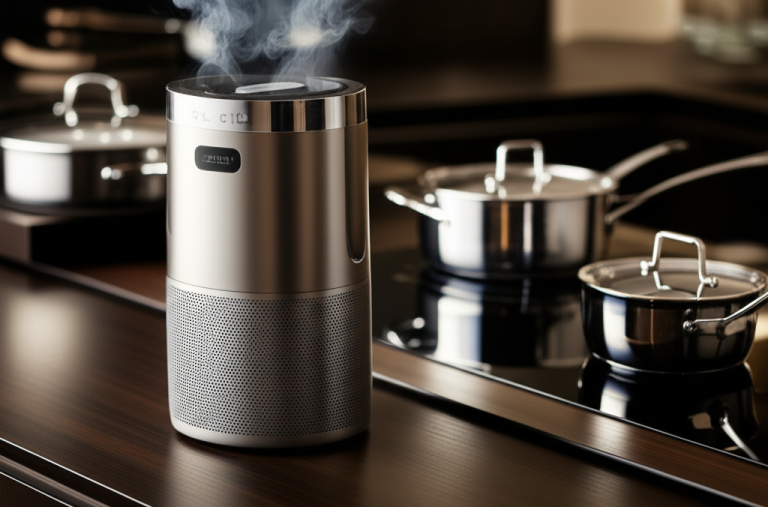
Best Air Purifier For Severe Allergies: Proven Relief

The best air purifier for severe allergies offers proven relief by capturing microscopic allergens like pollen, dust mites, pet dander, and mold spores, creating a healthier indoor environment and significantly reducing allergy symptoms.
Best Air Purifier for Severe Allergies: Proven Relief and a Breath of Fresh Air
Living with severe allergies can feel like a constant battle against invisible enemies lurking in your home. Sneezing fits, itchy eyes, and difficulty breathing can disrupt your daily life, making even the simplest moments uncomfortable. Fortunately, the right air purifier can act as your personal shield, effectively clearing your indoor air of common allergens. I understand how frustrating this can be, and I’m here to guide you through finding the best air purifier for severe allergies, offering you the proven relief you deserve.
Why Air Purifiers are Essential for Severe Allergy Sufferers
For those with severe allergies, indoor air quality is not just a matter of comfort, but a critical component of well-being. Airborne allergens like pollen, dust mites, pet dander, and mold spores can trigger intense reactions, even in small concentrations. An air purifier works by drawing in contaminated air, passing it through a series of filters, and releasing cleaner air back into the room. This process significantly reduces the presence of these triggers, providing a sanctuary from allergy symptoms.
Understanding HEPA Filters: The Gold Standard for Allergy Relief
When searching for the best air purifier for severe allergies, the presence of a True HEPA filter is non-negotiable. True HEPA (High-Efficiency Particulate Air) filters are certified to capture at least 99.97% of airborne particles as small as 0.3 microns. This includes common allergens like pollen, pet dander, mold spores, and dust mite fragments. Without a True HEPA filter, an air purifier will likely be ineffective against the microscopic particles that cause severe allergic reactions.
How True HEPA Filters Work

True HEPA filters utilize a dense mat of randomly arranged fibers that trap particles through several mechanisms. These include interception, where particles stick to fibers as they pass, impaction, where larger particles collide with fibers, and diffusion, where very small particles move erratically and are more likely to hit a fiber. This multi-stage trapping process ensures that even the smallest, most problematic allergens are effectively removed from your air.
Key Features to Look for in an Air Purifier for Severe Allergies
Beyond the essential HEPA filter, several other features can enhance an air purifier’s effectiveness for severe allergy sufferers. Consider the Clean Air Delivery Rate (CADR), which measures how quickly the unit can clean a room of smoke, dust, and pollen. A higher CADR indicates more efficient air cleaning. Look for models with multiple filtration stages, such as pre-filters to capture larger particles and activated carbon filters to absorb odors and volatile organic compounds (VOCs).
CADR Ratings Explained
The CADR rating, provided by AHAM (Association of Home Appliance Manufacturers), is crucial for matching an air purifier to your room size. You’ll typically see three CADR ratings: one for smoke, one for dust, and one for pollen. For allergy sufferers, a higher rating across all three, particularly for dust and pollen, signifies better performance in removing common allergens. Always choose a purifier with a CADR suitable for the square footage of the room you intend to use it in.
Activated Carbon Filters for Odors and VOCs
While HEPA filters tackle particulate allergens, activated carbon filters address gaseous pollutants. These filters contain a porous material that adsorbs odors, smoke, and harmful VOCs released from cleaning products, furniture, and paints. For individuals with severe allergies who may also be sensitive to chemical irritants, an activated carbon filter is a valuable addition for comprehensive air purification.
Top Air Purifier Models for Severe Allergies: Our Recommendations
Finding the absolute best air purifier for severe allergies involves balancing performance, features, and budget. Based on expert reviews and user feedback, several models consistently stand out for their robust allergen removal capabilities. These units often feature advanced filtration systems, high CADR ratings, and user-friendly designs.
Coway Airmega 200M: A Powerful and Quiet Contender
The Coway Airmega 200M is frequently lauded for its exceptional performance in removing allergens. It boasts a True HEPA filter, an activated carbon filter, and a washable pre-filter, creating a comprehensive three-stage purification system. Its coverage area is substantial, making it suitable for medium to large rooms.
Filtration: True HEPA, Activated Carbon, Pre-filter
Coverage Area: Up to 361 sq. ft.
Noise Level: Quiet operation, especially in lower settings.
Smart Features: Eco mode that conserves energy when air quality is good.
The Coway Airmega 200M effectively tackles dust, pollen, pet dander, and even odors, providing significant relief for allergy sufferers. Its quiet operation ensures it won’t disrupt your daily life, making it a top choice for bedrooms and living spaces.
Blueair Blue Pure 211+ Auto: Simplicity Meets Efficiency
For those prioritizing simplicity and high performance, the Blueair Blue Pure 211+ Auto is an excellent option. It uses a unique combination of electrostatic and mechanical filtration (HEPASilent technology) to capture a wide range of airborne particles. The large, washable fabric pre-filter comes in various colors, adding a decorative touch.
Filtration: HEPASilent technology (combines electrostatic and mechanical), Pre-filter
Coverage Area: Up to 540 sq. ft.
Noise Level: Relatively quiet, with a higher setting for rapid cleaning.
Smart Features: Auto mode adjusts fan speed based on real-time air quality.
The Blueair Blue Pure 211+ Auto is designed for ease of use, with simple controls and filter replacements. Its ability to capture ultrafine particles makes it a strong contender for severe allergy relief.
Levoit Core 300S: Compact Powerhouse for Smaller Spaces
The Levoit Core 300S is a popular choice for smaller rooms, such as bedrooms or home offices. Despite its compact size, it features a three-stage filtration system including a True HEPA filter, a pre-filter, and an activated carbon filter. The smart features, controllable via a smartphone app, add convenience.
Filtration: True HEPA, Activated Carbon, Pre-filter
Coverage Area: Up to 219 sq. ft.
Noise Level: Very quiet, especially in sleep mode.
Smart Features: VeSync app control, voice control compatibility, air quality sensor.
The Levoit Core 300S provides effective allergen removal for personal spaces, making it an ideal solution for allergy sufferers who need clean air in their immediate vicinity. Its quiet operation is a significant benefit for sleep.
Beyond HEPA: The Role of Activated Carbon and Pre-Filters
While True HEPA filters are paramount for capturing particulate allergens, a comprehensive air purification system often includes other filter types. Pre-filters are designed to catch larger particles like hair and lint, extending the life of the more expensive HEPA filter. Activated carbon filters, as mentioned, are crucial for adsorbing odors, smoke, and VOCs, which can exacerbate allergy symptoms or be irritants themselves.
Room Size and CADR: Matching the Purifier to Your Space
Selecting an air purifier with the correct CADR for your room size is critical for effective allergen removal. A purifier that is too small for a large room will struggle to circulate and clean the air adequately, rendering it less effective against severe allergies. Conversely, an oversized unit might be unnecessarily noisy or energy-intensive. Always check the manufacturer’s recommended room coverage and compare it with your actual room dimensions.
Calculating Your Room Size
To determine the appropriate size of air purifier, measure the length and width of the room in feet. Multiply these two numbers to get the square footage. For example, a room that is 10 feet by 12 feet has a square footage of 120 sq. ft. You should then look for an air purifier with a CADR rating that is suitable for at least this size, ideally with a bit of extra capacity.
Placement and Maintenance: Maximizing Your Air Purifier’s Effectiveness
Proper placement and regular maintenance are key to ensuring your air purifier provides the best possible relief from severe allergies. For optimal performance, place the unit in the room where you spend the most time, such as your bedroom or living room. Ensure there is adequate space around the unit for unobstructed air intake and exhaust.
Where to Place Your Air Purifier
Ideally, place your air purifier in a central location within the room, away from walls or large furniture that could block airflow. If allergies are particularly bad in your bedroom, positioning it near your bed can provide direct relief while you sleep. Avoid placing it in corners or tight spaces where air circulation is limited.
Filter Replacement and Cleaning Schedule
Regular maintenance is crucial for any air purifier. This typically involves cleaning or replacing the pre-filter monthly and replacing the HEPA and activated carbon filters according to the manufacturer’s recommendations, usually every 6-12 months. Neglecting filter maintenance can significantly reduce the unit’s effectiveness and even lead to the re-release of trapped allergens.
Smart Features and Noise Levels: Balancing Convenience and Comfort
Modern air purifiers often come with smart features like app control, air quality sensors, and automatic modes. These can add significant convenience, allowing you to monitor and adjust settings remotely. However, it’s also important to consider the noise level, especially if the purifier will be used in a bedroom or living area where quiet is desired. Many units offer a “sleep mode” for ultra-quiet operation.
Assessing Noise Levels
Air purifiers operate with a fan, which naturally produces noise. Noise levels are typically measured in decibels (dB). For bedrooms, look for units that operate below 50 dB on their lower settings. Higher settings, often used for rapid cleaning, will be louder but are usually only needed for short periods. Always check the manufacturer’s specifications for noise levels at different fan speeds.
Advanced Filtration Technologies: Beyond Traditional HEPA
While True HEPA is the benchmark, some air purifiers employ additional technologies to enhance allergen removal. These can include UV-C light to kill bacteria and viruses, ionizers to charge particles for easier capture, or specialized filters designed for specific allergens. However, it’s important to research these technologies, as some, like ozone-producing ionizers, can be problematic for individuals with respiratory sensitivities.
The Case Against Ozone-Producing Ionizers
Ozone is a lung irritant and can worsen asthma and other respiratory conditions. Some air purifiers use ionizers that can inadvertently produce ozone as a byproduct. If considering an air purifier with an ionizer, ensure it is certified as ozone-free or has an option to disable the ionizer function. For severe allergy sufferers, it’s often safer to stick with proven HEPA filtration.
Comparing Air Purifier Costs: Initial Purchase vs. Long-Term Value
The initial cost of an air purifier can vary widely, from under $100 for basic models to over $500 for high-end units with advanced features. However, it’s essential to consider the long-term value, which includes the cost of replacement filters and energy consumption. A slightly more expensive unit with lower filter replacement costs and better energy efficiency might be more economical over time.
Understanding Filter Replacement Costs
Filter replacement is a recurring expense that can add up. High-quality HEPA filters can cost anywhere from $30 to $100 or more, and they typically need replacing every 6-12 months. Before purchasing, research the cost and availability of replacement filters for the models you are considering. This is a crucial factor in the overall cost of ownership.
Frequently Asked Questions About Air Purifiers for Severe Allergies
What is the most important feature in an air purifier for severe allergies?
The most crucial feature is a True HEPA filter, which captures at least 99.97% of airborne particles as small as 0.3 microns, including common allergens.
How often should I replace the filters in my air purifier?
HEPA and activated carbon filters typically need replacement every 6 to 12 months, depending on usage and air quality. Pre-filters may need cleaning or replacement more frequently.
Can air purifiers help with pet allergies?
Yes, air purifiers with True HEPA filters are highly effective at capturing pet dander, a common trigger for pet allergies.
Are air purifiers noisy?
Noise levels vary by model. Many units have a quiet “sleep mode” for nighttime use. Always check the decibel ratings for different fan speeds.
How large of a room can an air purifier cover?
Coverage varies significantly. Look at the Clean Air Delivery Rate (CADR) and the manufacturer’s recommended room size to match the purifier to your space.
Should I use an air purifier with an ozone generator?
It’s generally not recommended for allergy sufferers, as ozone can irritate the lungs and worsen respiratory issues. Opt for ozone-free models.
Conclusion: Investing in Your Health with the Best Air Purifier for Severe Allergies
Living with severe allergies doesn’t mean you have to suffer through constant discomfort. By understanding the essential features like True HEPA filtration, CADR ratings, and appropriate room coverage, you can confidently select the best air purifier for severe allergies. These devices are powerful tools that actively improve your indoor environment, offering a tangible path to relief and a healthier, more comfortable life. Investing in a quality air purifier is an investment in your well-being, providing a sanctuary from allergens and allowing you to breathe easier every day.