
Best Air Purifier for Kids Room: Genius Essential

The best air purifier for kids’ rooms is crucial for safeguarding your child’s health. This guide helps you choose a smart, safe, and effective unit to combat allergens, pollutants, and improve sleep quality, ensuring a healthier environment for your little ones.
Choosing the right air purifier for your child’s room can feel overwhelming, especially with so many options available. Common concerns include allergies, asthma triggers, and the general quality of the air your little ones breathe while sleeping and playing. It’s natural to want the very best for your child’s well-being. This comprehensive guide will walk you through everything you need to know to make an informed decision, ensuring a healthier and happier environment for your family.
Why an Air Purifier is a Genius Essential for Your Child’s Room
An air purifier for kids’ rooms is far more than a luxury; it’s a vital tool for safeguarding developing lungs. Children are more susceptible to the harmful effects of indoor air pollution due to their smaller size and faster breathing rates. These devices actively remove common irritants like dust mites, pollen, pet dander, mold spores, and volatile organic compounds (VOCs) that can trigger allergies, asthma, and other respiratory issues. By investing in a quality air purifier, you’re creating a sanctuary of cleaner air, promoting better sleep and overall health for your child.
Understanding Indoor Air Pollutants Affecting Children
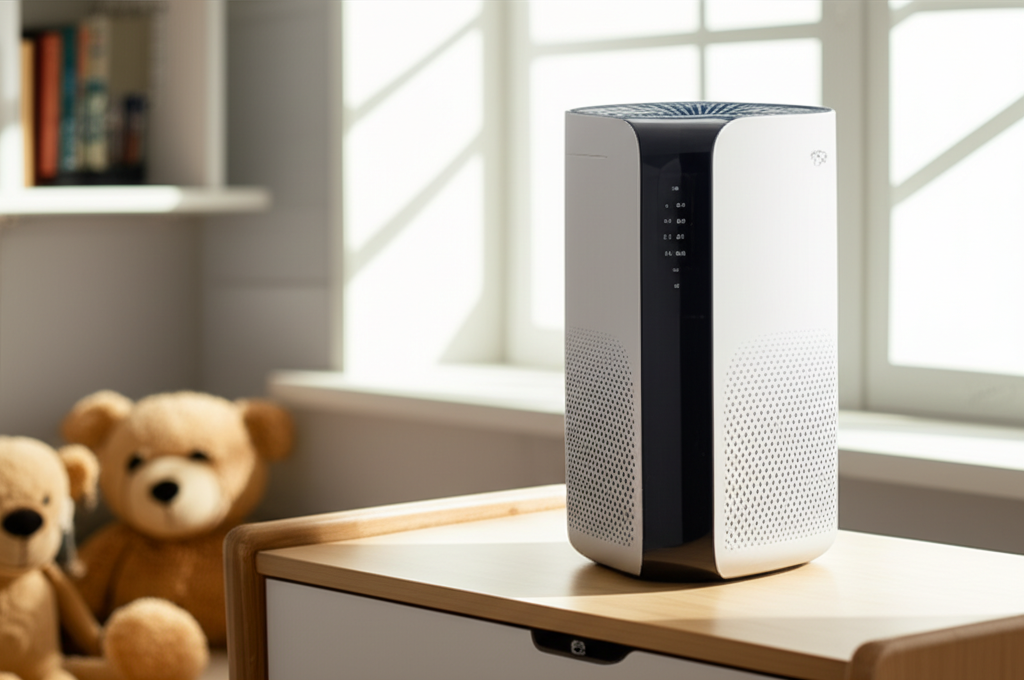
Indoor air can be up to five times more polluted than outdoor air, posing significant risks to children. Common culprits include dust and pollen that settle on surfaces and float in the air, pet dander from furry companions, and mold spores that thrive in damp areas. Additionally, VOCs are released from common household items like new furniture, cleaning products, and even some toys, emitting harmful gases. These pollutants can exacerbate existing conditions like asthma and allergies, and even contribute to the development of new ones.
Dust Mites and Allergens
Dust mites are microscopic creatures that live in bedding, carpets, and upholstery, feeding on dead skin cells. Their waste products are potent allergens that can trigger sneezing, itchy eyes, and runny noses in sensitive children. Regular cleaning helps, but an air purifier with a HEPA filter is exceptionally effective at capturing these tiny particles, significantly reducing airborne allergens.
Pet Dander
Even if you don’t own pets, dander can be tracked into your home from outside or from visitors’ clothing. This microscopic skin, saliva, and urine protein is a common allergen that can cause significant discomfort. An air purifier equipped with a True HEPA filter is designed to capture these fine particles, creating a more comfortable environment for allergic children.
Mold Spores
Mold can grow in humid areas like bathrooms and kitchens, but its spores can easily spread throughout the house. For children with mold allergies or asthma, exposure can lead to severe respiratory reactions. An air purifier with a HEPA filter can trap airborne mold spores, helping to prevent their dispersal and impact on your child’s health.
Volatile Organic Compounds (VOCs)
VOCs are gases emitted from various household products, including paints, cleaning supplies, air fresheners, and even some children’s toys. These chemicals can cause headaches, dizziness, and respiratory irritation. While source control is important, an air purifier with an activated carbon filter is essential for adsorbing these harmful gases.
Key Features to Look for in the Best Air Purifier for Kids Room
When selecting the best air purifier for kids’ rooms, several features are paramount to ensure safety, effectiveness, and ease of use. You’ll want a unit that is quiet enough not to disturb sleep, energy-efficient, and equipped with robust filtration to tackle a wide range of pollutants. Prioritizing models designed with children in mind will offer peace of mind and optimal performance for your little one’s environment.
True HEPA Filtration: The Gold Standard
A True HEPA (High-Efficiency Particulate Air) filter is non-negotiable when choosing an air purifier for a child’s room. This standard means the filter can capture at least 99.97% of airborne particles 0.3 microns in size, including dust, pollen, pet dander, and mold spores. Investing in a unit with True HEPA filtration ensures the most thorough removal of common allergens and irritants.
Activated Carbon Filter: Tackling Odors and Gases
While HEPA filters capture particles, an activated carbon filter is crucial for adsorbing gases, odors, and VOCs. This is particularly important in children’s rooms where lingering smells from diaper pails, pet accidents, or cleaning products can be an issue. A substantial amount of activated carbon ensures more effective odor and gas removal.
CADR Ratings: How Clean is the Air?
CADR stands for Clean Air Delivery Rate, a standardized measure indicating how quickly an air purifier can clean a room of specific pollutants like smoke, dust, and pollen. Look for a CADR rating that is appropriate for the size of your child’s room. A higher CADR generally means faster and more efficient air purification.
Noise Level: Sleep-Friendly Operation
Children’s sleep is precious, so a quiet air purifier is essential. Look for models that advertise a low decibel (dB) rating on their lowest setting, ideally below 30 dB, which is comparable to a whisper. Many purifiers offer a “sleep mode” that reduces fan speed and dims indicator lights for undisturbed rest.
Safety Features for Little Hands
Child safety is a top priority. Ensure the air purifier has a child lock feature to prevent curious little fingers from changing settings. Also, check for a stable design that won’t easily tip over and ensure there are no small, removable parts. Grille openings should be small enough to prevent little fingers from reaching the fan.
Energy Efficiency and Cost of Ownership
Consider the energy consumption of the air purifier, especially if it will be running continuously. Look for ENERGY STAR certified models, which indicate higher energy efficiency. Also, factor in the cost and availability of replacement filters, as these are ongoing expenses that contribute to the total cost of ownership.
Top Contenders: Best Air Purifier for Kids Room Reviewed
Finding the best air purifier for kids’ rooms involves balancing performance, safety, and budget. Here, I’ve highlighted some excellent options that consistently receive high marks for their effectiveness and child-friendly features, making them smart choices for your home.
Coway Airmega AP-1512HH Mighty
The Coway Airmega AP-1512HH Mighty is a perennial favorite, lauded for its powerful True HEPA filtration, effective odor control with its carbon filter, and smart features like an air quality sensor and eco mode. Its compact design fits well in most rooms, and its noise levels are generally low, especially on the lower fan speeds. It’s an excellent all-around performer for a child’s space.
Blueair Blue Pure 411 Auto
For smaller rooms or a more budget-friendly option, the Blueair Blue Pure 411 Auto is a standout. It features a three-stage filtration system, including a particle filter and activated carbon. Its unique selling point is its washable fabric pre-filter, which comes in various colors to match room decor, and its whisper-quiet operation. The “Auto” model includes an air quality sensor for automatic adjustments.
Levoit Core 300S Smart True HEPA Air Purifier
The Levoit Core 300S is a popular choice for its compact size, quiet operation, and True HEPA filtration. It offers smart features via a VeSync app, allowing remote control and scheduling, which can be incredibly convenient for parents. The unit also boasts a quiet sleep mode and a timer function. Its sleek design makes it unobtrusive in any room.
Winix 5500-2 Air Purifier
The Winix 5500-2 is a robust option that includes a True HEPA filter, an activated carbon filter, and PlasmaWave technology (which can be turned off if preferred). It features an auto mode with an air quality sensor and a remote control. Its larger coverage area makes it suitable for medium to large bedrooms, and its quiet operation is a plus.
Comparing Air Purifier Features for Children’s Rooms
To help you visualize the differences, here’s a comparison of some key features across popular models suitable for a child’s room. This table highlights aspects like filtration type, coverage area, noise levels, and special features that make them ideal for a child-centric environment.
| Feature | Coway Airmega AP-1512HH Mighty | Blueair Blue Pure 411 Auto | Levoit Core 300S | Winix 5500-2 |
| :—————— | :—————————– | :————————- | :————— | :———– |
| Filtration | True HEPA, Carbon | Particle, Carbon | True HEPA, Carbon | True HEPA, Carbon, PlasmaWave |
| Room Size Coverage | Up to 361 sq ft | Up to 161 sq ft | Up to 219 sq ft | Up to 360 sq ft |
| Noise Level (Low) | ~24 dB | ~17 dB | ~24 dB | ~28 dB |
| Child Lock | Yes | No | Yes | Yes |
| Smart Features | Auto Mode, Eco Mode | Auto Mode | App Control, Timer | Auto Mode, Remote |
| Pre-Filter | Washable | Washable Fabric | Washable | Washable |
Setting Up and Maintaining Your Child’s Air Purifier
Proper setup and regular maintenance are crucial to ensure your air purifier for kids’ rooms operates at peak efficiency and safety. Following these simple steps will maximize its benefits and longevity, providing your child with consistently clean air.
Initial Setup and Placement
Upon unboxing, remove all packaging from the filters before inserting them into the unit. Place the air purifier on a level surface, away from walls or furniture that could obstruct airflow. Ideally, position it in the room where your child spends the most time or sleeps, ensuring it has adequate space around it to draw in air effectively.
Understanding Filter Replacement Cycles
Filters have a finite lifespan and need regular replacement to maintain performance. True HEPA filters typically need replacing every 6-12 months, while activated carbon filters may need attention sooner, especially if dealing with heavy odors. Always refer to your air purifier’s manual for specific recommendations and purchase genuine replacement filters to ensure compatibility and effectiveness.
Cleaning and General Care
Most air purifiers benefit from regular cleaning of the exterior and the pre-filter. A damp cloth can usually clean the outer casing. If your model has a washable pre-filter, rinse it under cool water and allow it to dry completely before reinserting it. This simple step helps capture larger particles, extending the life of the HEPA filter.
When to Consider a Smart Air Purifier for Your Child’s Room
Smart air purifiers offer enhanced convenience and control, which can be particularly beneficial for busy parents managing a child’s environment. Features like app control, scheduling, and real-time air quality monitoring add a layer of sophisticated management to your air purification strategy.
App Control and Remote Operation
The ability to control your air purifier via a smartphone app is a game-changer. You can adjust fan speeds, set timers, or turn the unit on/off remotely, perfect for when your child is asleep and you don’t want to disturb them. This convenience allows for proactive air quality management without interrupting precious downtime.
Air Quality Monitoring and Auto Mode
Many smart purifiers come equipped with sensors that continuously monitor indoor air quality. They can detect changes in pollutant levels and automatically adjust the fan speed to compensate. This intelligent auto mode ensures your child’s room air remains clean without constant manual intervention, providing peace of mind.
Scheduling and Timers for Optimal Air Quality
Setting schedules for your air purifier can ensure optimal air quality throughout the day and night. You can program it to run at higher settings when your child is playing and then switch to a quieter, lower setting during sleep hours. This smart scheduling maximizes efficiency and minimizes noise disturbances.
Frequently Asked Questions about Air Purifiers for Kids’ Rooms
Here are answers to some common questions parents have when looking for the best air purifier for their child’s room. These are designed to be straightforward and helpful.
What is the best type of filter for a child’s room?
The best filter combination for a child’s room is a True HEPA filter paired with an activated carbon filter. The True HEPA filter captures tiny particles like dust, pollen, and dander, while the activated carbon filter removes odors and harmful gases like VOCs.
How large of an air purifier do I need for my child’s room?
You’ll need an air purifier rated for the square footage of your child’s room. It’s often recommended to choose a unit with a CADR (Clean Air Delivery Rate) suitable for a slightly larger room than your child’s actual bedroom to ensure faster and more effective purification.
Can air purifiers help with a child’s allergies or asthma?
Yes, air purifiers can significantly help by removing common allergens and irritants like dust mites, pollen, pet dander, and mold spores from the air. This reduction in airborne triggers can lead to fewer allergy symptoms and asthma flare-ups for sensitive children.
Are air purifiers noisy, and will they disturb my child’s sleep?
Many modern air purifiers are designed to be very quiet, especially on their lowest settings or in “sleep mode.” Look for models with a decibel rating below 30 dB for whisper-quiet operation that won’t disrupt sleep.
Should I leave the air purifier on all the time in my child’s room?
It’s generally recommended to run your air purifier for extended periods, especially when your child is in the room or sleeping. Many models have energy-saving modes or timers that allow for continuous operation without excessive energy use or noise.
What safety features should I look for in an air purifier for a child’s room?
Prioritize air purifiers with a child lock feature to prevent tampering. Also, ensure the unit is stable, has small grille openings to prevent finger access, and doesn’t have easily detachable small parts.
Conclusion: Investing in Your Child’s Health with the Best Air Purifier for Kids Room
Choosing the best air purifier for your child’s room is a proactive step towards ensuring their health and well-being. By focusing on True HEPA filtration, effective carbon filtering, appropriate coverage, and child-safe features, you can create a significantly healthier environment for your little one. Remember to consider noise levels for peaceful sleep and smart features for convenient management. Investing in a quality air purifier means investing in better breathing, fewer allergy symptoms, and a more comfortable space for your child to grow and thrive. This smart essential will bring you peace of mind and a breath of fresh air.
