
Best Air Purifier For Artists: Essential Guide

The best air purifier for artists is crucial for removing harmful VOCs and particulates from paints, solvents, and dust, ensuring a safer and more productive creative space. This guide helps you choose the ideal model based on your studio size, materials used, and specific air quality concerns.
Creating art can fill your studio with wonderful colors and textures, but it can also introduce airborne contaminants that affect your health and the longevity of your work. From the volatile organic compounds (VOCs) in paints and solvents to the fine dust from sanding or pastels, your studio air might not be as clean as you think. This is where a good air purifier becomes an indispensable tool for any artist. I understand the frustration of worrying about what you’re breathing in while trying to focus on your passion. That’s why I’ve put together this comprehensive guide to help you find the best air purifier for artists, ensuring a healthier and more inspiring creative environment.
Why Artists Need an Air Purifier: Protecting Your Health and Your Art
Artists often work with materials that release harmful particles and fumes into the air. These can include VOCs from oil paints, solvents, adhesives, and spray varnishes, as well as fine dust from pastels, charcoal, or sanding. Inhaling these substances over time can lead to respiratory issues, headaches, and other health problems, diminishing your ability to create. An effective air purifier captures these pollutants, creating a safer breathing zone and preserving the quality of your artwork by reducing dust accumulation.
Understanding Air Pollutants in the Art Studio
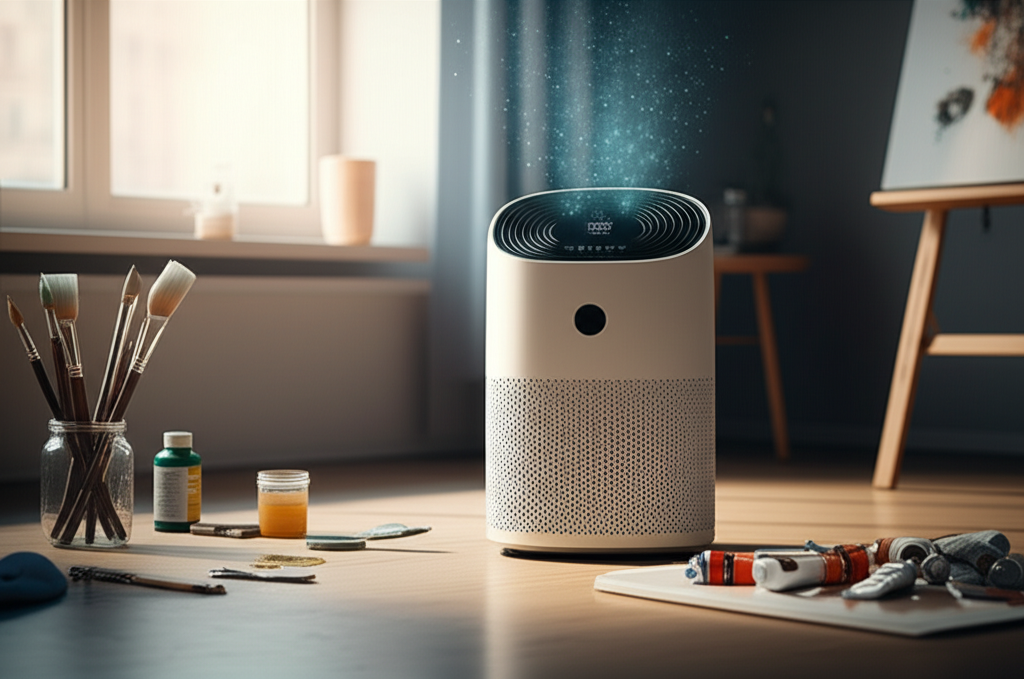
The artistic process inherently involves materials that can compromise air quality. Oil paints and their associated solvents, such as turpentine and mineral spirits, are notorious for releasing VOCs. Acrylic paints and mediums, while often water-based, can still emit VOCs during drying. Even seemingly innocuous materials like pastels, charcoal, and clay can create fine particulate matter when handled or sanded. Spray adhesives, fixatives, and varnishes are also significant sources of airborne irritants.
The Health Risks for Artists
Prolonged exposure to studio air pollutants can have serious consequences. Respiratory irritation, asthma exacerbation, dizziness, nausea, and allergic reactions are common complaints among artists. Some VOCs are even classified as carcinogens. Beyond immediate symptoms, chronic exposure can contribute to long-term health problems. Protecting yourself means actively managing the air you breathe during your creative sessions.
Preserving Your Artwork from Dust and Fumes
Beyond personal health, air quality impacts your artwork itself. Dust can settle on wet paint, delicate sculptures, or finished pieces, marring their appearance and potentially degrading their materials over time. Fumes from solvents and paints can also affect the curing process of certain mediums or leave a residue on surfaces. An air purifier helps maintain a cleaner environment, allowing your art to flourish undisturbed.
Key Features to Look for in the Best Air Purifier for Artists
When selecting an air purifier, several features are particularly important for an artistic environment. A multi-stage filtration system is paramount, especially one that effectively tackles both particulate matter and gaseous pollutants. Consider the size of your studio and the specific materials you use most frequently to determine the necessary coverage area and purification capabilities. Ease of maintenance and noise levels are also practical considerations for a comfortable workspace.
HEPA Filtration: The Foundation of Clean Air
True HEPA (High-Efficiency Particulate Air) filters are designed to capture at least 99.97% of airborne particles as small as 0.3 microns. This is crucial for trapping microscopic dust from pastels, sanding, and other fine particulates generated during artistic processes. A HEPA filter is the first line of defense against solid airborne contaminants in your studio.
Activated Carbon Filters: Tackling Fumes and VOCs
For artists working with solvents, paints, glues, and varnishes, an activated carbon filter is non-negotiable. This type of filter uses a porous carbon material to adsorb (not absorb) gases, odors, and VOCs. The more activated carbon a purifier contains, the more effective it will be at neutralizing the chemical fumes common in art studios. Look for models with substantial carbon filters for optimal fume removal.
Pre-filters: Extending Filter Life
A washable pre-filter captures larger particles like hair, pet dander, and larger dust bunnies. This crucial layer prevents these bigger items from clogging the more expensive HEPA and carbon filters, significantly extending their lifespan and maintaining the purifier’s overall efficiency. Regularly cleaning the pre-filter is a simple maintenance task that pays dividends.
CADR Ratings: Matching Power to Your Space
Clean Air Delivery Rate (CADR) indicates how quickly an air purifier can clean the air in a specific room size. It’s measured for three pollutants: smoke, dust, and pollen. For artists, a higher CADR rating is generally better, especially if you work with strong-smelling or highly particulate materials. Ensure the purifier’s CADR is appropriate for your studio’s square footage, aiming for a unit rated for a slightly larger space than you have for maximum effectiveness.
Coverage Area and Room Size
Air purifiers are rated for specific room sizes. It’s essential to choose a unit that can adequately service your studio. If you have a large studio or a space with high ceilings, you’ll need a more powerful unit or potentially multiple purifiers. Overestimating your needs is generally better than underestimating, as it ensures thorough air cleaning.
Noise Levels: Maintaining a Peaceful Creative Flow
While powerful, some air purifiers can be quite noisy, which can be distracting when you’re trying to concentrate on your art. Look for models that specify their decibel (dB) levels, especially on lower settings. Many modern purifiers offer quiet or sleep modes that are barely audible, allowing for uninterrupted creative flow. A noise level below 50 dB on higher settings is generally considered acceptable for a workspace.
Smart Features and Controls
Some air purifiers come with “smart” features like Wi-Fi connectivity, app control, and automatic modes. These can allow you to monitor air quality, adjust settings remotely, and set schedules. Auto modes often use sensors to detect air quality changes and adjust fan speed accordingly, ensuring optimal purification without manual intervention. These features can add convenience and ensure your studio air is consistently clean.
Top Air Purifier Recommendations for Artists
Based on the specific needs of artists, I’ve identified several top-performing air purifiers that excel in tackling common studio pollutants. These models offer a robust combination of HEPA and activated carbon filtration, appropriate CADR ratings for various studio sizes, and user-friendly features. Whether you’re dealing with solvent fumes or fine dust, these options provide excellent protection.
For Small Studios or Hobbyists: Compact Powerhouses
If you have a smaller dedicated art space or primarily work with less volatile materials, a compact yet powerful unit can be ideal. These models often provide excellent filtration for their size and are more budget-friendly. They are perfect for keeping your immediate creative zone free from dust and minor fumes.
Coway AP-1512HH Mighty: This is a perennial favorite for its excellent performance-to-price ratio. It features a 4-stage filtration system including a HEPA filter and an activated carbon filter, along with an Eco mode. It’s rated for rooms up to 361 sq ft, making it suitable for many smaller to medium-sized studios. Its auto mode and air quality sensor are also very convenient.
For Medium to Large Studios: Robust All-Arounders
For artists with larger studios or those who frequently use strong solvents, adhesives, or spray paints, a more powerful unit is necessary. These purifiers offer higher CADR ratings and larger filter capacities to handle greater volumes of pollutants effectively. They are designed for more demanding environments.
Blueair Classic 405: Blueair purifiers are known for their quiet operation and high efficiency. The Classic 405 uses a combination of electrostatic and mechanical filtration (HEPASilent™ technology) to capture both particles and gases. It’s ideal for rooms up to 270 sq ft, but its effectiveness can extend beyond that due to its efficient air circulation. It’s a great choice for minimizing noise while maximizing air cleaning.
Levoit Core 300S: This popular smart air purifier is compact but packs a punch. It offers a 3-stage filtration system with a true HEPA filter and an activated carbon filter. It’s rated for rooms up to 219 sq ft and features app control and voice command compatibility. Its quiet operation and stylish design make it a great addition to any studio.
For Heavy-Duty Fume and VOC Control: Industrial Strength
Artists working extensively with oil paints, solvents, resins, or spray finishing techniques require purifiers with exceptionally large activated carbon filters. These units are designed to tackle serious VOCs and chemical fumes, providing the highest level of protection. They often have higher energy consumption but are essential for health and safety in such environments.
Airthereal ADH80 Air Purifier: This unit is a beast when it comes to air purification, especially for larger spaces (up to 1500 sq ft). It boasts a multi-stage filtration system including a medical-grade HEPA filter and an impressively large activated carbon filter, making it excellent for absorbing strong odors and VOCs. It’s a top contender for studios with significant chemical fume concerns.
Honeywell HPA300: A robust choice for larger rooms (up to 465 sq ft), the HPA300 features a substantial activated carbon pre-filter and a true HEPA filter. It’s highly effective at capturing both large and microscopic particles, as well as odors and VOCs from paints and solvents. Its three air intake channels help to capture pollutants more efficiently.
Choosing the Right Filtration System for Your Art Materials
The type of art you create directly influences the kind of air purification you need. Understanding the specific pollutants generated by your materials is key to selecting the most effective filtration system. This section breaks down recommendations based on common artistic mediums.
Oil Painting and Solvent Use
If you primarily work with oil paints and use solvents like turpentine, mineral spirits, or linseed oil, VOCs are your main concern. A powerful activated carbon filter is essential to adsorb these chemical fumes. Look for purifiers with a substantial amount of carbon, often measured in pounds, or those specifically marketed for odor and fume removal. A HEPA filter will also be beneficial for capturing any airborne pigment particles.
Acrylic Painting and Water-Based Mediums
While acrylic paints are often water-based, they can still release VOCs as they dry, especially certain brands or when used with specific mediums. Adhesives and spray varnishes used with acrylics also contribute to VOCs. A combination HEPA and activated carbon filter is recommended. The carbon filter will help neutralize any lingering fumes, and the HEPA filter will capture pigment dust.
Pastels, Charcoal, and Drawing Media
Working with dry media like pastels, charcoal, graphite, or chalk generates a significant amount of fine particulate matter. For these mediums, a high-quality HEPA filter is paramount. It will efficiently capture the microscopic dust particles that can become airborne. While VOCs are less of a concern here, a basic activated carbon filter can still help with general studio freshness and any incidental odors.
Sculpture and Mixed Media
Sculpting can involve sanding, grinding, and working with materials like clay, wood, resins, or epoxies. These processes can produce a wide range of airborne particles and potentially VOCs. A comprehensive filtration system with a HEPA filter for dust and particulates, and a robust activated carbon filter for any fumes from resins or adhesives, is advisable. A pre-filter will also be crucial for capturing larger debris.
Spray Techniques (Aerosols, Varnishes, Fixatives)
Any process involving aerosols, such as spray paints, fixatives, varnishes, or even airbrushing, generates fine mists that can carry pigments and chemicals. These are often a mix of particulate matter and VOCs. A high-performance air purifier with both a strong HEPA filter and a substantial activated carbon filter is absolutely critical for this type of work. Consider a unit with a high CADR and excellent air circulation.
Maintaining Your Air Purifier for Optimal Performance
To ensure your air purifier continues to effectively clean your studio air, regular maintenance is key. Neglecting this can lead to reduced performance, increased noise, and a shorter lifespan for the unit. Following the manufacturer’s recommendations for filter replacement and cleaning will guarantee you get the most out of your investment.
Filter Replacement Schedule
HEPA and activated carbon filters have a limited lifespan and cannot be cleaned. They need to be replaced periodically. The frequency of replacement depends on the model, the air quality in your studio, and how heavily the purifier is used. Most manufacturers recommend replacing HEPA filters every 6-12 months and activated carbon filters every 3-6 months, but always check your specific model’s manual.
Cleaning the Pre-filter
The washable pre-filter should be cleaned regularly, typically once a month or more often if you notice significant dust buildup. This can usually be done by vacuuming it or rinsing it under running water. Ensure the pre-filter is completely dry before reinserting it into the air purifier to prevent mold or mildew growth.
General Cleaning and Care
Beyond filters, the exterior of the air purifier should be wiped down periodically with a damp cloth to remove dust. Ensure the air intake and outlet vents are kept clear of obstructions to allow for proper airflow. Periodically check the fan for any dust buildup, though this is less common with enclosed designs.
Comparing Air Purifier Technologies for Artists
While HEPA and activated carbon filtration are the gold standards for artist studios, other technologies exist. Understanding their pros and cons will help you make an informed decision about the best air purifier for your specific needs.
Activated Carbon vs. Other Odor Control Methods
Activated carbon is highly effective because it adsorbs* VOCs and odors onto its vast surface area. Other methods, like ionizers or UV-C lights, may offer some benefits but are not always as effective for the broad range of chemical fumes artists encounter. Ionizers can produce ozone, which is a lung irritant, and UV-C lights are primarily for killing germs, not removing gases.
HEPA vs. Other Particle Filtration
True HEPA filters are certified to capture 99.97% of particles at 0.3 microns. Some purifiers use “HEPA-type” or “HEPA-like” filters, which may not meet the same rigorous standards. For artists dealing with fine dust from pastels or sanding, a true HEPA filter is essential for effective particle removal.
The Role of Ionizers and UV-C Lights
Some air purifiers include ionizers or UV-C lights. Ionizers release negative ions to charge particles, causing them to clump and fall out of the air or stick to surfaces. However, they can produce ozone, which is a respiratory irritant and can be detrimental to certain art materials. UV-C lights are used to kill airborne bacteria and viruses, but they do not remove particulate matter or VOCs. For most artists, prioritizing robust HEPA and activated carbon filtration is more beneficial.
Troubleshooting Common Air Purifier Issues
Even the best air purifiers can encounter minor issues. Knowing how to troubleshoot can save you time and ensure your unit continues to function optimally. Here are some common problems and their solutions.
My Air Purifier Smells Bad
If your air purifier starts emitting an unpleasant odor, it’s usually a sign that the filters are saturated and need replacing, especially the activated carbon filter. If you have a washable pre-filter, ensure it’s clean and completely dry. In rare cases, mold might have grown on a damp filter, requiring immediate replacement.
The Air Purifier Seems Less Effective
Reduced effectiveness can stem from several factors. First, check if the filters need replacing; clogged filters significantly impede airflow and purification. Ensure the unit is placed in a location where it can effectively circulate air, away from walls or furniture. For larger rooms, the unit might simply be undersized for the space and pollutant load.
Unusual Noises from the Unit
New or unusual noises could indicate a problem. If you hear rattling, it might be a loose part or debris in the fan. Grinding noises could suggest a motor issue. Always unplug the unit before inspecting it. If the noise persists after a basic inspection, contact the manufacturer for support.
FAQ: Your Questions About Air Purifiers for Artists Answered
What is the most important feature in an air purifier for an artist?
For artists, the most critical features are a true HEPA filter to capture fine dust and particulates, and a substantial activated carbon filter to adsorb VOCs and fumes from paints, solvents, and adhesives. A good CADR rating for your studio size is also vital.
How often should I replace the filters in my air purifier?
Filter replacement frequency varies by model and usage. Generally, HEPA filters last 6-12 months, and activated carbon filters need replacing every 3-6 months. Always consult your air purifier’s manual for specific recommendations.
Can an air purifier remove the smell of turpentine or solvents?
Yes, an air purifier with a robust activated carbon filter is very effective at adsorbing the odors and VOCs associated with turpentine, mineral spirits, and other solvents. The larger and denser the carbon filter, the better it will perform.
Will an air purifier help with dust from pastels or charcoal?
Absolutely. A true HEPA filter is designed to capture very fine particles, including the microscopic dust generated from working with pastels, charcoal, and other dry media. This will significantly reduce airborne dust in your studio.
Are air purifiers with ionizers safe for artists?
While ionizers can help remove particles, they can also produce ozone, which is a lung irritant and can be harmful to both you and some art materials. It’s generally safer for artists to opt for purifiers that prioritize HEPA and activated carbon filtration without ozone-producing features.
What size air purifier do I need for my art studio?
You need an air purifier with a CADR rating appropriate for your studio’s square footage. It’s often recommended to choose a unit rated for a slightly larger room than yours to ensure effective air cleaning, especially if you use strong-smelling materials.
Conclusion: Breathe Easier, Create Better
Investing in the best air purifier for artists is an investment in your health, the longevity of your artwork, and the overall quality of your creative process. By understanding the specific pollutants generated in your studio and prioritizing features like true HEPA and substantial activated carbon filtration, you can significantly improve your studio’s air quality. Whether you’re a hobbyist in a small corner or a professional in a dedicated studio space, there’s an air purifier out there that can help you breathe easier and create better, free from the worry of harmful airborne contaminants. Choose wisely, maintain it well, and enjoy a healthier, more productive artistic journey.
