
Air Purifier for Home Comparison: Essential Guide

Choosing the right air purifier for your home involves comparing features, types, and specific needs to ensure optimal air quality. This guide simplifies the air purifier for home comparison process, helping you make an informed decision for a healthier living environment.
Are you concerned about the air quality inside your home? Dust, allergens, pet dander, and even microscopic pollutants can significantly impact your health and comfort. Finding the right solution can feel overwhelming with so many options available. Don’t worry, I’m here to guide you through a comprehensive air purifier for home comparison, making it easy to select the perfect device for your needs.
Why an Air Purifier for Home Comparison is Crucial
Comparing air purifiers is essential because not all models are created equal, and your home’s unique needs dictate the best choice. A thorough air purifier for home comparison ensures you invest in a device that effectively tackles your specific air quality concerns, whether it’s allergies, pet odors, or general freshness. This process helps you avoid common pitfalls and guarantees you get the most value for your money, leading to a healthier and more comfortable living space.
Understanding Air Purifier Technologies: A Deep Dive
The core of any air purifier for home comparison lies in understanding the different technologies they employ. Each technology targets specific types of airborne particles and pollutants, making it vital to match the technology to your primary concerns. Knowing these differences empowers you to make an informed decision that truly benefits your home’s air quality.
HEPA Filters: The Gold Standard
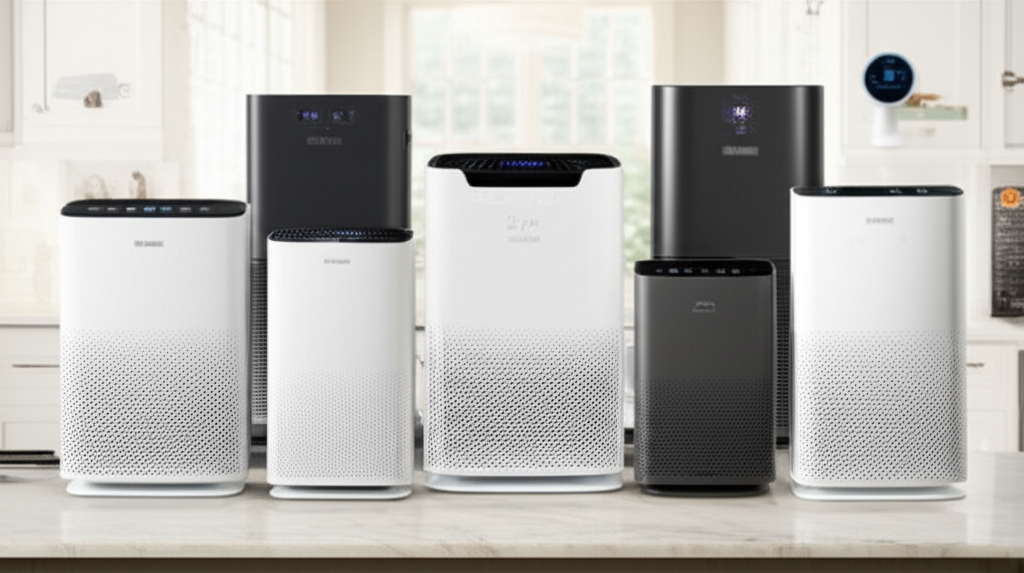
High-Efficiency Particulate Air (HEPA) filters are widely recognized as the most effective for capturing tiny particles. They are designed to trap at least 99.97% of airborne particles 0.3 microns in size, which includes common allergens like pollen, dust mites, and pet dander. When conducting an air purifier for home comparison, prioritize models with True HEPA filters for maximum particle removal.
Activated Carbon Filters: Tackling Odors and VOCs
Activated carbon filters are crucial for addressing odors, gases, and Volatile Organic Compounds (VOCs) that HEPA filters cannot capture. These filters work by adsorption, where gases and odors chemically bond to the porous surface of the activated carbon. For homes with pets, smokers, or those sensitive to chemical smells, an activated carbon component is a non-negotiable feature in your air purifier for home comparison.
Ionizers and UV-C Light: Additional Purification Layers
Ionizers release negative ions that attach to airborne particles, causing them to clump together and fall to the ground or be more easily captured by filters. UV-C light, on the other hand, is used to kill or inactivate airborne bacteria, viruses, and mold spores. While these technologies can enhance purification, it’s important to note that some ionizers can produce ozone, which can be an irritant. Always check for third-party certifications like CARB compliance when considering these features in your air purifier for home comparison.
Key Factors in Your Air Purifier for Home Comparison
When embarking on an air purifier for home comparison, several critical factors will influence your final decision. These elements ensure the air purifier you choose is not only effective but also practical and suited to your lifestyle and living space. Paying attention to these details will save you time and money in the long run.
Coverage Area and CADR Ratings
The Clean Air Delivery Rate (CADR) is a vital metric that indicates how quickly an air purifier can clean a room of specific pollutants like smoke, dust, and pollen. A higher CADR rating means faster purification. When performing an air purifier for home comparison, match the CADR rating to your room size; a general rule is to choose a CADR that is at least two-thirds of the room’s square footage.
Noise Levels and Energy Consumption
Noise levels are a significant consideration, especially for bedrooms or living areas where quiet is desired. Air purifiers are often measured in decibels (dB), with lower numbers indicating quieter operation. Energy consumption is also important for long-term costs. Look for ENERGY STAR certified models to ensure efficiency, a smart aspect of any air purifier for home comparison.
Filter Replacement Costs and Lifespan
The ongoing cost of filter replacements is a crucial part of your air purifier for home comparison. HEPA and activated carbon filters need regular replacement, typically every 6-12 months, depending on usage and air quality. Factor these recurring expenses into your budget to avoid surprises and ensure continuous optimal performance.
Smart Features and User-Friendliness
Modern air purifiers often come with smart features like Wi-Fi connectivity, app control, air quality sensors, and automatic modes. These can enhance convenience and provide real-time insights into your home’s air quality. A good air purifier for home comparison should weigh these advanced features against their necessity and impact on price.
Top Air Purifier Brands: A Comparative Overview
Navigating the market for an air purifier for home comparison means encountering numerous reputable brands, each offering unique strengths. Understanding what sets these brands apart can help you narrow down your choices and find a model that aligns with your specific needs and budget. Here’s a look at some leading players.
Coway: Innovation and Performance
Coway is consistently praised for its innovative designs and high-performance air purifiers. Models like the Airmega series often feature multi-stage filtration, advanced sensors, and robust build quality. When considering Coway in your air purifier for home comparison, expect excellent particle and odor removal capabilities.
Levoit: Value and User-Centric Design
Levoit offers a compelling range of air purifiers that balance performance with affordability. They are known for their user-friendly interfaces, quiet operation, and effective filtration systems, making them a popular choice for budget-conscious consumers in their air purifier for home comparison.
Blueair: Sleek Design and Powerful Filtration
Blueair is recognized for its stylish, Scandinavian-inspired designs and its proprietary HEPASilent™ technology, which combines electrostatic and mechanical filtration. This technology allows for high efficiency at lower noise levels, a significant advantage in any air purifier for home comparison.
Honeywell: Reliability and Established Reputation
Honeywell is a trusted name in home appliances, and their air purifiers are no exception. They offer a wide variety of models, from compact units to whole-house systems, known for their durability and effective performance. Honeywell often excels in providing reliable filtration for various home environments in an air purifier for home comparison.
Air Purifier for Home Comparison: Feature Breakdown Table
To make your air purifier for home comparison more concrete, let’s look at a comparative table of common features across different types of purifiers. This table highlights what to look for and how different technologies address various air quality issues.
| Feature/Technology | HEPA Filter | Activated Carbon | Ionizer | UV-C Light | CADR Rating | Noise Level (dB) |
|—|—|—|—|—|—|—|
| Primary Function | Captures particles (dust, pollen, dander) | Absorbs odors, gases, VOCs | Charges particles for easier capture | Kills germs (bacteria, viruses) | Air cleaning speed | Operational loudness |
| Best For | Allergies, asthma, general dust | Pet odors, smoke, cooking smells, chemical fumes | Odor reduction, particle clumping | Sanitizing air, reducing airborne pathogens | Room size and cleaning speed | Quiet operation needs |
| Potential Downsides | Requires regular replacement | Requires regular replacement | Can produce ozone (check certification) | May be less effective on larger particles | Varies by model | Varies by model |
| Consideration in Comparison | Essential for most needs | Crucial for odor/gas concerns | Check ozone production | May be a secondary benefit | Match to room size | Low is better for living/bedrooms |
Choosing the Right Air Purifier for Your Specific Needs
Your personal circumstances are the most significant factor in any air purifier for home comparison. What works for one household might not be ideal for another. Identifying your primary concerns will help you prioritize features and technologies.
For Allergy Sufferers
If allergies are your main concern, your air purifier for home comparison should heavily weigh HEPA filtration capabilities. Look for models with a True HEPA filter that can capture 99.97% of particles as small as 0.3 microns. Additional features like pre-filters to catch larger debris can extend the life of the main HEPA filter.
For Pet Owners
Pet owners often face a double challenge: dander and odors. In your air purifier for home comparison, prioritize units with a robust activated carbon filter alongside a True HEPA filter. This combination is essential for trapping pet dander and hair while neutralizing those characteristic pet smells.
For Homes with Smokers or Chemical Sensitivity
For those dealing with smoke or sensitive to chemical fumes and VOCs, the activated carbon filter is paramount. Your air purifier for home comparison must focus on models with substantial amounts of activated carbon, as a thin layer will be insufficient. Look for descriptions that emphasize “heavy-duty” or “high-capacity” carbon filters.
For General Air Freshening and Well-being
If your goal is simply to maintain fresh, clean air and improve overall well-being, a balanced approach is best. Your air purifier for home comparison can focus on models with effective HEPA and carbon filtration, good CADR ratings for your room size, and quiet operation. Smart features can add convenience to monitoring and maintaining air quality.
How to Perform Your Own Air Purifier for Home Comparison
Performing your own air purifier for home comparison doesn’t have to be complicated. By following a structured approach, you can confidently select the best unit for your home. This systematic process ensures you don’t miss any critical details.
Step 1: Assess Your Home’s Air Quality Needs
The first step in any air purifier for home comparison is to identify your primary concerns. Are you battling seasonal allergies, pet dander, smoke odors, or general dust? Understanding these issues will guide your feature prioritization.
Step 2: Determine Room Size and CADR Requirements
Measure the square footage of the room(s) where you plan to use the air purifier. Consult the CADR ratings of different models and aim for a unit that can effectively clean the air in your specified space. This is a critical step in your air purifier for home comparison.
Step 3: Compare Filter Types and Effectiveness
As discussed, HEPA and activated carbon filters are key. Ensure the models you’re considering offer True HEPA filtration and a substantial activated carbon component if odors or VOCs are a concern. This is central to any thorough air purifier for home comparison.
Step 4: Evaluate Noise Levels and Energy Efficiency
Consider where the purifier will be placed. If it’s a bedroom, look for models with low decibel ratings, especially on lower settings. For long-term savings, check for ENERGY STAR certification, an important factor in your air purifier for home comparison.
Step 5: Research Brands, Reviews, and Pricing
Read independent reviews and compare prices from different retailers. Look for brands with good customer service and warranty policies. This research phase of your air purifier for home comparison will help you find reliable models within your budget.
Common Pitfalls to Avoid in Your Air Purifier for Home Comparison
Even with the best intentions, it’s easy to overlook crucial details during an air purifier for home comparison. Being aware of these common mistakes can save you from making an ineffective purchase. Avoiding these pitfalls ensures you invest wisely in your home’s air quality.
Overlooking Filter Replacement Costs
One of the most common oversights in an air purifier for home comparison is neglecting the ongoing cost of filter replacements. These can add up significantly over time, so factor them into your budget from the outset.
Buying a Purifier for the Wrong Room Size
Purchasing an air purifier that is too small for the intended room will result in poor performance. Always match the CADR rating to your room’s square footage during your air purifier for home comparison to ensure effective air cleaning.
Ignoring Ozone Production
Some air purifiers, particularly those with ionizers, can produce ozone, a lung irritant. In your air purifier for home comparison, always check for certifications like CARB (California Air Resources Board) compliance to ensure ozone levels are within safe limits.
Frequently Asked Questions About Air Purifier for Home Comparison
Here are answers to some common questions that arise when comparing air purifiers for your home. These address typical concerns and provide clarity for making an informed decision.
Q1: How often should I replace the filters in my air purifier?
A: Filter replacement frequency varies by model and usage, but generally, HEPA filters should be replaced every 6-12 months, and activated carbon filters also require regular replacement. Always check your manufacturer’s recommendations.
Q2: Are all HEPA filters the same?
A: No, look for “True HEPA” filters, which are certified to capture at least 99.97% of airborne particles 0.3 microns in size. “HEPA-type” or “HEPA-like” filters may not meet this standard.
Q3: Can an air purifier help with cooking smells?
A: Yes, air purifiers with a substantial activated carbon filter are very effective at absorbing and neutralizing cooking odors. Ensure this is a key feature in your air purifier for home comparison if this is a concern.
Q4: How do I know which air purifier is best for my allergies?
A: For allergies, prioritize a True HEPA filter. Also, consider a model with a pre-filter to capture larger particles like pet hair, extending the life of the HEPA filter.
Q5: Is it worth buying an air purifier with smart features?
A: Smart features like app control and air quality sensors can add convenience and allow for remote monitoring and adjustments. Whether they are “worth it” depends on your budget and preference for technology.
Conclusion: Your Informed Air Purifier for Home Comparison
Making an informed air purifier for home comparison is key to achieving cleaner, healthier air in your living space. By understanding the different technologies, evaluating essential features like CADR and filter types, and considering your specific needs, you can confidently select a device that offers the best value and performance. Remember to factor in ongoing costs like filter replacements and always prioritize models that are certified for safety and efficiency. With this comprehensive guide, your air purifier for home comparison journey will lead you to a breath of fresh air.


