

“`html
Can a Dirty Filter Damage a Vacuum Cleaner?
Quick Answer
Yes. A dirty vacuum filter can restrict airflow, weaken suction, make the machine run hotter, and on some models eventually contribute to motor problems. Regular filter maintenance is one of the simplest ways to protect vacuum performance, especially in homes with heavy dust, pet hair, or allergens; the EPA’s indoor air quality guidance also emphasizes controlling household dust and particles.
What a clogged filter can cause
- Lower suction: Restricted airflow makes it harder for the vacuum to pull dirt through the cleaning path.
- Extra heat: Reduced airflow can leave less cooling air moving through parts of the machine.
- Motor strain: Some manufacturers warn that neglected filters can contribute to motor damage.
- Dust blowback: A dirty, damaged, or poorly seated filter may allow dust to escape on certain models.
- Poor cleaning: You may need repeated passes because the vacuum cannot move air efficiently.
Best first step
- Turn the vacuum off, unplug it if applicable, inspect the filter, and clean or replace it exactly as your owner’s manual directs.
I’ve used vacuums that seemed to lose half their cleaning power when the real problem was surprisingly simple: a filter packed with fine gray dust. After cleaning the filter and clearing the airflow path, the difference in suction was obvious.
A dirty filter isn’t just an inconvenience. In this guide, I’ll explain how filter restriction affects a vacuum cleaner, which warning signs matter, and when cleaning isn’t enough.
In This Guide
Can a Dirty Filter Actually Damage a Vacuum?
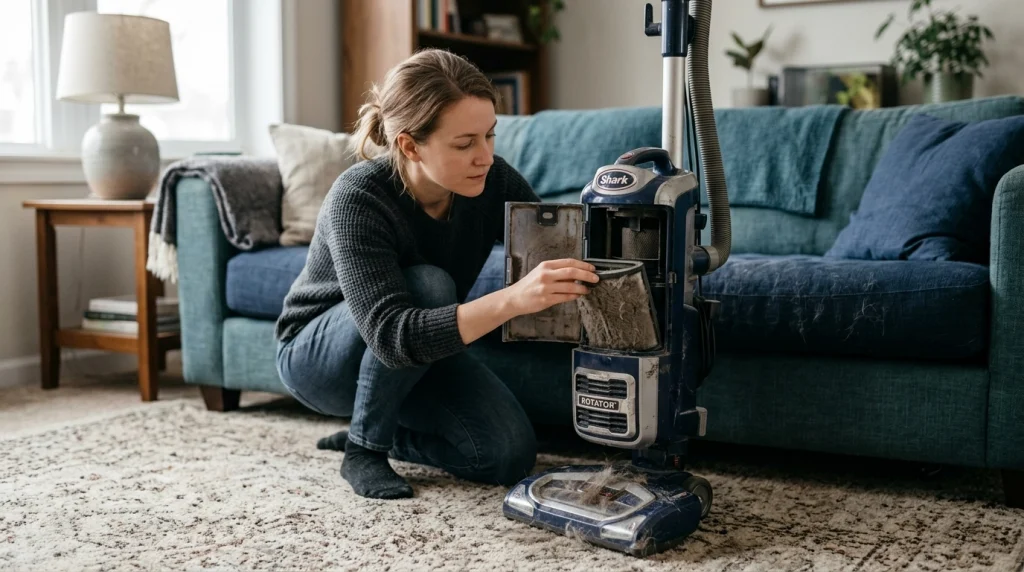
Yes, it can. The risk depends on the vacuum design, how blocked the filter becomes, and how long you continue using the machine in that condition.
A vacuum filter is a porous component that lets air pass while trapping dust and other particles. Many vacuums use more than one filter, including a pre-motor filter and a post-motor or exhaust filter.
Restricted airflow is the main problem
Your vacuum depends on moving air. The motor creates airflow that carries dust through the nozzle, hose, cyclone, bag, or dirt bin.
When dust fills the filter material, air meets more resistance. Suction at the cleaning head may then fall noticeably.
- Clean filter: Air can move through the machine with relatively little restriction.
- Partly clogged filter: Suction may weaken and cleaning takes longer.
- Heavily clogged filter: Airflow may become severely restricted and the machine may run hotter or behave abnormally.
- Damaged filter: Fine dust may bypass the filtration system depending on the vacuum design.
Can the motor overheat?
A blocked airflow path can contribute to heat problems in some vacuum cleaners. Filters, hoses, brush heads, dirt bins, and bags can all restrict the airflow the machine needs.
Some vacuums have thermal protection that shuts the machine off when it becomes too hot. That safety feature should not be treated as a normal operating condition.
If your vacuum shuts itself off and feels unusually hot, stop using it. Let it cool and inspect the filter, dirt container, hose, wand, and floor head before restarting it.
Expert Alert: If the vacuum repeatedly overheats, smells electrically burnt, sparks, or loses power after basic maintenance, stop using it and have the appliance inspected by a qualified repair technician.
Can a dirty filter destroy the motor?
It is possible on some machines if filter maintenance is ignored for long enough. Bissell, for example, warns in support guidance for certain models that dirty filters can cause motor damage when they are not properly maintained.
That doesn’t mean every dusty filter immediately ruins a motor. Think of filter neglect as an avoidable stressor that can reduce performance and potentially shorten appliance life.
Section Takeaway: A dirty filter usually shows up first as reduced airflow or suction. Continuing to run a severely restricted vacuum can create additional heat and strain, so filter maintenance should not be ignored.
How Does a Dirty Vacuum Filter Affect Airflow?
A clogged filter behaves like a partially blocked breathing path. The motor may still run, but less air can move through the complete vacuum system.
This is why weak suction doesn’t always mean the motor itself has failed. A full bin, clogged hose, blocked brush head, or dirty filter can produce similar symptoms.
| Filter condition | Typical airflow effect | What you may notice | Best action |
|---|---|---|---|
| Clean and correctly fitted | Normal airflow | Normal suction and sound | Continue routine inspections |
| Lightly dusty | Minor restriction possible | Little or no obvious change | Clean when the manual recommends |
| Heavily clogged | Significant restriction possible | Weak suction, louder sound, heat, poor pickup | Stop and service the filter |
| Wet when it should be dry | Airflow may be restricted | Poor performance or musty odor | Remove and dry fully if washable |
| Torn or deformed | Filtration may be compromised | Dust leakage or blowback may occur | Replace with the correct filter |
Dirty filters can also affect household dust control
A vacuum doesn’t make dirt disappear. It needs to collect particles while limiting how much captured dust escapes back into your home.
The U.S. Environmental Protection Agency notes that household dust can contain pollen, mold spores, pet dander, dust-mite material, and other particles. EPA guidance also suggests considering a vacuum with a HEPA filter to help limit some captured dust from escaping.
HEPA means high-efficiency particulate air. However, having the word HEPA on a vacuum doesn’t eliminate the need to maintain its filter, seals, bin, and airflow path.
The Centers for Disease Control and Prevention also recommends regular vacuuming as one part of managing indoor dust and certain asthma triggers. Filtration works best as part of broader household cleaning rather than as a substitute for it.
Section Takeaway: Good vacuum performance depends on the whole airflow path. A clean filter cannot compensate for a blocked hose, and a clear hose cannot compensate for a filter packed with dust.
What Are the Signs Your Vacuum Filter Is Too Dirty?
The clearest signs are reduced suction, visible filter buildup, unusual heat, and poor dirt pickup. You may notice several symptoms at the same time.
- Weak suction: The vacuum takes more passes to collect crumbs, hair, or dust.
- Visible buildup: The filter surface looks coated, matted, or packed with fine dust.
- Dust blowback: Fine debris appears around the exhaust or dirt container.
- Hotter operation: The body of the vacuum feels warmer than you normally expect.
- Unusual sound: The motor pitch changes or the vacuum sounds strained.
- Automatic shutdown: The machine stops during use and works again after cooling.
- Persistent odor: Dust, pet debris, or damp filter material creates an unpleasant smell.
Don’t blame the filter for every suction problem
Filters are only one possible restriction point. Check the rest of the machine before assuming a replacement filter will solve everything.
- Empty the dirt cup or replace a full bag.
- Inspect the filter for heavy dust buildup.
- Check the hose and wand for blockages.
- Remove hair and string from the brush roll.
- Inspect the floor head and inlet openings.
- Confirm every cover, seal, and dirt container is fitted correctly.
I usually start with the dirt bin because it takes seconds. Then I inspect the filter and hose before assuming something expensive has broken.
Should You Clean or Replace a Dirty Vacuum Filter?
That depends entirely on the filter type. Some filters are washable, while others must stay dry and be replaced when dirty or damaged.
Never wash a vacuum filter just because it looks washable. Check the owner’s manual or manufacturer’s support instructions first.
How to clean a washable vacuum filter
- Turn off the vacuum. Unplug a corded model before opening filter compartments.
- Remove the filter carefully. Avoid shaking collected dust throughout the room.
- Follow the manufacturer method. Some filters can be rinsed with water, while others need different care.
- Remove loose debris. Do this gently so you don’t tear the filter material.
- Let washable filters dry completely. Never reinstall a damp filter unless the manufacturer specifically allows it.
- Refit every part correctly. Poor seating can cause air leaks or dust escape.
Several Bissell support guides specify complete air drying after washing and give examples of roughly 24 to 48 hours for particular filters. That is a model-specific instruction, not a universal drying time for every vacuum.
When should the filter be replaced?
Replace a filter when the manufacturer says it has reached the end of its usable life. Physical damage is another clear reason.
- The filter is torn.
- The frame is cracked or warped.
- The material stays deeply clogged after approved cleaning.
- The filter no longer fits or seals correctly.
- A non-washable filter is heavily soiled.
- Your owner’s manual calls for scheduled replacement.
Don’t automatically buy a replacement based on a generic internet timetable. Vacuum designs, filter materials, pet exposure, floor type, and cleaning frequency vary too much.
How Can You Prevent Filter-Related Vacuum Problems?
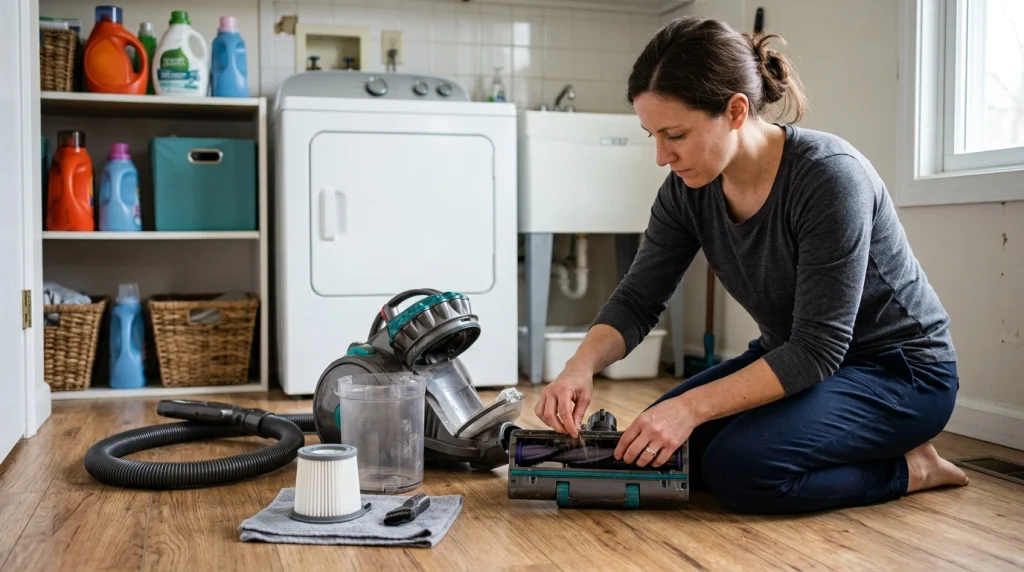
The best approach is simple preventive maintenance. Check airflow components before the vacuum becomes noticeably weak.
Use a short maintenance routine
- Empty the bin early: Don’t repeatedly run a bagless vacuum far beyond its marked fill line.
- Inspect filters regularly: Pet hair and fine dust can load them faster than expected.
- Check the brush roll: Wrapped hair and string can reduce cleaning performance.
- Look through hoses: Small objects can create major airflow restrictions.
- Keep filters dry: Reinstall washable filters only after they are completely dry.
- Use correct replacements: Poor-fitting filters can affect sealing and filtration.
Homes with pets or heavy dust may need more attention
A vacuum used once a week in a low-dust apartment does not face the same workload as one collecting pet hair daily. Fine construction dust can also load filtration systems quickly.
If someone in the home has asthma or allergies, controlling dust may be especially important. The National Institutes of Health provides research resources on indoor allergens, while public-health guidance generally supports reducing household dust exposure as part of a broader strategy.
As of 2026, I still think the owner’s manual is the most useful maintenance schedule for any specific vacuum. Manufacturer instructions tell you which filters are washable and how your exact machine should be serviced.
Section Takeaway: Preventive filter care is easier and cheaper than troubleshooting a vacuum after airflow has collapsed. Pair filter checks with bin, hose, brush-roll, and inlet maintenance.
Vacuum Filter FAQ
Can I use my vacuum with a dirty filter?
You may be able to, but you shouldn’t keep using a severely clogged filter. Restricted airflow can reduce suction and may contribute to overheating or motor strain on some models.
Can a clogged vacuum filter cause loss of suction?
Yes. Manufacturer troubleshooting guidance commonly lists dirty filters as a possible cause of low suction because accumulated debris restricts airflow through the vacuum.
Can a dirty vacuum filter make the machine overheat?
It can contribute to overheating when airflow becomes heavily restricted. Clogged hoses, full bags or bins, and blocked floor heads can create similar problems, so inspect the entire airflow path.
Can I wash every vacuum filter?
No. Some foam and reusable filters are washable, while many exhaust or specialty filters are not. Washing a non-washable filter can damage it, so check your model’s instructions first.
How long should a vacuum filter dry after washing?
Follow your manufacturer’s instructions. Some Bissell models specify 24 to 48 hours of complete air drying, but other brands and filter designs may require different treatment.
Why is my vacuum blowing dust after I clean the filter?
The filter may be installed incorrectly, damaged, still dirty, or incompatible with the machine. Also inspect the dirt container, seals, and other filters because escaping dust doesn’t always come from one component.
Will changing the filter make my vacuum stronger?
It can restore lost suction when a clogged filter caused the restriction. If performance stays weak afterward, inspect the hose, brush roll, dirt bin, seals, battery condition, and other airflow components.
Bottom line: A dirty filter can do more than make vacuuming frustrating. When it restricts airflow, it can reduce suction, increase heat, and on some machines contribute to motor problems.
Check the filter before assuming your vacuum is worn out. A few minutes of correct maintenance can often restore performance and may help your cleaner last longer.
