
How to Vacuum a Mattress: A Complete Step-by-Step Guide

Quick Answer
To vacuum a mattress, remove all bedding and attach a clean upholstery tool to your vacuum. Clean the top, sides, seams, and tufts with slow, overlapping passes. A sealed model like those covered in this guide to the best vacuum cleaners for allergies may reduce the amount of fine dust escaping back into the room.
Quick Mattress Vacuuming Steps
- Strip the bed: Remove sheets, protectors, pillows, and blankets.
- Check the mattress: Look for moisture, mold, stains, tears, or pest signs.
- Prepare the vacuum: Empty its bin and fit a clean upholstery attachment.
- Vacuum slowly: Make overlapping passes from the head to the foot.
- Clean hidden areas: Vacuum seams, piping, buttons, sides, and the bed frame.
- Finish the job: Let the mattress air before replacing clean bedding.
Important Safety Tip
- Keep it dry: Never vacuum a wet mattress with an ordinary dry vacuum.
Learning how to vacuum a mattress changed the way I clean my bedroom. The first time I tried it, I rushed across the center and completely missed the dusty seams.
This guide covers the method I now use for routine home hygiene. It also explains attachments, dust mites, stains, odors, and situations that need more than vacuuming.
In This Guide
Why Should You Vacuum Your Mattress?
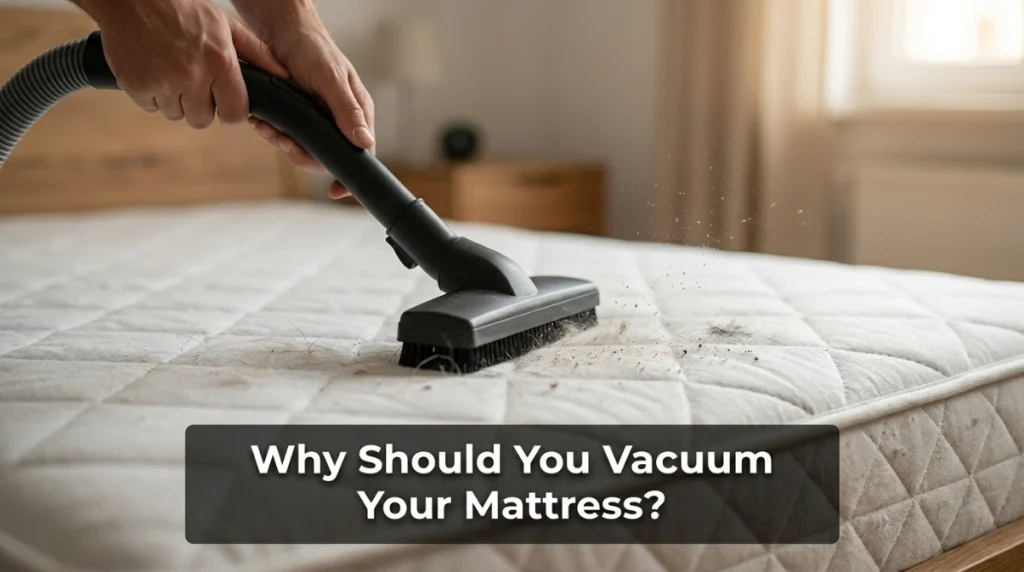
Vacuuming removes loose dust, hair, lint, skin flakes, and surface allergen debris. It complements laundering but does not wash or disinfect the mattress.
Mattress vacuuming is the use of controlled suction and a clean attachment to lift dry particles from mattress fabric, seams, and edges.
What collects inside a mattress?
A mattress sits beneath you for several hours each night. Its fabric can collect particles even when you use fitted sheets.
- Skin flakes: These pass through or around bedding over time.
- Household dust: Air movement carries fine particles into bedroom fabrics.
- Hair and lint: These often gather near seams and mattress edges.
- Pet debris: Fur and dander may reach the bed when pets enter the room.
- Dust mite material: Mite body parts and waste can remain in soft furnishings.
The Asthma and Allergy Foundation of America’s dust mite guidance says mites and their debris occur in bedding and mattresses. It recommends mattress vacuuming every one to three months, especially without a fully enclosed allergen cover.
Does vacuuming kill dust mites?
Vacuuming alone cannot remove every dust mite. Many live too deeply inside soft materials for ordinary suction to reach.
The useful goal is reducing accessible dust and allergen debris. Washing bedding, controlling humidity, and using zippered covers form a more complete plan.
- Wash suitable bedding regularly according to its care label.
- Use a fully enclosed mattress and pillow cover if allergies are a concern.
- Keep indoor humidity controlled rather than allowing the bedroom to stay damp.
- Use a well-sealed vacuum with effective filtration when possible.
The EPA’s indoor air quality resources explain that source control, ventilation, and filtration can work together to reduce indoor pollutant exposure.
Section Takeaway: Vacuuming reduces loose surface debris, but it works best as one part of a wider bedding and bedroom-cleaning routine.
What Do You Need to Vacuum a Mattress?
You need a dry vacuum, a clean upholstery attachment, and enough time to make slow passes. High power alone does not guarantee a better result.
Which vacuum attachment works best?
An upholstery tool is my first choice. Its wide opening spreads suction across the fabric without concentrating force in one tiny spot.
I use a clean crevice tool for seams and piping. I avoid dirty floor heads because they can transfer grit, hair, and germs from the floor.
| Attachment | Best Use | Main Caution |
|---|---|---|
| Upholstery tool | Large top and side panels | Clean it before touching the bed |
| Crevice tool | Seams, piping, handles, and frame gaps | Avoid scraping delicate fabric |
| Soft dusting brush | Delicate covers and light surface dust | A stiff brush may pull fibers |
| Motorized mini tool | Hair on compatible mattress fabrics | Check the mattress care instructions first |
Do you need a HEPA vacuum?
A HEPA filter captures fine airborne particles passing through the filter. However, the vacuum’s seals also matter because air can escape around a poorly sealed housing.
People sensitive to dust may prefer a sealed, filtered unit. Our overview of the best household vacuum cleaners explains the main formats and household features.
- Canister vacuum: Often convenient beside a bed because the hose provides reach.
- Upright vacuum: Effective when it includes a suitable hose and upholstery tool.
- Stick vacuum: Light and easy to control, though runtime and filtration vary.
- Handheld vacuum: Convenient for quick cleaning but may have a small bin.
Before starting, empty the dust bin or fit a fresh bag. Check that the hose is clear and the filter is installed correctly.
How Do You Vacuum a Mattress Properly?
Strip the bed, inspect the surface, and vacuum it in slow, overlapping lines. Give seams and edges extra attention because debris gathers there.
1. Read the care label
Check the manufacturer’s care instructions before using suction or attachments. This matters for delicate quilting, wool covers, and removable specialty fabrics.
Do not remove a mattress cover unless its label says it is removable. Some covers contain materials that should not be opened or washed at home.
2. Remove and wash the bedding
Take off the sheets, pillowcases, protector, blankets, and removable topper. Launder each washable item according to its label.
Move pillows and clean laundry out of the work area. This prevents stirred dust from settling on them.
3. Inspect the bare mattress
Look across the top, sides, and seams in good light. Stop if you find dampness, widespread mold, insects, eggs, or unexplained dark spots.
- Check around piping and stitched labels.
- Inspect buttons, tufts, handles, and zipper areas.
- Look beneath the mattress and along the bed frame.
- Note stains that may need separate treatment.
4. Prepare the room and vacuum
Open a window if outdoor conditions allow. Anyone with a strong dust allergy should avoid the room during cleaning when possible.
AAFA notes that vacuuming can stir up dust. It suggests that sensitive cleaners consider an N95 mask and stay outside the room for 20 to 30 minutes afterward.
5. Vacuum the top in overlapping passes
Start at the head of the mattress. Move the upholstery tool slowly toward the foot instead of making quick sweeping motions.
- Divide the surface into manageable sections.
- Pull the tool in one straight direction.
- Overlap the next pass slightly.
- Repeat across the full width.
- Make a second set of passes across the first direction if the fabric allows.
On my own mattress, slower strokes collect more visible lint than fast strokes. Pressing hard did not help and made the tool difficult to move.
6. Clean seams, tufts, and sides
Switch to the crevice tool. Trace the piping gently and pause around buttons, folds, and stitched depressions.
Vacuum the four side panels next. If the mattress can be turned safely, clean the underside using the same method.
7. Vacuum the bed frame and nearby floor
Dust often hides on slats, rails, and the floor below the bed. Clean these areas before returning the mattress to position.
A vacuum with practical suction and attachments can make these deeper bedroom jobs easier. Keep floor tools separate from mattress tools.
8. Air the mattress and remake the bed
Let the surface air before adding clean bedding. Make sure it feels completely dry.
Fit a clean mattress protector if you use one. A washable protector makes routine care simpler, but it does not replace mattress cleaning.
Section Takeaway: Slow passes and careful seam cleaning matter more than force. Always finish the surrounding frame and floor before remaking the bed.
How Often Should You Vacuum a Mattress?
For most homes, vacuuming every one to three months is a practical starting point. Your household may need a different schedule.
| Household Situation | Practical Starting Schedule |
|---|---|
| Typical bedroom with a washable protector | Every two to three months |
| No fully enclosed allergen cover | About every one to three months |
| Pet regularly sleeps on the bed | Inspect weekly and vacuum when debris appears |
| After a dusty move or renovation | Once after dust control and room cleanup |
These are cleaning guidelines, not medical treatment schedules. Ask a qualified healthcare professional about persistent allergy or asthma symptoms.
As of 2026, AAFA continues to recommend vacuuming mattresses every one to three months. It also stresses that vacuuming cannot remove all mites from deep mattress layers.
Can Vacuuming Remove Stains, Odors, or Mold?
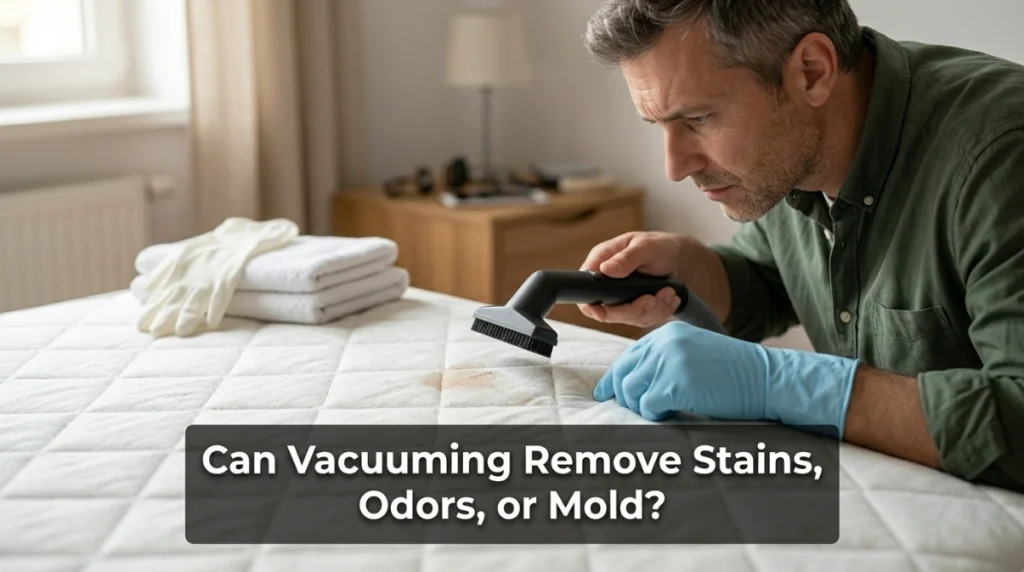
Vacuuming removes dry, loose material. It cannot wash out a stain, neutralize every odor source, or safely remediate an established mold problem.
Stains
Vacuum the area before applying an approved stain treatment. Loose grit can spread when liquid is added.
Follow the mattress maker’s instructions and use as little moisture as possible. Never soak foam or inner mattress layers.
Odors
Suction may remove odor-carrying hair and debris. It cannot solve odors caused by urine, smoke residue, moisture, mold, or material breakdown.
Some cleaners sprinkle baking soda before vacuuming. Check both the mattress and vacuum manuals first because fine powder may clog filters or damage certain machines.
Mold or persistent dampness
Do not vacuum visible mold with an ordinary household vacuum. Disturbing a contaminated area may spread spores and does not address the moisture source.
The EPA notes that wet furnishings can support mold growth when they remain damp. Moisture control must come before cosmetic cleaning.
Expert Alert: If a mattress has visible mold, flood contamination, or deep persistent dampness, stop using it and seek qualified remediation advice. Replacement may be safer than attempting a home surface treatment.
Bed bugs
Vacuuming may collect some visible insects or debris, but it is not a complete bed bug treatment. Eggs and insects can remain in hidden gaps.
Expert Alert: Contact a licensed pest-management professional when you suspect bed bugs. Avoid moving the mattress through the home because that may spread the infestation.
Section Takeaway: Use vacuuming for dry surface debris. Moisture, mold, pests, and deep stains require separate treatment or professional help.
What Mattress Vacuuming Mistakes Should You Avoid?
The biggest mistakes involve dirty tools, rushed passes, excess force, and moisture. Each can reduce cleaning quality or harm the mattress.
- Using a floor head: It can transfer dirt from rugs and hard floors to the bed.
- Moving too quickly: Fast passes give the airflow less time to lift settled debris.
- Ignoring the seams: Hair, lint, and other particles collect around folds and piping.
- Pressing too hard: Heavy pressure can restrict airflow or stress delicate fabric.
- Using an aggressive brush: A rotating tool may snag quilting or loosen fibers.
- Vacuuming damp fabric: A standard dry vacuum is not designed for wet material.
- Adding unapproved powder: Fine powders may enter filters, motors, or mattress layers.
- Forgetting the underside: Dust can settle beneath the mattress and on bed slats.
- Skipping vacuum maintenance: A full bin or clogged filter reduces airflow.
I once used an attachment immediately after cleaning a rug. A few dark fibers transferred onto the mattress, so I now wash or wipe tools first.
Also avoid treating vacuuming as a cure for allergies. The CDC’s asthma information can help readers understand why trigger control belongs within a broader care plan.
Frequently Asked Questions
Can I vacuum my mattress with a regular vacuum?
Yes, if it has a clean upholstery attachment and suitable suction control. Avoid placing a dirty floor head directly on the mattress, and check the mattress care label before using a motorized brush.
Can I use a handheld vacuum on a mattress?
Yes. A handheld vacuum works well for seams, crumbs, hair, and quick maintenance. Its smaller bin and narrower cleaning path may make a full mattress take longer.
Should I vacuum both sides of my mattress?
Vacuum both sides if the manufacturer permits turning or flipping the mattress. For a heavy one-sided model, clean the exposed surface and accessible sides without risking injury.
How long should it take to vacuum a mattress?
A careful cleaning usually takes about 10 to 20 minutes, depending on mattress size and condition. The aim is complete, overlapping coverage rather than meeting an exact time.
Should I use baking soda before vacuuming?
Only use baking soda when both the mattress maker and vacuum manufacturer allow it. Fine powder can clog some filters, reach the motor, or become trapped inside mattress fabric.
Can vacuuming remove dust mites completely?
No. Vacuuming can reduce accessible mite debris, but many mites remain deep inside soft materials. Combine it with regular bedding care, humidity control, and allergen-barrier covers when appropriate.
Can I vacuum a memory foam mattress?
Usually, but read its care label first. Use a clean, nonaggressive attachment with light pressure, and never soak the foam or use a harsh rotating brush without manufacturer approval.
Mattress vacuuming is a simple job when you use clean tools and work slowly. Strip the bed, inspect it carefully, cover every surface, and finish with clean bedding.
Add the task to your seasonal bedroom-cleaning routine. If you find moisture, mold, or pests, pause and solve that underlying problem before using the mattress again.
