
How to Vacuum Furniture: A Complete Upholstery Cleaning Guide

Quick Answer
To vacuum furniture, remove loose cushions, check the care label, and fit your vacuum with an upholstery tool. Vacuum from top to bottom using slow, overlapping strokes. Clean seams and crevices with a narrow nozzle. Regular vacuuming can also reduce household dust and common asthma triggers, according to the CDC’s guidance on controlling asthma triggers.
Quick Furniture-Vacuuming Steps
- Check the label: Follow the furniture maker’s cleaning instructions.
- Remove loose items: Take off pillows, throws, and removable cushions.
- Test the tool: Try the attachment on a hidden area first.
- Vacuum the surface: Use slow, overlapping strokes with light pressure.
- Clean every gap: Vacuum seams, cushion edges, and the frame.
- Finish underneath: Clean the back, sides, legs, and floor below.
Furniture can look clean while holding dust, crumbs, hair, and pollen below the surface. I learned this after vacuuming a sofa that seemed spotless and filling half the dust cup.
This guide explains how to vacuum furniture without harming its fabric. It covers upholstered sofas, leather furniture, mattresses, wood, and delicate materials.
In This Guide
Why Should You Vacuum Furniture?
Vacuuming furniture means using controlled suction and suitable attachments to remove dry debris from its surfaces, seams, and hidden spaces. It is routine maintenance rather than stain removal or wet cleaning.
Soft furniture can collect more than visible crumbs. Its fibers and padding may hold dust, pollen, pet dander, lint, and tracked-in soil.
- Dust: Fine particles settle across backs, arms, cushions, and frames.
- Food debris: Crumbs fall between cushions and may attract pests.
- Pet material: Hair and dander can cling tightly to upholstery fibers.
- Pollen: Clothing, pets, and open windows can bring pollen indoors.
- Dust-mite material: Soft furnishings can hold mites and their waste.
The Asthma and Allergy Foundation of America’s indoor-allergen guidance recommends regular vacuuming to help keep allergen levels low. It also warns that a poor-quality vacuum may return particles to the air.
Vacuuming also protects the fabric. Grit trapped in upholstery can rub against fibers whenever someone sits down.
I notice this most on light-colored sofa arms. A dull gray patch often improves after careful dry vacuuming, even before any stain treatment.
Vacuuming cannot remove every contaminant. It will not fix mold growth, urine inside foam, heavy grease, or a deeply soaked spill.
Expert Alert: If furniture has widespread mold, sewage contamination, or deep water damage, stop using it. Ask a qualified remediation professional whether it can be cleaned safely.
Section Takeaway: Regular vacuuming removes dry debris before it works deeper into the furniture. It supports a cleaner home, but it does not replace stain treatment or professional remediation.
What Tools Should You Use?
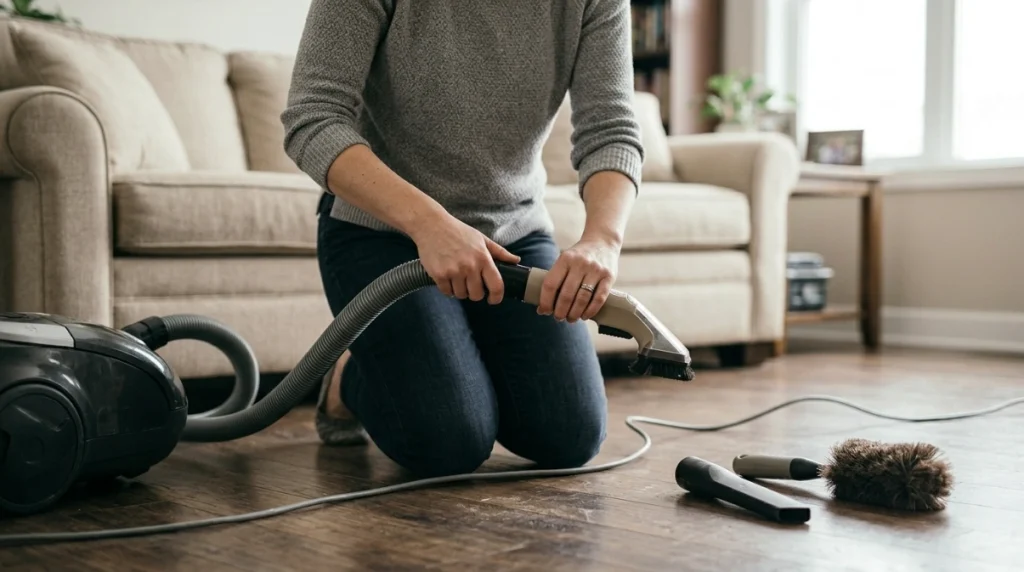
The best tool is usually an upholstery attachment with gentle suction. A crevice tool and soft dusting brush handle the areas it cannot reach.
Upholstery Tool
An upholstery tool has a wide, flat opening. It spreads suction across the fabric and makes cleaning large sections faster.
Some models include a lint strip or small rotating brush. Test powered brushes carefully because they may pull loops or loose threads.
Crevice Tool
A crevice nozzle reaches cushion gaps, piping, buttons, and frame edges. It is often the most useful attachment for crumbs.
Keep its hard edge slightly above delicate fabric. Dragging it across the surface may leave marks.
Soft Dusting Brush
A brush attachment works well on wood, leather, vents, decorative trim, and firm fabric. Its bristles loosen dust while reducing direct contact with hard plastic.
Which Vacuum Type Works Best?
| Vacuum Type | Best Use | Main Limitation |
|---|---|---|
| Canister | Deep cleaning with a flexible hose | Bulky to move around furniture |
| Upright with hose | Routine sofa and chair cleaning | A short hose may pull the machine over |
| Cordless stick | Fast weekly cleaning | Limited battery time and dust capacity |
| Handheld | Crumbs, stairs, and small chairs | Small filters can clog quickly |
| Wet/dry vacuum | Dry debris on durable workshop furniture | Strong suction may harm household upholstery |
If allergies are a concern, consider a sealed vacuum with a high-efficiency particulate air, or HEPA, filter. A HEPA label alone does not prove that the entire vacuum is sealed.
Check the filter, hose, seals, and dust container before starting. Escaping dust defeats much of the work.
Section Takeaway: Pair a wide upholstery tool with a crevice nozzle and soft brush. Use moderate suction, clean filters, and a well-sealed vacuum when possible.
How Do You Prepare Furniture for Vacuuming?
Begin by checking the furniture label and removing loose objects. Preparation prevents damage and lets you reach hidden debris.
- Read the care label. Look under a cushion or beneath the frame for the maker’s cleaning instructions.
- Clear the furniture. Remove blankets, pillows, toys, coins, and other loose items.
- Inspect the fabric. Look for tears, loose threads, weak seams, damp areas, or flaking material.
- Empty the vacuum. Start with an empty bin or a bag that still has capacity.
- Check the attachments. Remove trapped hair and wipe dirt from their contact surfaces.
- Reduce the suction. Open the airflow vent or select a lower power setting for delicate fabric.
- Test a hidden spot. Vacuum a small area behind or below the furniture first.
Do not vacuum wet upholstery with a standard dry vacuum. Moisture can damage the machine and pull liquid deeper across the fabric.
I also check for small objects by hand before using the crevice tool. Coins and toy parts can block a narrow hose with surprising speed.
Move nearby curtains and power cords out of the way. Give yourself room to walk around the furniture without pulling the vacuum against it.
If the furniture has removable covers, consult their labels separately. A washable cushion cover may have different rules from the padded insert beneath it.
Section Takeaway: Inspect first and vacuum second. A short check for damage, moisture, and hidden objects prevents most avoidable problems.
How Do You Vacuum Upholstered Furniture?
Work from the highest point downward, then clean the cushions and exposed frame. Slow, overlapping passes remove more debris than quick back-and-forth movements.
1. Vacuum the Back and Upper Edge
Start at the top of the sofa or chair. Clean the upper edge, back panel, and any fabric facing the wall.
Use the upholstery tool with light pressure. Overlap each pass so you do not leave narrow strips untouched.
2. Clean the Arms and Front Panel
Vacuum the arms from back to front. Pay close attention to the areas touched by hands and resting heads.
Continue across the lower front panel. Use the soft brush around wooden trim or decorative details.
3. Remove and Vacuum the Cushions
Take out every removable cushion. Vacuum the top, bottom, side panels, piping, and zipper area.
Change the direction of your strokes on woven fabric. A second pass across the first can lift debris held between fibers.
4. Vacuum Under the Cushions
Use the wide tool on the exposed platform. Switch to the crevice nozzle along frame edges and deep channels.
Do not force the nozzle into a tight gap. You could tear the lining or disconnect fabric from the frame.
5. Clean Seams, Tufts, and Buttons
Lower the suction before cleaning tufted areas. Guide the crevice tool around buttons without placing it directly over them.
A clean, soft brush can loosen stubborn particles. Vacuum the released debris immediately afterward.
6. Finish the Sides, Legs, and Floor
Clean the outer sides and lower edges. Use a soft brush on legs, supports, and non-fabric surfaces.
Move the furniture only when it is safe to do so. Vacuum underneath because loose debris often collects just beyond the visible edge.
Replace the cushions after the dust settles. Rotate reversible cushions to spread wear more evenly.
Section Takeaway: Follow one route from top to bottom so no area gets missed. Slow passes, light pressure, and the correct nozzle give the safest result.
How Should You Vacuum Different Materials?
Furniture materials do not all tolerate the same suction or attachments. Adjust your method to the surface rather than treating every piece like a carpet.
Fabric Sofas and Chairs
Use a clean upholstery tool and low-to-medium suction. Clean in the direction of the fabric’s nap when the surface has a visible pile.
Avoid aggressive brush rolls on loosely woven cloth. They can catch loops and turn a small snag into a long pulled thread.
Velvet and Other Delicate Fabrics
Check the maker’s instructions before touching velvet with a vacuum. Some velvet should receive professional care.
If vacuuming is permitted, use low suction and a soft attachment. Follow the pile in one direction and avoid pressing down.
Leather and Faux Leather
Use a soft brush attachment on low power. Focus on seams and cushion gaps, where grit can scratch the finish.
Never scrape leather with a bare plastic nozzle. Vacuuming removes dry debris but does not replace the maker’s approved leather-care routine.
Wood, Metal, and Painted Furniture
Fit a soft brush and confirm that its bristles are clean. Sand or grit caught in the brush may scratch polished surfaces.
Use suction near carvings and hardware rather than rubbing them hard. A microfiber cloth can handle dust left on broad, smooth panels.
Mattresses
Remove all bedding and use a clean upholstery tool. Vacuum the top, sides, piping, labels, and accessible base.
Give seams extra attention without claiming that vacuuming removes every dust mite. The AAFA’s dust-mite guidance notes that mites and their waste can remain deep inside soft furnishings.
Pet Hair on Furniture
First collect loose hair with the upholstery attachment. Work in short strokes from several directions.
For hair that remains, loosen it with a clean rubber pet-hair tool approved for the fabric. Do not use stiff brushes on delicate upholstery.
Section Takeaway: Lower suction for delicate materials and keep hard nozzle edges away from finished surfaces. Always let the care label override general advice.
Which Vacuuming Mistakes Should You Avoid?
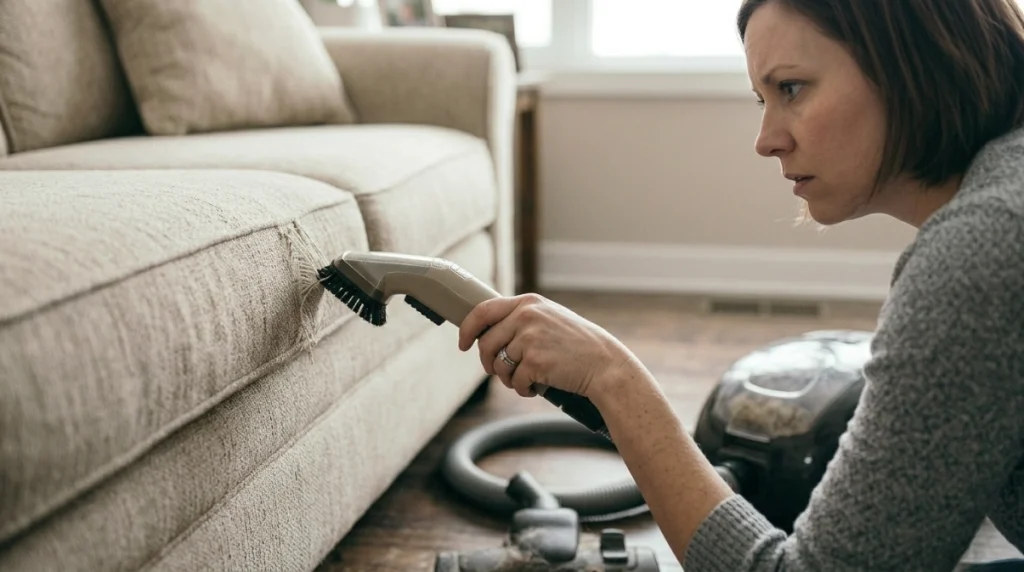
The most common mistake is using maximum suction everywhere. Strong airflow can lift loose fabric, stress seams, and pull at decorative details.
- Skipping the care label: The furniture maker may restrict vacuuming or powered brushes.
- Using a dirty tool: An attachment used on floors can transfer grit and stains.
- Vacuuming too fast: Rapid passes may leave embedded hair and fine debris behind.
- Ignoring hidden areas: Dust collects beneath cushions, behind furniture, and along the frame.
- Forcing the nozzle: Hard plastic edges may scrape leather or damage weak fabric.
- Vacuuming damp material: A standard dry vacuum is not designed for liquids.
- Overfilling the bin: Restricted airflow can reduce pickup and strain the machine.
- Using a damaged cord: Electrical damage requires repair before the vacuum is used.
What If the Vacuum Pulls the Fabric?
Stop immediately and reduce the suction. Open the airflow control, switch to a wider tool, or place a clean mesh screen between the nozzle and delicate fabric.
Do not continue if threads rise from the surface. A furniture or textile professional should examine valuable or fragile upholstery.
What If Dust Blows Back Into the Room?
Turn off the vacuum and inspect its bin, bag, filters, hose connections, and seals. A clogged filter or loose dust container can allow particles to escape.
The EPA’s indoor-air-quality resources describe source control, ventilation, and filtration as parts of reducing indoor pollutants. Vacuuming works best as one part of that broader routine.
How Often Should Furniture Be Vacuumed?
Most frequently used upholstered furniture benefits from vacuuming every one or two weeks. Weekly cleaning makes sense in homes with pets, visible crumbs, or allergy concerns.
| Household Situation | Practical Starting Schedule |
|---|---|
| Lightly used furniture | Every two to four weeks |
| Daily-use sofa or chair | Every one to two weeks |
| Pets on furniture | Once or twice a week |
| Food eaten on furniture | Remove crumbs promptly; vacuum weekly |
| Allergy-sensitive household | Follow medical advice; weekly is a common starting point |
This schedule is a starting point, not a fixed rule. Adjust it for furniture use, pets, outdoor pollen, and the amount your vacuum collects.
As of 2026, my simplest test remains visual and practical. If I can see hair, feel grit, or find crumbs under a cushion, I shorten the schedule.
Section Takeaway: Avoid excess suction, dirty attachments, and rushed passes. Set your cleaning schedule according to actual household use.
Frequently Asked Questions
Can I vacuum my couch with a regular vacuum?
Yes, if the vacuum has a hose, upholstery tool, and adjustable suction. Clean the attachment first and test it on a hidden section. Avoid placing a powered floor head directly on the couch unless the furniture and vacuum makers permit it.
Should I remove couch cushions before vacuuming?
Remove every cushion that is designed to come out. Vacuum all sides of each cushion, then clean the platform and gaps underneath. Do not force attached cushions because you may damage their seams or fasteners.
How do I vacuum furniture without an upholstery attachment?
Use a clean soft-brush attachment on low suction. If you only have a bare hose, keep its hard edge just above the surface. Do not drag it across leather, velvet, loose weaves, or polished wood.
Does vacuuming furniture remove dust mites?
Vacuuming can remove surface dust and some mite material, but it cannot remove every mite from deep padding. Combine regular cleaning with washable covers, suitable humidity control, and professional medical advice when dust-mite allergy is a concern.
Can I vacuum wet furniture?
Do not use a standard dry vacuum on wet furniture. Extracting liquid requires equipment designed for wet pickup and a method approved for that material. Furniture must dry fully because lingering moisture may support mold growth.
Can vacuuming damage upholstery?
It can if suction is too strong or the attachment catches loose threads. Damage may also occur when a dirty floor tool scratches the surface. Use low power, inspect the fabric, and test a hidden area first.
Should I vacuum before cleaning a furniture stain?
Yes, in most cases. Removing dry dirt keeps it from mixing with a cleaning solution and spreading. However, blot a fresh liquid spill first and follow the care label before applying water, detergent, or solvent.
Final Takeaway: Vacuum furniture from top to bottom with clean attachments, controlled suction, and slow overlapping passes. Include cushions, seams, the frame, and the floor underneath.
Make furniture vacuuming part of your weekly or biweekly cleaning routine. That small habit prevents crumbs, hair, and dust from building into a much harder job.
