
How to Unclog a Vacuum Hose and Protect Your Indoor Air Quality

When your vacuum cleaner suddenly loses suction, it leaves behind pet hair, dust mites, and daily dirt. For families managing allergies or asthma, a poorly performing vacuum is more than just a nuisance—it is a direct threat to your home’s air quality. Learning how to unclog a vacuum hose is a simple, essential maintenance skill that restores your machine’s cleaning power and ensures harmful allergens are captured in the filter, rather than kicked back up into the air you breathe.
In this guide, we will walk you through the safest, most effective ways to clear a stubborn vacuum clog. We will also explore how maintaining your vacuum’s suction protects your indoor air quality and keeps your home a safe, healthy environment.
Quick Answer
To quickly fix a loss of suction, learning how to unclog a vacuum hose requires just a few simple steps. First, unplug the vacuum and detach the hose from both the wand and the base. Drop a small coin through the hose to locate the blockage. Gently push a blunt, long object—like a broom handle—through the hose to force the debris out. Finally, rinse the hose with warm water (only if it does not contain electrical wires) and let it dry completely before reattaching.
The Hidden Link Between Vacuum Suction and Indoor Air Quality
Most homeowners view vacuuming purely as a way to keep carpets looking clean. However, a high-quality vacuum—especially one equipped with a HEPA filter—is actually one of your first lines of defense for indoor air quality.
When your vacuum hose is clogged, the machine loses the suction power required to lift microscopic particles out of carpet fibers. Instead of trapping dust, pollen, and pet dander inside the sealed dirt bin, a clogged vacuum simply agitates the carpet. This friction launches settled allergens directly into your breathing zone.
Furthermore, a clog restricts airflow to the motor. This forces the motor to run hotter and work harder, which can sometimes emit a burning smell or cause fine, unfiltered motor dust to exhaust back into the room. To maintain a healthy home, you must ensure your vacuum operates at peak airflow. In fact, according to the Asthma and Allergy Foundation of America’s guidelines for controlling indoor allergens, using a high-efficiency vacuum weekly is critical for reducing asthma triggers like dust mites and pet dander.
Warning Signs Your Vacuum Hose is Clogged
Before you tear your machine apart, look and listen for the telltale signs of a restricted hose:
- A high-pitched whining noise: Restricted airflow changes the acoustic pitch of the vacuum motor.
- Zero suction at the wand: The brush roll may spin, but no dirt travels up the tube.
- Spitting debris: The vacuum kicks dirt out the back instead of pulling it in.
- Overheating and shutting off: Many modern vacuums feature a thermal switch that cuts power to prevent motor fires when airflow is blocked.
- Musty or burning odors: Trapped pet hair and dust can smell awful as the motor heats up around them.
Step-by-Step Guide: How to Unclog a Vacuum Hose
Clearing a blockage is a straightforward DIY task. Gather a broom with a detachable handle (or a long, blunt wooden dowel), a flashlight, and a pair of pliers before you begin.
Step 1: Unplug the Machine for Safety
Never perform maintenance on a vacuum while it is plugged into a wall outlet. Accidental start-ups can lead to injury, especially if you are working near the motorized brush roll.
Step 2: Detach the Hose
Remove the hose from the main vacuum canister and the extension wand. Most hoses twist off or feature simple push-button release tabs. Lay the hose flat on the floor in a straight line.
Step 3: Perform the “Drop Test”
If you aren’t sure where the clog is located, drop a heavy coin (like a quarter) into one end of the hose and lift it. If the coin doesn’t fall out the other side, you have a confirmed blockage. The point where the coin stops tells you exactly where the clog is resting.
Step 4: Use a Blunt Tool to Push the Clog
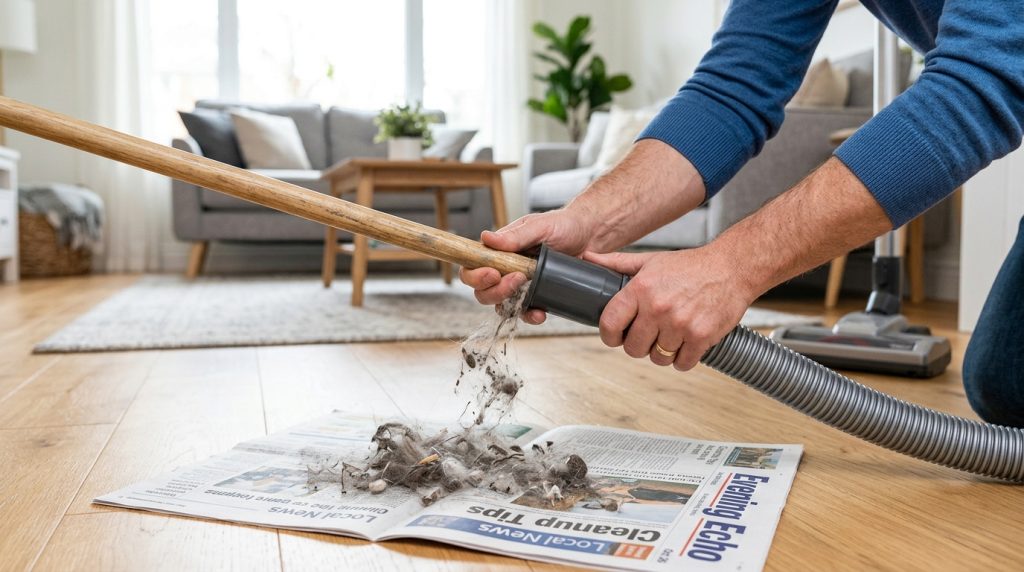
Take your blunt broom handle or wooden dowel and insert it into the hose. Do not force it. Gently push against the clog to loosen the compacted dust, hair, and debris. Work from the end closest to the blockage so you have less distance to push the debris out.
Step 5: Wash the Hose (Non-Electric Hoses Only)
If your hose is completely hollow and has no electrical prongs or wires running through it, you can wash it. Run warm water and a drop of mild dish soap through the hose to remove sticky residue and lingering odors. Important: Hang the hose over a shower rod and let it dry for a full 24 to 48 hours. Reattaching a wet hose will cause immediate mold growth and ruin your vacuum motor.
Expert Tip: Never use a wire coat hanger to unclog a vacuum hose. The sharp metal tip can easily puncture the thin plastic ridges of the hose. Even a tiny pinhole leak will drastically reduce your vacuum’s suction power and allow microscopic dust to escape back into your home’s air.
Maintaining Your Vacuum for Optimal Air Quality
Unclogging the hose is only one part of the equation. To truly protect your home’s air quality, you must maintain the entire filtration system. Vacuums act as localized air purifiers when running; they pull in dirty air, filter it, and exhaust clean air.
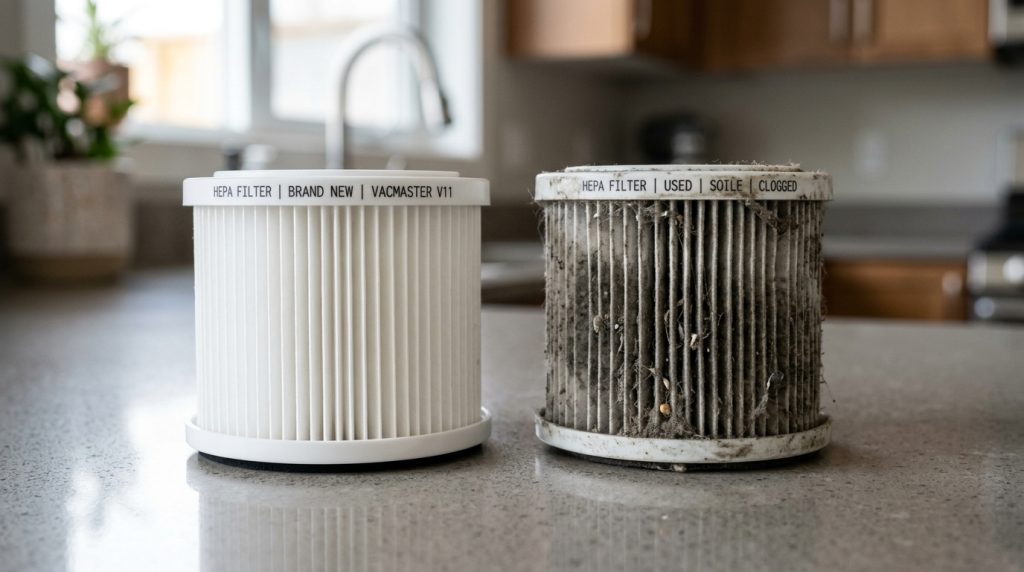
Check and Replace HEPA Filters
If you have successfully unclogged your hose but your vacuum still smells dusty or lacks suction, your HEPA filter is likely saturated. HEPA filters trap 99.97% of particles down to 0.3 microns, including pollen, mold spores, and pet dander. Once saturated, airflow stops.
Check your manufacturer’s manual. Some filters are washable, while others must be replaced every 6 to 12 months. According to the EPA’s recommendations for indoor particulate matter, minimizing airborne dust through proper source control—which includes regular, highly-filtered vacuuming—is highly effective at reducing respiratory distress.
Empty the Dirt Bin Frequently
Bagless vacuums rely on cyclonic action to separate dirt from the air. If the dirt bin passes the “Max Fill” line, the cyclonic action fails. Dust is then forced directly into the pre-motor filter, clogging it instantly. Empty the bin after every use to maintain maximum airflow.
Inspect the Brush Roll
Turn the vacuum over and inspect the spinning brush roll. If it is tightly wrapped in human or pet hair, it cannot agitate the carpet to release dust mites. Carefully cut the hair away using scissors, being mindful not to snip the bristles.
Troubleshooting Guide: Why Is My Vacuum Losing Suction?
If you have cleared the hose and are still experiencing issues, use this table to diagnose other common vacuum problems that can hinder your home’s cleanliness.
| Symptom | Likely Cause | How to Fix It | Air Quality Impact |
|---|---|---|---|
| No suction at hose, but brush spins | Clogged vacuum hose | Detach and clear with a broom handle. | High; leaves dirt in carpets to become airborne later. |
| Weak suction everywhere | Clogged HEPA or pre-motor filter | Wash or replace filters per manufacturer guidelines. | Severe; forces fine dust directly out the exhaust back into the room. |
| Brush roll won’t spin | Broken or slipped drive belt | Remove bottom plate and replace the rubber belt. | Moderate; fails to lift heavier dander and dirt out of thick carpets. |
| Burning rubber smell | Tangled brush roll or jammed belt | Cut away hair; check belt for friction burns. | Moderate; introduces VOCs (burnt rubber smells) into the room. |
Common Mistakes Homeowners Should Avoid
When trying to fix a vacuum quickly, it is easy to make a mistake that permanently damages the machine or creates an indoor air quality hazard. Keep these practical warnings in mind:
- Washing an electrified hose: Many modern upright and canister vacuums have wiring built directly into the hose to power the motorized floor head. Never run water through an electric hose.
- Vacuuming wet messes with a dry vacuum: Moisture will mix with the dust inside the hose and filters, creating a concrete-like sludge. This will ruin the HEPA filter and cause severe mold growth, blasting mold spores into your air every time you vacuum.
- Ignoring the pre-motor filter: Washing the dirt bin but forgetting the foam pre-filter guarantees weak suction. This foam piece protects the motor from fine dust.
- Using sharp tools: As mentioned earlier, knives, scissors, and unbent coat hangers will puncture flexible vacuum hoses.
- Vacuuming up drywall dust: Fine construction dust will bypass basic cyclonic separation and instantly blind a HEPA filter. Always use a dedicated shop-vac with a fine-dust bag for home renovations.
When to Consult an Air Quality or HVAC Professional
A high-quality, fully functional vacuum is an excellent tool for managing indoor allergens. However, vacuums only capture dust that has settled onto surfaces. They cannot filter particles actively suspended in the air.
If you have unclogged your vacuum hose, replaced your HEPA filters, and are vacuuming regularly, but your family is still suffering from allergy symptoms, coughing, or persistent odors, it is time to look at the bigger picture.
You may need to consult an indoor air quality expert or an HVAC professional if:
- Dust accumulation is unusually rapid: If your furniture is coated in dust just 24 hours after a deep clean, you likely have leaky HVAC ductwork pulling dust from an attic or crawlspace.
- Humidity is out of control: Dust mites thrive in humidity above 50%. A professional can help you size a whole-home dehumidifier.
- You need continuous airborne filtration: While a vacuum cleans surfaces, a dedicated HEPA air purifier is required to scrub the air 24/7. An expert can calculate the exact CADR (Clean Air Delivery Rate) needed for your specific room sizes.
FAQs
How do I know if my vacuum hose is clogged?
You will likely notice a severe drop in suction at the wand, a change in the motor’s pitch (usually a high-pitched whine), or dirt spitting back out of the floor head. A simple test is dropping a coin through the detached hose; if it doesn’t come out the other side, there is a clog.
Can I use a coat hanger to unclog a vacuum hose?
No, you should avoid using wire coat hangers. The stiff, sharp metal can easily puncture the flexible plastic lining of the vacuum hose. A punctured hose will permanently lose suction and leak dust back into your home. Use a blunt object like a broom handle instead.
Will a clogged vacuum damage the motor?
Yes, if left running. A clog restricts the airflow that the motor relies on for cooling. Over time, this forces the motor to overheat. While many vacuums have safety shut-off switches, repeated overheating will eventually burn out the motor and destroy the appliance.
How often should I clean my vacuum hose?
You only need to clear the hose when you experience a loss of suction or suspect a clog. However, if your hose is non-electric, washing it with warm, soapy water once or twice a year can help eliminate trapped, musty odors caused by pet dander.
Does a clogged vacuum affect indoor air quality?
Absolutely. A vacuum with a clogged hose lacks the suction required to pull dust, pollen, and pet dander into the sealed filtration system. Instead, the vacuum’s brush roll simply kicks these settled allergens up into the air, drastically lowering your home’s air quality.
Can I wash my vacuum hose with water?
You can only wash a vacuum hose if it is completely hollow and non-electric. Many modern vacuums have wires running through the hose to power the motorized brush head. Washing an electric hose will destroy the wiring and create a safety hazard.
Conclusion
Knowing how to unclog a vacuum hose is a simple yet vital skill for any homeowner. It saves you the cost of replacing an otherwise perfectly good appliance and, more importantly, ensures your vacuum is actually removing allergens from your floors rather than blowing them back into the air.
By regularly checking for blockages, changing your HEPA filters, and keeping the brush roll clean, you are taking a proactive step in protecting your family’s respiratory health. Take ten minutes today to inspect your vacuum’s airflow. If your vacuum is running smoothly but you still struggle with indoor dust and pet dander, it might be time to look into adding a dedicated HEPA air purifier to your home’s air quality defense strategy.
