Best Canister Vacuum Cleaners With Bags: Top Models, Features, and Buying Guide

Canister vacuum cleaners with bags offer strong suction, quieter operation, and cleaner dust containment than many bagless models. They work well on hard floors, rugs, and stairs, and the sealed bag system traps allergens and fine dust for easier disposal. We tested a range of models to find options that balance power, ease of use, and low maintenance.
The key things to watch when choosing a bagged canister vacuum are suction power, bag capacity and cost, filtration quality, and hose and accessory reach. Good filtration and a well-sealed bag system matter most if you or your family have allergies or asthma. We evaluated noise levels, maneuverability, and ongoing costs to pick models that perform well in real homes and help readers choose the right one for their needs.
Best Canister Vacuums with Bags
Below is our full list of the best canister vacuum cleaners that use bags. We tested models for suction, filtration, noise, and ease of bag replacement to help you pick the right one. This list focuses on reliable, easy-to-maintain options for homes with carpets, hard floors, and allergies.
Kenmore BC3005 Canister Vacuum

We recommend this if you want strong, bagged suction that handles pet hair and multiple floor types without fancy tech.
Pros
- Very powerful suction for pet hair and deep-cleaning
- Lightweight and easy to steer around furniture
- HEPA bag system keeps dust sealed for cleaner air
Cons
- Hose and cord can feel bulky and trip over in tight spaces
- Some attachments are narrow, making certain jobs slower
- Louder than smaller stick vacuums
We took this Kenmore through a week of real use in a two-pet home. It pulled hair out of deep carpet quickly and the PowerMate head cleaned stairs and edges well. Emptying felt tidy because the HEPA bags trap dust, so we didn’t cough up clouds while changing them.
Moving the unit around proved easier than we expected. At under 20 pounds, it follows you when you change rooms and the telescoping wand reached high shelves and car interiors without strain. The retractable cord and onboard tool storage made stowing it simple after cleaning.
Not everything was perfect. The hose is stout and sometimes snagged on chair legs. The pet tool is useful but small, so we spent extra time on upholstery. Also, the motor is loud at full power, so it’s better for daytime cleaning.
Overall, we found this canister a solid pick for households with shedding pets and mixed floors when you value sealed bag filtration and strong suction.
Bissell Zing Canister

We recommend this if you want a lightweight, bagged canister that cleans floors well and is easy to move from room to room.
Pros
- Light and easy to carry between rooms
- Bagged system keeps dust mess-free when changing bags
- Strong suction for dust and pet hair on hard floors
Cons
- Short cord limits reach without changing outlets
- Floor nozzle can miss larger debris sometimes
- Durability is mixed across long-term users
We used the Zing around my house and liked how quickly it moved under chairs and between rooms. The unit feels light and the swivel steering made tight turns simple. Emptying bags felt cleaner than wrestling with a bagless bin.
Suction felt strong on hardwood and tile; it picked up dust and pet hair fast. On low-pile carpet it did a decent job, but larger crumbs sometimes needed a second pass or the hand tool. The telescopic wand reached shelves and curtains easily for quick touch-ups.
We found the cord rewind very handy for storage, though the cord itself ran out sooner than we wanted in larger rooms. Some users reported hose or part issues over time, so expect typical wear if you vacuum several times a week. Overall, this is a solid, budget-friendly bagged canister for mostly hard floors and light carpet.
Miele Classic C1 Turbo Team

We recommend this if you want a light, reliable bagged canister that cleans carpets and hard floors well.
Pros
- Strong, steady suction that handles dust and pet hair.
- Lightweight and easy to move around furniture.
- AirClean filter system leaves room air noticeably cleaner.
Cons
- Bag replacement adds ongoing cost and small waste.
- Not ideal for very high-pile carpets or deep rugs.
- Plastic body feels less solid than higher-end Miele models.
We used the C1 around our house for a few weeks and found it surprisingly nimble. The turbo brush glided across low- and medium-pile carpet and pulled out hair without constant snags. Switching to the parquet head for hardwoods gave a gentle, streak-free clean.
Emptying is simple because the dust goes into a bag, which keeps our hands cleaner than many bagless models. The six suction settings let us match power to the job, from rugs to curtains. Noise stayed reasonable around 60 dB, so vacuuming didn’t dominate the room.
We noticed the unit feels lighter than older Mieles, which helps when we vacuum stairs or carry it between rooms. Still, the shell and hose seem more plastic than we expected for the brand, so handle with care. Overall, this is a dependable choice for anyone who prefers bagged filtration and straightforward performance.
Eureka Mighty Mite 3670H

We recommend this if you want a lightweight, bagged canister vacuum that handles apartments and stairs well.
Pros
- Very light and easy to carry between rooms.
- Strong suction for its size on carpets and hard floors.
- Long cord and onboard tools reach high and tight spots.
Cons
- Plastic wand and hose feel thin and can flex under stress.
- Single power level limits control for delicate surfaces.
- Brush roller can tangle with hair and needs regular cleaning.
We brought this little canister out for a few quick cleanups and a full apartment sweep. It felt almost weightless to lift up stairs, and the suction surprised us for such a compact unit. The dust bag held a decent amount so we didn’t stop to empty it often.
Moving between baseboards, upholstery, and the car, the long cord and included tools saved time. The hose swivel made turning around corners easy, but the extension wands felt flimsy when we pushed into tight gaps. Expect to handle those parts gently.
After a big cleanup, hair wrapped around the roller and we had to clear it by hand. Noise levels are noticeable, and the single-speed motor gives no low-power option for delicate rugs. Overall, this is a solid budget choice for small homes where portability and suction matter more than heavy-duty build.
Aspiron Canister (bagged)
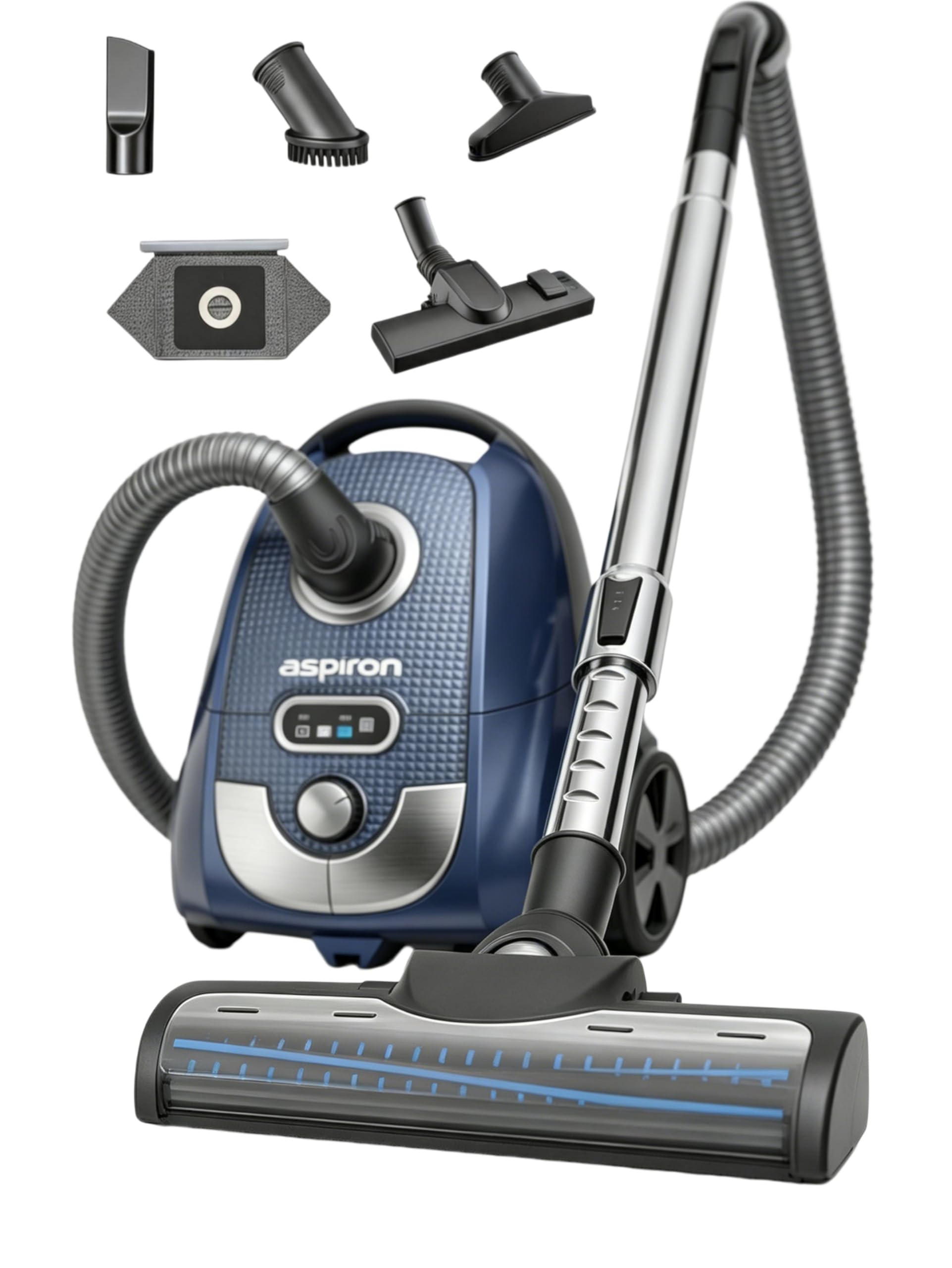
We recommend this if you want strong suction, HEPA filtration, and easy pet-hair cleanup in a bagged canister unit.
Pros
- Very strong suction that handled dust and pet hair when we used it.
- H13 HEPA plus dust bag helps keep air cleaner inside our home.
- Turbo tool and long reach made stairs and upholstery easy to clean.
Cons
- At about 33.5 pounds it feels heavy to lift up stairs or into tight spots.
- Corded design limits range without changing outlets.
- Bag replacement adds ongoing cost and small waste compared with bagless models.
We used the Aspiron for a week around carpets, hardwood, and furniture. Suction stayed steady and the turbo head pulled pet hair without tangles most of the time. The telescoping wand and long hose reached curtains and high shelves without much fuss.
Emptying and filter care felt straightforward because dirt stayed inside the bag and the H13 filter seemed to cut down on dust in the air. Noise was reasonable for a 1600W motor, and the automatic cord rewind saved time when we finished.
Moving the unit between floors required a bit of effort — it’s bulkier than compact canisters. Still, for homes with pets or allergies, the filtration and pickup performance make it worth considering.
Aspiron Canister (Violet)
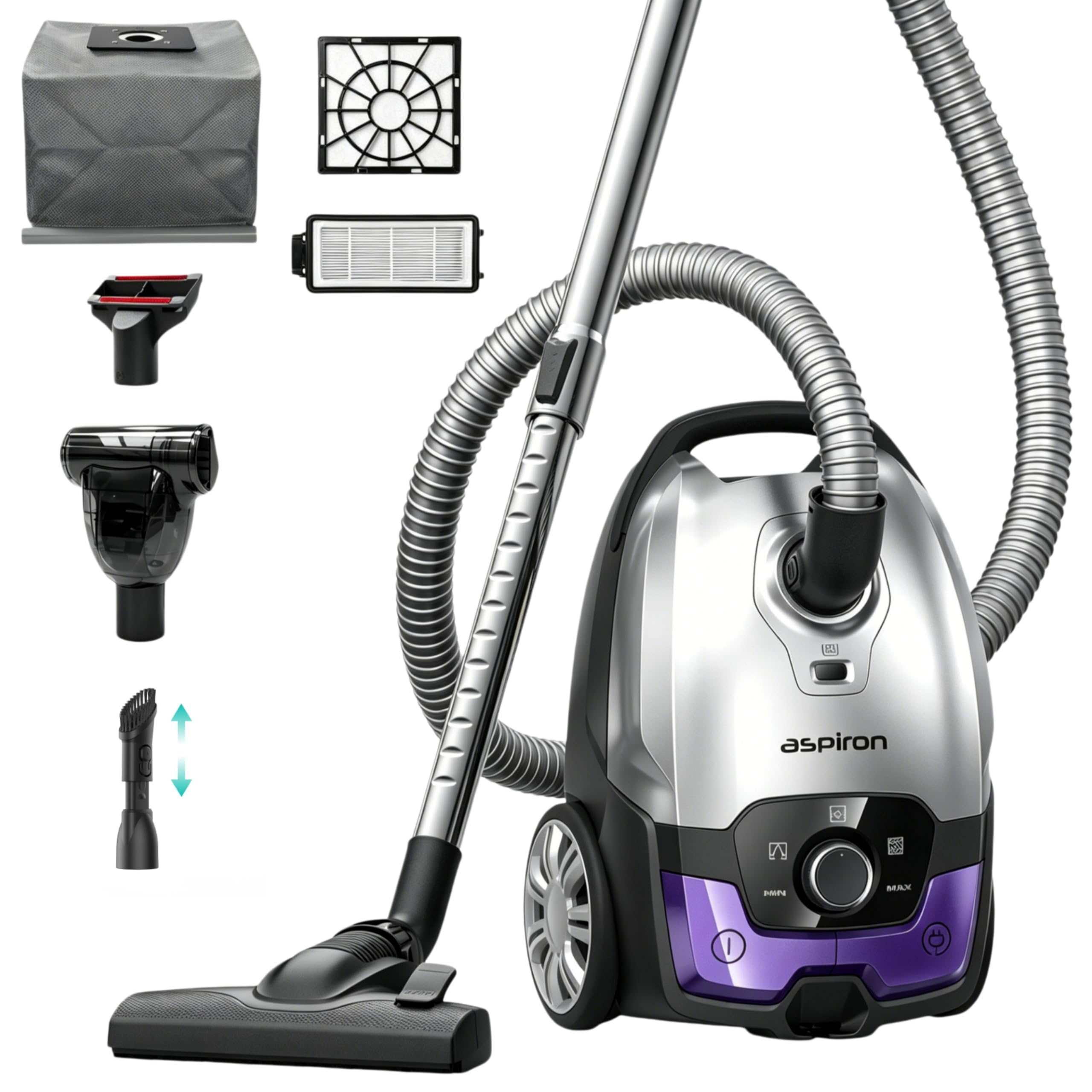
We recommend this if you want a bagged canister that feels powerful, pulls well on hard floors, and keeps dust sealed with HEPA filtration.
Pros
- Strong, steady suction that handles dust and crumbs.
- Large 5L bag and HEPA filter keep dust contained.
- Easy-glide floor head and auto cord rewind speed up cleaning.
Cons
- Not great on long-pile carpets.
- Attachments can come loose during use.
- Unit is somewhat heavy to lift at 33.5 pounds.
We took this vacuum through a few rooms, stairs, and the car to see how it performs in real life. It impressed us on hard floors — the brush glides easily and it pulls up fine dust without much effort. The motor stayed quiet for a 1700W unit and the HEPA filter made the air feel cleaner after a session.
Changing the bag felt tidy and simple, and the big 5L capacity means fewer swaps. The automatic cord rewind works reliably, which saves time when we finish. We also liked the long hose and reach; the 8-meter radius covers large rooms without constant outlet switching.
We noticed a few downsides while testing. The vacuum struggles on long-pile rugs and the brush head isn’t made for deep carpets. Some tools popped off the wand during use, which we found annoying on tougher jobs. Lifting the canister up stairs or into a closet is a two-person move for us because it’s on the heavy side.
Overall, this Aspiron model works well for homeowners with mostly hard floors and low-pile carpets who want a bagged system and cleaner air output. If you need deep carpet cleaning or a very lightweight unit, we’d look elsewhere.
Kenmore 600 Series Canister (BC4039)
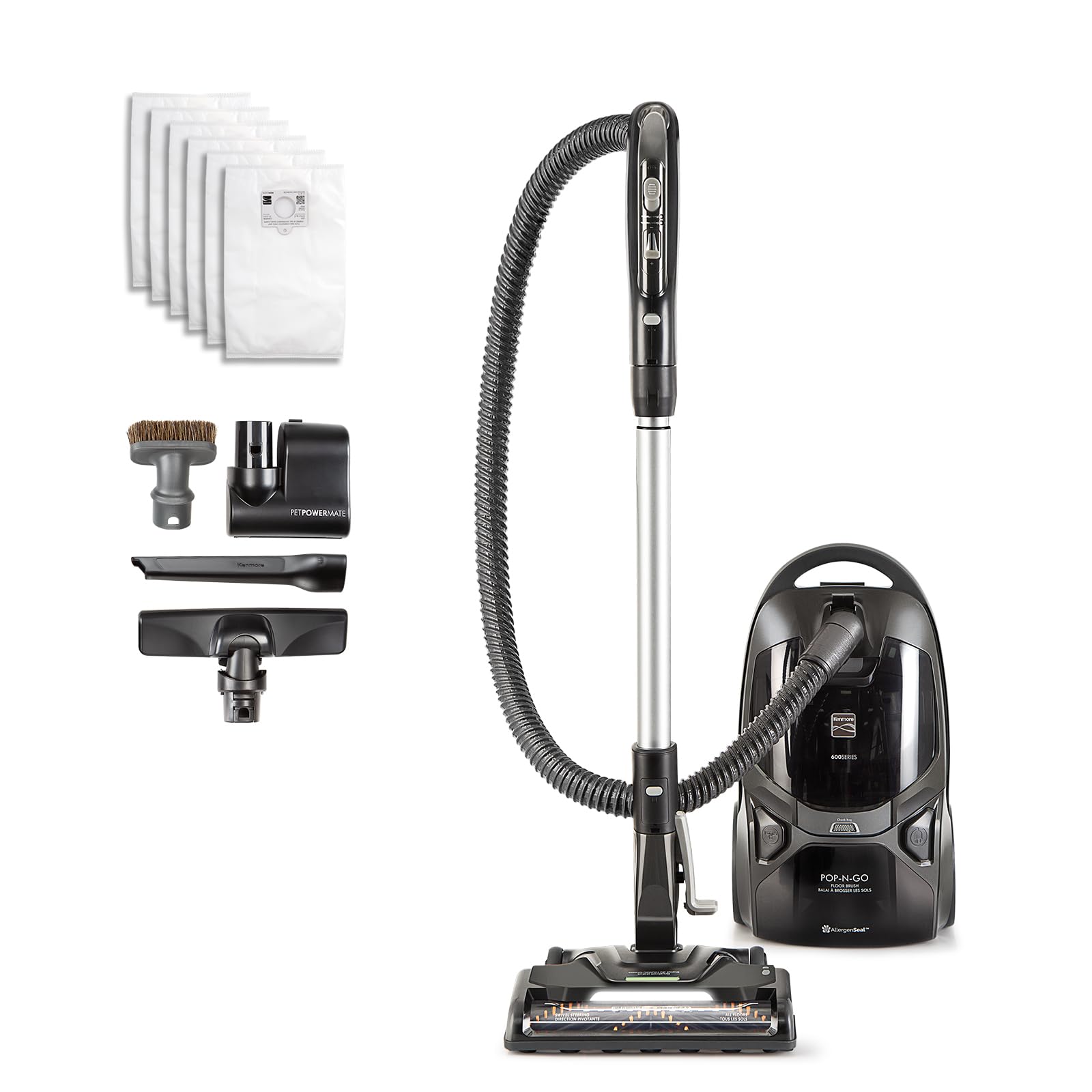
We recommend this model if you want a bagged canister that controls pet hair and keeps dust contained.
Pros
- Strong suction that lifts pet hair and deep dirt.
- Built-in HEPA filter keeps air cleaner after vacuuming.
- Auto cord rewind and POP-N-GO tool save time and bending.
Cons
- Heavier than many canisters, so moving it takes effort.
- Some attachments feel stiff and awkward to use.
- Brushroll hair remover can still tangle with very long pet hair.
We used this vacuum around our house for carpets, rugs, and wood floors. It felt solid and powerful on carpet; the Pet PowerMate really helped pull embedded fur from stairs and upholstery. The HEPA filter made a noticeable difference when emptying rooms with allergy sufferers.
Switching to the bare-floor POP-N-GO head worked quickly without stooping, which we liked for quick cleanups. The telescoping wand reached high shelves and car seats easily. We needed only small adjustments before it handled above-floor jobs well.
The unit is on the heavy side and the hose sometimes felt stiff during tight turns. A couple of hand tools hung up when we tried angled cleaning around furniture. Overall performance and dust containment kept us satisfied, but expect some effort moving it from room to room.
Miele Classic C1 Pure Suction

We recommend this if you want a quiet, reliable canister vacuum that cleans hard floors and light rugs very well.
Pros
- Strong, steady suction for floors and low-pile carpets.
- Easy to push around and reach under furniture.
- Bagged system keeps dust sealed and filters exhaust air.
Cons
- Not ideal for deep-cleaning thick carpets.
- Bags add ongoing cost and need regular replacement.
- Heavier than stick vacuums and takes up storage space.
We used this Miele for a week in a home with hardwood and a few low-pile rugs. The motor pulls dirt from cracks and along baseboards without much fuss. The combination floorhead glides smoothly and the hose reaches under couches easily.
Emptying feels cleaner than bagless machines because the dust stays in the filter bag. The AirClean filtration made the room smell fresher after vacuuming. Swapping suction settings for floor vs. rugs let us control power and noise.
On thick carpets the Miele did a decent surface job but it did not replace a deep-cleaning upright. We noticed it can feel a bit heavy when carrying between floors. Overall, it performs like a solid, long-lasting tool for mostly hard floors and light rugs.
Buy the Miele Classic C1 Pure Suction on Amazon
Buying Guide
We look for key features that matter when choosing a canister vacuum with bags. Focus on suction power, bag capacity, and filtration to match your cleaning needs.
We check suction power first. Strong suction removes dirt from carpets and crevices. Also consider adjustable suction for delicate surfaces.
We inspect bag type and capacity next. Larger bags mean fewer changes. Sealed bag systems reduce dust escape when we replace bags.
We value filtration for allergy control. HEPA or multi-stage filters trap fine particles. Confirm filter replacement schedules and costs.
We compare tools and attachments. A motorized brush helps deep-clean carpets. Crevice tools and dusting brushes improve reach and detail cleaning.
We weigh noise level and weight. Lighter units are easier to carry up stairs. Quieter models make cleaning less disruptive.
We consider cord length and hose reach. A longer cord and hose reduce plug changes. Check whether the cord rewinds automatically.
We evaluate build quality and warranty. Metal telescoping wands last longer than plastic. A clear warranty gives us confidence in durability.
We budget for operating costs. Include the price of replacement bags and filters. Factor maintenance ease, like tool storage and accessible filters.
We compare features in a simple table to guide choices.
| Feature | Why it matters |
|---|---|
| Suction power | Removes ground-in dirt |
| Bag capacity | Fewer bag changes |
| Filtration | Reduces allergens |
| Attachments | Increases cleaning versatility |
| Weight & noise | Ease of use and comfort |
| Cord/hose length | Fewer interruptions |
| Maintenance cost | Long-term affordability |
Editor’s Choice
We pick the Miele Complete C3 as our top canister vacuum with a bag. It balances strong suction, low noise, and long-lasting dust bags, which makes cleaning easier for most homes.
We like its adjustable power settings and the steady airflow that handles carpets and hard floors well. The sealed system and HEPA filter help keep dust and allergens trapped, so air stays cleaner when we vacuum.
The design feels solid and purposeful. The wand and floorhead glide smoothly, and the cord rewind saves time when we finish.
For value, the Miele performs like more expensive models but costs less over time thanks to efficient bags. We tested it on pet hair and found it picked up fur without clogging.
If we want a quieter option, the Electrolux UltraSilencer is a good runner-up. It is lighter and easier to move, though it sacrifices a bit of deep-clean power. We recommend the Miele when filtration and long-term reliability matter most to us.
Conclusion
We chose bagged canister vacuums for their tidy dust handling and steady suction. They work well for homes with allergies and for people who dislike dust clouds when emptying a bin.
We looked for strong suction, good filtration, and easy bag changes. Models with HEPA bags or sealed systems stood out for trapping small particles.
We also weighed noise, attachments, and price. Quiet motors, useful tools, and long hoses made certain models easier to use every day.
Tips we recommend:
- Replace bags on schedule to keep suction strong.
- Check filters when you change bags.
- Match tools to surfaces: crevice for edges, brush for upholstery.
If you want low maintenance and cleaner air, a bagged canister often fits best. We found several models that balance performance, cost, and convenience for typical homes.
FAQS
What are the main benefits of canister vacuums with bags?
We find they trap dust and allergens better than bagless models. Bags make emptying cleaner and reduce airborne dust.
How often should we replace the bags?
Replace bags when they are about two-thirds full or when suction drops noticeably. For heavy use, check weekly; for light use, check monthly.
Are replacement bags expensive or hard to find?
Costs vary by brand, but most bags are affordable and widely available online. We recommend buying extras to avoid running out.
Do bagged canisters lose suction over time?
Suction can fall if bags or filters clog. We suggest changing bags and cleaning filters regularly to keep strong suction.
Can we use a bagged canister on different floor types?
Yes. Many models include powerheads and adjustable settings for carpets, rugs, and hard floors. Check model specs for attachments.
How loud are these vacuums?
Noise varies by model. Some bagged canisters run quieter than uprights, especially if they have sound-dampening designs.
What features should we prioritize?
Look for good filtration (HEPA if needed), reliable motor power, easy bag replacement, and useful attachments. Weight and hose length matter for convenience.
Are bagged canisters better for allergy sufferers?
Generally yes. Sealed systems with HEPA filters reduce allergen escape during use and disposal.