
Can You Use a Carpet Cleaner on Upholstery? Check the Code First

Quick answer
Yes, if the fabric’s cleaning code is W or W/S and you use the machine’s upholstery tool with a light touch. Look for the code on the tag under the cushions. Don’t use a carpet cleaner on fabric coded S (solvent only) or X (no liquids), or on leather, silk or velvet. Use an upholstery-safe solution at the recommended dilution, test a hidden spot, avoid soaking the cushions, and let the furniture dry fast with good airflow.
Most carpet cleaners come with a small handheld upholstery tool, so cleaning a sofa or chair with the same machine is tempting. It often works well, but the fabric decides. Some upholstery fabrics shrink, bleed color or leave water rings the moment they get wet. Here’s how to tell whether your furniture can take it and how to do it safely.
Start with the upholstery cleaning code
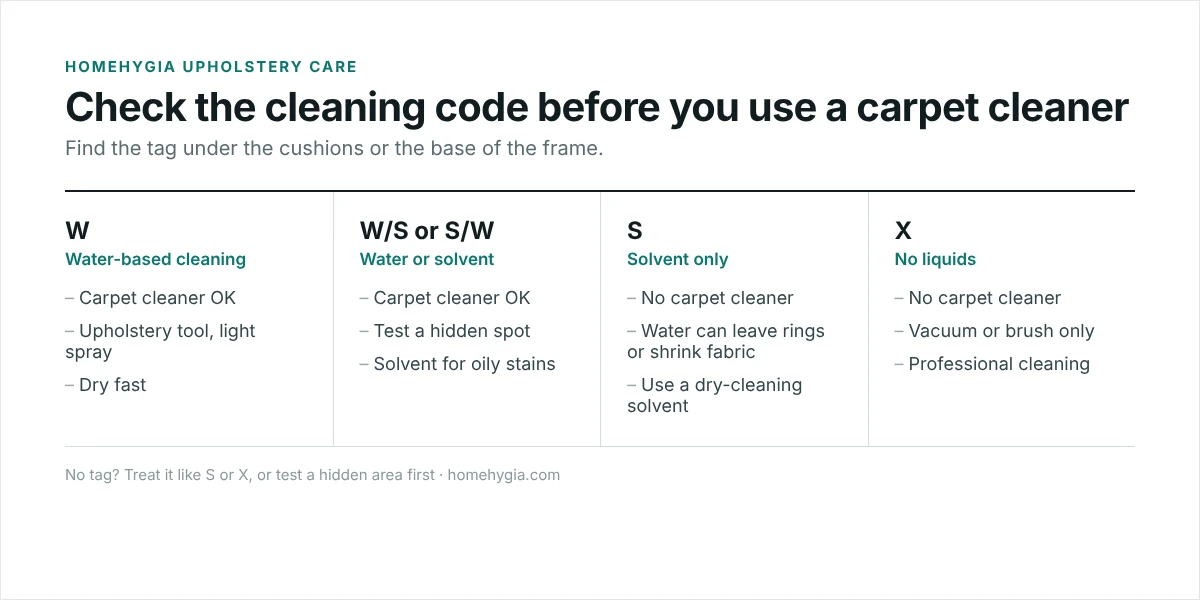
Most upholstered furniture has a care tag, usually under the seat cushions or on the base of the frame, with a letter code. Furniture maker American Leather explains it as the manufacturer’s recommended cleaning method for that fabric (American Leather: fabric cleaning codes):
| Code | Meaning | Carpet cleaner? |
|---|---|---|
| W | Water-based cleaners are safe | Yes, with the upholstery tool |
| W/S or S/W | Water-based or solvent-based cleaners are safe | Yes, test first |
| S | Solvent-based (water-free) cleaners only; water can cause damage or rings | No |
| X | No liquid cleaners; vacuum or brush only, professional cleaning otherwise | No |
No tag? Check the manufacturer’s website or your receipt. If you still can’t find it, treat the piece as S or X until a hidden-spot test shows water is safe.
Fabrics to keep away from a carpet cleaner
- Leather and faux leather: use a leather cleaner and conditioner instead.
- Silk, velvet and linen: prone to water spots, crushing and shrinkage.
- Antique or delicate pieces: old fabric and stuffing can stain or break down when wet.
- Furniture with wood or metal trim close to the fabric: keep moisture off the finish.
Which cleaning solution to use
Use a formula labeled for upholstery or for carpet and upholstery, and dilute it exactly as the machine maker says. Too much detergent leaves a sticky residue that attracts dirt. Many machines let you do a rinse pass with plain warm water afterward, which helps remove leftover soap. Avoid bleach, ammonia and oxygen boosters on colored fabrics unless the label says they’re safe. For a gentler approach on light soiling, try baking soda for upholstery cleaning.
How to use a carpet cleaner on upholstery
- Vacuum thoroughly. Use the upholstery attachment and crevice tool to remove crumbs, hair and dust first. See how to vacuum a couch.
- Test a hidden spot. Clean a small area on the back or underside, let it dry completely, and check for color bleeding, rings or texture changes.
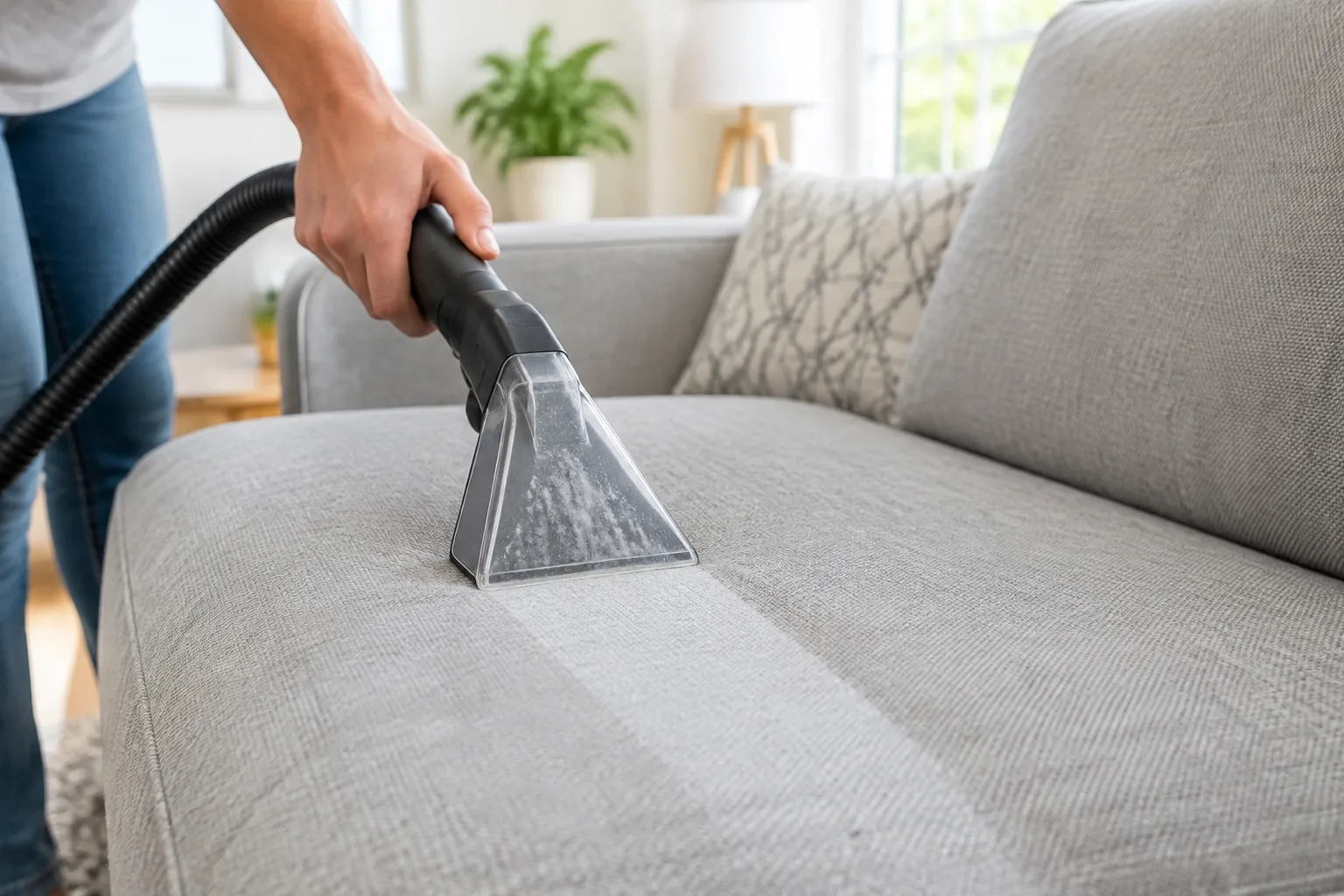
- Fit the upholstery tool. Don’t use the full-size floor head on furniture. See carpet cleaners with upholstery attachments.
- Spray lightly and extract more. Press the trigger briefly, then make two or three slow dry passes (no spray) to pull water back out.
- Work in small sections and overlap strokes so you don’t leave lines.
- Don’t soak the cushions. Water that reaches the foam is slow to dry and can cause odors or mildew.
- Dry quickly. Open windows, run a fan or AC, and stand cushions on edge. Most fabrics should be dry within several hours.
- Brush the nap gently once dry to restore the texture.
Afterward, clean the tool so it doesn’t grow odor; see how to clean upholstery tools.
Common problems and how to avoid them
- Water rings or brown marks: too much water, or an S-code fabric. Clean the whole panel evenly, not just a spot, and extract well.
- Stiff or sticky fabric: leftover detergent. Do a rinse pass with plain water.
- Musty smell: the cushion stayed wet too long. Improve airflow and dry faster next time.
- Color bleeding: stop and blot with a dry white towel; call a professional upholstery cleaner.
Frequently asked questions
Can I use carpet cleaner solution on my couch?
On W or W/S fabric, a carpet and upholstery solution is usually fine if you dilute it correctly and test first. Don’t use it on S or X fabric.
Is it sanitary to use the same carpet cleaner on upholstery?
Yes, if the tanks and tool are rinsed and clean. Empty and rinse the dirty-water tank before switching to furniture, and clean the upholstery tool after use.
How long does upholstery take to dry after a carpet cleaner?
Often several hours, depending on the fabric, how much water was used, and airflow. Light spraying and extra dry passes speed it up.
Can I use a carpet cleaner on a mattress?
Some people do with the upholstery tool, but mattresses dry slowly. Use very little water, extract well, and dry fully before putting sheets back on.
What if my sofa has no cleaning code?
Check the manufacturer’s site or contact the retailer. Otherwise, test a hidden spot first, or treat it as solvent-only and spot clean with a dry-cleaning solvent.