
Best Vacuum for Cleaning Upholstery: Essential Guide

The best vacuum for cleaning upholstery tackles stubborn dirt, pet hair, and allergens with specialized tools and strong suction, keeping your furniture fresh and inviting.
Is your sofa looking a little sad? Do crumbs and pet fur seem to stick to your favorite armchair no matter what you do? You’re not alone! Upholstery can be a magnet for dust, dirt, and allergens. Keeping it clean is vital for a healthy home and a cozy feel. But not all vacuums are up to the task. Some are too rough, while others lack the power. This guide will help you find the perfect vacuum to make your furniture look and feel like new again. We’ll explore what makes a vacuum great for upholstery and highlight some top picks.
Why Upholstery Needs Special Vacuum Care
Upholstered furniture, like sofas and chairs, can trap a lot of debris. Think dust mites, pet dander, and spilled crumbs. Regular floor vacuums might be too harsh or lack the right attachments. This can damage delicate fabrics or simply not pick up everything. Using the right vacuum ensures a deep clean without harming your beloved furniture. It helps maintain the fabric’s look and extends its life.
Using a vacuum designed for upholstery can significantly improve your home’s air quality by removing allergens. This is especially important for families with allergies or asthma. A good upholstery vacuum provides a gentle yet effective cleaning solution for all fabric types.
Key Features to Look for in an Upholstery Vacuum
When searching for the best vacuum for cleaning upholstery, several features stand out. These help ensure it cleans effectively without damaging your furniture. Consider the tools it comes with, the type of suction it offers, and how easy it is to use. A vacuum with these features will make your cleaning routine much easier and more effective.
Specialized Attachments are a Must
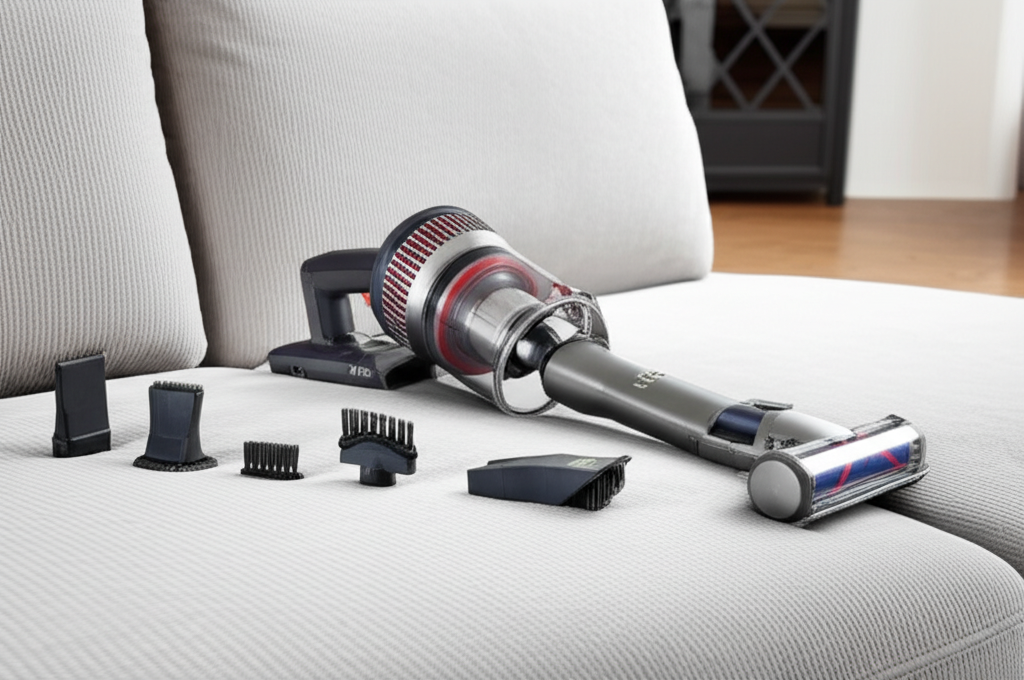
The right attachments are crucial for cleaning upholstery. Look for a crevice tool for tight spots and a brush tool with soft bristles. A motorized brush head designed for fabric is also excellent for lifting embedded dirt and pet hair. These tools allow you to reach every nook and cranny. They also adapt the vacuum’s power to different fabric types.
Many vacuums come with a variety of attachments. A common set includes a dusting brush, a crevice tool, and an upholstery tool. Some higher-end models might offer specialized tools for pet hair or delicate fabrics. Always check what comes in the box.
Suction Power Matters for Deep Cleaning
Strong suction is key to pulling out dirt from deep within upholstery fibers. Look for vacuums with adjustable suction settings. This allows you to control the power for different fabrics. For instance, delicate fabrics need lower suction than durable ones. High suction power helps remove stubborn pet hair and allergens effectively.
The amount of suction is often measured in air watts (AW) or Pascals (Pa). While these numbers can be indicators, real-world performance is more important. Many reviews discuss how well a vacuum handles pet hair and embedded dirt.
Filtration System for Allergy Sufferers
A good vacuum should have a robust filtration system, like a HEPA filter. This traps tiny particles such as dust mites and pollen. It prevents them from being released back into the air. For allergy sufferers, this is a non-negotiable feature. It ensures the air you breathe is cleaner after vacuuming.
A sealed system is also important. This means that all the air sucked into the vacuum passes through the filter. It prevents dust and allergens from leaking out. This is vital for maximizing the benefits of a HEPA filter.
Weight and Maneuverability for Ease of Use
Cleaning upholstery often involves moving around furniture and lifting the vacuum. A lightweight and maneuverable vacuum makes this task much easier. Look for models with swivel steering. This helps you navigate around chair legs and under tables effortlessly.
Consider the cord length too. A longer cord means you can clean more area without stopping to switch outlets. If you opt for a cordless model, check the battery life. This ensures you can complete the job on a single charge.
Types of Vacuums Best Suited for Upholstery
Not all vacuum types are created equal when it comes to upholstery. Some are designed with this specific task in mind. Understanding the different types can help you narrow down your choices. Each has its own advantages for furniture cleaning.
Stick Vacuums: Lightweight and Versatile
Stick vacuums are a popular choice for quick cleanups. They are lightweight and easy to handle. Many come with useful attachments for upholstery. Their slim design allows them to get into tight spaces. Cordless stick vacuums offer great freedom of movement.
Stick vacuums are ideal for spot cleaning and regular maintenance. They might not have the deep cleaning power of a full-sized vacuum. However, their convenience makes them a top contender for many homes. They are great for keeping your furniture looking tidy between deep cleans.
Handheld Vacuums: Portable Powerhouses
Handheld vacuums are specifically designed for small, tough-to-reach areas. They are perfect for car interiors, stairs, and furniture cushions. Many offer powerful suction for their size. They are incredibly portable and easy to store.
While not ideal for whole-room cleaning, handheld vacuums excel at upholstery. They provide targeted cleaning power where you need it most. Look for models with good battery life and strong suction. Some come with specialized brush heads for fabric.
Canister Vacuums: Powerful and Adaptable
Canister vacuums are known for their strong suction power. They typically have a separate canister and a hose with attachments. This design often makes them more powerful than upright models. They are very versatile and can handle various cleaning tasks, including upholstery.
The hose and wand system of a canister vacuum allows for easy access to furniture. They usually come with a good range of upholstery-specific tools. Their powerful motors ensure deep cleaning of fabric fibers. They are a great option for homes with extensive upholstery.
Upright Vacuums with Upholstery Features
While often associated with carpets, many upright vacuums are excellent for upholstery. Look for models that include a hose and detachable wand. These features allow you to use upholstery attachments effectively. Some uprights have specialized settings for different floor types and fabric levels.
Upright vacuums are often a good all-around choice. They offer strong performance on both carpets and furniture. Ensure the model you choose has the necessary attachments and adjustable settings. This will prevent damage to delicate fabrics.
Top Vacuum Models for Cleaning Upholstery
After considering the features and types, let’s look at some specific models. These vacuums have consistently received high marks for their upholstery cleaning capabilities. They offer a good balance of power, features, and ease of use.
Dyson V11/V15 Detect (Cordless Stick)
Dyson vacuums are renowned for their powerful suction and innovative design. The V11 and V15 models are excellent for upholstery. They offer strong, consistent suction and come with specialized tools. The laser dust detection on the V15 can reveal hidden dust.
These vacuums are lightweight and cordless, offering great convenience. Their advanced filtration captures allergens effectively. While they are an investment, their performance and longevity make them worthwhile. They are a top choice for modern homes.
Shark IZ462H Vertex (Cordless Stick)
Shark offers a strong competitor with its Vertex cordless stick vacuum. It boasts impressive suction power and a DuoClean PowerFins brushroll. This design is excellent for picking up pet hair and debris from upholstery. It’s also quite versatile for floor cleaning.
The Vertex is often more affordable than Dyson models. It provides excellent value with its robust performance. Its lightweight design and good maneuverability make upholstery cleaning less of a chore. The included attachments are well-suited for furniture.
Bissell Pet Hair Eraser (Handheld)
For targeted cleaning, the Bissell Pet Hair Eraser handheld vacuum is superb. It’s specifically designed to tackle pet messes. Its powerful suction and specialized brush can lift embedded pet hair from fabric. It’s small, light, and easy to use on furniture.
This handheld vacuum is a budget-friendly option. It’s perfect for quick cleanups on couches, chairs, and car seats. Its cordless design adds to its convenience. It’s a must-have for pet owners dealing with shedding.
Miele Complete C3 Cat & Dog (Canister)
Miele is known for its premium quality and durable appliances. The Complete C3 Cat & Dog canister vacuum is a powerhouse for homes with pets. It features exceptional suction and a specialized mini-turbo brush. This brush is incredibly effective at removing pet hair from upholstery.
This vacuum offers superior filtration and a sealed system. It’s ideal for allergy sufferers. While it is a significant investment, its performance and lifespan are unmatched. It’s built to last for many years.
How to Clean Upholstery with Your Vacuum Effectively
Using the right vacuum is only half the battle. Knowing how to use it properly on your furniture is also key. Follow these steps for the best results. This ensures you clean thoroughly without causing any damage.
Step 1: Check Your Furniture’s Fabric Type
Before you begin, identify the fabric type of your upholstery. Look for a tag on the furniture that provides cleaning codes. For example, ‘W’ means water-based cleaners are okay, ‘S’ means solvent-based cleaners only, and ‘X’ means vacuum only. Always follow these guidelines. This prevents accidental damage.
If you’re unsure, test the vacuum on an inconspicuous area first. This could be the back or underside of a cushion. Ensure the fabric doesn’t fade, fray, or get damaged by the brush or suction.
Step 2: Choose the Right Attachment
Select the appropriate attachment for the job. Use the crevice tool for seams and corners. The upholstery tool with a brush is great for general fabric surfaces. For stubborn pet hair, a motorized brush attachment is ideal. Avoid using the main floor brush if it has stiff bristles.
Using the correct attachment ensures effective cleaning. It also protects the delicate fibers of your upholstery. A soft brush attachment is gentle enough for most fabrics.
Step 3: Adjust Suction Power
If your vacuum has adjustable suction, use it wisely. Start with a lower setting for delicate fabrics like silk or velvet. Gradually increase the suction for more durable materials like cotton or linen. This prevents stretching or damaging the fabric.
For heavily soiled areas or embedded pet hair, you might need maximum suction. Always test on a small area first. This ensures you find the right balance of power and fabric safety.
Step 4: Vacuum in Different Directions
To lift embedded dirt and hair, vacuum the upholstery in multiple directions. Go over the surface horizontally, then vertically, and even diagonally. This helps dislodge debris from all angles within the fabric weave. Pay special attention to high-traffic areas.
Moving the vacuum slowly ensures it has enough time to pick up dirt. Don’t rush the process. Thoroughness leads to a cleaner and fresher piece of furniture.
Step 5: Empty the Dustbin Regularly
Keep the vacuum’s dustbin or bag empty. A full dustbin reduces suction power. This makes your cleaning less effective. It also increases the risk of dust and allergens being released back into the air.
Check the dustbin after each use. This ensures your vacuum is always ready for the next cleaning session. Many modern vacuums have clear bins, so you can easily see when they need emptying.
Dealing with Pet Hair on Upholstery
Pet hair can be one of the biggest challenges when cleaning upholstery. It clings to fabric and can be hard to remove. Vacuums designed with pet owners in mind often have specialized tools. These tools are key to tackling this common problem.
Motorized Pet Tools
Many vacuums include small, motorized brush heads. These are specifically designed to agitate and lift stubborn pet hair from fabric. They work much better than static brushes. They are often included with handheld or stick vacuums.
These tools can make a huge difference. They pull embedded hair from deep within the fibers. Ensure the bristles are not too stiff for your fabric type.
Rubberized Attachments
Some vacuums feature rubberized nozzles or attachments. These create a static charge that helps attract and lift pet hair. They can be very effective, especially on smooth upholstery fabrics.
These attachments are often found on handheld vacuums. They are excellent for quick cleanups of shedding spots. Their effectiveness on pet hair is a significant advantage for pet owners.
Regular Vacuuming is Key
The best defense against excessive pet hair buildup is regular vacuuming. Make it a habit to vacuum your upholstery at least once a week. This prevents hair from becoming deeply embedded. It also reduces the amount of allergens in your home.
Consistent cleaning makes each session easier. It also keeps your furniture looking its best. Investing in a vacuum with good pet hair removal features is a wise choice.
Maintaining Your Upholstery Vacuum
To ensure your vacuum continues to perform well on upholstery, regular maintenance is essential. This includes cleaning filters, emptying the dustbin, and checking for blockages. Proper care extends the life of your vacuum. It also maintains its cleaning efficiency.
Cleaning or Replacing Filters
Filters trap dust and allergens. They need to be cleaned or replaced regularly. Check your vacuum’s manual for specific instructions. Some filters can be washed, while others need to be replaced every few months. Clogged filters reduce suction power significantly.
A clean filter ensures the vacuum operates at peak performance. It also prevents allergens from being recirculated into your home. This is crucial for maintaining good indoor air quality.
Checking for Blockages
Periodically check the vacuum hose, wand, and brush head for any blockages. Hair, dust bunnies, or debris can get lodged inside. This can restrict airflow and reduce suction. Gently remove any obstructions you find.
Ensuring clear airflow is vital for optimal vacuum performance. It also prevents the motor from overheating. This simple check can save you from potential repairs.
Cleaning Brush Rolls
Brush rolls can accumulate hair and debris over time. This can reduce their effectiveness. Carefully remove any tangled hair or threads from the brush roll. Some brush rolls are designed for easy cleaning.
A clean brush roll agitates the fabric properly. This helps lift dirt and hair more effectively. It ensures your vacuum continues to work as intended on upholstery.
Frequently Asked Questions about Upholstery Vacuums
Here are some common questions people ask about choosing and using vacuums for upholstery.
What is the most important feature for an upholstery vacuum?
The most important features are specialized attachments like a crevice tool and a soft brush, along with strong, adjustable suction power. These allow for effective cleaning without damaging delicate fabrics.
Can I use my regular floor vacuum on upholstery?
You can, but it’s often not ideal. Most floor vacuums lack the specific attachments needed. They might also have suction that’s too strong or brush rolls that are too abrasive for upholstery. Always use the appropriate attachment.
How often should I vacuum my upholstery?
It’s recommended to vacuum upholstery at least once a week, especially if you have pets or allergies. More frequent vacuuming helps prevent dirt and allergens from building up.
Are cordless vacuums powerful enough for upholstery?
Many modern cordless vacuums offer excellent suction power, comparable to corded models. Look for high air watt ratings and good reviews for pet hair removal. Battery life is also a key consideration.
What is a HEPA filter and why is it important for upholstery vacuums?
A HEPA filter captures 99.97% of particles as small as 0.3 microns. For upholstery vacuums, this is important for trapping allergens like dust mites, pollen, and pet dander, improving indoor air quality.
How do I clean delicate upholstery fabrics like velvet?
Always check the manufacturer’s cleaning codes. Use the lowest suction setting and a soft brush attachment. Vacuum in one direction and avoid pressing down too hard. For ‘X’ code fabrics, professional cleaning might be best.
Conclusion: Your Guide to Fresher Furniture
Finding the best vacuum for cleaning upholstery ensures your furniture stays clean, fresh, and inviting. It’s about choosing a vacuum with the right tools, adequate suction, and gentle performance. Whether you opt for a versatile stick vacuum, a powerful canister, or a convenient handheld, the key is matching its features to your specific needs and fabric types. Prioritize models with specialized attachments and good filtration systems. Regular cleaning and maintenance will keep both your upholstery and your vacuum in top condition.
Ready to give your furniture a new lease on life? Explore the options that best fit your home and cleaning routine. For more insights on keeping your home spotless, follow us!
