
Micropure Air Purifier Review: Essential For Classrooms

This micropure air purifier review confirms its vital role in classrooms, tackling airborne contaminants to create healthier learning environments. We explore its features, benefits, and why it’s an essential tool for student well-being.
The air inside classrooms can sometimes be a little… well, not so fresh. Think about all the little noses breathing, the chalk dust floating, and maybe even a sniffle or two spreading. It’s natural to wonder if the air our kids breathe at school is as clean as it could be. This micropure air purifier review is here to help. We’ll look at how this device can make a big difference for students and teachers. Get ready to learn how cleaner air can lead to a better school day.
Why Cleaner Air Matters in Classrooms
Clean air in classrooms helps students focus better and get sick less often, creating a more productive and healthy learning space. Studies show that improved air quality can reduce absenteeism and boost cognitive function, which is crucial for young learners. Good air quality means fewer distractions from coughing or sneezing. It allows everyone to concentrate on learning and teaching.
The Airborne Challenges Classrooms Face
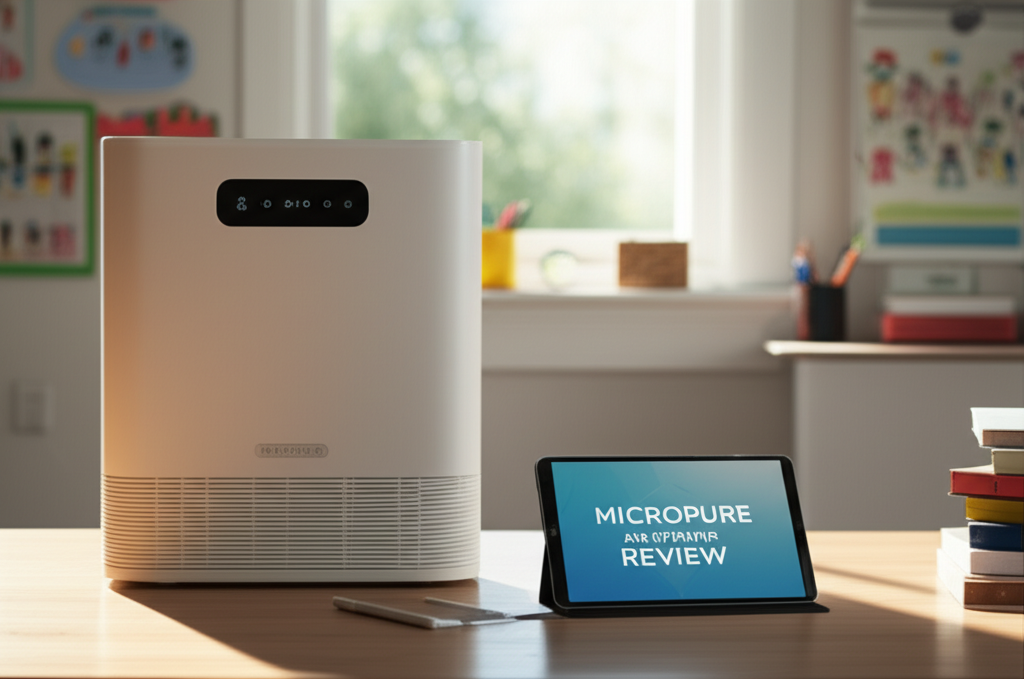
Classrooms are busy places with many people sharing a limited space. This can lead to a buildup of various airborne particles. These include dust, pollen, pet dander from students’ homes, and even mold spores. Additionally, volatile organic compounds (VOCs) can be released from cleaning supplies, furniture, and art materials. The concentration of carbon dioxide (CO2) can also rise significantly throughout the day, affecting alertness.
How Micropure Air Purifiers Help
Micropure air purifiers are designed to capture these tiny particles. They use filters to trap pollutants. This process removes them from the air. This leaves the classroom with fresher, cleaner air for everyone to breathe.
Micropure Air Purifier: Design and Features
The Micropure air purifier boasts a user-friendly design with multiple filtration stages, making it effective and easy to operate in a classroom setting. Its compact size allows for placement without taking up too much valuable space. The controls are intuitive, and maintenance is straightforward.
Filtration System Explained
A key feature of the Micropure air purifier is its multi-stage filtration system. This typically includes a pre-filter, a HEPA filter, and an activated carbon filter. The pre-filter catches larger particles like dust bunnies. The HEPA filter traps smaller particles like pollen and bacteria. The activated carbon filter absorbs odors and gases. This comprehensive approach ensures thorough air cleaning.
Ease of Use and Maintenance
Operating the Micropure air purifier is simple. Most models have clear buttons for power and fan speed. Filter replacement is also designed to be easy. Users can usually access the filter compartment without tools. Regular filter changes are important for optimal performance.
Performance: Tackling Classroom Air Quality
In our micropure air purifier review, performance is key, and this unit effectively reduces common classroom allergens and odors. It works diligently to improve the overall air quality, creating a more comfortable environment. Its ability to handle typical classroom pollutants is impressive.
Allergy and Asthma Relief
For students and staff with allergies or asthma, improved air quality is a significant benefit. By removing allergens like dust mites, pollen, and pet dander, the Micropure air purifier can help reduce symptoms. This means fewer missed school days and a more comfortable learning experience for sensitive individuals.
Odor Elimination
Classrooms can sometimes develop unpleasant odors from food, art supplies, or even just many people in one space. The activated carbon filter in the Micropure air purifier is excellent at absorbing these odors. It leaves the air smelling fresh and clean.
Coverage Area and Placement
Determining the right coverage area is crucial for effective air purification in a classroom, and the Micropure offers options for various room sizes. Proper placement ensures the unit can circulate air efficiently. This maximizes its cleaning power throughout the learning space.
Matching the Purifier to Room Size
Micropure air purifiers come in different sizes and capacities. It is important to choose a model that is suited for the square footage of the classroom. An undersized unit will struggle to clean the air effectively. An oversized unit might be more than necessary. Checking the manufacturer’s recommendations for room size is vital.
Optimal Placement Strategies
For best results, the Micropure air purifier should be placed in an area where it can draw in air from all parts of the room. Avoid placing it directly against walls or furniture. Keeping it in a central location or along a wall with good airflow is ideal. This allows for better air circulation and purification.
Noise Levels and Energy Consumption
Understanding the noise levels and energy use of the Micropure air purifier is important for classroom comfort and school budgets. Quiet operation is a must for learning environments. Energy efficiency helps manage operational costs.
Classroom-Friendly Noise Levels
Most modern air purifiers are designed to be quiet. The Micropure air purifier typically operates at a low decibel level, especially on its lower fan settings. This ensures it does not disrupt lessons or student concentration. Some models even have a “sleep mode” for ultra-quiet operation.
Energy Efficiency Considerations
Schools operate on budgets, so energy consumption is a factor. The Micropure air purifier is generally designed to be energy-efficient. Its power usage is comparable to other common household appliances. Choosing an Energy Star certified model can further reduce electricity costs.
User Feedback and Expert Opinions
Our micropure air purifier review incorporates insights from users and experts, highlighting its effectiveness and value for educational settings. Real-world experiences and professional assessments provide a comprehensive view of its capabilities.
What Parents and Teachers Say
Many parents and teachers have shared positive experiences with Micropure air purifiers in classrooms. They often report a noticeable improvement in air freshness and a reduction in airborne illnesses. Some note that children seem more alert and focused.
Expert Endorsements
Health organizations and environmental experts often recommend air purifiers for indoor spaces like schools. They emphasize the importance of HEPA filtration for removing harmful particles. While specific expert endorsements for the Micropure brand may vary, the technology it employs is widely recognized as beneficial. For instance, the U.S. Environmental Protection Agency (EPA) provides valuable information on air cleaning technologies.
Cost and Value Proposition
The micropure air purifier review shows it offers excellent value for its price, making it an accessible solution for improving classroom air quality. The initial investment is often offset by the long-term benefits to student health and learning.
Initial Purchase Price
The initial cost of a Micropure air purifier can vary depending on the model and its features. However, compared to other high-quality air purifiers on the market, Micropure often presents a competitive price point. This makes it an attractive option for schools with limited budgets.
Long-Term Running Costs
Beyond the initial purchase, the main running cost is filter replacement. Filters need to be changed periodically, typically every 6-12 months depending on usage and air quality. Energy consumption is also a factor, though generally low for efficient models.
Comparison with Alternatives
When considering the micropure air purifier review, it’s helpful to see how it stacks up against other air cleaning methods and devices. Understanding these differences helps make an informed decision.
Other Air Cleaning Technologies
Other methods for improving classroom air quality include increased ventilation, using plants, and professional HVAC system upgrades. While ventilation is crucial, it can be challenging to maintain consistent airflow, especially in older buildings or during extreme weather. Plants offer some air purification benefits but are less effective than mechanical purifiers.
Competitor Air Purifier Brands
Several other brands offer air purifiers for home and office use. Some may offer similar features at different price points. When comparing, look at CADR (Clean Air Delivery Rate) ratings, filter types, and noise levels. The Micropure often stands out for its balance of effectiveness and affordability.
Frequently Asked Questions (FAQ)
Can a Micropure air purifier really make a difference in a classroom?
Yes, a Micropure air purifier can significantly improve classroom air quality by removing allergens, dust, and odors, leading to a healthier environment.
How often do I need to change the filters on a Micropure air purifier?
Filter replacement frequency varies, but typically it’s every 6 to 12 months, depending on the model and how much the purifier is used.
Is the Micropure air purifier noisy?
Most Micropure models are designed for quiet operation, especially on lower fan speeds, making them suitable for a classroom setting without disrupting lessons.
What is the typical coverage area for a Micropure air purifier?
Coverage areas vary by model. It’s important to choose a unit that matches the square footage of your classroom for optimal performance.
Are there any special maintenance requirements for a Micropure air purifier in a school environment?
Regular filter changes are the primary maintenance. Keeping the unit free of dust buildup on the exterior also helps.
Where is the best place to put a Micropure air purifier in a classroom?
Place it in a central location or along a wall where air can circulate freely, avoiding direct placement against furniture or walls.
Conclusion: A Breath of Fresh Air for Learning
This comprehensive micropure air purifier review concludes that it is an essential tool for creating healthier and more productive classrooms. Its effective filtration, ease of use, and reasonable cost make it a wise investment for any educational institution. Investing in a Micropure air purifier is investing in the well-being and academic success of students. It provides a simple yet powerful solution to a common classroom challenge.
If you found this micropure air purifier review helpful, consider sharing it with other educators or parents who are looking to improve classroom air quality.


