Hepa vs UV Air Purifier: Essential Guide

Choosing between a HEPA and a UV air purifier is crucial for cleaner indoor air. This guide breaks down the HEPA vs UV air purifier debate, explaining how each technology works, their pros and cons, and which is best for your specific needs to achieve optimal home air quality.
Breathing in clean air at home should be a given, but for many, it’s a constant battle against allergens, pollutants, and invisible microbes. You might be overwhelmed by the options available, wondering if a HEPA filter or a UV light is the right choice for your air purifier. It’s a common frustration when you’re just trying to create a healthier living space for your family. This guide will demystify the world of air purification, specifically focusing on the HEPA vs UV air purifier comparison. We’ll explore how each technology tackles airborne contaminants and help you make an informed decision step-by-step, so you can finally breathe easier.
What is a HEPA Air Purifier and How Does it Work?
A HEPA air purifier uses a high-efficiency particulate air filter to physically trap airborne particles. These filters are designed to capture at least 99.97% of particles that are 0.3 microns in size. This includes common allergens like dust mites, pollen, pet dander, and mold spores.
The process is straightforward: air is drawn into the purifier and passed through the dense HEPA filter. Particles are caught in the filter’s fibers, preventing them from recirculating into your room. This mechanical filtration is highly effective for removing solid contaminants from the air you breathe.
What is a UV Air Purifier and How Does it Work?
A UV air purifier utilizes ultraviolet (UV-C) light to neutralize airborne microorganisms. The UV-C light damages the DNA and RNA of bacteria, viruses, and mold spores, rendering them unable to reproduce and thus inactive. This technology is often used in medical settings to sterilize equipment.
In an air purifier, UV-C lamps are typically placed within the unit, often in conjunction with other filters. As air passes over the UV light, these harmful microbes are exposed. It’s important to note that UV purifiers primarily target biological contaminants and don’t filter out particulate matter like dust or pollen.
HEPA vs UV Air Purifier: Key Differences
The core difference lies in their primary function. HEPA filters excel at physically removing solid particles, acting like a very fine sieve for your air. UV purifiers, on the other hand, target living organisms by deactivating them with UV-C light.
Think of it this way: a HEPA filter catches the “bad guys” (dust, pollen), while a UV purifier “neutralizes” them (germs, viruses). Many modern air purifiers combine both technologies to offer comprehensive air cleaning. Understanding this fundamental distinction is key when comparing HEPA vs UV air purifier options.
Pros and Cons of HEPA Air Purifiers
HEPA filters are a staple in air purification for good reason. Their ability to capture a vast range of microscopic particles makes them incredibly effective for allergy sufferers and anyone concerned about indoor air quality. The mechanical filtration is also very reliable and easy to understand.
However, HEPA filters do require regular replacement, which adds to the ongoing cost of ownership. They also don’t address airborne gases or odors, which might be a concern for some users. The effectiveness of a HEPA filter is also dependent on the seal of the unit to prevent air bypass.
Pros of HEPA Air Purifiers:
Highly effective particle removal: Captures 99.97% of particles 0.3 microns and larger.
Reduces allergens: Excellent for dust, pollen, pet dander, and mold spores.
Proven technology: Widely recognized and trusted for air cleaning.
No harmful byproducts: Does not produce ozone or other harmful gases.
Cons of HEPA Air Purifiers:
Requires filter replacement: Ongoing cost and maintenance.
Doesn’t remove gases/odors: Less effective for VOCs or smells unless combined with activated carbon.
Can be noisy: Higher fan speeds necessary for good air circulation can create noise.
Pros and Cons of UV Air Purifiers
UV air purifiers offer a unique benefit by tackling microscopic biological threats that HEPA filters cannot eliminate. For those concerned about airborne viruses and bacteria, especially during flu season, UV purification can provide an extra layer of protection. The UV lamps generally have a long lifespan, reducing the frequency of replacements compared to HEPA filters.
However, UV-C light needs sufficient contact time to be effective, and if the air passes too quickly over the lamp, its germicidal action can be limited. Additionally, poorly designed UV purifiers can potentially produce ozone, a lung irritant. It’s also crucial to remember that UV lights don’t remove any particulate matter from the air.
Pros of UV Air Purifiers:
Neutralizes microorganisms: Kills bacteria, viruses, and mold spores.
Longer lifespan of bulbs: Typically lasts for years, reducing replacement frequency.
No filter replacement needed for UV component: Lower recurring cost for the UV aspect.
Effective in specific applications: Useful for germicidal purposes.
Cons of UV Air Purifiers:
No particle removal: Does not filter out dust, pollen, or allergens.
Requires sufficient exposure time: Air must pass slowly enough for UV to work effectively.
Potential for ozone production: Some units can generate harmful ozone.
Limited effectiveness against all microbes: Not all microorganisms are equally susceptible.
HEPA vs UV Air Purifier: Which is Better for Allergies?
For allergy sufferers, a HEPA vs UV air purifier comparison heavily favors HEPA. Allergies are typically triggered by particulate matter like pollen, dust mites, pet dander, and mold spores. A true HEPA filter is specifically designed to capture these allergens with exceptional efficiency.
While UV light can deactivate mold spores, it won’t remove existing mold particles from the air, nor will it help with pollen or dander. Therefore, if your primary concern is reducing allergy symptoms, a HEPA air purifier is your essential tool.
HEPA vs UV Air Purifier: Which is Better for Germs and Viruses?
When the focus shifts to airborne germs and viruses, UV air purifiers come into play. The UV-C light’s germicidal properties are designed to inactivate these microscopic threats. This can be particularly reassuring during cold and flu seasons or in households with vulnerable individuals.
However, it’s vital to remember that UV purification is most effective when air has adequate exposure time to the UV light. Many experts recommend a multi-stage approach for maximum protection against airborne pathogens. This often includes HEPA filtration for particles and UV for germ inactivation.
Combining HEPA and UV: The Best of Both Worlds?
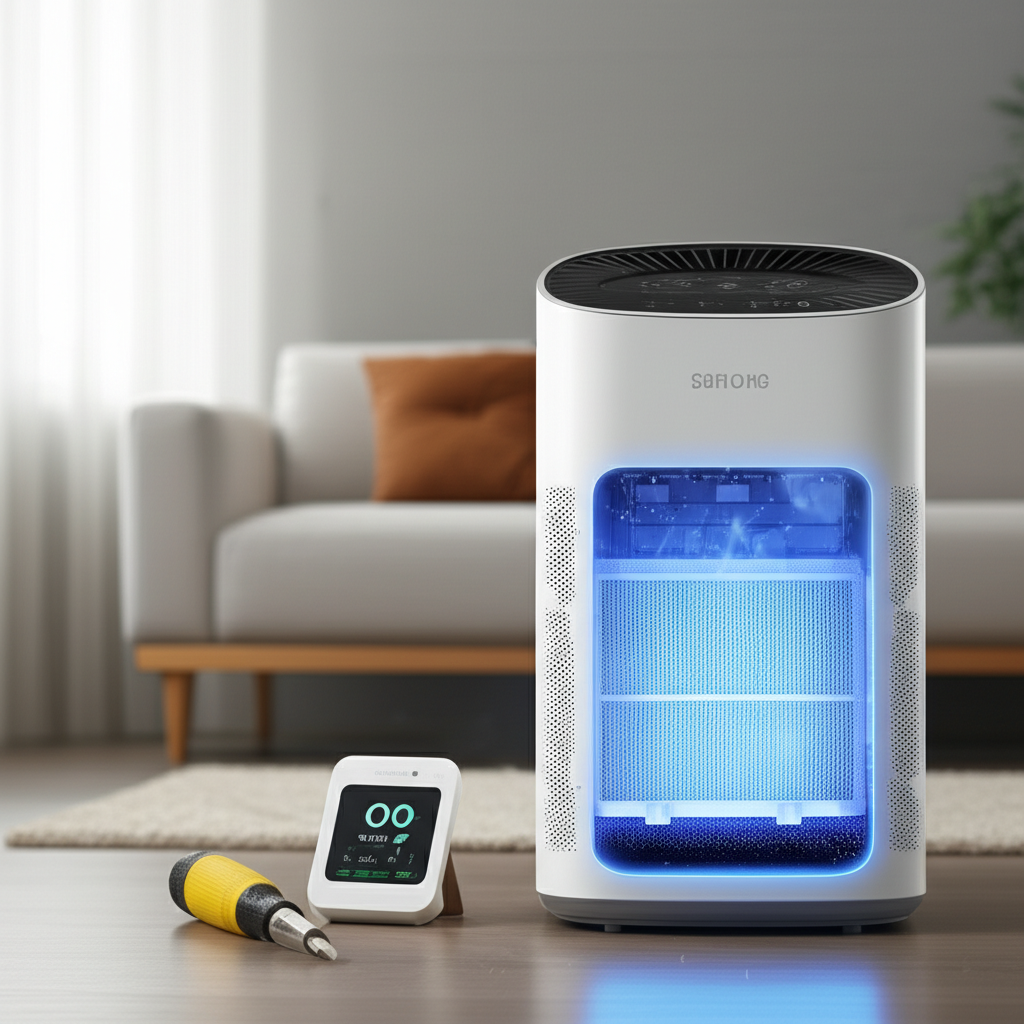
Many air purifiers on the market today offer a combination of HEPA filtration and UV-C light technology. This hybrid approach aims to provide comprehensive air purification by addressing both particulate matter and airborne microorganisms. Such units typically use a HEPA filter to trap allergens and pollutants, followed by a UV lamp to neutralize any remaining germs.
This integrated system can be an excellent solution for those who want robust protection against a wide spectrum of airborne contaminants. It leverages the strengths of both technologies to deliver cleaner, healthier air. The dual-action approach is often considered the gold standard for home air purification.
How to Choose the Right Air Purifier for Your Home
When deciding between HEPA vs UV air purifier, consider your primary air quality concerns. If allergies and dust are your main issues, a HEPA filter is paramount. If you’re more worried about viruses and bacteria, UV technology might be appealing, but often best paired with HEPA.
Look for air purifiers that clearly state they use a “True HEPA” filter, as this designation has specific performance standards. For UV, ensure the unit is certified as ozone-free or has a very low ozone output. Always check the CADR (Clean Air Delivery Rate) to ensure the purifier is appropriately sized for your room.
Factors to Consider:
Primary concern: Allergies, dust, odors, germs, or a combination?
Room size: Ensure the purifier’s CADR matches the square footage.
Filter replacement costs: Factor in ongoing expenses for HEPA filters.
Ozone production: Opt for ozone-free or low-ozone models.
Noise level: Check decibel ratings for quieter operation.
Understanding Other Air Purification Technologies
Beyond HEPA and UV, other technologies exist to enhance air purification. Activated carbon filters are excellent at adsorbing odors, gases, and volatile organic compounds (VOCs) that HEPA filters cannot capture. Ionizers release negative ions that cause airborne particles to clump together and fall, though some can produce ozone.
Photocatalytic oxidation (PCO) uses UV light and a catalyst to break down pollutants, but its effectiveness and potential byproducts are still debated. For most homes, a combination of True HEPA, activated carbon, and potentially UV-C offers the most comprehensive solution.
HEPA vs UV Air Purifier: A Comparative Table
To quickly summarize the HEPA vs UV air purifier debate, here’s a comparison:
| Feature | HEPA Air Purifier | UV Air Purifier |
| :—————— | :———————————————– | :——————————————— |
| Primary Action | Physically traps particles | Deactivates microorganisms |
| Target Pollutants | Dust, pollen, pet dander, mold spores, PM2.5 | Bacteria, viruses, mold spores |
| Effectiveness | High for particulate matter | High for biological contaminants |
| Filter Needs | Requires regular HEPA filter replacement | UV bulb may need eventual replacement |
| Ozone Production| None | Potential for some models |
| Best For | Allergies, asthma, dust reduction | Germ control, reducing airborne pathogens |
| Standalone Use | Excellent for particle removal | Limited without particle filtration |
Real-World Impact and User Experiences
Many users report significant improvements in air quality after investing in air purifiers. Sarah, a long-time allergy sufferer, shared, “My HEPA purifier has been a game-changer. I finally wake up without a stuffy nose. I also use a separate UV sterilizer in my bedroom, just for peace of mind.”
Another user, Mark, who lives in a city with high pollution, stated, “I opted for a unit with HEPA, activated carbon, and UV. The difference in the air smell and the reduction in dust settling is noticeable. It feels like a cleaner environment overall.” These testimonials highlight the benefits of targeted or combined purification strategies.
Frequently Asked Questions (FAQ)
What is the difference between a HEPA filter and a UV light in an air purifier?
A HEPA filter physically captures tiny particles like dust and pollen, while UV light uses ultraviolet rays to kill or deactivate airborne germs like bacteria and viruses.
Can a UV air purifier remove dust and allergens?
No, UV air purifiers primarily target biological contaminants and do not filter out particulate matter like dust, pollen, or pet dander.
Is a HEPA filter or UV light better for allergies?
A True HEPA filter is generally better for allergies because it effectively captures common allergens such as pollen, dust mites, and pet dander.
Do UV air purifiers produce ozone?
Some UV air purifiers can produce ozone as a byproduct, which can be a lung irritant. It’s best to choose models certified as ozone-free or with very low ozone output.
Should I get an air purifier with both HEPA and UV?
An air purifier with both HEPA and UV technology can offer comprehensive air cleaning by removing particles and neutralizing germs, providing a well-rounded solution.
How often do I need to replace a HEPA filter?
HEPA filters typically need replacement every 6 to 12 months, depending on usage, air quality, and the manufacturer’s recommendations.
Is UV light effective against all viruses and bacteria?
UV-C light is effective against many common viruses and bacteria, but its efficacy can vary depending on the specific microorganism and the duration of exposure.
Conclusion: Making Your Informed Choice for Cleaner Air
When considering HEPA vs UV air purifier technology, the best choice depends on your specific needs. For widespread allergy relief and removal of common household irritants, a True HEPA filter is your most effective solution. If your primary concern is neutralizing airborne pathogens like viruses and bacteria, UV-C light offers a valuable complementary or standalone benefit.
However, for the most comprehensive indoor air quality improvement, I often recommend air purifiers that combine True HEPA filtration with activated carbon and UV-C technology. This multi-pronged approach tackles a wider range of pollutants, from microscopic particles to biological threats and odors. By understanding how each technology works and what you aim to achieve, you can confidently select the right air purifier to create a healthier, more comfortable living environment. Explore reputable brands and models that fit your room size and budget to start breathing easier today.