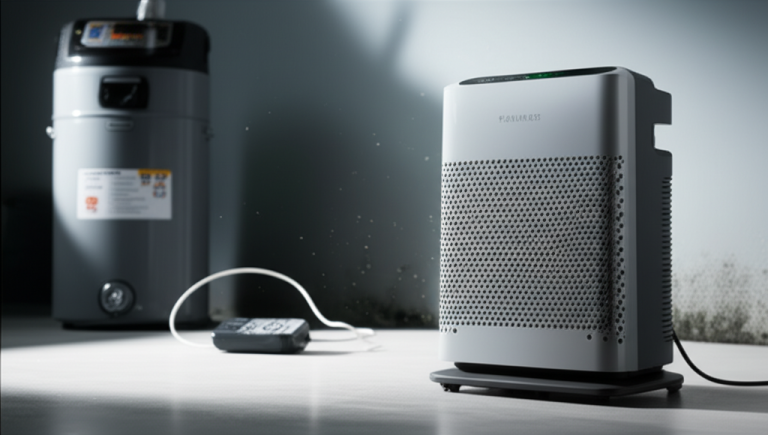
Eco-Friendly Ionic Air Purifiers For Homes: Essential Guide

Discover eco-friendly ionic air purifiers for homes that effectively clean your air with minimal environmental impact. This guide covers their benefits, how they work, and what to look for to make a healthy and sustainable choice for your living space.
Breathing clean indoor air is more important than ever, yet many homes are filled with unseen pollutants. From dust and pet dander to VOCs from everyday products, these particles can affect our health and well-being. You might be wondering if there’s a way to purify your air effectively without harming the planet. Thankfully, eco-friendly ionic air purifiers for homes offer a smart solution. This guide will walk you through everything you need to know to choose the best one for your needs.
Why Choose Eco-Friendly Ionic Air Purifiers for Homes?
Eco-friendly ionic air purifiers for homes offer a dual benefit: cleaner air for your family and a reduced environmental footprint. Traditional air purifiers can sometimes consume significant energy or use disposable filters that end up in landfills. Ionic purifiers, especially those designed with sustainability in mind, aim to address these concerns. They utilize advanced technology to remove airborne contaminants while prioritizing energy efficiency and responsible materials.
These purifiers work by releasing negative ions into the air. These ions then attach themselves to positively charged particles like dust, pollen, and smoke. The charged particles become heavier and fall to the ground or are attracted to collection plates within the purifier. This process helps to remove them from the air you breathe, creating a fresher environment.
Understanding How Ionic Air Purifiers Work
Ionic air purifiers are fascinating in their simplicity and effectiveness. They don’t rely on noisy fans or bulky filters in the traditional sense. Instead, they employ a process called ionization to clean your air. This method makes them a popular choice for those seeking quiet and efficient air purification.
The core of an ionic air purifier is its set of electrodes. These electrodes emit a stream of negative ions. As these ions circulate, they encounter airborne particles.
When a negative ion encounters a particle, it transfers its charge. This makes the particle negatively charged. These charged particles then clump together or are attracted to positively charged surfaces.
Many ionic purifiers have a collection plate that is positively charged. This plate acts like a magnet, drawing the newly charged particles to it for easy removal. This eliminates the need for constant filter replacements, a key eco-friendly feature.
The Eco-Friendly Advantage: What Sets Them Apart
When we talk about “eco-friendly,” we’re looking at several key aspects: energy consumption, filter waste, and the materials used in the product’s construction. Eco-friendly ionic air purifiers for homes excel in these areas, making them a responsible choice. They offer a sustainable way to improve your indoor air quality.
Energy Efficiency: Many ionic purifiers use less electricity than traditional HEPA filter models. This lower energy draw means a smaller carbon footprint and reduced utility bills over time.
Reduced Filter Waste: A significant environmental benefit is the elimination or reduction of disposable filters. Instead of throwing away paper or plastic filters, many ionic models use washable collection plates. This drastically cuts down on landfill waste.
Sustainable Materials: Brands committed to eco-friendliness often use recycled plastics, sustainable packaging, and durable components designed for longevity. This reduces the environmental impact from manufacturing to disposal.
Key Features to Look For in Eco-Friendly Models
Choosing the right eco-friendly ionic air purifier for your home involves looking beyond just the “ionic” label. You want a unit that genuinely aligns with sustainable practices and delivers effective air purification. Consider these features to make an informed decision.
Energy Star Certification: Look for models with the Energy Star label. This signifies that the product meets strict energy efficiency guidelines set by the U.S. Environmental Protection Agency.
Washable Collection Plates: This is a crucial feature for reducing waste. A purifier with washable plates means you won’t be buying and discarding filters regularly.
Low Ozone Emission: While all ionizers produce some ozone, eco-friendly models are designed to emit minimal amounts. Look for units that are certified as low-ozone emitters or have ozone-reduction technology. The U.S. Food and Drug Administration (FDA) recommends that ozone generators for home use should not emit ozone at levels exceeding 0.050 parts per million.
Durable Construction: A well-built unit made from high-quality, sustainable materials will last longer, reducing the need for premature replacement.
Quiet Operation: Many ionic purifiers are naturally quieter than fan-based models, but check decibel ratings if noise is a concern.
How Ionic Purifiers Tackle Common Household Pollutants
Ionic air purifiers are surprisingly effective at capturing a wide range of airborne irritants. They work by changing the electrical charge of particles, making them easier to remove from your breathing space. This technology is particularly good at dealing with fine particles that can be challenging for other types of purifiers.
Dust and Dander: Negative ions attach to dust particles and pet dander, causing them to fall out of the air. This can significantly reduce the amount of visible dust settling on surfaces and allergens circulating in your home.
Smoke and Odors: Smoke particles from cooking or cigarettes, as well as various odors, can be effectively neutralized. The ions bind to these particles, making them easier to trap or settle.
Mold Spores and Bacteria: While not a replacement for proper mold remediation, ionic purifiers can help capture airborne mold spores. They can also impact some airborne bacteria by charging them, making them fall to surfaces where they can be cleaned.
Volatile Organic Compounds (VOCs): Some ionic purifiers, especially those with activated carbon pre-filters, can help reduce VOCs emitted from paints, cleaning supplies, and furniture. The ionization process can help break down some of these compounds.
Comparing Ionic vs. HEPA vs. Other Air Purifier Technologies
Understanding how ionic purifiers stack up against other common air cleaning technologies is key to finding the best fit for your home. Each technology has its strengths and weaknesses, and your specific needs will dictate which is most suitable.
| Technology | How it Works | Pros | Cons | Eco-Friendly Aspects |
| :—————— | :————————————————————————— | :———————————————————————————————– | :——————————————————————————————————————————- | :———————————————————————————————————————- |
| Ionic | Releases negative ions to charge particles, causing them to clump or settle. | Quiet operation, no filters to replace (often), effective for fine particles, low energy use. | Can produce ozone (though modern units minimize this), may not capture gases/odors as well as carbon, requires cleaning of plates. | Reduced filter waste, often lower energy consumption. |
| HEPA | Uses a fan to force air through a dense filter that traps particles. | Highly effective at capturing small particles (99.97% of 0.3 microns), no ozone produced. | Requires regular filter replacement (waste), can be noisy, higher energy consumption, filters can be expensive. | Some HEPA filters are recyclable, but the disposal of used filters is a significant waste stream. |
| Activated Carbon| Adsorbs gases, odors, and VOCs onto its porous surface. | Excellent for removing smells, chemicals, and gases. | Doesn’t capture particles effectively on its own, carbon filters need replacement. | Filter replacement contributes to waste. |
| UV-C Light | Uses ultraviolet light to kill or inactivate airborne microorganisms. | Effective against bacteria, viruses, and mold spores. | Bulb needs replacement, doesn’t remove particles or gases, effectiveness can vary based on exposure time. | Bulb disposal is a factor; generally low energy use. |
Choosing an eco-friendly ionic air purifier for homes often means balancing particle capture with a minimal environmental footprint. For homes with allergies or respiratory issues, a multi-stage system combining ionic technology with a pre-filter and an activated carbon filter can be ideal.
Potential Downsides and How to Mitigate Them
While eco-friendly ionic air purifiers for homes offer many advantages, it’s important to be aware of potential drawbacks. Understanding these issues allows you to make informed choices and ensure you’re using the technology safely and effectively.
Ozone Production: Some ionic purifiers can release small amounts of ozone as a byproduct. While generally considered safe at very low levels, prolonged exposure to higher concentrations can be irritating to the lungs. Look for models with certifications like CARB (California Air Resources Board) approval, which indicates compliance with strict ozone emission standards.
“Static Cling” Effect: Because the ions cause particles to become charged, they can sometimes stick to walls, furniture, and other surfaces. This isn’t necessarily a sign of malfunction but rather the technology working. Regular cleaning of your home will help manage this.
Cleaning Requirements: Instead of disposable filters, ionic purifiers typically have collection plates that need to be cleaned. This is a minor inconvenience compared to buying filters but requires a consistent routine to maintain efficiency.
Effectiveness on Gases/Odors: While good for particles, pure ionic purifiers may not be as effective at removing gases and odors as models with activated carbon filters. Many modern units incorporate a carbon pre-filter to address this.
By being aware of these points, you can select a unit that minimizes ozone, understand the cleaning process, and potentially opt for a hybrid model if gas and odor removal is a high priority.
Setting Up and Maintaining Your Ionic Air Purifier
Getting the most out of your eco-friendly ionic air purifier for homes is simple with proper setup and regular maintenance. Unlike filter-based purifiers, the maintenance routine is different, focusing on cleaning rather than replacement. This makes ongoing care more sustainable and cost-effective.
Initial Setup:
Placement: Position the purifier on a level surface, away from walls or furniture that could obstruct airflow. Optimal placement is often in the center of a room or where air circulation is best.
Power On: Plug in the unit and select your desired settings. Most units have simple controls for power and ionizer intensity.
Regular Maintenance:
Cleaning Collection Plates: This is the most critical maintenance step. Refer to your manufacturer’s instructions. Typically, you’ll unplug the unit, remove the collection plates, and wash them with mild soap and water. Ensure they are completely dry before reinserting.
Wiping Down Exterior: Occasionally wipe down the exterior of the unit to keep it clean.
* Pre-filter Cleaning (if applicable): Some models may have a washable pre-filter to catch larger particles. Clean this as per the manual.
Frequency: The frequency of cleaning collection plates usually depends on the air quality in your home and how often you run the purifier. A good rule of thumb is to clean them every 2-4 weeks.
Where to Place Your Ionic Air Purifier for Maximum Impact
Strategic placement of your eco-friendly ionic air purifier for homes is key to maximizing its effectiveness. While they can be placed almost anywhere, certain locations will yield better results in terms of air purification and overall air quality improvement throughout your living space. Consider the main areas where you spend your time.
High-Traffic Areas: Place the purifier in rooms where you spend the most time, such as the living room or bedroom. This ensures the air you breathe most is being cleaned effectively.
Near Pollutant Sources: If you have specific sources of indoor air pollution, like a kitchen where cooking fumes linger or a home office with new furniture off-gassing, placing a purifier nearby can help capture pollutants closer to their origin.
Avoid Obstructions: Ensure there is adequate space around the purifier for optimal air intake and output. Blocking the unit can reduce its efficiency and strain the internal components.
Central Locations: In larger rooms, placing the purifier in a more central location allows the purified air to circulate more broadly. This helps achieve a more consistent level of air purity throughout the space.
Real-World Examples and User Testimonials
Hearing from others who have adopted eco-friendly ionic air purifiers for homes can offer valuable insights. Many users report noticeable improvements in their living environment and appreciate the sustainable aspects of these devices.
One user, Sarah from Oregon, shared, “I was tired of constantly buying expensive HEPA filters for my old purifier. Switching to an ionic model with washable plates has been a game-changer. My allergies have definitely improved, and I feel good knowing I’m creating less waste.”
Another homeowner, Mark, noted, “I was skeptical about ozone, but my new ionic purifier is CARB certified and I haven’t noticed any issues. It’s so quiet, I barely know it’s running, and the air in my bedroom feels much fresher, especially at night.”
These testimonials highlight the practical benefits users experience, from allergy relief and fresher air to the satisfaction of making a more environmentally conscious choice. Many users find the quiet operation and reduced waste to be significant advantages over traditional purifiers.
Frequently Asked Questions About Eco-Friendly Ionic Air Purifiers
Q1: Are eco-friendly ionic air purifiers truly safe for homes?
Yes, when you choose models certified for low ozone emissions, like those meeting California Air Resources Board (CARB) standards, they are considered safe. These standards ensure ozone output is well below levels that could cause respiratory irritation.
Q2: How often do I need to clean the collection plates?
Typically, you should clean the collection plates every 2-4 weeks, depending on your home’s air quality and how frequently the purifier is used. Refer to your specific model’s manual for precise recommendations.
Q3: Can ionic purifiers remove all types of allergens?
Ionic purifiers are very effective at removing airborne particles like dust, pollen, and pet dander. For gases and odors, a model with an activated carbon filter is often recommended in addition to the ionic function.
Q4: Will an ionic purifier make my furniture dusty?
Ionic purifiers work by charging particles, which can cause them to settle on surfaces. This is a sign the purifier is working. Regular dusting will manage this effect, and the particles are removed from the air you breathe.
Q5: Are they noisy?
Most ionic air purifiers are significantly quieter than fan-based HEPA purifiers because they don’t rely on fans. Many operate at very low decibel levels, making them ideal for bedrooms and quiet living spaces.
Q6: Do I still need to air out my home if I use an ionic purifier?
While an ionic air purifier greatly improves indoor air quality, it’s still beneficial to open windows periodically for fresh air exchange, especially after activities that might increase indoor pollutants like cooking or cleaning.
Conclusion: Breathe Easier with Sustainable Air Purification
Choosing eco-friendly ionic air purifiers for homes is a forward-thinking decision that benefits both your health and the planet. You can effectively reduce airborne pollutants, from dust and allergens to smoke and odors, without contributing to filter waste or excessive energy consumption. By understanding how these devices work, what features to look for, and how to maintain them, you’re well-equipped to create a cleaner, healthier living environment. Make the switch to sustainable air purification and experience the difference.