
Dyson Air Purifier Vs Air Doctor: Essential Choice

Choosing between a Dyson air purifier and an Air Doctor is crucial for your home’s air quality. This guide breaks down their key differences in performance, features, and cost to help you make the essential choice for a healthier living space.
Breathing clean air is no longer a luxury; it’s a necessity for our health and well-being. In today’s world, indoor air can be surprisingly polluted, harboring allergens, dust, pet dander, and even harmful VOCs. Two names frequently come up when discussing top-tier air purifiers: Dyson and Air Doctor. Deciding between a Dyson air purifier vs Air Doctor can feel overwhelming, as both promise superior air purification. I understand this dilemma, and I’m here to guide you through a detailed comparison, ensuring you find the perfect solution for your home.
Dyson Air Purifier vs Air Doctor: The Core Differences
When you’re comparing a Dyson air purifier vs Air Doctor, the fundamental differences lie in their technology, design philosophy, and specific filtration capabilities. Dyson often emphasizes multi-functionality and advanced sensing, while Air Doctor focuses intensely on HEPA filtration and capturing a broad spectrum of pollutants. Understanding these core distinctions is the first step to making an informed decision.
What is a Dyson Air Purifier?
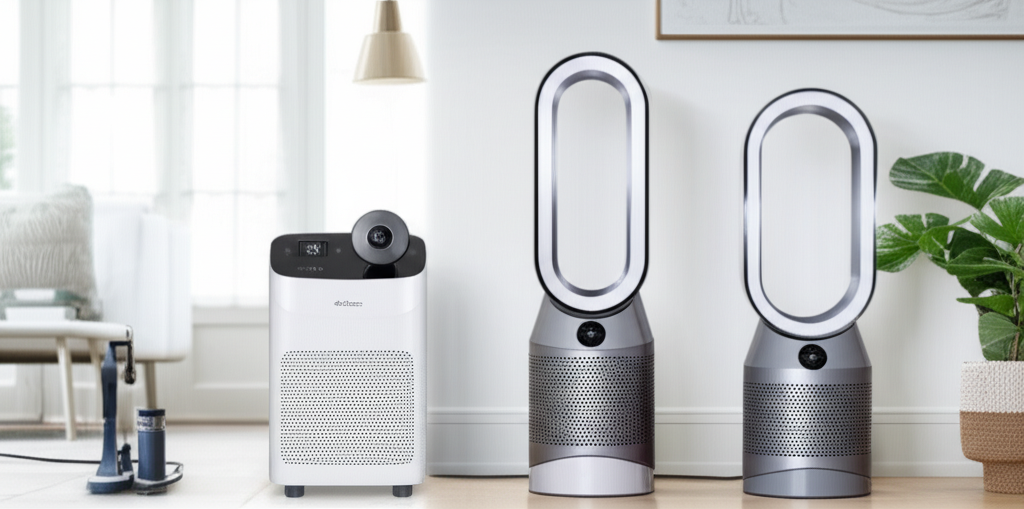
Dyson air purifiers are renowned for their sophisticated, often bladeless fan designs that double as air purifiers and sometimes heaters or humidifiers. They integrate advanced sensors to continuously monitor air quality, displaying detailed real-time data on their screens and via a connected app. Dyson’s approach is about creating a holistic environmental control system, not just a single-function device.
What is an Air Doctor?
Air Doctor positions itself as a powerful, no-nonsense air purification solution. Its primary focus is on capturing a wide range of airborne particles, including ultra-fine particles, using a robust filtration system. The brand highlights its multi-stage filtration, often featuring a substantial activated carbon filter for odor and gas removal, and a true HEPA filter.
Filtration Technology: A Deep Dive
The heart of any air purifier lies in its filtration system. Both Dyson and Air Doctor employ advanced methods, but their specific technologies and the types of filters used can lead to different outcomes for various pollutants.
Dyson’s Filtration Approach
Dyson purifiers typically use a sealed filtration system, meaning all the air passes through the filters, and they are designed to capture 99.97% of particles as small as 0.3 microns. This includes allergens, pollen, and dust. Many models also include a catalytic converter designed to break down formaldehyde and other VOCs.
Air Doctor’s Filtration Strategy
Air Doctor units often boast a multi-stage filtration process. This typically includes a pre-filter to catch larger particles, an activated carbon filter to absorb odors and gases, and a powerful HEPA filter capable of capturing 99.97% of particles down to 0.3 microns. Some models claim to capture even smaller particles, offering comprehensive protection against a wide array of airborne contaminants.
Performance Metrics and CADR
When evaluating an air purifier, its Clean Air Delivery Rate (CADR) is a crucial metric. This tells you how quickly the unit can clean the air in a room of a specific size. Comparing the CADR for different pollutants (smoke, dust, pollen) is essential for matching the purifier to your room size and needs.
Understanding Dyson’s CADR
Dyson provides CADR ratings for its models, allowing for direct comparison. Their units are generally designed for effective purification in medium to large rooms, with powerful fans ensuring efficient air circulation. The continuous monitoring helps ensure the purifier is always working at optimal levels for the detected pollution.
Air Doctor’s CADR Capabilities
Air Doctor models are often praised for their high CADR ratings, especially for their size. They are engineered to quickly and effectively remove pollutants from larger spaces. The brand emphasizes its ability to purify air in rooms up to a certain square footage, making it suitable for open-plan living areas or larger bedrooms.
Design and Aesthetics: Where Form Meets Function
The appearance of an air purifier can be a significant factor, especially if it’s going to be a prominent fixture in your home. Dyson is known for its futuristic, minimalist designs, while Air Doctor tends to opt for a more functional, utilitarian aesthetic.
Dyson’s Signature Style
Dyson air purifiers are often considered design statements. With their sleek lines, iconic loop amplifier, and absence of visible blades, they blend seamlessly into modern interiors. The intuitive LCD screens and app connectivity further enhance their user-friendly appeal.
Air Doctor’s Practical Design
Air Doctor units are typically more compact and functional in their design. While not as overtly stylish as Dyson, they are built for efficiency and ease of use. Their straightforward appearance means they can fit into most home environments without drawing excessive attention.
Smart Features and Connectivity
In today’s connected world, smart features can significantly enhance the user experience. This includes app control, voice commands, and intelligent automation based on air quality readings.
Dyson’s Integrated Smart Ecosystem
Dyson excels in integrating smart technology. Their purifiers connect to the Dyson Link app, allowing you to monitor air quality, control settings, and receive reports remotely. Many models also offer voice control compatibility with platforms like Amazon Alexa and Google Assistant.
Air Doctor’s Smart Capabilities
While Air Doctor focuses primarily on purification performance, some models incorporate smart features. These might include automatic modes that adjust fan speed based on air quality sensors and digital displays showing real-time readings. Connectivity options can vary, so it’s important to check specific model specifications.
Noise Levels: A Crucial Consideration
The sound a purifier makes can impact its suitability for bedrooms, nurseries, or quiet living spaces. Manufacturers often provide decibel (dB) ratings for different fan speeds.
Dyson’s Quiet Operation
Dyson purifiers are engineered for quiet operation, especially at lower fan speeds. The bladeless design and advanced airflow dynamics contribute to a hushed experience, making them suitable for use in sleeping areas. The app allows for precise control over fan speed to minimize noise.
Air Doctor’s Sound Profile
Air Doctor units are generally considered to be reasonably quiet for their powerful performance. While they may produce more noticeable noise at higher settings compared to Dyson, they are still designed to be unobtrusive for everyday use. Many users find the white noise produced at higher speeds to be acceptable or even beneficial for sleep.
Cost and Value: Investing in Your Health
The price point of an air purifier is a significant factor for many consumers. When considering a Dyson air purifier vs Air Doctor, you’ll find differences in both the initial purchase price and the ongoing cost of replacement filters.
Dyson’s Premium Pricing
Dyson products are positioned as premium devices, and their air purifiers are no exception. The initial investment is typically higher, reflecting the advanced technology, multi-functionality, and design. Replacement filters also represent an ongoing cost.
Air Doctor’s Value Proposition
Air Doctor often presents a strong value proposition, offering powerful purification at a more accessible price point compared to some high-end brands. While replacement filters are still a recurring expense, the initial outlay is often more budget-friendly.
Key Features Comparison Table
To provide a clearer overview, here’s a table comparing some key aspects of Dyson and Air Doctor air purifiers.
| Feature | Dyson Air Purifier | Air Doctor |
| :—————– | :————————————————- | :————————————————- |
| Primary Focus | Multi-functional (purify, fan, heat/cool) | High-performance air purification |
| Filtration | HEPA + Activated Carbon + Catalytic Converter (varies by model) | Multi-stage HEPA + Activated Carbon (varies by model) |
| Particle Capture | Captures 99.97% of particles 0.3 microns | Captures 99.97% of particles 0.3 microns (often claims smaller) |
| Smart Features | Advanced app control, real-time data, voice control | Automatic modes, digital display (model dependent) |
| Design | Futuristic, minimalist, bladeless fan | Functional, utilitarian |
| Noise Level | Generally very quiet, especially at low settings | Reasonably quiet, can be more noticeable at high settings |
| Price Point | Premium | Mid-range to Upper Mid-range |
| Replacement Filters | Ongoing cost | Ongoing cost |
User Reviews and Real-World Experiences
Hearing from actual users can offer invaluable insights into how these purifiers perform in everyday life. Reviews often highlight specific strengths and weaknesses that might not be apparent from product specifications alone.
Dyson User Feedback
Users often praise Dyson purifiers for their effective purification, quiet operation, and sleek design. The app connectivity is frequently cited as a major benefit for monitoring and control. Some users note the higher price point and filter replacement costs as drawbacks.
Air Doctor User Testimonials
Air Doctor garners praise for its powerful purification capabilities and effectiveness against allergens and odors. Many users appreciate its value for money, offering robust performance without the premium price tag of some competitors. Some reviews mention that higher fan speeds can be noisy.
Which One is Right for You?
The decision between a Dyson air purifier vs Air Doctor ultimately hinges on your priorities. If you’re looking for a multi-functional device with cutting-edge design and extensive smart features, Dyson might be your ideal choice. If your main concern is powerful, no-nonsense air purification with a focus on HEPA filtration at a competitive price, Air Doctor could be the better fit.
Frequently Asked Questions (FAQ)
How does the filtration in Dyson compare to Air Doctor?
Both brands use HEPA filters to capture 99.97% of particles 0.3 microns. Dyson often includes additional features like catalytic converters, while Air Doctor may emphasize a more robust combination of HEPA and activated carbon for broader pollutant capture.
Are Dyson air purifiers worth the high price?
For many, the value of Dyson lies in its combination of advanced technology, multi-functionality (purifier, fan, heater), sophisticated design, and comprehensive smart features. If these aspects are important to you, the premium price may be justified.
Which air purifier is better for allergies: Dyson or Air Doctor?
Both are highly effective for allergies due to their HEPA filtration. Air Doctor’s emphasis on multi-stage filtration, including extensive carbon for odors and VOCs, might offer a slight edge for those with multiple sensitivities. Dyson’s sealed system ensures all air is filtered effectively.
Can Dyson or Air Doctor remove odors and smoke?
Yes, both brands’ purifiers are designed to remove odors and smoke. Their activated carbon filters are key to absorbing volatile organic compounds (VOCs) and odor-causing particles.
Which air purifier is quieter, Dyson or Air Doctor?
Dyson generally has a reputation for quieter operation, especially at lower fan speeds, due to its advanced engineering and bladeless design. Air Doctor units are reasonably quiet but can be more noticeable at higher settings.
What is the average lifespan of a Dyson or Air Doctor filter?
Filter lifespan varies by model and usage, but typically ranges from 6 to 12 months. It’s crucial to check the specific model’s recommendations and monitor filter life indicators.
Is Air Doctor a good brand for a large room?
Yes, Air Doctor models are often designed with high CADR ratings, making them suitable for effectively purifying air in larger rooms. Always check the recommended room coverage for the specific model you are considering.
Conclusion: Making Your Essential Choice
Deciding between a Dyson air purifier vs Air Doctor is about aligning a product’s capabilities with your personal needs and budget. Dyson offers a premium, feature-rich experience with a focus on integrated home comfort. Air Doctor provides powerful, dedicated air purification that excels in performance and value. I hope this in-depth comparison has clarified the distinctions and empowered you to make the essential choice for cleaner, healthier air in your home. Your family’s well-being is paramount, and investing in the right air purifier is a significant step towards achieving that.
