
Dyson TP07 vs TP10: Essential Guide

Comparing the Dyson TP07 and TP10 air purifiers reveals subtle yet significant differences in technology and performance, crucial for choosing the best model for your home’s air quality.
It’s a common dilemma for those seeking cleaner air: which Dyson purifier is the right fit? You’ve likely seen the sleek designs and heard about the advanced filtration, but when it comes to the Dyson TP07 and TP10, the distinctions can feel a bit blurry. Deciding between these two premium models might seem daunting, but understanding their core differences will empower you to make the best choice for your health and home environment. This guide will break down everything you need to know about the Dyson TP07 vs TP10, ensuring you feel confident in your decision.
Dyson TP07 vs TP10: What’s the Core Difference?
The fundamental distinction between the Dyson TP07 and TP10 lies in their filtration technology and sensing capabilities. Both are designed to capture pollutants and allergens, but the TP10 introduces advancements that offer a more comprehensive and real-time understanding of your indoor air. This means the TP10 can potentially react faster and more precisely to changes in air quality.
The TP07 is a highly capable purifier, effectively tackling common indoor pollutants. The TP10 builds upon this foundation with enhanced sensing and a refined filtration system, offering a more sophisticated approach to air purification.
Design and Build: A Familiar Dyson Aesthetic
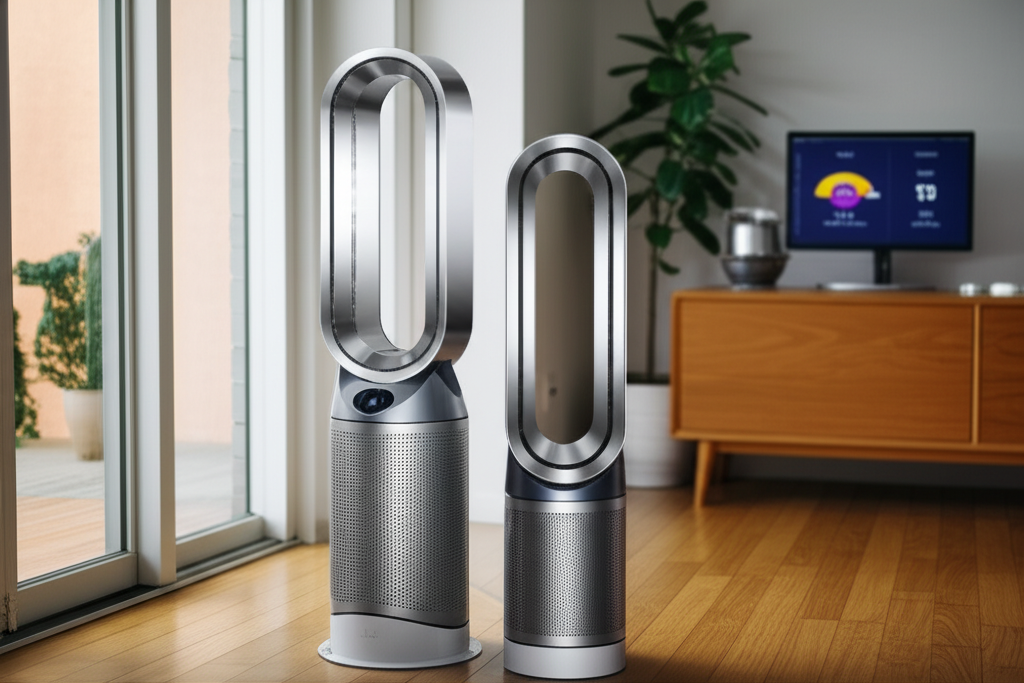
Visually, the Dyson TP07 and TP10 share a very similar, iconic tower design. This cylindrical form factor is not just for aesthetics; it allows for 360-degree air intake and projection, distributing purified air efficiently throughout a room. Both models feature a minimalist aesthetic with premium materials, fitting seamlessly into modern home decor.
Both purifiers boast the signature bladeless technology that Dyson is known for. This design not only looks futuristic but also makes them safer for homes with children and pets, as there are no fast-spinning blades to worry about.
Display and Controls: Clarity at a Glance
The display on both the Dyson TP07 and TP10 provides crucial information about your air quality. They show real-time pollutant levels, filter life, and fan speed settings. The TP10, however, offers a slightly more detailed and nuanced display, reflecting its advanced sensing capabilities.
Control is intuitive on both units, with options for manual adjustment via the device itself or through the Dyson Link app. The app offers remote control, scheduling, and detailed historical air quality data.
Filtration System: Capturing the Invisible
At the heart of any air purifier is its filtration system, and both the TP07 and TP10 excel here. They utilize a combination of HEPA and activated carbon filters to capture particles as small as 0.1 microns and gases like VOCs and NO2. This dual-action approach ensures that both particulate matter and gaseous pollutants are addressed.
The TP10 features an upgraded filtration system that Dyson claims is even more effective at capturing ultra-fine particles and a broader range of gases. This enhancement is a key differentiator for those with severe sensitivities or concerns about specific airborne contaminants.
Sensing Technology: A Smarter Approach in the TP10
This is where the Dyson TP07 vs TP10 comparison truly shines. The TP07 is equipped with sophisticated sensors to monitor air quality. The TP10, however, steps up with an additional, more advanced laser diffraction sensor. This sensor is specifically designed to detect and measure even the smallest particles, including PM2.5 and PM10, with greater accuracy.
This enhanced sensing in the TP10 allows it to provide a more detailed breakdown of the pollutants in your environment. It can differentiate between various particle sizes and types, offering a clearer picture of your air quality.
Dyson Link App Integration: Connected Living
Both the TP07 and TP10 offer seamless integration with the Dyson Link app. This app is your command center for monitoring and controlling your purifier remotely. You can view real-time air quality reports, track filter life, adjust fan speeds, and set schedules, all from your smartphone or tablet.
The app experience is largely consistent between the two models. However, the TP10’s advanced sensors feed more detailed data into the app, giving you a richer understanding of your home’s air quality trends.
Performance and Coverage: Clearing the Air Effectively
In terms of raw performance, both Dyson models are designed to purify medium to large rooms effectively. They deliver powerful airflow, ensuring that purified air is circulated throughout the space. The bladeless technology helps in projecting air further and more evenly.
While both are high-performing, the TP10’s advanced sensing might allow it to react more proactively to sudden air quality changes, potentially leading to quicker restoration of optimal air conditions. Dyson states their purifiers are tested to CADR standards, ensuring efficient air cleaning rates.
Key Differences Summarized: TP07 vs TP10
| Feature | Dyson TP07 | Dyson TP10 |
| :—————— | :—————————————— | :————————————————– |
| Core Technology | HEPA + Activated Carbon Filtration | HEPA + Activated Carbon + Enhanced Gas Filtration |
| Sensing | Particulate Matter (PM), VOCs, NO2 | Particulate Matter (PM2.5, PM10 via laser), VOCs, NO2 |
| Display Detail | Standard Air Quality Metrics | More granular pollutant breakdown |
| Filter Efficiency| High, captures 99.97% of particles 0.3 microns | Very High, captures 99.97% of particles 0.3 microns |
| App Data | Comprehensive Air Quality Reports | More detailed and precise real-time data |
| Target User | General air purification needs | Users seeking advanced sensing and data |
Choosing between the Dyson TP07 and TP10 often comes down to the level of detail and advanced sensing you desire. If you are looking for a robust air purifier with excellent filtration, the TP07 is a fantastic choice. For those who want the most precise real-time air quality data and potentially faster responses to airborne irritants, the TP10 offers that extra layer of sophistication.
Cost and Value: Investing in Your Health
The Dyson TP10 typically comes with a higher price tag than the TP07, reflecting its advanced sensing technology and potentially enhanced filtration. When considering the Dyson TP07 vs TP10, it’s important to weigh the added cost against the benefits of the TP10’s superior sensing capabilities.
For many, the investment in cleaner air is paramount. Both models offer significant value by improving indoor air quality, which can alleviate symptoms related to allergies, asthma, and general respiratory discomfort. According to the Environmental Protection Agency (EPA), indoor air can be two to five times more polluted than outdoor air, making a good air purifier a worthwhile investment.
Which Dyson Air Purifier is Right for You?
The decision between the Dyson TP07 and TP10 hinges on your specific needs and priorities. If your primary concern is effective filtration of common allergens and pollutants, the TP07 delivers exceptional performance. It’s a solid, reliable choice for most households looking to breathe easier.
However, if you or someone in your household suffers from severe respiratory issues, have concerns about specific ultra-fine particles, or simply want the most advanced, data-rich air quality monitoring available, the TP10 is likely the better investment. Its superior sensing technology provides a deeper understanding of your environment.
Frequently Asked Questions About Dyson TP07 vs TP10
What is the main difference between Dyson TP07 and TP10?
The primary difference lies in the TP10’s more advanced sensing technology, which uses a laser diffraction sensor to provide a more detailed and accurate analysis of ultra-fine particles in your air compared to the TP07.
Is the Dyson TP10 better than the TP07?
The TP10 is considered “better” if you prioritize the most advanced sensing and detailed air quality data. For general purification, the TP07 is still an excellent and highly effective performer.
Do both purifiers have HEPA filters?
Yes, both the Dyson TP07 and TP10 feature multi-stage filtration systems that include a HEPA filter to capture 99.97% of particles as small as 0.3 microns.
Can I control both purifiers with the Dyson app?
Absolutely. Both the TP07 and TP10 can be fully controlled and monitored remotely via the Dyson Link app, allowing for scheduling, adjustments, and air quality reporting.
Are the filters interchangeable between the TP07 and TP10?
While both use advanced filtration, it’s always best to check the specific filter model number for each unit on Dyson’s official website to ensure compatibility. Generally, Dyson purifiers use model-specific filters.
Which model is quieter?
Both models are engineered for quiet operation, especially at lower fan speeds. Any perceived difference in noise level would likely be marginal and dependent on the specific settings and room acoustics.
Is the TP10 worth the extra cost over the TP07?
This depends on your budget and how much you value the TP10’s enhanced sensing capabilities. If detailed air quality data is important to you, the extra cost can be justified.
Conclusion: Your Healthiest Air Awaits
Navigating the Dyson TP07 vs TP10 decision is about understanding your personal needs. Both are exceptional air purifiers from a reputable brand, designed to significantly improve your indoor air quality. The TP07 offers robust, reliable purification that will benefit most homes. The TP10, with its cutting-edge sensing technology, provides an even more refined and data-driven approach to ensuring the air you breathe is as clean as possible. Ultimately, investing in either Dyson purifier is a step towards a healthier living environment.
If you found this guide helpful, consider exploring more ways to optimize your home’s air quality on our HomeHygia blog.
