Corsi Rosenthal Box vs Air Purifier: Essential Guide

Comparing the Corsi-Rosenthal box and a traditional air purifier is crucial for choosing the best indoor air quality solution. This guide explores their differences, benefits, and ideal uses to help you make an informed decision for cleaner, healthier air in your home or office.
Breathing clean indoor air is more important than ever, yet understanding the best tools for the job can feel overwhelming. You might have heard about the DIY-friendly Corsi-Rosenthal box or the readily available commercial air purifiers. Both aim to improve your air quality, but they do so in fundamentally different ways. Deciding between a Corsi-Rosenthal box vs air purifier involves understanding their technology, effectiveness, and cost. This guide will break down everything you need to know, from their construction to their performance, ensuring you can confidently select the right solution for your needs.
What is a Corsi-Rosenthal Box?
A Corsi-Rosenthal box is a do-it-yourself air filtration system. It’s constructed using readily available materials, typically four MERV 13 furnace filters and a box fan. This simple design creates a powerful, cost-effective air cleaner.
The genius of the Corsi-Rosenthal box lies in its simplicity and efficiency. By arranging the filters to create a box around the fan, it maximizes the surface area for air intake, allowing the fan to draw air through the filters effectively. This design is particularly good at capturing airborne particles like dust, pollen, and virus-carrying aerosols.
What is a Traditional Air Purifier?
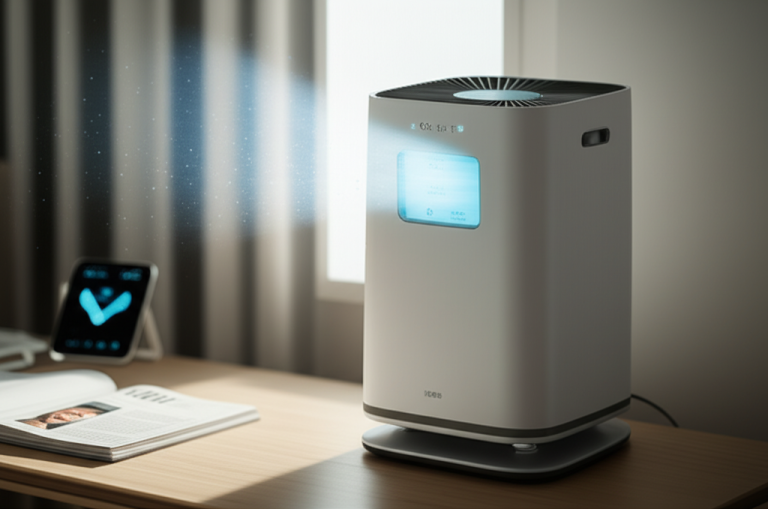
A traditional air purifier, also known as an air cleaner, is a manufactured device designed to remove contaminants from the air. These units come in various shapes and sizes, often featuring multiple filtration stages and advanced technologies. They are readily available for purchase from numerous retailers.
Most commercial air purifiers use a combination of filters, such as HEPA (High-Efficiency Particulate Air) filters, activated carbon filters, and sometimes UV-C light or ionizers. HEPA filters are highly effective at capturing small particles, while activated carbon is excellent for adsorbing odors and volatile organic compounds (VOCs).
Corsi-Rosenthal Box vs Air Purifier: Key Differences
The primary distinction between a Corsi-Rosenthal box and a traditional air purifier lies in their origin and construction. One is a DIY project, while the other is a commercially produced appliance. This difference impacts cost, customization, and ease of use.
Another significant difference is the filter type and configuration. Corsi-Rosenthal boxes typically use MERV 13 furnace filters, which are designed for HVAC systems. Commercial air purifiers often employ specialized HEPA filters, which are certified to capture 99.97% of particles 0.3 microns in size.
Understanding MERV and HEPA Ratings
MERV (Minimum Efficiency Reporting Value) is a rating system used for HVAC filters. Higher MERV ratings indicate better filtration of smaller particles. MERV 13 filters, commonly used in Corsi-Rosenthal boxes, are quite effective at capturing a wide range of airborne particles.
HEPA (High-Efficiency Particulate Air) filters are the gold standard for air purification. They are tested and certified to capture at least 99.97% of airborne particles 0.3 micrometers in diameter. This makes them exceptionally good at removing very fine contaminants like viruses, bacteria, and fine dust.
Effectiveness and Particle Capture
Both Corsi-Rosenthal boxes and traditional air purifiers can significantly improve indoor air quality by capturing airborne particles. Studies have shown that Corsi-Rosenthal boxes can be as effective as, or even more effective than, some commercial air purifiers at removing particulate matter. For instance, research published by University of Massachusetts Amherst has demonstrated their significant impact.
However, the effectiveness of a Corsi-Ros Rosenthal box is heavily dependent on the quality of the filters used and the seal of the construction. Commercial air purifiers, especially those with certified HEPA filters, offer a guaranteed level of performance for specific particle sizes. They also often include additional features like activated carbon for odor removal.
Cost Comparison: DIY vs. Commercial
The cost is a major factor when considering a Corsi-Rosenthal box vs air purifier. A Corsi-Rosenthal box is remarkably cost-effective. The materials typically cost between $50 and $100, depending on where you purchase them and the fan you use.
Traditional air purifiers can range widely in price, from under $100 for basic models to over $500 for high-end units with advanced features. While the initial investment for a commercial unit can be higher, it often includes a longer lifespan and manufacturer warranties. Replacement filters for commercial units can also add to the ongoing cost.
Ease of Assembly and Use
The Corsi-Rosenthal box is designed for easy assembly, requiring basic tools and minimal technical skill. Many people can build one in under an hour. Once assembled, it’s a plug-and-play device, though filter replacement is a manual process.
Commercial air purifiers are ready to use right out of the box. Simply plug them in, select a setting, and they begin working. Maintenance typically involves replacing filters at recommended intervals, which is usually a straightforward process outlined in the user manual.
Noise Levels
Noise is an important consideration for any air cleaning device. The noise level of a Corsi-Rosenthal box is primarily determined by the box fan used. Many standard box fans operate at a moderate noise level, which can be comparable to or louder than some commercial air purifiers on their highest settings.
Commercial air purifiers vary significantly in noise output. Many models are designed to operate quietly, especially on lower fan speeds, making them suitable for bedrooms or offices. Some higher-end models even feature “sleep modes” that further reduce noise.
Filtration Capabilities: Beyond Particles
While both systems excel at particle removal, their ability to tackle other airborne pollutants differs. Corsi-Rosenthal boxes, using standard furnace filters, are primarily focused on particulate matter. They do not effectively remove gases, VOCs, or odors unless specialized filters are incorporated.
Many commercial air purifiers include activated carbon filters specifically designed to adsorb gases, VOCs, and odors. This makes them a more comprehensive solution for households concerned with chemical fumes from cleaning products, cooking smells, or pet odors. Some units also incorporate UV-C light for germicidal purposes or ionizers, though the effectiveness and potential byproducts of these technologies are debated.
Where Each Solution Shines
The Corsi-Rosenthal box vs air purifier debate often comes down to specific needs and budgets. A Corsi-Rosenthal box is an excellent choice for budget-conscious individuals or groups seeking a highly effective, DIY solution for particle reduction, especially in larger spaces or during periods of high airborne risk like wildfire smoke events. They are also favored for their simplicity and the ability to create multiple units for broader coverage.
Traditional air purifiers are ideal for those who prioritize convenience, advanced features, and guaranteed performance. They are a good fit for individuals with allergies or asthma who need consistent HEPA filtration, or for those who want to address odors and VOCs in addition to particles. Their compact designs and aesthetic appeal also make them suitable for various home decors.
Corsi-Rosenthal Box vs. Traditional Air Purifier: A Comparative Table
| Feature | Corsi-Rosenthal Box | Traditional Air Purifier |
| :—————- | :————————————————— | :—————————————————– |
| Construction | DIY (Box fan, MERV 13 filters, tape) | Manufactured appliance |
| Initial Cost | Low ($50 – $100) | Moderate to High ($100 – $500+) |
| Primary Filter| MERV 13 Furnace Filters | HEPA Filter (often with pre-filters & activated carbon) |
| Particle Capture| Excellent for PM2.5, dust, pollen, aerosols | Excellent for fine particles (certified HEPA) |
| Odor/VOC Removal| Limited (unless specialized filters added) | Often excellent (with activated carbon filters) |
| Assembly | Requires DIY assembly | Ready to use out of the box |
| Noise Level | Varies by fan; can be moderate to loud | Varies by model; often quieter on lower settings |
| Maintenance | Filter replacement (manual) | Filter replacement (scheduled, often simpler) |
| Portability | Bulky, less aesthetically pleasing | Varies; many are compact and designed for home |
User Experiences and Testimonials
Many users have shared positive experiences with both solutions. For instance, during wildfire seasons, communities have rallied to build Corsi-Rosenthal boxes, reporting significant improvements in indoor air quality. One user noted, “Building a Corsi-Rosenthal box was a game-changer during the smoke. I could actually breathe comfortably inside my home for the first time.”
On the other hand, individuals with severe allergies often praise the consistent performance of commercial HEPA air purifiers. A reviewer shared, “My allergies have improved dramatically since getting a HEPA air purifier. I wake up without congestion, which I haven’t experienced in years.” These testimonials highlight the real-world benefits of effective air filtration.
Factors to Consider for Your Choice
When deciding between a Corsi-Rosenthal box vs air purifier, consider your budget, your specific air quality concerns, and your willingness to undertake a DIY project. If cost is a primary driver and your main concern is particulate matter, the Corsi-Rosenthal box is a strong contender. If you need a comprehensive solution for allergies, odors, and VOCs, and prefer a ready-made, aesthetically pleasing device, a commercial air purifier might be a better fit.
Think about the size of the space you need to filter. While a single Corsi-Rosenthal box can be effective, you might need multiple units for larger areas. Similarly, commercial air purifiers come with CADR (Clean Air Delivery Rate) ratings that indicate their suitability for different room sizes.
Frequently Asked Questions
Is a Corsi-Rosenthal box better than a store-bought air purifier?

It depends on your needs. Corsi-Rosenthal boxes are incredibly cost-effective and excellent for particle filtration. Store-bought purifiers often offer more features like odor control and a guaranteed HEPA standard.
Can a Corsi-Rosenthal box filter out viruses?
Yes, a well-built Corsi-Rosenthal box using MERV 13 filters can capture virus-carrying aerosols, significantly reducing airborne virus concentrations. For the highest level of virus capture, a certified HEPA filter in a commercial unit is also a great option.
How often do I need to change the filters on a Corsi-Rosenthal box?
Filter life varies based on usage and air quality. Generally, you should inspect them monthly and replace them every 3-6 months, or sooner if they appear visibly dirty or airflow is significantly reduced.
Are Corsi-Rosenthal boxes noisy?
The noise level is determined by the box fan used. Many standard box fans operate at a moderate noise level, similar to or louder than some air purifiers on their highest settings.
Do commercial air purifiers remove odors?
Many commercial air purifiers include activated carbon filters, which are very effective at adsorbing odors and VOCs. Corsi-Rosenthal boxes primarily focus on particles and do not typically remove odors without modification.
What is the MERV rating needed for a Corsi-Rosenthal box?
MERV 13 filters are generally recommended for Corsi-Rosenthal boxes as they offer a good balance of filtration efficiency and airflow for most box fans. Higher MERV ratings might restrict airflow too much.
Conclusion
When weighing the Corsi-Rosenthal box vs air purifier, both are valuable tools for improving your indoor air quality. The Corsi-Rosenthal box stands out for its affordability and impressive particle-capturing capabilities, making it an excellent DIY solution for widespread particle reduction. Traditional air purifiers offer convenience, advanced features like odor and VOC removal, and certified HEPA filtration for those seeking a comprehensive, ready-to-use appliance. Your final decision should align with your budget, specific air quality concerns, and desired level of convenience. Whichever you choose, investing in cleaner indoor air is an investment in your health and well-being.
Stay informed about the latest in home health technology by following our updates.