
Best Bedroom HEPA Air Purifier: Essential Guide

“`html
The best bedroom HEPA air purifier is crucial for creating a healthier sleep sanctuary. This guide helps you choose the right one to combat allergens, odors, and pollutants, ensuring a refreshing night’s rest.
Breathing in clean air while you sleep is fundamental to your well-being, yet many bedrooms harbor hidden pollutants. Dust mites, pet dander, pollen, and even volatile organic compounds (VOCs) from furniture can disrupt your sleep and impact your health. It’s a common frustration for allergy sufferers and anyone seeking a more restful environment. This essential guide will demystify the world of HEPA air purifiers and help you find the best bedroom HEPA air purifier to transform your sleep space.
Why a HEPA Air Purifier is Essential for Your Bedroom
A HEPA air purifier is essential for your bedroom because it actively removes microscopic particles that can trigger allergies, asthma, and other respiratory issues. By trapping these airborne irritants, it significantly improves indoor air quality, leading to better sleep and overall health.
Many common bedroom allergens, such as dust mites, pet dander, and pollen, are too small for the human eye to see but can cause significant discomfort. A true HEPA filter is designed to capture at least 99.97% of airborne particles 0.3 microns in size, offering a powerful solution to this pervasive problem.
Understanding HEPA Filters: The Gold Standard for Air Purification
HEPA stands for High-Efficiency Particulate Air, a standard that signifies exceptional filtration capabilities. A true HEPA filter is a mechanical air filter that works by forcing air through a fine mesh that traps all the particles and pollutants.
These filters are incredibly effective at removing tiny particles like pollen, dust mites, pet dander, and mold spores. For anyone concerned about allergies or asthma, a HEPA filter is non-negotiable when selecting an air purifier.
It’s important to distinguish true HEPA filters from “HEPA-type” or “HEPA-like” filters, which may not meet the same rigorous standards for particle capture efficiency.
Key Features to Look for in a Bedroom HEPA Air Purifier
When choosing the best bedroom HEPA air purifier, several features enhance its effectiveness and suitability for your personal space. Look for appropriate coverage area, noise levels, and additional filtration stages.
Consider the CADR (Clean Air Delivery Rate) to ensure the purifier can adequately clean the air in your specific bedroom size. Lower noise levels are crucial for undisturbed sleep, so check the decibel ratings on lower settings.
Additional filters, like activated carbon, can further enhance air quality by removing odors and VOCs, making your bedroom an even more serene environment.
Coverage Area and Room Size: Finding the Perfect Fit
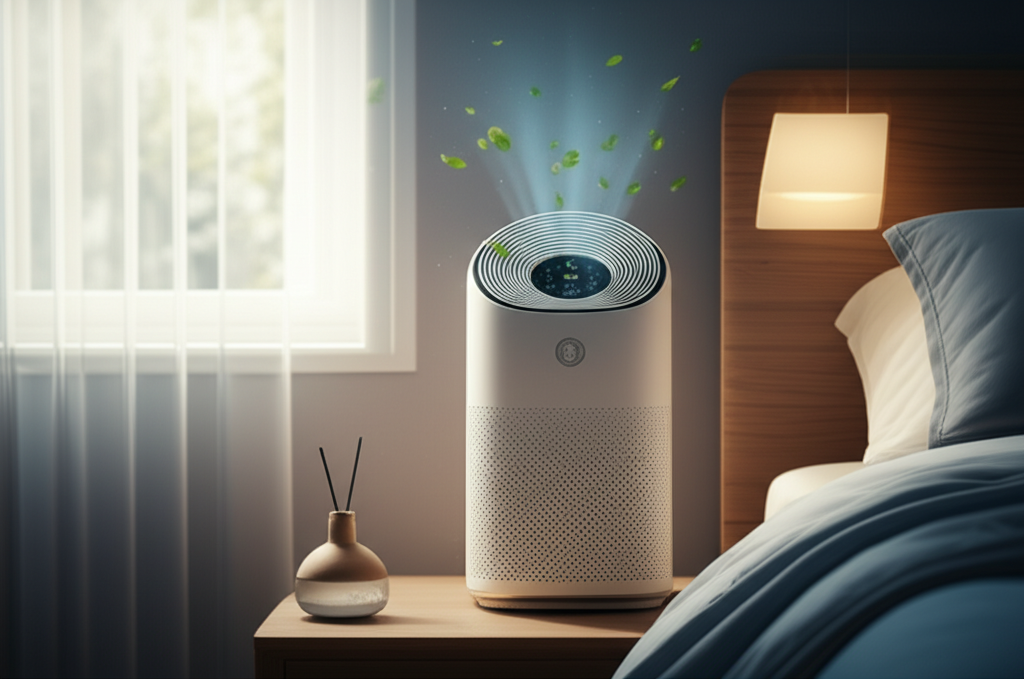
The coverage area of an air purifier, often measured in square feet, is paramount to its effectiveness in your bedroom. An undersized unit will struggle to clean the air sufficiently, while an oversized one might be unnecessarily noisy or costly.
Manufacturers typically provide recommended room sizes or CADR ratings for different room dimensions. Always aim for a unit that can handle a room slightly larger than yours to ensure optimal performance, especially during peak allergy seasons.
For example, a common bedroom size might be 150-200 sq ft, for which you’d look for a purifier with a corresponding CADR or coverage rating.
Noise Levels: Ensuring Undisturbed Sleep
Noise is a critical consideration for a bedroom air purifier; you don’t want a device that disrupts your precious sleep. Look for models with low decibel (dB) ratings, especially on their lowest fan speed settings.
Many purifiers offer a “sleep mode” or ultra-quiet setting that significantly reduces fan speed and often dims indicator lights. Aim for a model that operates below 30-40 dB on its lowest setting, comparable to a whisper or quiet library.
Some purifiers also feature a built-in timer, allowing you to set it to run only when needed, further minimizing potential noise disturbances.
Additional Filtration Stages: Beyond HEPA
While a HEPA filter is the core component, many of the best bedroom HEPA air purifiers include additional filtration layers. These can significantly broaden the purifier’s capabilities, addressing a wider range of indoor air pollutants.
An activated carbon pre-filter is common, designed to capture larger particles like hair and dust, extending the life of the HEPA filter. It also excels at absorbing odors from cooking, pets, or smoke, and trapping VOCs emitted from household products.
Some advanced units may also incorporate UV-C light technology to neutralize airborne bacteria and viruses, though its effectiveness can vary and it’s not a substitute for proper cleaning.
Top-Rated Bedroom HEPA Air Purifier Models for 2024
Selecting the best bedroom HEPA air purifier involves balancing features, performance, and budget. Here are some highly-regarded models known for their effectiveness in smaller to medium-sized rooms, offering excellent value and advanced technology.
Each of these units has been chosen for its reliable HEPA filtration, quiet operation, and user satisfaction, making them strong contenders for improving your bedroom air quality.
Coway AP-1512HH Mighty Air Purifier
The Coway AP-1512HH Mighty is a perennial favorite for its exceptional performance and smart features. It boasts a true HEPA filter, an odor-reducing activated carbon filter, and a washable pre-filter, making it a comprehensive solution.
Its “Eco Mode” intelligently adjusts fan speed based on air quality, saving energy, and its noise level on the lowest setting is remarkably quiet, perfect for a bedroom. This model consistently ranks high for its effectiveness in rooms up to 361 sq ft.
Levoit Core 300S Smart True HEPA Air Purifier
For those seeking smart home integration, the Levoit Core 300S is an outstanding choice. It features a 3-stage filtration system, including a true HEPA filter, and can be controlled via a smartphone app or voice commands.
This compact unit is ideal for bedrooms, offering quiet operation and an effective clean for rooms up to 219 sq ft. The Levoit app provides real-time air quality monitoring and filter life tracking, adding convenience.
Blueair Blue Pure 411 Auto Air Purifier
The Blueair Blue Pure 411 Auto is celebrated for its simplicity and effectiveness, especially in smaller spaces. Its unique HEPASilent™ technology combines electrostatic and mechanical filtration to deliver high performance with minimal noise.
It’s incredibly user-friendly with a single-button control and an auto mode that adjusts fan speed based on detected air quality. This purifier is well-suited for rooms up to 161 sq ft, offering a quiet and efficient solution.
How to Maximize the Effectiveness of Your Bedroom Air Purifier
To get the most out of your chosen best bedroom HEPA air purifier, proper placement and regular maintenance are key. Ensuring optimal airflow and filter function guarantees cleaner air for longer periods.
Place the air purifier away from walls and furniture to allow for unobstructed air intake and circulation. This ensures the unit can effectively draw in and filter the air throughout the room, maximizing its impact on air quality.
Regularly check and clean or replace the filters as recommended by the manufacturer. This is the most critical step in maintaining the purifier’s performance and ensuring it continues to capture pollutants effectively.
Filter Replacement Schedule: Keeping Your Purifier Working
The effectiveness of any HEPA air purifier hinges on the condition of its filters. Over time, filters become saturated with trapped pollutants and lose their efficiency, necessitating timely replacement.
Most manufacturers provide guidelines for filter replacement, typically ranging from 6 to 12 months for HEPA and carbon filters, depending on usage and air quality. Some units have filter replacement indicators to alert you when it’s time.
Neglecting filter changes can lead to reduced air purification performance and, in some cases, even release trapped particles back into the air. Always use genuine replacement filters for your specific model to ensure optimal performance and longevity.
Placement Strategies for Optimal Air Circulation
Where you position your air purifier in the bedroom can significantly impact its performance. Strategic placement ensures the unit can efficiently circulate and clean the air throughout the entire room.
Avoid placing the air purifier directly in a corner or too close to walls, curtains, or furniture. This can obstruct airflow, forcing the unit to work harder and reducing its overall effectiveness. Aim for an open area, ideally in the center of the room or where air circulation is most needed.
Consider placing it near your bed if you suffer from nighttime allergies, allowing it to purify the air you breathe most directly during sleep. For more comprehensive room coverage, elevating the unit slightly can also improve air circulation.
Are Air Purifiers Worth It for Bedrooms?
Yes, air purifiers are absolutely worth it for bedrooms, especially if you struggle with allergies, asthma, or simply want to improve your sleep quality. The benefits of breathing cleaner air during your most restorative hours are substantial.
Investing in a quality best bedroom HEPA air purifier can lead to fewer allergy symptoms, reduced exposure to airborne irritants, and a generally more comfortable and healthier sleep environment. The impact on your daily well-being is often profound.
For many, the relief from congestion, sneezing, and itchy eyes experienced after using an air purifier makes it a worthwhile investment in their health and comfort.
Frequently Asked Questions About Bedroom HEPA Air Purifiers
What size air purifier do I need for my bedroom?
You need an air purifier rated for your bedroom’s square footage. Check the Clean Air Delivery Rate (CADR) or recommended room size on the product. It’s often better to choose a unit slightly larger than your room for optimal performance.
How often should I replace the HEPA filter in my bedroom air purifier?
Typically, HEPA filters should be replaced every 6 to 12 months, depending on the manufacturer’s recommendation and your home’s air quality. Some purifiers have indicator lights to signal when replacement is needed.
Can an air purifier help with pet dander in the bedroom?
Absolutely. A HEPA air purifier is highly effective at capturing airborne pet dander, which is a common allergen. Models with pre-filters also help capture larger pet hair.
Are air purifiers noisy?
Noise levels vary by model. Many modern bedroom HEPA air purifiers offer quiet or sleep modes with very low decibel ratings, making them suitable for use while sleeping.
Do air purifiers remove odors from the bedroom?
Yes, many air purifiers include an activated carbon filter specifically designed to absorb and neutralize odors from smoke, cooking, pets, and other sources, in addition to filtering particles.
Should I run my air purifier all night?
Running your air purifier continuously, especially on a lower setting or in sleep mode, is recommended for maintaining consistent air quality throughout the night. This ensures you are breathing cleaner air during your entire sleep cycle.
Conclusion: Breathe Easier, Sleep Better with the Right HEPA Purifier
Choosing the best bedroom HEPA air purifier is a proactive step towards a healthier and more restful sleep. By understanding the key features, considering your specific needs, and selecting a reputable model, you can significantly improve your indoor air quality.
A well-chosen HEPA air purifier not only tackles allergens and pollutants but also contributes to a more serene and rejuvenating sleep environment. Invest in your well-being and experience the difference clean air can make to your nights and days.
“`
