
Best Air Purifiers For Nursery: Essential, Proven Choices

Breathe easy with our guide to the best air purifiers for nursery spaces. We’ve researched proven choices to ensure your baby’s sensitive lungs are protected from common indoor pollutants, allergens, and odors, creating a healthier environment for peaceful sleep and growth.
Welcoming a new baby is a joyous time, but it also brings a new level of concern for their well-being. One area that often causes worry is the air quality in their nursery. Tiny lungs are more vulnerable to pollutants like dust mites, pet dander, mold spores, and volatile organic compounds (VOCs) that can linger indoors. Finding the right air purifier can feel overwhelming with so many options available. This guide simplifies the process, offering essential, proven choices to help you create a clean and safe sanctuary for your little one.
Why Nursery Air Quality Matters for Your Baby
The air inside your home can be surprisingly polluted, often more so than outdoor air. Babies and young children spend a significant amount of time in their nurseries, breathing the air in that space. Their respiratory systems are still developing, making them particularly susceptible to the negative effects of indoor air pollutants. These can range from common allergens like dust and pollen to harmful VOCs released from new furniture, paints, and cleaning products. Ensuring clean air is a proactive step towards supporting their healthy development and reducing the risk of respiratory issues.
Common Indoor Pollutants Affecting Nurseries
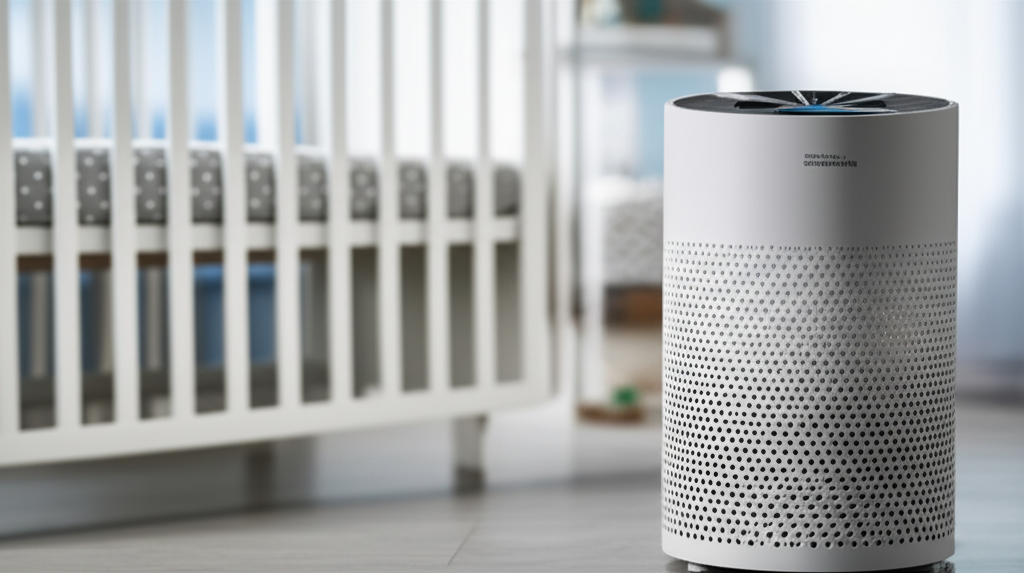
Common culprits in nursery air pollution include dust mites, pet dander, mold spores, and pollen that can easily find their way indoors. Beyond allergens, chemical pollutants like formaldehyde and benzene, often found in building materials and household products, can also be present. Even everyday items like scented candles or air fresheners can release VOCs that are detrimental to infant health. These invisible threats can contribute to allergies, asthma, and general respiratory discomfort for your baby.
Key Features to Look for in the Best Air Purifiers for Nursery
When selecting the best air purifiers for nursery environments, certain features are paramount. Prioritizing safety, effectiveness, and user-friendliness will ensure you make the best choice for your baby. Look for models specifically designed for smaller to medium-sized rooms, as most nurseries fall into this category. Quiet operation is also a significant consideration to avoid disrupting your baby’s sleep.
HEPA Filtration: The Gold Standard for Nursery Air
A true HEPA (High-Efficiency Particulate Air) filter is non-negotiable when choosing an air purifier for a nursery. This type of filter is designed to capture at least 99.97% of airborne particles as small as 0.3 microns. This includes common allergens like dust, pollen, pet dander, and mold spores. By trapping these microscopic irritants, a HEPA filter significantly improves the air your baby breathes, creating a healthier environment.
Activated Carbon Filters for Odor and VOC Removal
While HEPA filters tackle particles, activated carbon filters are crucial for addressing gases, odors, and VOCs. These filters use a porous carbon material that adsorbs harmful chemicals and unpleasant smells. In a nursery, this can be particularly beneficial for removing odors from diapers, as well as VOCs off-gassing from new cribs, mattresses, or paints. A combination HEPA and activated carbon filter offers comprehensive air purification.
Noise Levels: The Sleep-Friendly Factor
For a nursery, a quiet air purifier is essential. Most babies are sensitive to noise, and a loud appliance can disrupt their sleep, leading to fussiness and more frequent wake-ups. Look for air purifiers with a low decibel (dB) rating on their lowest setting, ideally below 30 dB, which is comparable to a whisper. Many models offer a “sleep mode” that further reduces fan speed and light indicators for undisturbed rest.
Safety Features: Child Lock and No Ozone Production
Safety is paramount in a nursery. Ensure the air purifier you choose has no exposed moving parts that a curious toddler could access. A child lock feature can prevent accidental adjustments to settings. Crucially, opt for purifiers that do not produce ozone as a byproduct of their filtration process. Ozone can be a lung irritant, especially for infants. Avoid ionizers or UV-C lights that may generate ozone unless they are certified to produce minimal to zero ozone.
Top-Rated Air Purifiers for Your Baby’s Nursery
After extensive research into what makes an air purifier truly effective and safe for the most sensitive lungs, I’ve identified several standout models. These best air purifiers for nursery spaces balance powerful filtration with user-friendly features, ensuring a healthier environment for your little one. I’ve focused on models that are quiet, efficient, and offer comprehensive pollutant removal.
Coway Airmega AP-1512HH Mighty: A Powerful All-Rounder
The Coway Airmega AP-1512HH Mighty is consistently praised for its exceptional performance in a compact, stylish package. It features a multi-stage filtration system including a true HEPA filter and an activated carbon filter, effectively capturing particles and odors. Its smart sensor adjusts fan speed automatically based on air quality, and it operates at a very low noise level on its lowest setting, making it one of the best air purifiers for nursery use. Its energy-efficient design also contributes to its appeal.
This model excels at removing allergens and pollutants, making it a top choice for sensitive environments. Its real-time air quality indicator provides peace of mind, showing you exactly what it’s working on.
Levoit Core 300S: Smart and Compact Performance
The Levoit Core 300S is a popular choice, especially for smaller nurseries or apartments. It utilizes a 3-stage filtration system: a pre-filter for larger particles, a true HEPA filter for fine allergens, and an activated carbon filter for odors and VOCs. Its compact cylindrical design allows for 360-degree air intake, maximizing efficiency. The Core 300S is also a smart purifier, controllable via a smartphone app, which is incredibly convenient for busy parents.
It offers multiple fan speeds, including a quiet sleep mode that operates at a whisper-quiet 22dB. The absence of ozone generation makes it a safe option for baby’s room.
Blueair Blue Pure 411 Auto: Simple, Effective, and Quiet
For those seeking simplicity and effectiveness, the Blueair Blue Pure 411 Auto is an excellent contender for the best air purifiers for nursery. It uses a unique combination of electrostatic and mechanical filtration called HEPASilent™ technology, which is highly effective at capturing 99.97% of airborne particles. This technology also allows it to operate at a remarkably low noise level. The auto mode adjusts fan speed based on detected air quality.
Its simple one-button operation and washable pre-filter make maintenance a breeze. The compact footprint is ideal for smaller spaces, and its modern design blends well with nursery decor.
Winix 5500-2: Advanced Filtration and Odor Control
The Winix 5500-2 is a robust option that offers advanced air purification for medium to large rooms. It boasts a 4-stage filtration system: a washable fine-mesh pre-filter, a true HEPA filter, an activated carbon filter, and Winix’s PlasmaWave™ technology. While PlasmaWave™ can be turned off if you have concerns about ionizers, the HEPA and carbon filters alone provide excellent purification. It features an auto mode with air quality sensors and a sleep mode for quiet operation.
This model is particularly effective at tackling stubborn odors and smoke, making it a versatile choice. Its comprehensive filtration ensures a cleaner, healthier environment for your baby.
Understanding Air Purifier Specifications for Nurseries
Navigating the technical specifications of air purifiers can be confusing, but understanding a few key metrics will help you choose the best air purifiers for nursery use. These numbers provide a clearer picture of how effective and suitable a unit is for your specific needs and room size. Don’t get bogged down in jargon; focus on what truly impacts your baby’s air quality.
CADR Ratings: Clean Air Delivery Rate Explained
CADR (Clean Air Delivery Rate) is a measure of how quickly an air purifier can clean the air in a room. It’s measured for three common pollutants: smoke, dust, and pollen. A higher CADR rating means the purifier cleans the air faster. For a nursery, you’ll want a CADR rating that is appropriate for the room’s square footage. Manufacturers often provide recommendations based on room size, which is a more practical guide than CADR alone.
Room Size Coverage: Matching the Purifier to Your Space
Air purifiers are rated for specific room sizes, typically in square feet. It’s crucial to choose a unit that is designed for the size of your nursery. Using an undersized purifier won’t be effective, while an oversized one might be unnecessarily noisy or expensive. Always check the manufacturer’s recommended room coverage and consider opting for a unit rated for a slightly larger room for optimal performance, especially if air quality concerns are high.
Filter Replacement Costs and Frequency
Beyond the initial purchase price, consider the ongoing cost of replacement filters. True HEPA and activated carbon filters need to be replaced periodically, usually every 6 to 12 months, depending on usage and air quality. Check the cost of replacement filters for any model you are considering, as this can add up over time. Some units have washable pre-filters, which can help reduce the frequency of full filter replacements.
Setting Up and Maintaining Your Nursery Air Purifier
Once you’ve chosen the best air purifiers for your nursery, proper setup and regular maintenance are key to ensuring they perform optimally. These simple steps will maximize the benefits and longevity of your chosen unit, providing consistent clean air for your baby. Think of it as part of your regular baby care routine.
Optimal Placement for Maximum Effectiveness
Positioning your air purifier correctly in the nursery is crucial for efficient air circulation. Ideally, place it in an open area away from walls or furniture that could obstruct airflow. Placing it near the baby’s crib, but not so close that it creates a draft or makes noise directly in their ear, can be beneficial. Ensure it’s on a stable surface and out of reach of crawling babies.
Regular Maintenance for Peak Performance
Follow the manufacturer’s instructions for cleaning and filter replacement. This typically involves dusting the exterior and cleaning the pre-filter monthly. The HEPA and carbon filters usually need replacement every 6-12 months. Neglecting filter changes will significantly reduce the purifier’s effectiveness and can even lead to reduced airflow and increased noise. Many purifiers have filter replacement indicators to remind you.
Frequently Asked Questions About Nursery Air Purifiers
Q1: How often should I run an air purifier in the nursery?
It’s generally recommended to run your air purifier in the nursery continuously, especially during your baby’s sleep times and when they are in the room. This ensures a consistent supply of clean air and helps to manage airborne pollutants effectively.
Q2: Do air purifiers really make a difference for babies?
Yes, air purifiers can make a significant difference, particularly for babies with allergies, asthma, or other respiratory sensitivities. They help reduce exposure to common allergens, dust, and other irritants that can affect a baby’s developing lungs and overall health.
Q3: Can an air purifier be too noisy for a baby?
Some air purifiers can be too noisy. It’s important to choose a model with a low decibel rating on its lowest setting, ideally below 30 dB, and to utilize its sleep mode. A quiet purifier won’t disrupt your baby’s sleep.
Q4: What is the difference between a HEPA filter and a HEPA-type filter?
A “true HEPA” filter is certified to capture at least 99.97% of airborne particles 0.3 microns in size. A “HEPA-type” or “HEPA-like” filter may not meet these strict standards and is generally less effective. Always look for “true HEPA” for the best results in a nursery.
Q5: Should I use an air purifier with an ionizer or UV-C light in the nursery?
It’s best to avoid air purifiers with ionizers or UV-C lights that produce ozone, as ozone can be a lung irritant for infants. If you choose a model with these features, ensure it’s certified to produce minimal to zero ozone, or that the feature can be turned off.
Q6: How do I know if my nursery air is clean?
Many air purifiers come with air quality sensors and indicators that display the current air quality in real-time. While these are helpful, consistently running a well-chosen air purifier with HEPA filtration is the best way to ensure your nursery air is as clean as possible.
Conclusion: Creating a Healthier Nursery Environment
Investing in one of the best air purifiers for nursery spaces is a vital step in safeguarding your baby’s health and well-being. By prioritizing true HEPA filtration, quiet operation, and safety features, you can create a sanctuary free from many common indoor pollutants. The proven choices discussed offer effective solutions to common nursery air quality concerns, giving you peace of mind. I hope this comprehensive guide helps you make an informed decision for your little one’s healthy start.
