
Air Purifier Dyson vs Philips: Genius, Essential Choice

Choosing between a Dyson and Philips air purifier is a crucial decision for your home’s air quality. This guide breaks down their unique features, performance, and value to help you make the best, most essential choice for your health and comfort.
Breathing clean air at home is no longer a luxury; it’s a necessity. With concerns about indoor air pollution on the rise, many of us are turning to air purifiers. But with so many options, how do you choose the right one? Two prominent brands, Dyson and Philips, often top the lists, but their approaches differ significantly. This comparison will illuminate the genius behind each, helping you make an essential choice for your living space.
Dyson vs. Philips Air Purifier: Understanding the Core Differences
Dyson and Philips represent distinct philosophies in air purification technology, catering to different user needs and priorities. Understanding these core differences is key to making an informed decision.
Dyson air purifiers often integrate multiple functions, such as purification, heating, and cooling, within a single, aesthetically pleasing unit. They focus on advanced sensing and powerful, bladeless fan technology. Philips, on the other hand, typically emphasizes a more dedicated and streamlined approach to air purification, focusing on robust filtration and smart features designed purely for cleaner air. This fundamental divergence in design and functionality shapes the user experience and the overall value proposition of each brand.
Dyson Air Purifiers: Innovation Meets Multi-Functionality
Dyson’s reputation for innovation is evident in its air purifiers, which often go beyond simple air cleaning. These devices are designed to be smart, connected, and versatile, blending seamlessly into modern homes.
Dyson’s genius lies in its all-in-one approach. Many models function as purifiers, fans, and heaters, offering year-round utility. Their bladeless “Air Multiplier” technology is a signature feature, providing powerful airflow without the safety concerns of traditional fans. Advanced sensors continuously monitor air quality, automatically adjusting settings for optimal performance.
Dyson’s Unique Features and Technologies
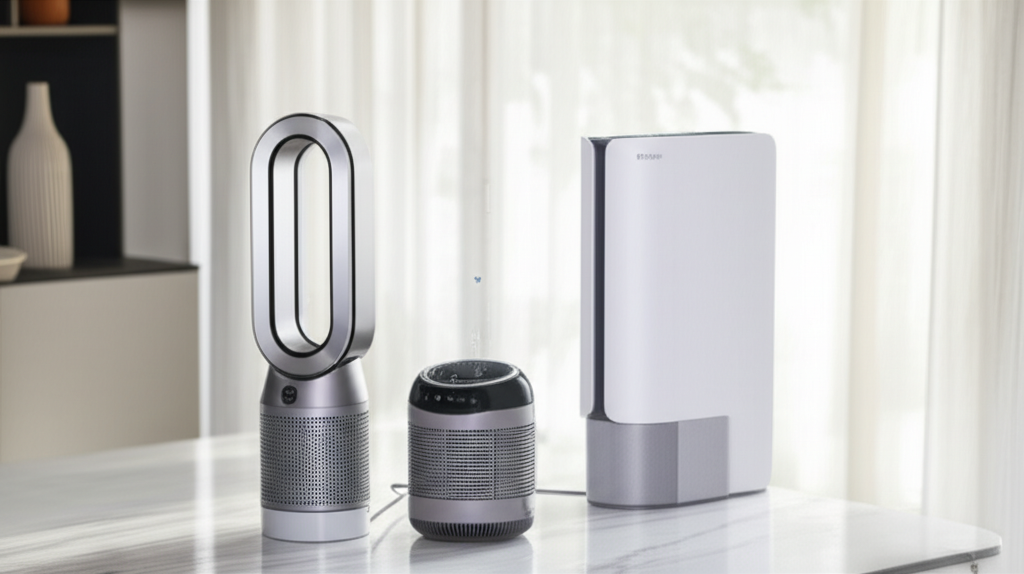
Dyson air purifiers are packed with proprietary technologies that set them apart in the market. These innovations are designed to enhance both purification effectiveness and user convenience.
Key Dyson features include:
HEPA and Activated Carbon Filtration: Captures ultra-fine particles and gases.
Air Multiplier™ Technology: Projects purified air efficiently throughout the room.
Real-time Air Quality Monitoring: Uses multiple sensors to detect pollutants.
App Connectivity: Allows remote control and detailed air quality reporting via the Dyson Link app.
Oscillation and Diffused Modes: Provides widespread or directed airflow.
Integrated Heating/Cooling: Some models offer climate control functions.
The Dyson Experience: Design and User Interface
Dyson products are renowned for their sleek, modern aesthetics, and their air purifiers are no exception. They are designed to be a statement piece as much as a functional appliance.
The user interface is typically intuitive, with clear digital displays and easy-to-use controls. The accompanying mobile app provides a wealth of information, allowing users to track historical air quality data and customize settings remotely. This blend of form and function makes the Dyson experience feel premium and cutting-edge.
Philips Air Purifiers: Dedicated Purity and Smart Efficiency
Philips has a long-standing reputation for producing high-quality home appliances, and their air purifiers are no exception. They focus on delivering exceptional air cleaning performance through advanced filtration and intelligent design.
Philips’ strength lies in its dedicated focus on purification. The brand prioritizes robust multi-stage filtration systems designed to tackle a wide range of airborne contaminants effectively. Their smart features are geared towards optimizing the purification process and providing users with peace of mind.
Philips’ Advanced Filtration Systems
Philips air purifiers often boast sophisticated multi-layer filtration systems engineered for maximum pollutant capture. These systems are the heart of their purification prowess.
A typical Philips filtration setup includes:
Pre-filter: Captures larger particles like dust and hair.
Activated Carbon Filter: Absorbs odors, gases, and volatile organic compounds (VOCs).
True HEPA Filter: Removes 99.97% of particles as small as 0.3 microns, including allergens, bacteria, and viruses.
NanoProtect HEPA Technology: In some models, this enhances particle capture and filter lifespan.
Smart Features and Connectivity in Philips Purifiers
While Dyson integrates purification with other functions, Philips focuses on enhancing the purification experience through smart technology. These features aim for efficiency and ease of use.
Philips air purifiers often include:
AeraSense Technology: Advanced sensors that provide real-time, highly accurate air quality readings.
Automatic Mode: Adjusts fan speed based on detected pollution levels.
Allergen Mode: Specifically designed to combat airborne allergens.
App Control (Clean Home+ app): Offers remote operation, scheduling, and detailed air quality insights.
* Sleep Mode: Operates quietly with dimmed lights for undisturbed rest.
Air Purifier Dyson vs Philips: Performance Comparison
When it comes to raw purification performance, both Dyson and Philips deliver excellent results, but their methodologies and reporting might differ. Comparing their effectiveness requires looking at CADR ratings, filtration types, and real-world efficacy.
Dyson’s powerful airflow and advanced sensing aim for rapid and comprehensive room coverage. Philips often excels in meticulous filtration, ensuring a high percentage of pollutants are captured by its multi-stage systems. Both brands invest heavily in research and development to ensure their devices meet stringent performance standards, making the choice often come down to specific needs.
Particle Removal Efficiency: HEPA Standards
Both Dyson and Philips utilize True HEPA filters, the gold standard for capturing microscopic airborne particles. This ensures a high level of protection against allergens, dust, and other irritants.
True HEPA filters are certified to remove at least 99.97% of airborne particles 0.3 micrometers in diameter. This includes common allergens like pollen and pet dander, as well as smaller particles like mold spores and bacteria. Both brands adhere to these rigorous standards.
Odor and Gas Elimination
Beyond particles, effective air purifiers also tackle odors and harmful gases. This is where the activated carbon component of the filters plays a crucial role.
Dyson models typically incorporate activated carbon filters to adsorb odors and VOCs. Philips also heavily relies on its activated carbon filters, often emphasizing their capacity and effectiveness in neutralizing a wide range of household smells and chemical pollutants. The quality and amount of activated carbon can influence how long these filters remain effective.
Noise Levels and Energy Efficiency
The operational noise and energy consumption of an air purifier are important considerations for daily use and long-term running costs. Both brands strive for a balance between performance and user comfort.
Dyson’s bladeless technology can sometimes be perceived as quieter at lower settings, though higher speeds can generate more noise. Philips models are often engineered for quiet operation, especially in sleep modes, with clear energy efficiency ratings available. Checking specific model decibel ratings is recommended for sensitive environments.
Air Purifier Dyson vs Philips: Cost and Value Proposition
The investment in an air purifier is a significant one, and understanding the long-term costs associated with each brand is essential. This includes the initial purchase price as well as ongoing expenses for replacement filters.
Dyson purifiers generally command a higher initial price point, reflecting their advanced technology, multi-functional design, and premium branding. Philips models often offer a more varied price range, with some high-performance units still being more accessible than comparable Dyson models. The value proposition for each depends heavily on whether you prioritize multi-functionality or dedicated, highly efficient purification.
Initial Purchase Price Comparison
When comparing the upfront cost, Dyson typically sits at the higher end of the market. Their innovative features and integrated functionalities contribute to this premium pricing.
Philips offers a broader spectrum of price points. While some of their high-end models can be comparable to Dyson, many Philips air purifiers provide excellent performance at a more moderate investment, making them a strong contender for budget-conscious consumers.
Replacement Filter Costs and Lifespan
The ongoing cost of replacement filters is a critical factor in the total cost of ownership for any air purifier. Both Dyson and Philips have specific filter replacement schedules and costs.
Dyson filters are often integrated units and can be relatively expensive to replace. Philips also requires regular filter replacement, with costs varying by model. It’s important to research the specific filter lifespan and price for the model you are considering to accurately project long-term expenses.
Air Purifier Dyson vs Philips: Smart Features and Connectivity
In today’s connected world, smart features and app integration are increasingly important for home appliances. Both Dyson and Philips offer smart capabilities, though their implementations differ.
Dyson’s app, Dyson Link, provides comprehensive control and detailed air quality data, integrating purification with other Dyson smart home devices. Philips’ Clean Home+ app focuses on delivering intuitive control over purification settings, air quality monitoring, and scheduling. The choice here depends on whether you prefer a unified ecosystem or a dedicated, streamlined app experience.
App Functionality and User Experience
The user experience with the companion apps can significantly enhance the ownership of a smart air purifier. Both brands aim for intuitive and informative interfaces.
Dyson’s app offers deep insights into your home’s air quality, historical data, and allows for precise control over all the device’s functions (purify, fan, heat). Philips’ app is focused on delivering clear, actionable information about air quality and straightforward control over the purification process.
Integration with Smart Home Ecosystems
For those invested in smart home technology, compatibility with existing ecosystems is a key consideration. This is an area where Dyson often has an edge.
Dyson products are designed to work within the Dyson ecosystem, offering seamless integration with other Dyson smart devices. While Philips offers robust app control, its integration with broader third-party smart home platforms might be less extensive compared to Dyson’s approach.
Air Purifier Dyson vs Philips: Design and Aesthetics
The appearance of an air purifier in your home environment is a personal preference, and both Dyson and Philips offer distinct design philosophies. Aesthetics can play a role in how well an appliance integrates into your decor.
Dyson is known for its futuristic, often minimalist designs that can serve as a statement piece. Philips generally opts for a more understated, functional aesthetic that blends into various home styles without drawing excessive attention.
Dyson’s Iconic Design Language
Dyson’s commitment to design is evident in its signature bladeless technology and sculptural forms. Their air purifiers are often recognized for their unique and modern look.
The smooth lines, premium materials, and often compact footprint make Dyson units visually appealing. They are designed not just to perform but also to enhance the aesthetic of a room, fitting well in contemporary living spaces.
Philips’ Functional and Discreet Styling
Philips tends to prioritize functionality and a less obtrusive presence in its air purifier designs. The focus is on delivering performance without overwhelming the space.
Their units often feature cleaner lines and a more traditional appliance look, making them easy to place in bedrooms, living rooms, or offices without being overly conspicuous. This can be preferable for those who want performance without a strong visual statement.
Air Purifier Dyson vs Philips: Maintenance and Filter Replacement
Regular maintenance is crucial for ensuring an air purifier operates at peak efficiency. Understanding the process and cost of filter replacement for both brands is important for long-term satisfaction.
Dyson’s integrated filter systems are designed for straightforward replacement, typically a simple click-in mechanism. Philips also offers easy-to-replace filters, often with indicator lights to signal when it’s time for a change. The frequency and cost of these replacements will impact your overall ownership experience.
Ease of Filter Replacement
Both Dyson and Philips aim to make filter replacement a hassle-free process for the user. This is a key aspect of their product design.
Dyson filters usually click into place, often requiring minimal tools or effort. Philips models are also designed for user-friendly filter changes, with clear instructions provided for each unit.
Filter Lifespan and Availability
The lifespan of a filter directly impacts how often you’ll need to purchase replacements and the associated costs. Availability ensures you can get replacements when needed.
Dyson filters have varying lifespans depending on usage and environmental conditions, and replacements are readily available through Dyson’s official channels. Philips filters also have specified lifespans, and replacements are generally easy to find, both from Philips and authorized retailers.
Air Purifier Dyson vs Philips: Which is the Genius, Essential Choice for You?
Making the “genius, essential choice” between a Dyson and Philips air purifier hinges on your individual needs, priorities, and budget. Both brands offer exceptional performance, but they cater to different aspects of home air purification and lifestyle.
If you value multi-functionality, cutting-edge design, and seamless integration within a premium smart home ecosystem, a Dyson air purifier might be your ideal choice. Its ability to purify, heat, and cool (in some models) offers year-round convenience. Conversely, if your primary concern is dedicated, highly efficient air purification with advanced filtration, a user-friendly app experience, and potentially a more accessible price point, a Philips air purifier is likely the smarter, essential option. Consider what truly matters most for your home’s air quality and your daily life.
Frequently Asked Questions
Q1: Which brand offers better filtration technology for allergies?
Both Dyson and Philips use True HEPA filters, which are highly effective at capturing allergens like pollen, dust mites, and pet dander. Philips often emphasizes its multi-stage filtration for comprehensive allergen removal, while Dyson integrates this with powerful airflow.
Q2: Are Dyson air purifiers quieter than Philips?
Noise levels can vary significantly by model and fan speed. Some Dyson models are designed to be quieter at lower settings due to their bladeless technology, while Philips often excels in quiet operation with dedicated sleep modes. It’s best to check the specific decibel ratings for the models you’re considering.
Q3: Which brand is more cost-effective in the long run?
This depends on the initial purchase price and the cost of replacement filters. Dyson units tend to have a higher upfront cost, and their integrated filters can be expensive. Philips offers a wider price range and generally competitive filter costs, potentially making them more cost-effective over time for some users.
Q4: Do I really need an air purifier if I don’t have allergies?
Yes, air purifiers can benefit everyone. Indoor air can contain pollutants like VOCs from cleaning products, smoke, and even fine particles from cooking, which can affect respiratory health and overall well-being, regardless of allergies.
Q5: How often do I need to replace the filters for Dyson and Philips air purifiers?
Filter replacement schedules vary by model, usage, and air quality. Generally, HEPA and carbon filters need replacement every 6-12 months. Both Dyson and Philips provide indicator lights or app notifications to let you know when it’s time.
Conclusion: Your Air Quality, Your Essential Choice
Ultimately, the decision between a Dyson and Philips air purifier boils down to your personal definition of a “genius, essential choice.” Both brands are at the forefront of air purification technology, offering robust solutions for cleaner indoor air. Dyson excels in integrated functionality, innovative design, and a premium user experience, making it a compelling choice for those seeking a multi-functional smart home device. Philips, with its deep commitment to pure purification, advanced filtration systems, and smart, efficient operation, offers a highly effective and often more focused solution for those prioritizing clean air above all else. By carefully considering performance, cost, features, and your specific home environment, you can confidently select the air purifier that best suits your needs, ensuring a healthier and more comfortable living space.
