Activated Carbon Vs HEPA Filters: Essential Choice

Activated carbon vs HEPA filters for air purification: Choosing the right filter depends on your specific air quality concerns. HEPA excels at capturing tiny particles like allergens and dust, while activated carbon is best for eliminating odors and VOCs. This guide helps you make the essential choice for a healthier home.
Breathe easier, knowing your home’s air is clean and healthy. Many of us struggle with invisible airborne irritants, from lingering cooking smells to seasonal allergens. It can be frustrating to choose the right air purifier when faced with technical terms like HEPA and activated carbon filters. But don’t worry, I’m here to guide you through the essential differences between activated carbon vs HEPA filters for air purification. We’ll break down what each filter does best, so you can confidently make the essential choice for your home environment.
Understanding the Core Technologies: Activated Carbon vs HEPA Filters
The battle of activated carbon vs HEPA filters for air purification is less about which is “better” and more about which is “right” for your needs. Each technology tackles different types of air pollutants, making them uniquely valuable in creating a cleaner living space. Understanding their fundamental mechanisms is the first step to making an informed decision.
HEPA Filters: The Particle Trappers
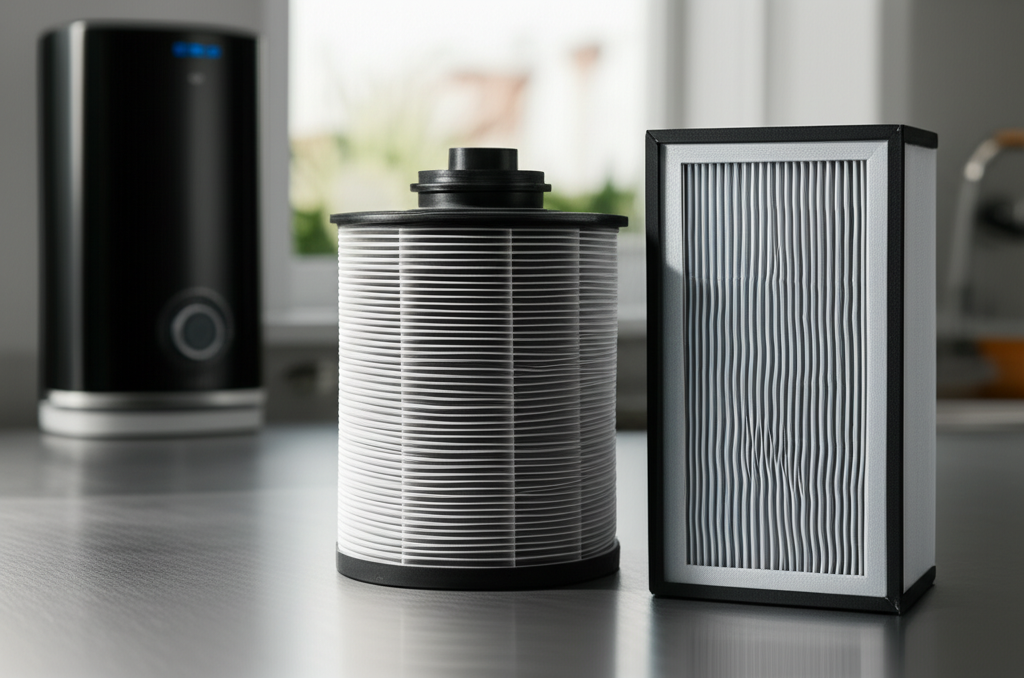
HEPA stands for High-Efficiency Particulate Air. These filters are designed to capture a significant percentage of airborne particles, making them incredibly effective against physical contaminants. They are a cornerstone of air purification for many households concerned with common allergens and dust.
A true HEPA filter must capture at least 99.97% of particles that are 0.3 microns in size. This includes microscopic dust mites, pollen, pet dander, mold spores, and even some bacteria and viruses. Their dense, fibrous material physically traps these particles as air passes through.
Activated Carbon Filters: The Odor and Gas Neutralizers
Activated carbon filters, also known as activated charcoal filters, work on a different principle: adsorption. This process involves using a porous material that has been treated to be extremely absorbent. It effectively pulls gases, odors, and volatile organic compounds (VOCs) out of the air.
Think of activated carbon as a sponge for smells and chemicals. It doesn’t primarily focus on physical particles but rather on gaseous pollutants that can cause unpleasant odors or contribute to indoor air pollution. This makes them a crucial component for tackling smells from cooking, pets, or chemicals.
How HEPA Filters Capture Particles
HEPA filters are marvels of mechanical filtration, employing a complex network of fibers to trap even the smallest airborne contaminants. Their effectiveness lies in a multi-pronged approach that catches particles of various sizes, ensuring a high level of air purity. Understanding these mechanisms reveals why HEPA is so vital for allergen sufferers.
The Science Behind HEPA Filtration
HEPA filters consist of a mat of randomly arranged fibers, typically made of fiberglass or synthetic materials. These fibers create a tortuous path for air to travel, increasing the chances of particles colliding with and adhering to the fibers. This process involves several mechanisms working in tandem to capture pollutants.
The primary mechanisms include:
Impaction: Larger particles directly collide with and stick to the fibers.
Interception: Medium-sized particles follow the airflow but get caught when they brush against a fiber.
Diffusion: The smallest particles move erratically and eventually collide with fibers.
This combination ensures that a broad spectrum of particulate matter is effectively removed from the air you breathe.
What HEPA Filters Effectively Remove
The efficacy of HEPA filters against particulate matter is their greatest strength. They are essential for individuals with allergies, asthma, or other respiratory sensitivities. By removing these common triggers, HEPA filters significantly improve indoor air quality.
Here’s a breakdown of what HEPA filters excel at removing:
Pollen
Pet dander
Dust mites
Mold spores
Smoke particles
Bacteria and some viruses
For a comprehensive understanding of air quality, consider resources from organizations like the Environmental Protection Agency (EPA).
How Activated Carbon Filters Work Their Magic
Activated carbon filters tackle a different set of air quality issues than HEPA filters, focusing on gases and odors. Their unique adsorption process makes them indispensable for neutralizing unpleasant smells and removing harmful chemical pollutants from your home. This makes them a key player in the activated carbon vs HEPA filters for air purification debate.
The Adsorption Process Explained
Adsorption is a surface phenomenon where gas or liquid molecules adhere to the surface of a solid material. Activated carbon is treated through a process that increases its surface area dramatically, creating millions of tiny pores. These pores act as traps for odor-causing molecules and VOCs.
When air passes through an activated carbon filter, odor molecules and VOCs come into contact with the vast internal surface area of the carbon. They then bind to the carbon, effectively being removed from the airstream. This process is highly efficient for specific types of pollutants.
What Activated Carbon Filters Effectively Remove
While HEPA filters are particle catchers, activated carbon filters are gas and odor eliminators. They are crucial for addressing airborne chemicals and smells that HEPA filters cannot capture. Their role in a multi-stage purification system is often complementary to HEPA.
Activated carbon filters are particularly effective at removing:
Cooking odors (fish, spices, burnt food)
Pet odors
Smoke odors (tobacco, wildfire)
Volatile Organic Compounds (VOCs) from cleaning products, paints, and furniture
Chemical fumes
Their ability to tackle these invisible but often pungent or harmful substances makes them highly sought after.
Activated Carbon vs HEPA: Direct Comparison
When comparing activated carbon vs HEPA filters for air purification, it’s crucial to see them as distinct but often complementary technologies. They address different types of pollutants, and understanding their individual strengths highlights why many advanced air purifiers utilize both. This comparison will clarify their roles.
| Feature | HEPA Filter | Activated Carbon Filter |
| :————— | :——————————————— | :—————————————————- |
| Primary Action | Mechanical filtration of particles | Adsorption of gases, odors, and VOCs |
| Target Pollutants | Dust, pollen, pet dander, mold spores, bacteria | Odors, smoke, chemical fumes, VOCs |
| Mechanism | Traps particles in a dense fiber mesh | Attracts and binds gas molecules to a porous surface |
| Effectiveness | High for physical particles (≥0.3 microns) | High for gases and odors |
| Lifespan | Depends on particle load, typically 6-12 months | Depends on gas/odor load, typically 3-6 months |
This table summarizes the key differences, emphasizing that neither is universally superior; their value is context-dependent.
Particle vs. Gas Filtration: The Fundamental Difference
The core distinction in activated carbon vs HEPA filters for air purification lies in what they are designed to capture. HEPA filters are physical barriers for tiny solids, while activated carbon is a chemical magnet for gaseous substances. This fundamental difference dictates their applications.
HEPA filters physically stop particles from passing through, much like a sieve. Activated carbon filters, on the other hand, chemically attract and hold onto gas molecules, effectively removing them from the air. One deals with tangible bits, the other with invisible vapors and smells.
When to Choose a HEPA Filter
HEPA filters are the go-to choice when your primary concern is airborne particulate matter. This includes common allergens and irritants that can significantly impact respiratory health and comfort. If you or your family suffer from allergies or asthma, a HEPA filter is likely essential.
Consider a HEPA filter if you want to reduce:
Seasonal allergies from pollen.
Reactions to pet dander and hair.
Irritation from dust and dust mites.
Exposure to mold spores.
These filters provide a physical barrier against a wide range of common household irritants.
Ideal Scenarios for HEPA Filtration
Certain environments and conditions make HEPA filtration particularly beneficial. Homes with pets, individuals with known allergies, or areas prone to dust accumulation are prime candidates. Ensuring your air purifier has a genuine HEPA filter is key.
Examples of ideal scenarios include:
Homes with cats, dogs, or other shedding pets.
Households with members experiencing allergies or asthma.
Rooms with significant dust buildup, like bedrooms or living areas.
Areas near high pollen counts or wildfire smoke.
These situations benefit greatly from the particle-capturing prowess of HEPA filters.
When to Choose an Activated Carbon Filter
Activated carbon filters shine when dealing with odors and chemical pollutants. If your home experiences persistent smells or you’re concerned about VOCs from household products, this type of filtration is crucial. It complements HEPA by addressing the invisible threats that HEPA alone cannot handle.
Opt for an activated carbon filter if you need to eliminate:
Lingering cooking smells.
Pet odors from litter boxes or accidents.
Smoke from cigarettes or cooking.
Chemical smells from new furniture or paint.
These filters are vital for creating a truly fresh-smelling and healthy indoor environment.
Ideal Scenarios for Activated Carbon Filtration
Specific situations warrant the inclusion of activated carbon filters for effective air purification. These often involve sources of strong odors or chemical off-gassing that can degrade indoor air quality. They are especially valuable in kitchens, bathrooms, and areas where VOCs are a concern.
Ideal scenarios include:
Kitchens where cooking odors are common.
Bathrooms to combat musty smells.
Rooms with new carpets, furniture, or recently painted walls.
Homes where smoking occurs indoors.
These environments benefit immensely from the odor and chemical neutralizing capabilities.
The Power of Combined Filtration: HEPA + Activated Carbon
Many of the most effective air purifiers on the market utilize a multi-stage filtration system that includes both HEPA and activated carbon. This combination offers the best of both worlds, tackling both particulate matter and gaseous pollutants for comprehensive air purification. Understanding this synergy is key to making the ultimate choice in activated carbon vs HEPA filters for air purification.
This dual-filter approach ensures that your air is cleaned of a wide range of contaminants. It addresses the physical irritants that HEPA filters capture and the chemical and odor culprits that activated carbon filters neutralize. This comprehensive strategy leads to a significantly healthier indoor atmosphere.
How Multi-Stage Air Purifiers Work
Multi-stage air purifiers typically start with a pre-filter to catch larger particles like hair and dust, extending the life of the main filters. Then, air passes through a true HEPA filter to capture fine particulate matter. Finally, it moves through an activated carbon filter to adsorb odors and VOCs.
This layered approach maximizes the effectiveness of each filter type. The pre-filter protects the HEPA and carbon, the HEPA captures particles, and the carbon tackles gases, providing a holistic solution. Many reputable brands, such as Coway and Blueair, offer such advanced systems.
Benefits of a Combined System
The primary benefit of a combined HEPA and activated carbon system is its comprehensive approach to air purification. It addresses a much broader spectrum of indoor air pollutants than either filter type could alone. This leads to cleaner air for everyone, especially those with multiple sensitivities.
The advantages include:
Removal of allergens, dust, and pet dander.
Elimination of cooking, pet, and smoke odors.
Reduction of harmful VOCs and chemical fumes.
Improved overall indoor air quality and freshness.
This makes them an excellent investment for overall home health.
Factors to Consider When Choosing
When deciding between activated carbon vs HEPA filters for air purification, or a combination, several factors come into play. Your specific living situation, health concerns, and the types of pollutants you most want to address will guide your decision. It’s about finding the best fit for your unique needs.
Consider these key points:
Your primary concerns: Are you battling allergies, persistent odors, or both?
Home environment: Do you have pets? Are there smokers in the house? Is there new construction or renovations?
Health conditions: Do you or family members have asthma or severe allergies?
Budget: Multi-stage purifiers can be more expensive upfront but often offer better value.
By evaluating these aspects, you can pinpoint the most effective filtration solution for your home.
Filter Lifespan and Replacement Costs
Both HEPA and activated carbon filters have a limited lifespan and will eventually need replacement. The frequency of replacement depends on usage, the concentration of pollutants in your air, and the specific model of air purifier. Keeping replacement costs in mind is part of the essential choice.
HEPA filters typically last 6-12 months, while activated carbon filters often need replacing every 3-6 months due to their adsorption capacity becoming saturated. Always check the manufacturer’s recommendations for your specific air purifier model. Investing in quality filters ensures continued performance.
Air Purifier Features to Look For
Beyond the type of filters, other features can enhance your air purification experience. Look for models with multiple fan speeds, timers, filter replacement indicators, and quiet operation modes. Smart features and energy efficiency can also be important considerations for modern homes.
When shopping for an air purifier, consider:
CADR (Clean Air Delivery Rate): This indicates how quickly the purifier can clean a room of specific pollutants.
Room size coverage: Ensure the purifier is rated for the square footage of the space you intend to use it in.
Noise level: Important for bedrooms or living areas where quiet is desired.
Filter replacement indicators: Helps you know exactly when to change filters for optimal performance.
These features contribute to the overall effectiveness and user experience of your chosen air purifier.
Common Misconceptions About Air Filters
It’s easy to get confused by the terminology surrounding air purification. Some common misconceptions can lead to choosing the wrong type of filter or an ineffective system. Clarifying these points helps ensure you make the essential choice for your needs when comparing activated carbon vs HEPA filters for air purification.
One common myth is that all filters labeled “HEPA-type” or “HEPA-like” are as effective as true HEPA filters. This is often not the case, as they may not meet the stringent 99.97% efficiency standard for 0.3-micron particles. Always look for “True HEPA” certification.
“HEPA-Type” vs. “True HEPA”
The distinction between “HEPA-type” and “True HEPA” filters is critical. While both aim to capture particles, only True HEPA filters meet the rigorous standards set by regulatory bodies. Using a “HEPA-type” filter might lead to disappointment if you require the highest level of particle filtration.
True HEPA: Captures 99.97% of particles 0.3 microns in size.
HEPA-type/HEPA-like: May capture a high percentage of larger particles but doesn’t meet the strict 0.3-micron standard.
For serious allergy or asthma sufferers, True HEPA is non-negotiable.
The Role of Ionizers and Ozone
Some air purifiers incorporate ionizers or UV-C light. While ionizers can help particles clump together, they can also produce ozone, a lung irritant. UV-C light can kill germs but is often less effective in the short time air spends in a purifier.
It’s wise to research these additional features and understand their potential benefits and drawbacks. For many, focusing on a robust HEPA and activated carbon combination offers the most reliable and safest path to cleaner air. For more information on indoor air quality, the American Lung Association is an excellent resource.
Frequently Asked Questions (FAQ)
Can a HEPA filter remove odors?
No, HEPA filters are designed to capture physical particles like dust and pollen, not gases or odors. For odor removal, you need an activated carbon filter.
Can an activated carbon filter remove allergens?
Activated carbon filters are not effective at removing small airborne particles like allergens. Their strength lies in adsorbing gases and odors.
Do I need both HEPA and activated carbon filters?
If you want to address both airborne particles (like allergens) and odors/VOCs, then yes, a combination of HEPA and activated carbon filters is ideal.
How often should I replace my HEPA and activated carbon filters?
HEPA filters typically last 6-12 months, while activated carbon filters usually need replacing every 3-6 months, depending on usage and air quality. Always follow the manufacturer’s guidelines.
What is the difference between activated carbon and charcoal?
Activated carbon is treated charcoal that has been processed to be extremely porous, significantly increasing its surface area and adsorption capabilities. Regular charcoal is not as effective.
Are air purifiers with both HEPA and carbon filters worth the cost?
For comprehensive air purification, especially if you have allergies, asthma, or concerns about odors and VOCs, the combined system is generally considered worth the investment for a healthier home.
Conclusion
Making the essential choice between activated carbon vs HEPA filters for air purification boils down to understanding your specific needs. HEPA filters are your champions against tiny particles like allergens and dust, providing a crucial barrier for respiratory health. Activated carbon filters, on the other hand, are your allies against bothersome odors and potentially harmful VOCs, ensuring a fresher, cleaner-smelling environment. For the most comprehensive solution, many find that air purifiers combining both True HEPA and substantial activated carbon filtration offer the best of both worlds. By considering your home’s unique challenges, you can confidently select the right filtration technology to breathe easier and live healthier.