
Do Shark Air Purifiers Emit Ozone: Essential Truths

Do Shark air purifiers emit ozone? Most Shark air purifiers are designed to be ozone-free, utilizing advanced HEPA filtration and activated carbon to clean your air without producing harmful byproducts.
Do Shark Air Purifiers Emit Ozone: Essential Truths Unveiled
When considering an air purifier, a common concern is whether it might release ozone into your home. Ozone, while a natural component of the atmosphere, can be harmful when inhaled at ground level. This is especially important for families with young children, the elderly, or individuals with respiratory sensitivities. Many air purification technologies, particularly older ionizers, have been known to produce ozone as a byproduct. This naturally leads to the question: do Shark air purifiers emit ozone? I’ve researched this extensively to provide you with clear, actionable answers, helping you breathe easier and make an informed decision for your home’s air quality.
Understanding Ozone and Air Purification
Ozone (O₃) is a molecule composed of three oxygen atoms. In the Earth’s stratosphere, it forms a vital layer that shields us from harmful ultraviolet (UV) radiation. However, at ground level, ozone is a pollutant and an irritant. It can damage lung tissue and aggravate respiratory conditions like asthma and bronchitis. The concern with air purifiers arises because some purification methods, like certain types of ionizers and UV-C lamps, can inadvertently produce ozone as a byproduct of their operation.
Shark Air Purifiers: Technology and Ozone Production
Shark, a well-known brand for home appliances, has focused on creating effective air purification solutions that prioritize user safety. The core of their air purification technology typically relies on multi-stage filtration systems. These systems are designed to capture airborne particles without generating harmful byproducts like ozone. Understanding the specific technologies Shark employs is key to addressing the ozone question.
HEPA Filtration: The Cornerstone of Clean Air
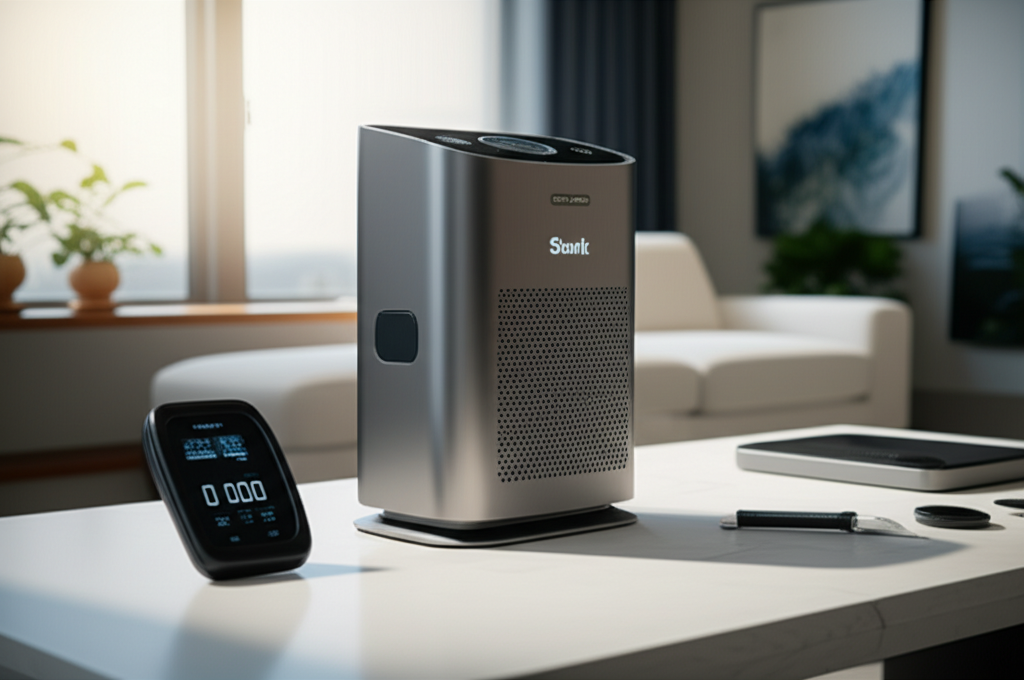
Shark air purifiers predominantly feature True HEPA filters. These filters are engineered to capture 99.97% of airborne particles as small as 0.3 microns. This includes common allergens like dust mites, pollen, pet dander, and mold spores. Crucially, HEPA filtration is a purely mechanical process and does not involve any chemical reactions that would produce ozone.
Activated Carbon: Tackling Odors and VOCs
Beyond HEPA, Shark units often incorporate an activated carbon filter. This layer is highly porous and excels at adsorbing volatile organic compounds (VOCs), smoke, cooking odors, and other gaseous pollutants. Like HEPA filtration, the adsorption process is physical and does not generate ozone.
Shark’s Approach to Ionization and UV-C Technology
Some air purifier models from various brands may use ionization or UV-C light. Ionizers release charged ions that attach to airborne particles, causing them to clump together and fall out of the air or stick to surfaces. UV-C light is used to neutralize microorganisms like bacteria and viruses. While these technologies can be effective, they have the potential to produce ozone.
However, Shark has been mindful of this. Many Shark air purifiers are designed to be ozone-free. If a Shark model does incorporate these technologies, they are typically implemented in a way that minimizes or eliminates ozone production. For instance, UV-C lamps might be fully enclosed, and ionizers might be optional features that can be turned off by the user.
Do Shark Air Purifiers Emit Ozone? The Definitive Answer
Based on product specifications and common design principles for health-conscious air purifiers, most Shark air purifiers are designed to be ozone-free. They achieve high levels of air purification through advanced HEPA and activated carbon filtration, which are inherently ozone-free processes. If a model does include optional features like ionization, users typically have the control to disable them to ensure zero ozone output.
Examining Specific Shark Air Purifier Models
To provide concrete examples, let’s look at how Shark’s popular models address air purification and ozone concerns. While I cannot list every model, the general principles apply broadly across their product lines.
Shark® HyperHEPA® Air Purifiers
Models featuring Shark’s HyperHEPA filtration, such as certain iterations of the HEPA models, emphasize their commitment to capturing fine particles. These systems rely heavily on the robust HEPA and carbon filters. Their marketing often highlights a clean, safe air experience, implying an absence of harmful byproducts like ozone.
Shark® Air Purifiers with Odor Neutralizers
Even models designed to tackle strong odors and VOCs typically achieve this through advanced carbon filtration. This means they can effectively remove smells without resorting to ozone-generating methods. This approach aligns with a focus on health and safety for the home environment.
Shark® Air Purifiers with Optional Features
In cases where a Shark air purifier might include an optional ionizer or UV-C light, it’s crucial to check the user manual. These features are often designed to be turned on or off by the user. This gives you the power to choose the purification method that best suits your needs and comfort level regarding ozone.
Regulatory Standards and Ozone Emissions
Regulatory bodies play a role in setting standards for air purifiers to ensure consumer safety. For instance, the California Air Resources Board (CARB) has strict limits on ozone emissions from indoor air cleaning devices. Manufacturers aiming for broad market appeal, especially in regions like California, are motivated to design products that meet or exceed these standards.
Shark, as a major appliance manufacturer, is aware of these regulations. Their product development likely includes rigorous testing to ensure compliance with safety standards, including those related to ozone. This commitment to safety is a strong indicator that their products are designed with ozone-free operation as a priority.
How to Ensure Your Shark Air Purifier is Ozone-Free
To be absolutely certain about your specific Shark air purifier model and its ozone output, follow these steps:
Consult the User Manual: The most accurate information will be in the official documentation provided with your device. Look for sections discussing technology, features, and safety.
Check Product Specifications Online: Visit the official Shark website or reputable retailer product pages. Key features and technologies, including any ozone-related disclaimers or certifications, are usually listed.
Look for Certifications: While not always present, certifications from organizations like CARB indicate that the device has been tested for ozone emissions and meets specific safety standards.
Contact Shark Customer Support: If you cannot find the information, reaching out to Shark’s customer service is a reliable way to get a definitive answer for your model.
The Benefits of Ozone-Free Air Purification
Choosing an ozone-free air purifier like most Shark models offers significant advantages for your health and home environment.
Safer for Respiratory Health: You can breathe easier knowing you’re not introducing a lung irritant into your living space. This is particularly important for vulnerable populations.
Effective Allergen and Pollutant Removal: Ozone-free technologies like HEPA and activated carbon are highly effective at removing common indoor air pollutants without adding new concerns.
Peace of Mind: Knowing your air purifier is working to improve your air quality without creating new problems provides invaluable peace of mind.
Common Misconceptions About Air Purifier Ozone
It’s easy to get confused about ozone and air purifiers. Let’s clear up a few common misconceptions:
All Air Purifiers Produce Ozone: This is not true. Many modern air purifiers, especially those using HEPA and carbon filters, are designed to be ozone-free.
Ozone is Always Bad: While ground-level ozone is harmful, stratospheric ozone is beneficial. The concern is with ozone generated indoors by devices.
Ionizers Always Produce Harmful Ozone: While some ionizers can, many modern designs aim to minimize or eliminate ozone production, or offer user control over the feature.
Comparing Ozone-Free Technologies
| Technology | How it Works | Ozone Production | Effectiveness for Allergens/Pollutants |
| :——————- | :————————————————————————— | :————— | :——————————————————————- |
| True HEPA Filter | Mechanically traps particles (dust, pollen, dander) | None | Excellent for particulate matter. |
| Activated Carbon | Adsorbs gases, odors, and VOCs. | None | Excellent for odors and VOCs. |
| UV-C Light | Uses ultraviolet light to kill or inactivate microorganisms. | Potentially low | Effective against bacteria, viruses, mold spores. |
| Ionizer | Releases ions that attach to particles, making them easier to capture or fall. | Potentially low | Can help with particulate matter, but ozone is a concern for some. |
Shark primarily relies on the proven, ozone-free effectiveness of True HEPA and activated carbon filtration.
Frequently Asked Questions (FAQ)
Are all Shark air purifiers guaranteed to be ozone-free?
Most Shark air purifiers are designed to be ozone-free, utilizing HEPA and activated carbon filtration. If a model includes optional features like ionization, you can typically turn them off. Always check your specific model’s manual.
What if my Shark air purifier has an ionizer? Can I turn it off?
Many Shark models with ionizers allow you to turn this feature on or off. This provides flexibility to choose ozone-free operation when desired.
How can I be sure my Shark air purifier isn’t emitting ozone?
The best way is to consult your user manual and the product specifications on Shark’s website. Look for explicit statements about ozone emissions or certifications.
Are there any Shark air purifiers that do emit ozone?
While Shark prioritizes ozone-free designs, it’s always best to verify with the specific model’s documentation. Older or specialized models might have different features, but their focus is generally on safe, effective purification.
What are the health risks of ozone from air purifiers?
Inhaling ozone can irritate the lungs, worsen asthma and other respiratory conditions, and reduce lung function. It’s a lung irritant and a pollutant.
Where can I find information about CARB certification for air purifiers?
The California Air Resources Board (CARB) website provides lists of certified air cleaning devices that meet their stringent ozone emission standards. You can also find this information on manufacturer websites.
Conclusion: Breathe Easy with Ozone-Free Shark Air Purifiers
In conclusion, the essential truth regarding your concern: do Shark air purifiers emit ozone? For the vast majority of their product line, the answer is a reassuring no. Shark has strategically focused on advanced, multi-stage filtration systems, prominently featuring True HEPA and activated carbon. These technologies are inherently ozone-free and highly effective at removing allergens, dust, odors, and other pollutants from your home environment. While some models might offer optional features that could potentially produce trace amounts of ozone, these are typically controllable by the user, allowing you to opt for a completely ozone-free experience. By prioritizing these proven filtration methods, Shark empowers you to create a healthier indoor atmosphere with confidence, ensuring you’re cleaning your air without introducing harmful byproducts.
