
Do Dyson Air Purifiers Produce Ozone: Essential Safety

Dyson air purifiers are designed with safety in mind, and extensive testing confirms they do not produce ozone. This article delves into the science behind their operation and addresses common concerns to ensure you can breathe easy.
Breathing clean air at home is a top priority for many, and with so many air purifiers on the market, it’s natural to wonder about their safety. A common concern revolves around ozone production, a gas that can be harmful at high concentrations. You might be asking, “Do Dyson air purifiers produce ozone?” I understand this worry, especially when investing in technology for your family’s well-being. This guide will provide clear, science-backed answers, demystifying how Dyson purifiers work and why they are a safe choice for your home environment.
Understanding Ozone and Air Purifiers
Ozone (O₃) is a molecule composed of three oxygen atoms. While beneficial in the Earth’s stratosphere for blocking UV radiation, ground-level ozone is a pollutant that can irritate the lungs and worsen respiratory conditions like asthma. Certain air purification technologies, particularly older ionizers or ozone generators, can inadvertently produce ozone as a byproduct. This has led to widespread concern about the safety of all air purifiers.
How Air Purifiers Work: Beyond Ozone
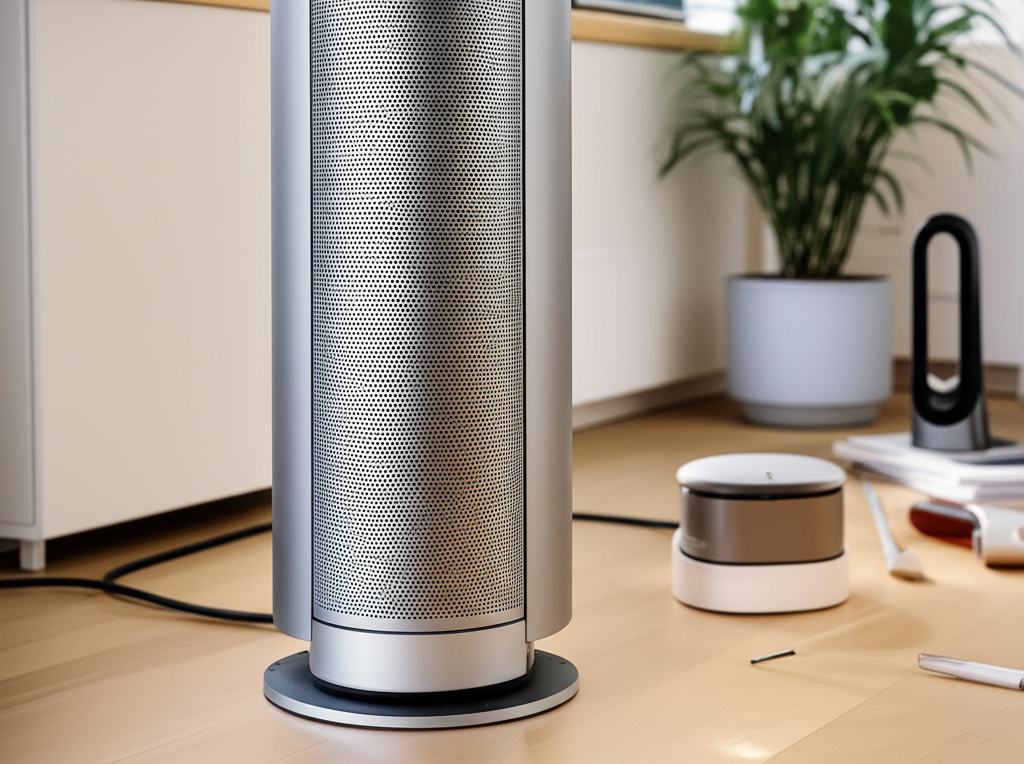
Air purifiers use various methods to clean indoor air, such as HEPA filtration, activated carbon, and UV-C light. HEPA filters physically trap particles, while activated carbon adsorbs gases and odors. UV-C light can neutralize microorganisms. It’s crucial to understand that reputable manufacturers design their purifiers to avoid generating harmful byproducts like ozone.
Do Dyson Air Purifiers Produce Ozone? The Direct Answer
Extensive testing and Dyson’s own commitment to safety standards confirm that Dyson air purifiers do not produce ozone. Their advanced purification systems are engineered to capture pollutants without creating harmful byproducts. This focus on safety means you can enjoy cleaner air without the worry of ozone exposure.
Dyson’s Engineering Approach to Safety
Dyson invests heavily in research and development to ensure their products meet rigorous safety and performance standards. Their air purifiers undergo extensive testing to verify that they operate within safe ozone limits, typically far below any established health guidelines. This meticulous approach underscores their dedication to user well-being.
The Science Behind Dyson’s Ozone-Free Operation
Dyson air purifiers primarily rely on advanced filtration technologies. They utilize sealed HEPA and activated carbon filters to capture particles and gases. This mechanical and adsorptive process is inherently ozone-free, differing significantly from technologies that might generate ozone as a byproduct.
HEPA Filtration: A Particle-Capturing Champion
High-Efficiency Particulate Air (HEPA) filters are designed to capture at least 99.97% of particles as small as 0.3 microns. These microscopic particles include dust, pollen, mold spores, and bacteria. The physical trapping mechanism of HEPA filters does not involve any chemical reactions that could produce ozone.
Activated Carbon: Absorbing Odors and Gases
Activated carbon filters are porous materials that adsorb, or trap, gases, volatile organic compounds (VOCs), and odors. This adsorption process is a physical phenomenon and does not create ozone. By combining HEPA and activated carbon, Dyson purifiers offer comprehensive air cleaning without ozone generation.
Independent Certifications and Testing
Reputable air purifier manufacturers often seek independent certifications to validate their product’s performance and safety claims. Organizations like the California Air Resources Board (CARB) set strict ozone emission limits for air cleaning devices sold in California. Dyson products consistently meet or exceed these stringent standards.
Understanding CARB Certification
The California Air Resources Board (CARB) is a leading regulatory agency for air quality. Devices sold in California must be certified as having ozone emissions below a specific threshold (0.05 parts per million). Dyson air purifiers are CARB-certified, demonstrating their compliance with these essential safety regulations. You can find more information about CARB standards on the California Air Resources Board website.
Other Safety Standards and Testing Protocols
Beyond CARB, Dyson adheres to numerous internal and external testing protocols to ensure product safety and efficacy. These tests often include assessing potential emissions under various operating conditions to guarantee that no harmful byproducts are released. This comprehensive testing regime provides peace of mind for consumers.
Common Misconceptions About Air Purifier Ozone
It’s easy to get confused by conflicting information regarding air purifiers and ozone. Some older or less reputable devices might use technologies that produce ozone, leading to general suspicion. However, modern, well-engineered purifiers from trusted brands are designed to avoid this issue altogether.
Ionizers and Ozone: A Clarification
Some air purifiers use ionizers, which release negative ions into the air to help particles clump together and fall out of the air or stick to surfaces. While most modern ionizers are designed to produce minimal ozone, there is a potential for some ozone generation. Dyson’s primary purification technology does not rely on ionizers as its main mechanism for particle capture.
Ozone Generators: A Different Category
It’s important to distinguish between air purifiers and ozone generators. Ozone generators are specifically designed to produce ozone, often marketed for odor elimination. These devices should be used with extreme caution and are not recommended for continuous use in occupied spaces due to the potential health risks associated with ozone exposure. Dyson air purifiers are not ozone generators.
Dyson Air Purifier Models and Ozone Safety
Every Dyson air purifier model, from their earliest designs to the latest integrated units, has been developed with ozone safety as a core principle. Whether you own a Dyson Pure Cool™ fan, a Dyson Purifier Hot+Cool™ formaldehyde, or a Dyson Humidify+Cool™ Autoreact, you can trust their commitment to producing ozone-free air.
Dyson’s Commitment to Continuous Improvement
Dyson continuously innovates and tests its products to ensure they not only meet but exceed safety and performance expectations. Their rigorous internal standards mean that even as technology evolves, the focus on ozone-free operation remains paramount across their entire air purification range.
Factors Affecting Air Quality in Your Home
While Dyson air purifiers are designed to be ozone-free, understanding other factors influencing your home’s air quality can help you create a healthier environment. Indoor air can be affected by cooking, cleaning products, pets, and outdoor pollution.
Sources of Indoor Air Pollutants
Common indoor pollutants include dust mites, pet dander, pollen, mold spores, cooking fumes, and volatile organic compounds (VOCs) from furniture, paints, and cleaning supplies. These can all contribute to respiratory issues and reduce overall air comfort.
Creating a Healthier Home Environment
Beyond using an ozone-free air purifier, good ventilation, regular cleaning, and using eco-friendly cleaning products can significantly improve indoor air quality. Minimizing sources of pollution is a crucial part of a holistic approach to healthy living.
How to Ensure Your Air Purifier is Safe
When choosing any air purifier, look for clear indications of safety certifications, especially from bodies like CARB. Read product specifications carefully to understand the purification technology used. Reputable brands will openly share information about their safety testing and compliance.
What to Look for on Product Packaging and Specifications
Always check for certifications like CARB compliance on the product packaging or in the user manual. The manufacturer’s website should also provide detailed information about their safety testing and emission reports. If a product is unclear about ozone production, it’s best to seek alternatives.
Trustworthy Brands and Independent Reviews
Opt for well-established brands with a proven track record for safety and quality, like Dyson. Reading independent reviews from trusted consumer organizations can also provide valuable insights into a product’s real-world performance and safety.
Frequently Asked Questions About Dyson Air Purifiers and Ozone
Do Dyson air purifiers emit any harmful gases?
No, Dyson air purifiers are engineered to capture pollutants without emitting harmful gases like ozone. Their HEPA and activated carbon filtration systems work to clean the air, not to create byproducts.
Are Dyson air purifiers safe for people with asthma or allergies?
Yes, Dyson air purifiers are designed to be safe and beneficial for individuals with asthma and allergies. By removing allergens and irritants from the air, they can help alleviate symptoms and improve respiratory comfort.
Can I run a Dyson air purifier all day?
Absolutely. Dyson air purifiers are designed for continuous operation, allowing you to maintain clean air in your home throughout the day and night. Their safety features ensure they operate without producing ozone.
How often should I replace the filters in my Dyson air purifier?
Filter replacement frequency depends on the specific Dyson model and your home’s air quality. Dyson typically recommends replacing filters annually, but the machine’s display will usually indicate when a filter needs changing based on usage and air quality.
What is the difference between an air purifier and an ozone generator?
An air purifier cleans the air by removing pollutants, aiming not to produce ozone. An ozone generator intentionally produces ozone, often for odor removal, but can be harmful to health if used improperly or in occupied spaces. Dyson air purifiers are strictly air purifiers, not ozone generators.
Where can I find official information about Dyson’s ozone safety?
Official information about Dyson’s commitment to ozone safety can be found on the Dyson official website, in product manuals, and through their customer support channels. They also adhere to third-party certifications like CARB.
Conclusion: Breathe Easy with Ozone-Free Dyson Air Purification
In conclusion, the question “Do Dyson air purifiers produce ozone?” has a clear and reassuring answer: no, they do not. Dyson’s dedication to engineering excellence and user safety means their air purifiers utilize advanced filtration technologies that capture pollutants without generating harmful ozone. You can confidently use your Dyson air purifier to create a healthier, cleaner indoor environment for you and your family, knowing that safety is a top priority. Their CARB certification and rigorous testing protocols further solidify their position as a trustworthy choice for ozone-free air purification.
