Best Air Purifier for Removing Odors: Proven Solution

The best air purifier for removing odors uses activated carbon filters to trap scent molecules, often combined with HEPA filters for allergens. Look for models with high CADR ratings for smoke and a substantial carbon filter layer to tackle persistent smells effectively.
Best Air Purifier for Removing Odors: Your Proven Solution for Fresh Air
Are lingering odors a constant battle in your home? Whether it’s cooking smells, pet dander, smoke, or musty dampness, unpleasant scents can significantly impact your living environment. Finding the right solution is key to enjoying a truly fresh and healthy home. This guide will walk you through everything you need to know to select the best air purifier for removing odors, ensuring a pleasant atmosphere for you and your family.
Why Odors Linger and How an Air Purifier Helps
Odors are essentially tiny particles or gases that travel through the air. These can come from various sources like cooking, pets, mold, or even volatile organic compounds (VOCs) from cleaning products and furniture. Standard ventilation might help a little, but it often just disperses these particles. An air purifier actively captures these odor-causing particles and gases, trapping them in its filters rather than just moving them around. This proactive approach is crucial for sustained freshness.
Understanding Air Purifier Technologies for Odor Control
The effectiveness of an air purifier against odors depends heavily on its filtration technology. While HEPA filters are excellent for capturing airborne particles like dust and allergens, they are not the primary weapon against odors. For odor removal, activated carbon is king. This porous material has a massive surface area that adsorbs gas molecules responsible for smells.
The Power of Activated Carbon Filters
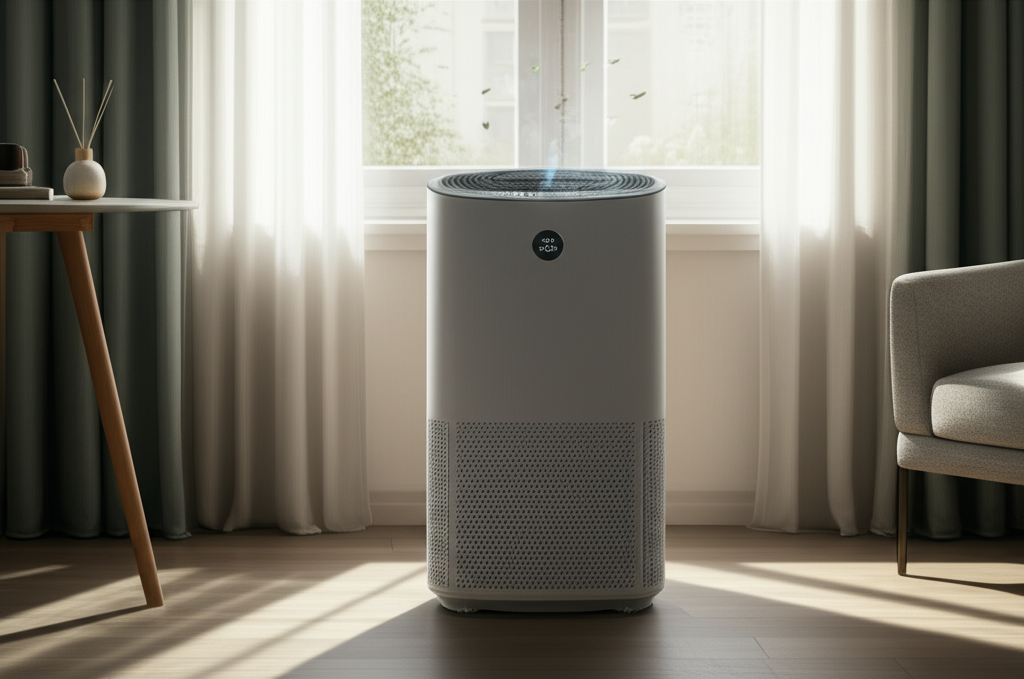
Activated carbon, also known as activated charcoal, is a highly porous form of carbon that has been treated to increase its absorbency. It works like a sponge, trapping odor molecules within its countless tiny pores. The more activated carbon a purifier contains, the better it will be at neutralizing a wide range of smells, from pet odors to cigarette smoke.
The Role of HEPA Filters
While activated carbon handles gases and odors, High-Efficiency Particulate Air (HEPA) filters are essential for capturing solid particles. These particles, like pet dander or mold spores, can also contribute to unpleasant smells and are significant allergens. A good odor-removing air purifier will typically combine a robust activated carbon filter with a true HEPA filter for comprehensive air cleaning.
Other Technologies: What to Watch Out For
Some air purifiers use ionizers or UV-C light to clean the air. While these technologies can be effective for certain applications, ionizers can sometimes produce ozone, which is a lung irritant and can even worsen odors. UV-C light is primarily for killing germs and viruses and has limited impact on common household odors. For the best air purifier for removing odors, prioritize activated carbon and HEPA filtration.
Key Features to Look for in an Odor-Fighting Air Purifier
When shopping for an air purifier specifically for odor removal, several features stand out. Beyond the core filtration technology, consider the capacity, fan speed, and ease of maintenance. These elements directly impact how well and how efficiently the unit will tackle persistent smells in your space.
CADR Ratings: A Measure of Performance
Clean Air Delivery Rate (CADR) is a standardized rating that measures how quickly an air purifier can clean the air. Look for high CADR ratings, especially for smoke, as this indicates a strong ability to remove particulate matter that often carries odors. A higher CADR means the purifier can clean a larger room more effectively and faster.
Filter Size and Material Quality
The amount and quality of activated carbon in a purifier are critical for odor removal. Look for purifiers that specify a substantial amount of carbon, often measured in pounds. A thin carbon pre-filter won’t do much for strong smells. Similarly, ensure it uses a true HEPA filter, not one labeled “HEPA-type” or “HEPA-like,” which captures fewer particles.
Coverage Area and Room Size
Always match the air purifier’s recommended coverage area to the size of the room where you intend to use it. An undersized unit will struggle to keep up with odors in a large space. Many manufacturers provide an estimated room size (e.g., up to 500 sq ft) based on a specific number of air changes per hour (ACH).
Noise Levels and Fan Speeds
Air purifiers have multiple fan speeds, and higher speeds generally mean more air cleaning but also more noise. If you plan to use the purifier in a bedroom or living area, check the noise level specifications (measured in decibels, dB) for each fan setting. Some models offer a quiet “sleep mode.”
Top Contenders: Best Air Purifiers for Removing Odors in [Current Year]
After extensive research and considering user reviews, several models consistently stand out for their exceptional odor-eliminating capabilities. These units combine powerful filtration with user-friendly features, making them reliable choices for tackling even the most stubborn household smells.
Coway Airmega 400S: Powerful Performance for Large Spaces
The Coway Airmega 400S is a powerhouse, ideal for larger homes. It features a multi-stage filtration system, including a washable pre-filter, an activated carbon filter, and a true HEPA filter. Its intelligent auto mode adjusts fan speed based on air quality, and its coverage area is impressive.
Blueair Classic 480i: Smart Technology and Superior Filtration
Blueair purifiers are known for their sleek design and high performance. The Classic 480i uses a combination of electrostatic and mechanical filtration (HEPASilent technology) along with a substantial activated carbon filter. It’s effective at removing odors, allergens, and pollutants from medium to large rooms.
Levoit Core 300S: Compact Yet Capable for Smaller Rooms
For smaller spaces like bedrooms or offices, the Levoit Core 300S is an excellent choice. It features a three-stage filtration system with a fine preliminary filter, a true HEPA filter, and a high-efficiency activated carbon filter specifically designed for odor removal. Its compact size and quiet operation make it a popular option.
Winix 5500-2: A Well-Rounded Performer
The Winix 5500-2 is a consistently recommended air purifier for its balance of features and performance. It includes a True HEPA filter, an activated carbon filter, and the PlasmaWave technology (which can be turned off if preferred). It’s effective at tackling pet odors, smoke, and general household smells.
Honeywell HPA300: Robust Filtration for Medium to Large Rooms
The Honeywell HPA300 is a robust choice for medium to large rooms. It boasts a True HEPA filter and an activated carbon pre-filter designed to capture large particles and odors. Its high CADR ratings ensure quick air cleaning, making it a solid option for homes with pets or smokers.
How to Maximize Your Air Purifier’s Odor-Fighting Potential
Simply buying the best air purifier for removing odors is only half the battle. Proper placement, regular maintenance, and understanding its limitations will ensure you get the most out of your investment. Here’s how to make sure your purifier is working its hardest to keep your air fresh.
Strategic Placement Matters
Place your air purifier in the room where odors are most prevalent or where you spend the most time. For continuous odor control throughout your home, consider using multiple units in key areas. Ensure there’s adequate space around the unit for optimal airflow, avoiding placing it directly against walls or furniture.
Regular Filter Maintenance is Crucial
The effectiveness of your air purifier hinges on its filters. Activated carbon filters become saturated over time and lose their ability to adsorb odors. HEPA filters can become clogged with captured particles. Always follow the manufacturer’s recommendations for cleaning (if applicable) and replacing filters. This is non-negotiable for sustained odor removal.
Understand Air Purifier Limitations
While an air purifier is a powerful tool against odors, it’s not a magic wand for all air quality issues. It won’t eliminate the source of the odor. For instance, if you have a persistent mold problem, you need to address the moisture and mold growth itself. Similarly, deep cleaning is still necessary for removing odor-causing residues.
Choosing the Right Filter for Your Needs
When selecting an air purifier, the type and amount of filter media are paramount for odor control. Different purifiers offer various combinations, and understanding these differences will help you make the best choice for your specific odor problem.
Activated Carbon: The Odor Neutralizer
As discussed, activated carbon is the star player for odor removal. Look for purifiers with substantial, high-quality activated carbon filters. Some purifiers use granulated activated carbon (GAC), while others use carbon-impregnated filters. Generally, a larger quantity of carbon is more effective and lasts longer.
Pre-filters: The First Line of Defense
Many air purifiers include a pre-filter, often washable, to capture larger particles like hair and dust. This protects the more expensive HEPA and carbon filters, extending their lifespan. A good pre-filter can also help trap some larger odor-carrying particles before they reach the main filters.
Combination Filters: The All-in-One Solution
Many of the best air purifiers for odors use combination filters that integrate a pre-filter, HEPA filter, and activated carbon filter into a single unit. This simplifies maintenance and ensures all aspects of air purification are covered. However, check if the carbon component is substantial enough for your odor concerns.
Comparing Top Odor-Removing Air Purifiers: A Quick Look
Here’s a simplified comparison of some leading models, focusing on their odor-fighting capabilities and suitability for different room sizes.
| Air Purifier Model | Best For Room Size (sq ft) | Activated Carbon Filter Type | Key Odor-Fighting Feature | Price Range (approx.) |
| :———————- | :————————- | :————————— | :—————————————————— | :——————– |
| Coway Airmega 400S | Up to 1573 | High-capacity carbon | Multi-stage filtration, large carbon surface area | $$$ |
| Blueair Classic 480i | Up to 390 | Activated carbon | HEPASilent™ technology, effective odor adsorption | $$$ |
| Levoit Core 300S | Up to 219 | High-efficiency carbon | Compact design, 3-stage filtration with dedicated carbon | $$ |
| Winix 5500-2 | Up to 360 | Activated carbon | True HEPA, carbon filter, PlasmaWave (optional) | $$ |
| Honeywell HPA300 | Up to 465 | Carbon pre-filter | High CADR, effective particle and odor capture | $$ |
Note: Prices are estimates and can vary based on retailer and promotions.
When to Replace Your Air Purifier Filters
Filter replacement is a critical, often overlooked, aspect of maintaining your air purifier’s performance. Ignoring it can lead to reduced effectiveness and even damage to the unit.
Activated Carbon Filter Lifespan
Activated carbon filters have a finite capacity for adsorbing odors. Depending on the intensity of odors in your home and the amount of carbon in the filter, they typically need replacing every 6 to 12 months. Once saturated, they can no longer trap new scent molecules and may even release trapped odors.
HEPA Filter Lifespan
True HEPA filters are designed to capture particles and usually last longer than carbon filters, often between 1 to 3 years. However, if they become clogged with excessive particulate matter, their airflow is reduced, impacting the purifier’s overall efficiency. Some purifiers have indicators to signal when it’s time for a change.
Pre-filter Maintenance
Washable pre-filters should be cleaned regularly, typically every 2-4 weeks, depending on your environment. This simple step prevents larger debris from reaching the main filters and significantly extends their life. Check your manual for specific cleaning instructions.
Frequently Asked Questions About Air Purifiers for Odors
What is the single most important feature for an air purifier that removes odors?
The most important feature is a substantial activated carbon filter. This is what effectively adsorbs odor-causing gases and molecules from the air.
Can an air purifier remove pet odors completely?
Yes, the best air purifiers for removing odors, particularly those with a strong activated carbon filter and HEPA filter, can significantly reduce or eliminate pet odors. Consistent use and filter maintenance are key.
How often should I run my air purifier for odor removal?
For best results, run your air purifier continuously on a medium or auto setting. This ensures constant air circulation and filtration, preventing odors from building up.
Will an air purifier help with cooking smells?
Absolutely. A good air purifier with a strong activated carbon filter is excellent at capturing and neutralizing strong cooking odors, especially when placed in or near the kitchen.
Can I wash my activated carbon filter?
Typically, activated carbon filters are not washable and must be replaced. While pre-filters are often washable, the carbon material itself needs to be swapped out once it’s saturated.
Are ozone-producing air purifiers safe for odor removal?
It’s generally advised to avoid air purifiers that intentionally produce ozone, as ozone can be a lung irritant and may not effectively remove all types of odors. Look for ozone-free certifications.
Conclusion: Breathe Easier with the Right Air Purifier
Investing in the best air purifier for removing odors is a proactive step towards a healthier and more enjoyable living space. By prioritizing models with robust activated carbon filtration, coupled with effective HEPA filters, you can significantly reduce or eliminate unwanted smells from cooking, pets, smoke, and more. Remember to consider room size, CADR ratings, and crucial filter maintenance for optimal performance. With the right unit strategically placed and well-maintained, you can finally say goodbye to lingering odors and welcome truly fresh air into your home.