
50s Vacuum Cleaner: Essential Guide

This essential guide explores the iconic 50s vacuum cleaner, detailing its unique features, historical impact, and how these vintage powerhouses still hold appeal today for collectors and those seeking a robust cleaning experience.
A 50s vacuum cleaner is more than just a cleaning tool; it’s a piece of history. These machines from the 1950s are known for their robust build and distinctive designs. Many people today still cherish and use these vintage appliances. If you’re curious about what made them special or want to find one, you’ve come to the right place. We’ll guide you through everything you need to know about the 50s vacuum cleaner.
The Charm and Appeal of 50s Vacuum Cleaners
Why are 50s vacuum cleaners still so popular? These machines were built differently than today’s models. They often used stronger materials and had powerful motors. This made them very durable and effective at cleaning. Many people love them for their retro look and the nostalgia they represent. Owning one is like owning a piece of mid-century American history.
This section will explore the nostalgic appeal and the solid construction that makes these vintage cleaners so desirable. We’ll look at why they stand out from modern alternatives.
Evolution of the 50s Vacuum Cleaner Design
The 1950s saw a big shift in appliance design. Vacuum cleaners became more streamlined and colorful. Brands like Hoover, Electrolux, and Eureka introduced iconic models. These machines often featured sleek lines, chrome accents, and bright colors like turquoise or red. They were designed to be both functional and a stylish addition to the home.
We will delve into the specific design elements that defined 50s vacuum cleaners. This includes their shapes, materials, and the aesthetic trends of the era.
Key Design Features of 1950s Vacuums
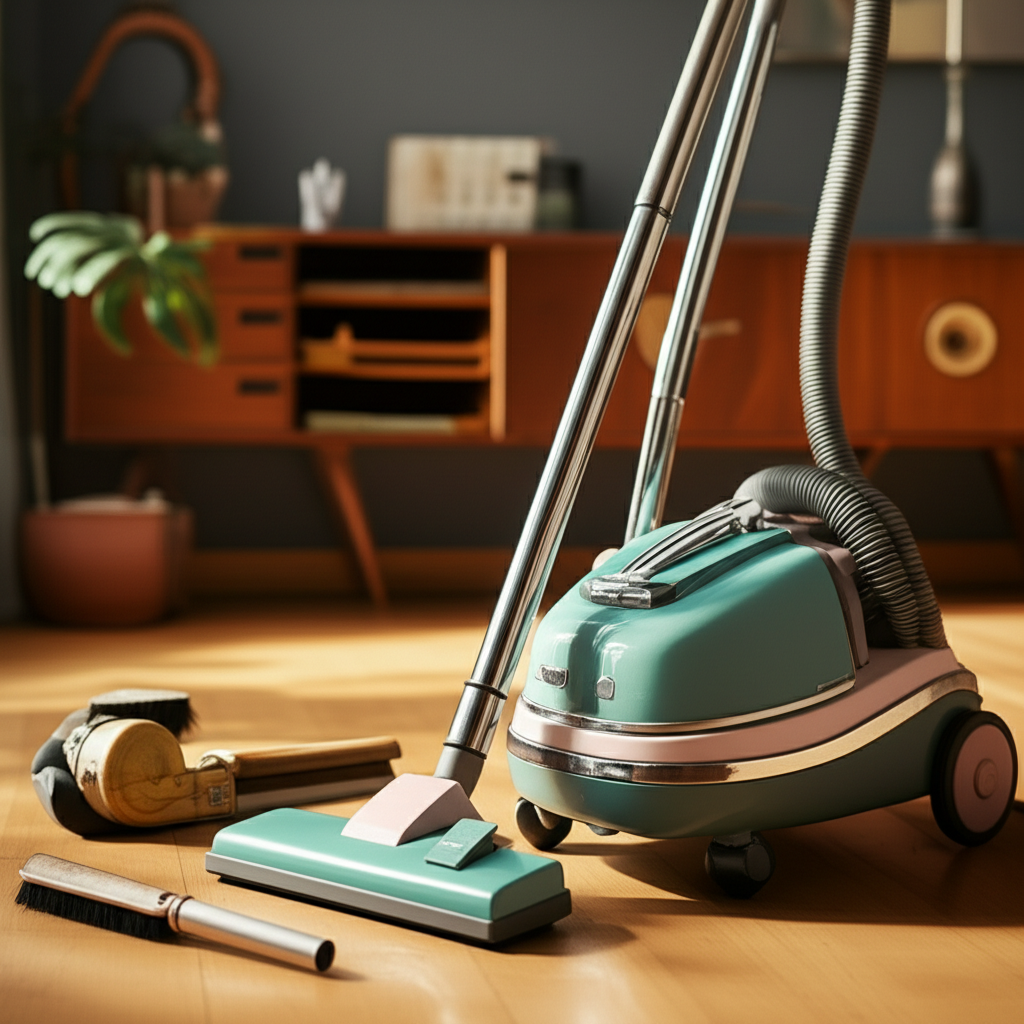
Streamlined Bodies: Gone were the bulky, utilitarian designs of earlier years. 50s vacuums embraced smoother curves and a more compact appearance.
Chrome Accents: Polished chrome was used generously on handles, wheels, and trim. This added a touch of luxury and shine.
Vibrant Colors: Beyond basic black or gray, manufacturers offered vacuums in cheerful colors. Think pastel blues, pinks, and reds that matched kitchen appliances.
Durable Materials: Metal construction was common, making these vacuums incredibly robust and long-lasting. Plastic was used, but often thicker and more resilient than today’s versions.
These features made the 50s vacuum cleaner a statement piece. They were appliances you wanted to display, not hide away.
Power and Performance: What Made Them Work So Well
The engines inside 50s vacuum cleaners were often built for serious power. They used sturdy, often brushed motors that could generate strong suction. This power meant they could tackle deep-pile carpets and stubborn dirt effectively. Many models featured robust filtration systems for their time, helping to keep dust contained.
We will examine the motor technology and suction power that characterized these vintage machines. This will explain their reputation for strong performance.
Motor Technology and Suction Power
The motors in 50s vacuum cleaners were designed for longevity. They often featured metal casings and robust windings. This allowed them to run powerfully for extended periods without overheating. Suction power was measured differently then, but users reported these vacuums could pick up heavy debris with ease.
Many vintage vacuums continue to perform exceptionally well today. Their simple, powerful mechanics contribute to their lasting effectiveness.
Types of 50s Vacuum Cleaners
During the 1950s, two main types of vacuum cleaners dominated: the upright and the canister. Upright vacuums were common for general floor cleaning. Canister models offered more versatility with attachments for different surfaces and tasks. Both types came with their own unique features and benefits for the home.
Let’s explore the specific types and what made each one a popular choice for households in the 1950s.
Upright Vacuums
Upright vacuums from the 50s were workhorses. They had a direct-drive brush roll that agitates carpet fibers. This made them excellent for cleaning carpets. Many had a distinct “beater bar” that helped lift dirt. Their simple design made them easy to maneuver on open floors.
These machines were often heavier but delivered deep cleaning. Their straightforward operation made them a favorite for daily chores.
Canister Vacuums
Canister vacuums offered more flexibility. They consisted of a main body (the canister) and a hose with attachments. This allowed users to clean not just floors but also upholstery, curtains, and even car interiors. The canister often housed the motor and dust bag, with the hose and wand providing reach.
The variety of attachments for canister models made them highly adaptable. They were perfect for homes with diverse cleaning needs.
Iconic Brands and Models of the Era
Several brands became household names during the 1950s. Hoover’s “Constellation” and Electrolux’s “Model 12” are prime examples. Eureka also produced popular models known for their reliability. These brands competed to offer the best features and most stylish designs. Their innovations set the standard for cleaning appliances.
This section highlights some of the most famous 50s vacuum cleaner brands and their standout models. We’ll look at what made them so special.
Hoover: The Name Synonymous with Cleaning
Hoover was a leader in the vacuum cleaner market. Their upright models were incredibly popular. The “World’s Hooverizer” was a term used to describe its effectiveness. They were known for durability and strong suction, making them a trusted brand in American homes.
Hoover’s commitment to innovation and quality solidified its place in cleaning history. Their 50s models are still sought after by collectors.
Electrolux: Elegance and Power
Electrolux offered elegant and powerful canister vacuums. Their designs were often more sophisticated. The Model 12, for instance, was known for its quiet operation and excellent filtration. Electrolux vacuums were seen as premium appliances, offering advanced features for their time.
These machines combined advanced engineering with a sleek aesthetic. They represented the pinnacle of home cleaning technology in the 50s.
Eureka: Reliable and Accessible
Eureka provided reliable and accessible vacuum cleaners. They offered a range of models that were effective and affordable. Many families relied on Eureka vacuums for their everyday cleaning needs. The brand became known for its no-nonsense performance and durability.
Eureka’s focus on practicality made their vacuums a common sight in homes across America. They offered great value and dependable cleaning.
Maintaining and Restoring Your 50s Vacuum Cleaner
Owning a vintage 50s vacuum cleaner can be rewarding, but it requires care. Regular maintenance is key to keeping it running well. This includes changing or cleaning the dust bag and checking the brush roll. For those looking to restore a unit, sourcing original parts can be a challenge but is often possible.
We will provide practical tips for maintaining your vintage vacuum. This will help you preserve its performance and beauty.
Essential Maintenance Tips
Dust Bag Replacement: Always use the correct size and type of dust bag. A full bag reduces suction power.
Brush Roll Cleaning: Hair and debris can clog the brush roll. Carefully remove any obstructions.
Hose and Cord Inspection: Check for cracks or damage. A damaged cord can be a safety hazard.
Motor Care: Listen for unusual noises. If the motor sounds strained, it may need professional attention.
Proper upkeep ensures your 50s vacuum cleaner remains a functional piece of history. Following these steps can prevent common issues and extend its lifespan.
Sourcing Parts and Repairs
Finding replacement parts for 50s vacuum cleaners can be difficult. Online marketplaces like eBay are excellent resources. Vintage appliance repair shops or specialized forums can also offer parts and advice. If you’re not comfortable with repairs, seek out a technician experienced with vintage appliances.
Restoring these machines often involves patience and a bit of detective work. The effort is usually well worth it for these classic pieces.
Are 50s Vacuum Cleaners Safe to Use Today?
Safety is a primary concern when using any vintage appliance. 50s vacuum cleaners were built to different electrical standards than today’s machines. It’s crucial to inspect the power cord and plug for any signs of wear or damage. Ensure the unit is properly grounded if it has a three-prong plug. If you have any doubts about its electrical safety, it’s best to have it inspected by a qualified technician.
We will discuss the safety aspects of using these older machines. This will help you make an informed decision about their use.
Electrical Safety Considerations
Cord Condition: Look for frayed wires, cracks, or exposed insulation. A damaged cord is a serious fire risk.
Plug Integrity: Ensure the plug is not loose or damaged.
Grounding: Older models might have two-prong plugs. If unsure, consult an electrician about safe usage.
Overheating: Never leave a running vacuum unattended. If it feels excessively hot, turn it off.
While many 50s vacuum cleaners are safe with proper checks, caution is advised. Always prioritize safety over nostalgia. For peace of mind, a professional inspection is highly recommended.
Comparing 50s Vacuums to Modern Machines
Modern vacuum cleaners offer features like HEPA filtration and cordless operation. They are often lighter and more maneuverable. However, 50s vacuum cleaners excel in durability and raw cleaning power. Their all-metal construction means they can withstand more abuse. While they may lack advanced features, their core function of cleaning is often still top-notch.
Let’s compare the strengths and weaknesses of 50s vacuums against their modern counterparts. This will help you understand their place in today’s cleaning landscape.
| Feature | 50s Vacuum Cleaner | Modern Vacuum Cleaner |
| :—————- | :——————————————— | :————————————————– |
| Build Quality | Very durable, often all-metal construction | Varies, often lighter plastics |
| Power | Strong suction, robust motors | Often powerful, with advanced motor technology |
| Features | Basic functions, fewer attachments | HEPA filters, cordless, smart features, bagless options |
| Weight | Generally heavier | Often lighter and more maneuverable |
| Maintenance | Simple repairs, bag replacement | Can be complex, filter cleaning/replacement |
| Aesthetics | Retro, iconic, stylish | Sleek, modern, functional |
| Durability | Built to last for decades | Lifespan can vary significantly |
When considering a 50s vacuum cleaner, you’re often choosing timeless performance and build quality over advanced convenience. The choice depends on your priorities for cleaning and appliance longevity.
Where to Find a 50s Vacuum Cleaner Today
Finding a genuine 50s vacuum cleaner requires some searching. Online auction sites and marketplaces are good starting points. Look for listings on eBay, Etsy, or Craigslist. Vintage appliance stores or flea markets can also be treasure troves. Some collectors also trade or sell directly through online forums dedicated to vintage appliances.
This section provides practical advice on locating these vintage gems. We’ll guide you on where to look and what to expect.
Online Marketplaces and Local Finds
eBay: Excellent for a wide selection and bidding opportunities. You can find many brands and models here.
Etsy: Often features restored vintage items, including vacuums.
Craigslist/Facebook Marketplace: Good for local deals, allowing you to inspect the item before buying.
Flea Markets & Antique Shops: Offers the chance to find unique pieces and haggle on price.
Be prepared to search, as availability can fluctuate. Patience is key when hunting for a specific model or a unit in good condition.
Restoring the Shine: Tips for Cleaning and Refurbishing
Cleaning a 50s vacuum cleaner involves more than just dusting. For metal exteriors, a gentle cleaner and a soft cloth work best. Avoid abrasive materials that could scratch the finish. For plastic parts, use a mild soap and water solution. If the vacuum has fabric components, check if they can be removed for cleaning.
We’ll offer specific tips for making your vintage vacuum look as good as it cleans. This includes methods for both exterior and interior components.
Cleaning Exterior Surfaces
Metal Bodies: Use a metal polish specifically designed for chrome or painted surfaces. A microfiber cloth will help achieve a streak-free shine.
Plastic Casing: A damp cloth with mild dish soap is usually effective. For stubborn grime, try a plastic cleaner.
* Wheels and Feet: Clean these with soap and water. Ensure they spin freely.
A clean vacuum not only looks better but also performs more efficiently. Taking the time to clean it properly shows respect for its history.
The Future of Vintage Vacuum Cleaners
The appeal of 50s vacuum cleaners continues to grow. They are cherished by collectors for their design and durability. For some, they are a practical choice for a powerful, long-lasting cleaning tool. As more people seek sustainable options, the longevity of these vintage machines makes them an attractive alternative to disposable modern appliances. Their place in history is secure, and their utility endures.
We will conclude by reflecting on the lasting legacy of these iconic machines. Their impact extends beyond cleaning, representing a time of quality craftsmanship.
Frequently Asked Questions About 50s Vacuum Cleaners
Are 50s vacuum cleaners still effective for cleaning?
Yes, many 50s vacuum cleaners are still very effective. They were built with powerful motors and durable components that often outperform modern machines in raw suction power.
Where can I buy a 50s vacuum cleaner?
You can often find 50s vacuum cleaners on online auction sites like eBay, vintage marketplaces like Etsy, or local classifieds such as Craigslist. Antique stores and flea markets are also good places to search.
How do I maintain a vintage vacuum cleaner?
Regular maintenance includes cleaning or replacing the dust bag, checking the brush roll for debris, and inspecting the power cord for damage. Keep the exterior clean and listen for any unusual motor sounds.
Are 50s vacuum cleaners safe to use?
They can be safe if properly inspected. Check the power cord and plug for any signs of wear or damage. If you have concerns about the electrical wiring, have it checked by a professional.
What kind of dust bags do 50s vacuums use?
Most 50s vacuums used disposable paper dust bags. You will need to find the correct size and type for your specific model. Sometimes, reusable cloth bags were also an option.
Is it hard to find parts for old vacuum cleaners?
Parts can be challenging to find, but online marketplaces and specialized vintage appliance forums are excellent resources. Patience and searching online can often yield the parts you need.
Why are 50s vacuum cleaners so collectible?
They are collectible due to their unique retro designs, robust build quality, and the nostalgia they represent. Many were built to last, making them functional pieces of history.
Conclusion
The 50s vacuum cleaner remains a fascinating piece of home appliance history. These machines offered powerful cleaning performance wrapped in stylish, durable designs. Whether you’re a collector drawn to their retro charm or seeking a robust cleaning tool, a 50s vacuum cleaner can still be a fantastic choice. By understanding their features, maintenance needs, and safety considerations, you can enjoy a truly iconic piece of the past.
If you found this guide helpful, consider exploring more about vintage home appliances on our site!
